University of Florida Research Spending Hits Record $1.34 Billion as State Universities Expand Their Labs
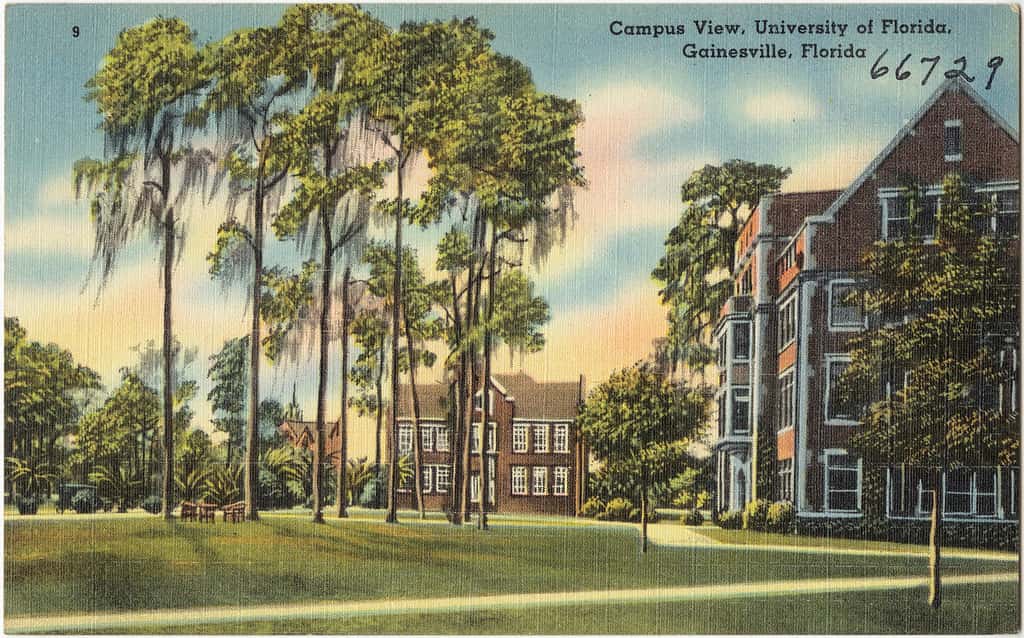
The University of Florida conducted a record $1.34 billion in research during fiscal year 2026, the university reported this month, a figure that places it among the larger academic research enterprises in the country and reflects a broader expansion underway across Florida's public university system.
The total spans medicine, agriculture, engineering, space science and a range of other fields, according to the university. Research expenditure totals of this kind measure money actually spent on research activity during the year, drawn from federal grants, state appropriations, industry contracts, foundation awards and institutional funds, and they are the standard metric used to compare the scale of university research nationally.
UF is not the only Florida institution moving in that direction. The University of South Florida reported research activity of $531 million in fiscal year 2025, a 15 percent increase over two years, and USF's Institute of Applied Engineering was selected by NASA to flight test technology for autonomous lunar landing. Taken together, the figures describe a state research base that has grown substantially over a relatively short period.
What the number represents
Research expenditures are a different measure from research awards. An award is money committed to a project, often spread across several years. An expenditure is money spent during the year in question. The expenditure figure is generally considered the better indicator of actual research capacity, because it reflects laboratories staffed, equipment purchased and work performed rather than commitments on paper.
The composition of the funding matters as much as the total. Federal agencies, principally the National Institutes of Health, the National Science Foundation, the Department of Defense and the Department of Agriculture, supply the largest share of university research money nationally. Industry contracts, philanthropic support and state funds make up the remainder in proportions that vary considerably by institution.
For a land grant university like UF, agricultural research carries particular weight. The university's agricultural sciences institute operates research and education centers across the state, working on problems including citrus greening, water quality, invasive species, aquaculture and crop breeding. That work is geographically distributed in a way most university research is not.
Medical research typically accounts for the single largest dollar share at institutions with academic health centers, and UF operates a substantial one. Engineering, space and physical sciences fill out the portfolio, with the space component tied to Florida's aerospace corridor along the Space Coast.
Why research volume matters to a state
The direct economic effect of research spending is employment. Research budgets pay for graduate students, postdoctoral researchers, laboratory technicians, research faculty and administrative staff, and those positions concentrate in university communities. In Gainesville and Tampa, the universities are among the largest employers in their metropolitan areas.
The indirect effects are what state economic development officials tend to emphasize. Research universities produce trained graduates who stay in the region, generate intellectual property that becomes licensed technology, and anchor the kind of industry clusters that attract private investment. Those effects are real but slow, measured over decades rather than budget cycles.
Florida has historically lagged states with older research university systems in the share of its economy tied to research intensive industry. The state's growth has been driven by population in migration, tourism, construction, agriculture and trade rather than by technology sectors clustered around universities. Building research capacity is the mechanism most often proposed for changing that composition.
Whether it works depends on factors beyond research dollars, including the availability of venture capital, the depth of the local talent market and whether graduates find reasons to stay. Florida has made progress on the first and third of those, though the state continues to export a meaningful share of its technical graduates to markets elsewhere.
The competition among Florida institutions
Florida's public university system has been shaped by state policy that explicitly rewards performance, including research productivity, through funding formulas and designations. The state's preeminent research university designation carries additional funding and has driven sustained competition among institutions to meet its metrics.
UF has been the system's flagship by most measures and has invested heavily in faculty recruitment, particularly in artificial intelligence, where the university built out substantial computing infrastructure and hired across departments. Florida State University has pursued a parallel strategy with different disciplinary emphases.
USF's trajectory has been among the more notable in American higher education over the past two decades, moving from a regional commuter institution to a research university competing nationally. The NASA selection of its applied engineering institute for lunar landing technology testing is the kind of award that signals arrival in a specific technical field rather than general growth.
Florida International University, the University of Central Florida and Florida Atlantic University have each built research strength in particular areas, including coastal and environmental science, optics and photonics, simulation and modeling, and ocean engineering. The system's research output is more distributed than it was a generation ago.
Federal funding and its risks
Because federal agencies supply most university research money, the sustainability of any institution's growth depends heavily on federal appropriations and agency priorities. That dependence creates exposure that universities have limited ability to manage.
Federal research budgets move with congressional appropriations, and periods of flat or declining funding force institutions to compete for a shrinking pool. Universities that have expanded laboratory space and hired research faculty in anticipation of continued growth face difficult adjustments when the funding environment tightens.
Agency priorities shift as well. A university that has built strength in an area an agency chooses to deemphasize can see its funding decline even in a growing overall budget. Diversification across agencies and across funding sources is the standard defense, and larger institutions manage it better than smaller ones.
Industry funding offers an alternative but comes with its own constraints, including restrictions on publication, intellectual property terms that favor the sponsor and a tendency to support applied work over the basic research that produces longer term breakthroughs.
What it means for Floridians
For students, research volume affects what is available to them. Undergraduates at research intensive institutions have access to laboratory experience, faculty conducting original work and graduate programs that would not exist at a teaching focused institution. That access is uneven and depends heavily on individual initiative, but it exists.
For graduate students and postdoctoral researchers, research funding is directly their employment. Expansion means more positions, and those positions are how the academic pipeline produces the next generation of researchers and technical workers.
For residents of university communities, the effects are economic and practical. Research spending supports local employment and business activity, and university medical centers funded in part by research often provide access to clinical trials and specialized care that would not otherwise be available regionally.
For taxpayers, the relevant question is return. Research funding is largely federal rather than state, but Florida does invest state money in its universities' research capacity, and the case for that investment rests on economic development outcomes that are genuinely difficult to measure with precision.
The space and defense connection
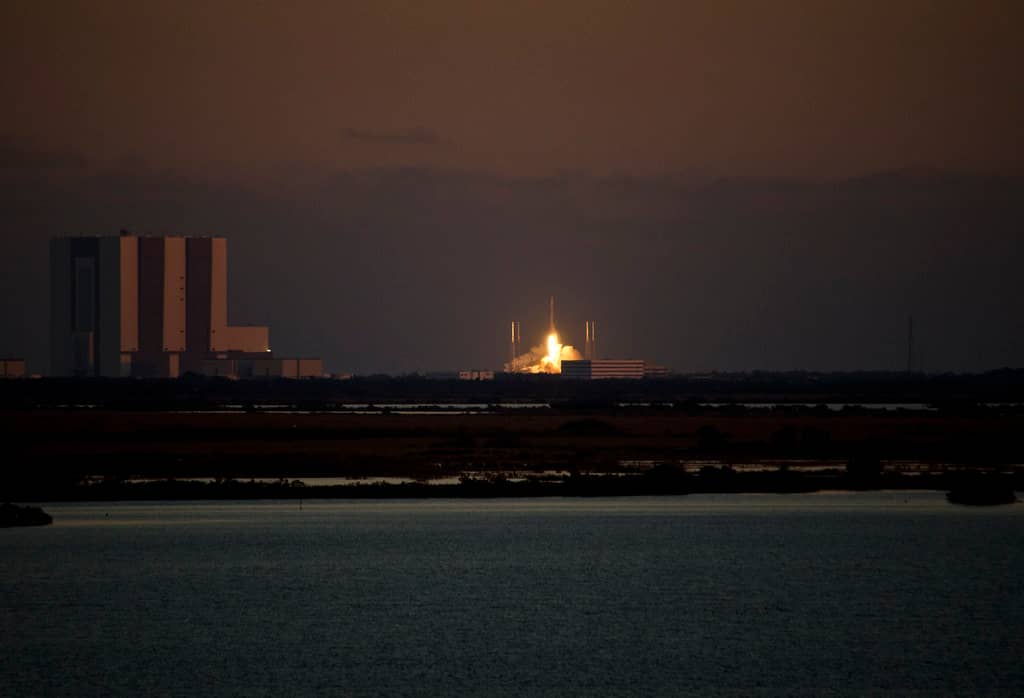
Florida's research profile is distinctive in its aerospace component. The state hosts Kennedy Space Center, Cape Canaveral Space Force Station, a growing commercial launch industry and a substantial defense contracting presence, particularly around Melbourne, Orlando and Tampa.
University research connects into that ecosystem through contracts, testbeds and workforce. NASA's selection of USF's applied engineering institute to flight test autonomous lunar landing capability is an example of the pattern, in which a specific technical capability developed at a university feeds into a federal mission.
Simulation and training research clustered around Orlando has a similar structure, serving both defense and commercial applications, and it has anchored a durable industry presence in Central Florida for decades.
From laboratory to company
The mechanism by which university research becomes economic activity runs through technology transfer offices, which manage patents arising from university work and license them to companies or to startups founded by the researchers themselves. Florida institutions have built out that capacity considerably over the past two decades.
UF has been among the more active American universities in licensing and startup formation, and the state has supported the model through incubator space, seed funding programs and research park development adjacent to campuses. Those facilities exist at Gainesville, Tampa, Orlando and Boca Raton, among other locations.
The conversion rate from research to commercial product is low by design. Most research does not produce a patentable invention, most patents are never licensed, and most licensed technologies do not become profitable products. The economics work only at scale, which is one reason total research volume matters as an input.
Florida's particular challenge has been retaining the companies that do form. A startup founded on university technology needs capital, specialized suppliers and experienced management, and when those are thin locally the company often relocates. Building that supporting infrastructure has been a slower project than building the research capacity itself.
Agriculture, health and the applied edge
Two areas of Florida university research have unusually direct application to problems the state faces, which gives them a claim on public support that more abstract fields do not have.
Agricultural research addresses citrus greening, water quality in the Everglades and Lake Okeechobee system, invasive species including pythons and lionfish, saltwater intrusion into farmland and crop varieties suited to a warming climate. Each of those is a live policy question in Florida with measurable economic consequences.
Health research carries similar weight given the state's demographics. Florida has one of the oldest populations among large states, which makes research on age related disease, long term care delivery and chronic condition management directly relevant to the health system residents actually use.
Coastal and environmental research forms a third category, covering storm surge modeling, red tide, coral reef decline and the engineering questions raised by sea level rise in low lying metropolitan areas. The state's exposure on those questions is greater than almost any other in the country.
What's next
Fiscal year totals for other Florida institutions will be published on their own schedules over the coming months, which will allow a clearer view of whether the growth reported at UF and USF reflects a system wide pattern or is concentrated at particular institutions.
The federal funding environment for the coming year is the variable most likely to determine whether the growth continues. Universities plan research capacity years ahead, and reductions in federal appropriations take time to show up in expenditure figures.
The longer horizon question for Florida is whether research growth translates into the economic diversification state officials have pursued for years. That requires graduates who stay, companies that form and capital that funds them, and it is measured over decades rather than fiscal years.
Spotted an issue with this article?
Have something to say about this story?
Write a letter to the editor