Wasserman Schultz Wins District 20 Primary Amid Representation Backlash
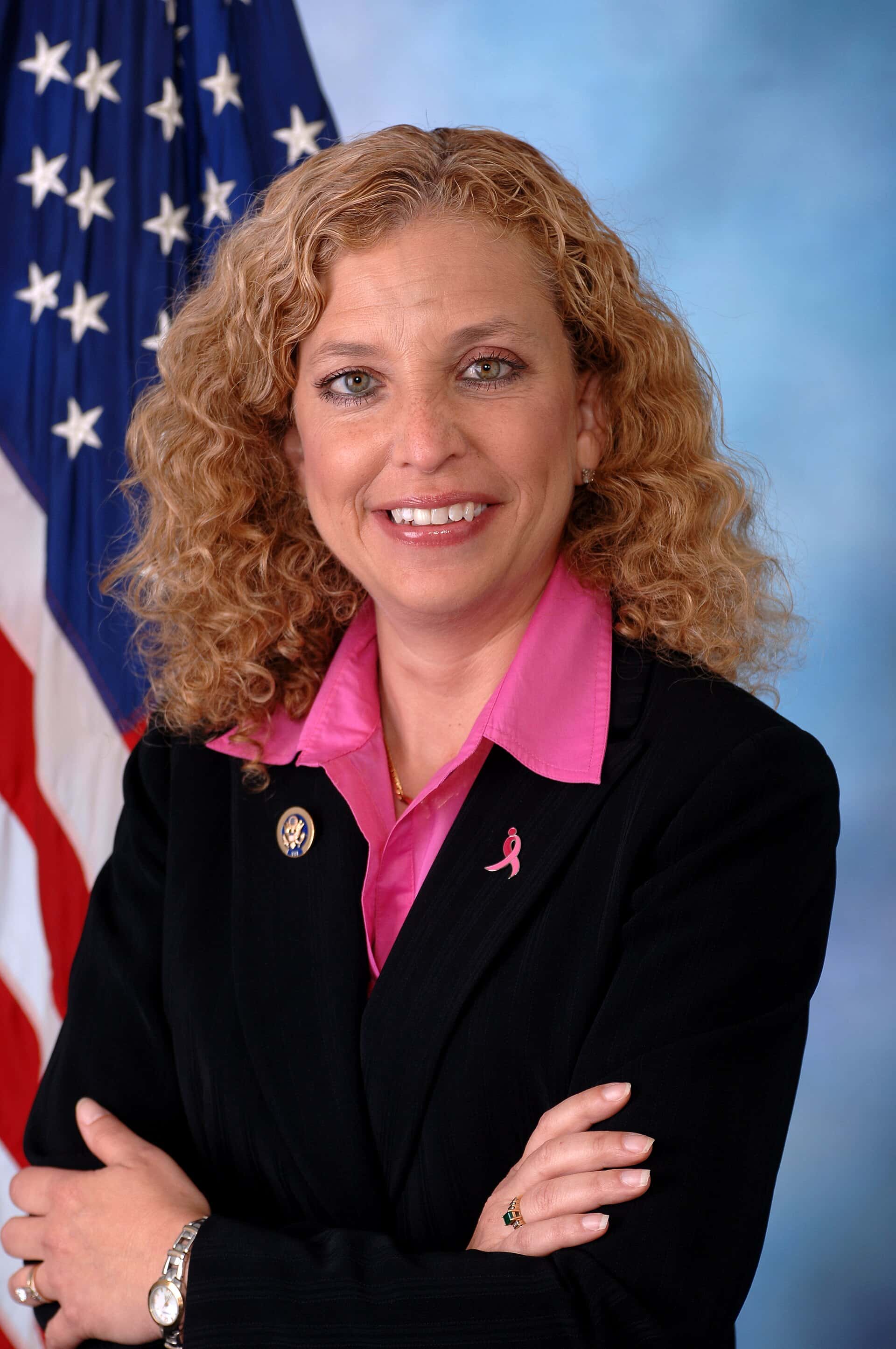
U.S. Rep. Debbie Wasserman Schultz won the Democratic primary for Florida's 20th Congressional District on Aug. 18, prevailing in a five-candidate field with roughly 45 percent of the vote in a contest that became the most contentious congressional primary in the state. More than 30,000 Democrats backed her, according to reported results, with former Broward County Mayor Dale Holness a distant second at about 15,000 votes, or roughly 23 percent.
The result closes a primary that had drawn national attention because of what it represents. Florida's 20th District, which covers portions of Broward and Palm Beach counties, has been a majority-Black district that has elected Black representatives for decades. Wasserman Schultz, who is white and had represented the neighboring 25th District, entered the race after redistricting shifted her previous seat toward Republicans.
Because the district is heavily Democratic, the primary was effectively the general election. Wasserman Schultz is now positioned to return to Congress representing a constituency that spent the primary season openly divided over whether she should be running there at all.
The 20th District was drawn to give Black voters in Broward and Palm Beach counties an effective opportunity to elect a representative of their choice, a category of district that traces back to the Voting Rights Act and to decades of subsequent litigation over Florida's maps. It has been held by Black representatives continuously, including the late Alcee Hastings, who served the area for three decades until his death in 2021. That history is what made this primary different from an ordinary incumbent-versus-challenger contest.
The field she beat
The primary drew an unusually deep and well-known field. Alongside Holness, the ballot included Sheila Cherfilus-McCormick, who had represented the district in Congress; Luther Campbell, the rapper and longtime South Florida community activist; and Elijah Manley, a progressive activist. Each ran, to varying degrees, on the argument that the district's representation should reflect its history and its voters.
Cherfilus-McCormick's candidacy carried an additional complication. She is under federal indictment on allegations involving the theft of roughly $5 million in federal funds and campaign fraud. She has not been convicted, and the charges remain pending. Despite the indictment, more than 6,100 Democrats voted for her, a figure that speaks to the strength of the representation argument in the district.
The multi-candidate structure worked in Wasserman Schultz's favor. With four candidates splitting the vote of those opposed to her candidacy, a plurality in the mid-40s was enough to win outright. Florida does not hold runoffs in congressional primaries, so 45 percent carried the nomination.
Luther Campbell brought a distinct kind of visibility to the race. Known nationally from his music career and from a First Amendment case that reached the federal appellate courts, he has spent decades in South Florida civic life as a youth football organizer and community advocate. His candidacy, alongside Manley's, meant the field spanned generational and stylistic lines within the same broad argument, which fragmented the vote further than a straight two-way contest would have.
Why redistricting put her here
Wasserman Schultz has served in Congress since 2005 and previously chaired the Democratic National Committee. Her long-held seat, the 25th District, was redrawn in a way that made it less favorable to a Democratic incumbent. Rather than run in a district she might lose, she moved to the neighboring 20th, which is among the safest Democratic seats in Florida.
That decision is legal. Members of Congress are required to live in the state they represent, not the district. But it is politically fraught when the district in question is one of a small number of majority-Black districts in a large state, and when the incumbent moving in has the fundraising and name recognition to win a primary against candidates rooted in the community.
Black Democratic leaders in Broward and Palm Beach counties said publicly during the campaign that they viewed the move as an affront. The tension was not primarily ideological. Wasserman Schultz's voting record is broadly consistent with the district's politics. The objection was about who gets to represent a district built, in part, to give Black voters an opportunity to elect a candidate of their choice.
Florida's congressional map has been contested throughout the decade. The state's Fair Districts amendments, added to the Florida Constitution by voters in 2010, prohibit drawing districts to favor a party or an incumbent and require that districts not diminish the ability of racial or language minorities to elect representatives of their choice. Litigation over whether the current map satisfies those provisions has moved through Florida courts, and the outcome of that litigation could reshape the district again before the decade ends.
What the numbers show
Turnout in the primary was modest, consistent with an August contest in a non-presidential year. Roughly 67,000 to 68,000 Democratic ballots appear to have been cast based on the reported vote totals, in a district with a substantially larger Democratic registration base.
Wasserman Schultz's 45 percent means a majority of participating Democrats voted for someone else. Holness at 23 percent, Cherfilus-McCormick at around 9 percent, and the remaining share divided among Campbell and Manley together account for the balance. In a two-candidate race, the arithmetic would have looked different, though it is impossible to say how those voters would have consolidated.
Turnout itself is part of the story. Roughly two-thirds of the district's registered Democrats did not vote at all, which is unremarkable for an August primary but consequential when a primary functions as the general election. In a safe seat, the decision about who represents several hundred thousand people is effectively made by the fraction who show up in late summer, and that structural feature applies equally to safe Republican districts elsewhere in Florida.
The pattern is a familiar one in American primaries. Fragmented opposition plus an incumbent with resources and universal name recognition produces a plurality win. It is also why the outcome has not settled the underlying argument in the district.
The broader South Florida picture
The 20th District result was one piece of a broader night in South Florida. Democratic voters across Broward, Palm Beach, and Miami-Dade counties also weighed in on statewide races, choosing David Jolly for governor and Angie Nixon for the U.S. Senate special election.
South Florida's political importance has shifted over the past decade. Miami-Dade County, once a Democratic anchor, has moved sharply toward Republicans in recent cycles. Broward remains the state's most reliably Democratic large county, and the 20th District sits within it. That makes the district's internal politics consequential well beyond its own borders, because Broward's Democratic organization is a significant part of what remains of the party's statewide infrastructure.
The friction from this primary will not disappear before November. Whether party leaders in Broward can hold the coalition together for the top of the ticket is a practical question with statewide implications, particularly given that the Democratic Senate nominee and gubernatorial nominee come from different wings of the party.
Broward's Democratic organization has real assets: a dense population of reliable Democratic voters, an established network of clubs and unions, and county offices held by Democrats. What it has not been able to do in recent cycles is generate the turnout margins needed to offset Republican gains in Miami-Dade and across the rest of the state. A primary that leaves parts of that organization aggrieved makes the November turnout task harder, and the statewide ticket needs Broward to perform.
Two Trump-backed candidates fall
The 20th District was not the only surprise on Florida's congressional primary night. On the Republican side, two candidates carrying Trump endorsements lost their primaries, including Rep. Cory Mills, whose campaign had been shadowed by investigations into allegations involving domestic abuse, misrepresentation of his military service, and financial misconduct. Mills lost despite holding a Trump endorsement.
Those results complicate the simple reading that a Trump endorsement is decisive in Florida Republican primaries. In races where the endorsed candidate carried significant personal liabilities, Republican voters proved willing to look elsewhere. In the governor's race, where Byron Donalds carried no comparable baggage, the endorsement translated cleanly.
Taken together, Florida's congressional primaries produced a set of results that resist a single narrative. Incumbency, money, and fragmented fields mattered as much as endorsements did.
At the top of the Republican ticket the endorsement effect was unambiguous. Byron Donalds won the gubernatorial primary comfortably after receiving Trump's backing in May 2025, an endorsement that cleared the field of serious challengers well before voting began. The contrast between that race and the House primaries suggests the endorsement functions most powerfully as a deterrent to entry rather than as a persuasion tool once voters are choosing among candidates they already know.
What's next
The 20th District's general election in November is not expected to be competitive given the district's partisan composition. Wasserman Schultz would be sworn in for a new term in January 2027, representing a district she did not previously serve.
The more consequential question is what happens in the district over the next two years and into the next cycle. Candidates who ran this year retain their organizations and their argument. Whether one of them consolidates support for a future primary, or whether the district's leaders seek a different remedy, remains to be seen.
Cherfilus-McCormick's federal case is separate and continues on its own timeline. She has not entered a plea that has been publicly reported as resolving the matter, and the charges remain allegations. Her legal proceedings will play out in federal court independent of the election calendar.
Voters in the district will also weigh in on statewide races in November, including the governor's contest between Byron Donalds and David Jolly, the U.S. Senate special election between Ashley Moody and Angie Nixon, and Amendment 3, the property tax measure. County supervisors of elections in Broward and Palm Beach handle registration, vote-by-mail requests, and polling locations for the district.
Spotted an issue with this article?
Have something to say about this story?
Write a letter to the editorComments
No comments yet. Be the first to weigh in.
Related Coverage
DeLand and Volusia County say goodbye to former state Rep. Pat Patterson as flags fly at half-staff
6h ago

Vance rallies Florida Republicans in Lakeland as governor's race tightens
22h ago

Amendment 3: Osceola, Orange counties warn of cuts to mosquito control, EMS
1d ago
Orange County's $9 Billion Budget Takes Effect With $1.1 Billion for Public Safety and a Bigger Sheriff's Budget
1d ago