What the Primary Revealed About Florida's Election Machinery
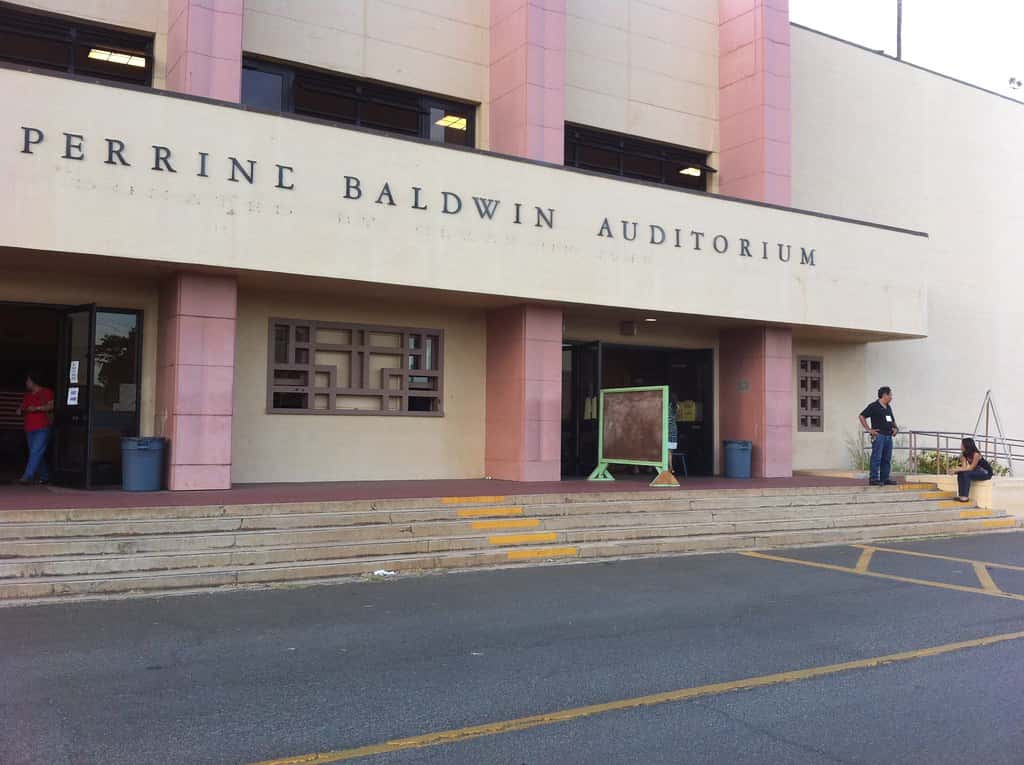
Florida ran a statewide primary on Tuesday across all 67 counties, with polling places open from 7 a.m. to 7 p.m. local time, under election readiness procedures that Secretary of State Cord Byrd's office outlined in advance of the vote.
The primary decided nominations for governor, a U.S. Senate special election, all 28 congressional districts under a newly drawn map, cabinet offices and state legislative seats. It was the first statewide election conducted under the congressional boundaries the Legislature approved during an April special session.
Turnout data was updated hourly on election day through the state's Florida Election Watch reporting system, and county supervisors of elections published their own returns as precincts reported. Final certified results follow a statutory schedule of county canvassing board review.
How Florida runs an election
Florida's election administration is decentralized. Each of the 67 counties has an independently elected supervisor of elections responsible for voter registration, polling place operations, ballot design within statutory parameters, and initial tabulation.
The Florida Department of State's Division of Elections handles statewide functions including the voter registration database, candidate qualifying, campaign finance reporting and certification of results. The secretary of state serves as the state's chief election officer.
That structure means voters in different counties can encounter meaningfully different experiences in terms of polling place density, early voting site availability and ballot layout, even while operating under identical state law.
Voting methods available
Florida offers three ways to cast a ballot. Vote by mail requires a request, which under current law must be renewed each general election cycle rather than standing indefinitely. Early voting occurs at designated sites during a period set in statute, with counties having discretion to extend within limits.
Election day voting occurs at assigned precincts. Voters who appear at the wrong precinct on election day are directed to their correct location, since Florida does not count out-of-precinct election day ballots for races the voter is not eligible to vote in.
Provisional ballots are available to voters whose eligibility cannot be immediately confirmed. Those ballots are set aside and reviewed by the county canvassing board, which determines whether they count based on eligibility verification.
Closed primaries and who can vote
Florida operates closed party primaries, meaning registered Republicans vote in Republican primaries and registered Democrats vote in Democratic primaries. Voters registered with no party affiliation, who now make up a substantial share of Florida's electorate, cannot participate in either party's partisan primary.
There is an exception. When all candidates for an office are from the same party and the winner will face no opposition in the general election, the race becomes a universal primary contest open to all registered voters regardless of party. That provision appears on some ballots and not others.
Nonpartisan races, including judicial elections and many school board and municipal contests, are open to all voters. Those races often appear on the same ballot as closed partisan primaries, which is why a no-party-affiliation voter may receive a ballot with some contests and not others.
What it means for Floridians
The closed primary structure means that in many Florida districts, the primary rather than the general election is the decisive contest. Under a congressional map expected to produce 24 Republican-leaning districts out of 28, the practical winner in a large share of those seats is determined in August.
That dynamic gives disproportionate influence to primary voters, who are typically fewer in number and more ideologically committed than general election voters. Florida turnout in primaries has historically run well below general election turnout.
For voters registered with no party affiliation, the practical consequence is exclusion from the decisive round in many races. Changing party registration requires action ahead of a registration deadline set in statute, generally 29 days before an election.
Local impact across the state
Miami-Dade County operates the largest election administration in Florida, serving more than 1.5 million registered voters across hundreds of precincts, with ballots produced in multiple languages under federal Voting Rights Act requirements.
Smaller counties, including several in the Panhandle and rural North Florida with populations under 20,000, run elections with substantially smaller staffs and budgets while meeting the same statutory requirements. Equipment costs and cybersecurity requirements fall on those offices as they do on large ones.
Counties across the state coordinate with the Division of Elections on security protocols. Florida has participated in federal information-sharing arrangements covering election infrastructure since those programs were established.
How Florida changed its rules after 2000
Florida's election administration was rebuilt substantially after the 2000 presidential recount, which turned on punch card ballots, hanging chads and a manual recount process that the U.S. Supreme Court ultimately halted.
The state eliminated punch card systems and moved through several generations of voting equipment. Current Florida law requires paper ballots that voters mark and that are counted by optical scan tabulators, a system that preserves a physical record capable of being recounted by hand.
Automatic recount provisions were codified. Under current law, a machine recount is triggered when the margin falls within a defined percentage, and a manual recount of overvotes and undervotes follows if the margin narrows further after the machine recount.
Post-election audits provide an additional check. Florida requires audits of results following elections, conducted by county canvassing boards according to procedures the Division of Elections specifies.
What has changed more recently
The Legislature has revised election law repeatedly over the past several cycles. Changes have addressed vote-by-mail request duration, drop box availability and supervision, third-party voter registration organizations and the handling of ballot signature verification.
The vote-by-mail request change is the one that affects the largest number of voters directly. Requests now expire after each general election cycle rather than standing across multiple cycles, which means voters who relied on a standing request must renew it.
Drop box rules now require staffing during available hours and restrict availability to specific periods rather than continuous access. County supervisors publish drop box locations and hours ahead of each election.
Signature matching remains a step in vote-by-mail processing, where the signature on a returned ballot envelope is compared against the signature on file. Voters whose signatures do not match receive an opportunity to cure the discrepancy within a statutory window.
Turnout patterns and what they mean
Florida primary turnout typically runs far below general election turnout. Midterm primaries in particular draw a fraction of the electorate that shows up in November, and that gap has been consistent across cycles.
The composition of the primary electorate differs from the general electorate in predictable ways. Primary voters skew older, are more likely to be long-term registrants, and are more consistently engaged with politics than the broader population.
Because closed primaries decide many Florida races outright in safe districts, that smaller and less representative electorate carries substantial influence over who ultimately holds office. It is a structural feature of the system rather than an anomaly.
Vote-by-mail and early voting have shifted when Floridians cast ballots even where they have not changed how many do. In recent cycles, a majority of Florida ballots have been cast before election day, which changes campaign timing and the value of late-breaking developments.
Who the supervisors of elections are
Florida's 67 supervisors of elections are constitutional officers elected by the voters of their counties, except in a small number of charter counties where the position is structured differently. They serve four-year terms and run for reelection on partisan ballots in most counties.
That independence is a deliberate design feature. A supervisor answers to county voters rather than to the state, which limits the ability of any single official to direct election administration statewide.
The trade-off is variation. Supervisors make decisions within statutory parameters on matters including the number and location of early voting sites, polling place assignments, staffing levels and voter outreach, and those decisions differ across counties.
Supervisors also carry the operational burden of implementing legislative changes, which have arrived frequently in recent cycles. Each change requires updated procedures, retrained poll workers and revised public communication.
Poll workers and the people who run elections
Florida elections depend on temporary poll workers recruited and trained by county supervisors, numbering in the tens of thousands statewide on election day. Recruitment has been a persistent challenge, and the workforce skews older than the general population.
Training covers equipment operation, voter identification requirements, provisional ballot procedures and handling of the situations that arise at polling places. The quality and consistency of that training affects voter experience directly.
Compensation is modest and the commitment is substantial, typically a full day extending beyond the hours polls are open, plus mandatory training. Counties recruit through public campaigns, and many have worked to bring in younger workers including high school and college students where permitted.
Election security responsibilities have grown alongside the traditional operational ones. Counties maintain physical and cyber security protocols covering equipment, ballot handling and chain of custody, and those procedures are subject to state requirements and audit.
What's next
County canvassing boards will complete their reviews and certify results on the schedule set in statute, after which the state certifies. Any race falling within the statutory margin triggers an automatic recount, first machine and then manual if the margin narrows further.
The general election is November 3. Voters wishing to change party registration ahead of a future primary, update an address, or request a vote-by-mail ballot can do so through their county supervisor of elections or the Division of Elections website.
Precinct-level returns from Tuesday will be posted publicly once certification is complete. Those returns are the raw material campaigns and analysts use to understand where each candidate's support was concentrated heading into November.
Spotted an issue with this article?
Have something to say about this story?
Write a letter to the editorComments
No comments yet. Be the first to weigh in.
Related Coverage

Vance rallies Florida Republicans in Lakeland as governor's race tightens
5h ago

Amendment 3: Osceola, Orange counties warn of cuts to mosquito control, EMS
13h ago
Orange County's $9 Billion Budget Takes Effect With $1.1 Billion for Public Safety and a Bigger Sheriff's Budget
1d ago

Miami-Dade Commission Sets Oct. 6 Hearing on Plan to Eliminate 12 Metrobus Routes
1d ago