Fed Meeting and Inflation Data Will Set Florida's Mortgage Rates
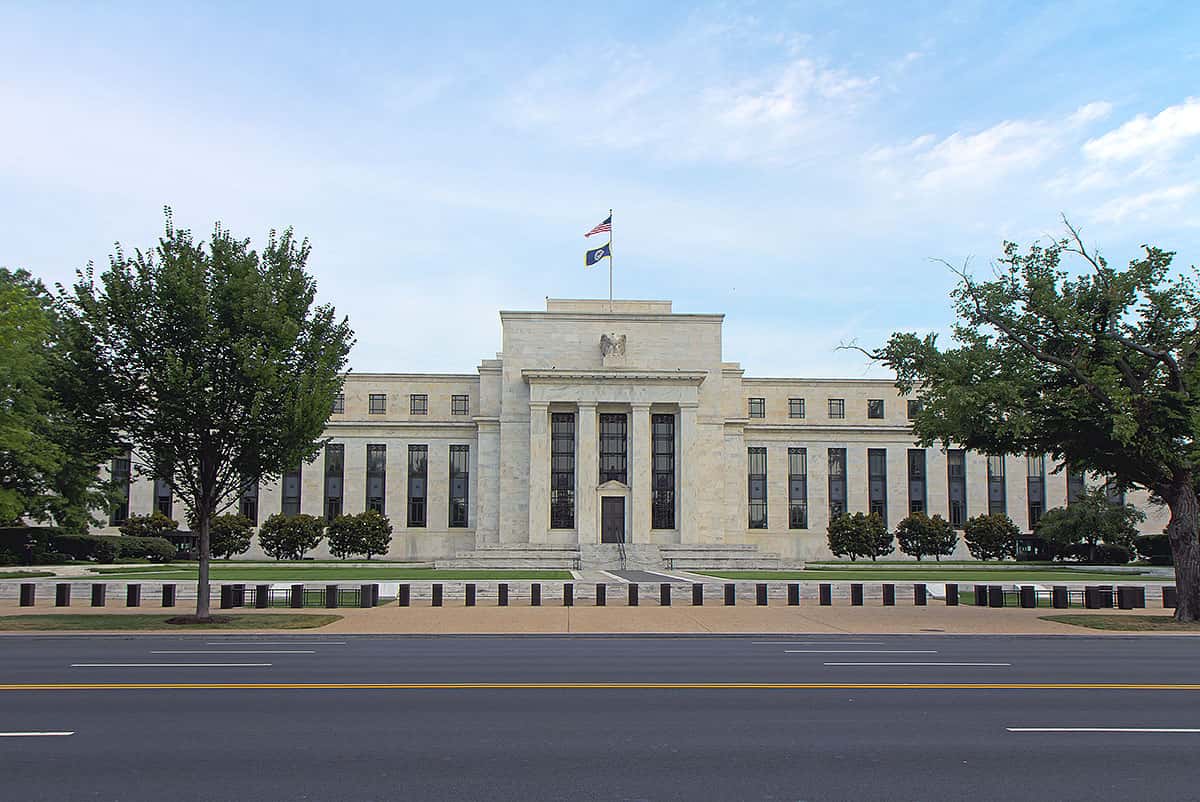
The Federal Reserve's rate-setting committee meets September 15 and 16, and the decision it reaches will affect the cost of buying a home in Florida more directly than almost any policy made in Tallahassee. The federal funds rate currently sits in a range of 3.50% to 3.75%, where it has been since December 2025.
Market pricing ahead of the meeting has been unusual. The CME FedWatch tool, which derives probabilities from futures contracts, has shown meaningful odds of a quarter-point increase, driven by inflation running above the Fed's 2% target alongside a labor market that has stayed resilient. Analysis of a hike scenario suggests 30-year mortgage rates could move from roughly 6.68% toward 7% or above.
On a $400,000 loan, that shift would add roughly $56 to a monthly payment, in the range of $672 a year. Applied across the volume of Florida home purchases, it is a substantial amount of money, and it lands in a market that has already been reshaped by higher borrowing costs.
How the Fed actually affects mortgages
A common misunderstanding is that the Federal Reserve sets mortgage rates. It does not. The Fed sets the federal funds rate, which governs overnight lending between banks. Thirty-year mortgage rates track the ten-year Treasury yield plus a spread that reflects prepayment risk and market conditions.
The connection runs through expectations. When markets conclude the Fed will keep rates higher for longer, longer-dated Treasury yields rise, and mortgage rates follow. When markets conclude easing is coming, the reverse happens. This is why mortgage rates frequently move substantially in the days before a Fed meeting, on no policy change at all.
It also means the meeting outcome matters less than how it compares to what markets already expected. A hike that was fully priced in produces little movement. A surprise in either direction produces a great deal.
The data ahead of the decision
The Consumer Price Index report lands September 10, days before the meeting, and it is the most consequential single data point in the sequence. Inflation running hotter than expected strengthens the case for tightening; a cooler reading weakens it.
The Personal Consumption Expenditures price index follows on September 25, after the meeting. PCE is the Fed's preferred inflation gauge, and while it arrives too late to influence the September decision, it shapes expectations for what comes next.
Labor market data feeds the other side of the Fed's mandate. A labor market that stays strong gives the committee room to tighten without triggering the employment losses it is charged with avoiding. Weakening employment data would pull in the opposite direction.
Florida's particular sensitivity
Florida's housing market is more exposed to rate movements than most states for reasons specific to how people buy homes here.
First, the state's in-migration is substantial, and people moving from other states are buying rather than renting at high rates. Purchase demand is more rate-sensitive than refinancing demand, because a buyer's qualifying income determines the maximum loan.
Second, Florida's total cost of ownership includes property insurance premiums among the highest in the nation and, for condominium buyers, association dues and special assessments that have risen sharply. Lenders count those costs in qualifying ratios, which means Florida buyers hit debt-to-income limits at lower purchase prices than buyers elsewhere with the same rate and income.
Third, the state's retiree population includes many buyers paying cash, who are unaffected by rates directly but who respond to the broader market conditions rates create. Cash buyers become relatively more powerful when financed buyers are constrained, which shapes competition in specific price segments.
What it means for buyers
For a buyer currently shopping, the practical question is rate lock timing. A lock secures a rate for a defined period, typically 30 to 60 days, protecting against increases while forgoing the benefit of any decrease.
Buyers under contract with closings in the coming weeks generally benefit from locking before the meeting, because the downside of an unexpected increase outweighs the upside of a modest decrease. Buyers earlier in the process have more flexibility and less reason to lock prematurely.
Rate buydowns are worth understanding in this environment. Sellers in a buyer's market often prefer paying points to reduce a buyer's rate over cutting the price, because a buydown can deliver more monthly payment relief per dollar spent. Florida buyers should ask about that structure explicitly.
What it means for sellers
Sellers face the mirror image. Higher rates reduce the pool of qualified buyers at any given price, which lengthens time on market and increases the concessions needed to close a sale.
Florida sellers are already operating in a market where inventory has rebuilt substantially and negotiating leverage has shifted toward buyers. A rate increase would compound that, while a decrease would bring sidelined buyers back and improve conditions.
The lock-in effect works against inventory growth. Homeowners holding mortgages at 3% have a strong financial reason not to sell and take on a new loan at 7%, which keeps existing homes off the market. That effect has been a significant driver of low resale inventory nationally.
Beyond housing
Rate policy touches Florida's economy in ways beyond home buying. The state's tourism industry depends on discretionary consumer spending, which tightens when borrowing costs rise and credit card rates follow.
Commercial real estate faces its own exposure. Florida has seen substantial multifamily and industrial development, much of it financed with debt that has to be refinanced periodically. Higher rates at refinancing can turn a viable project into a distressed one.
Small businesses across the state borrow at rates tied to the prime rate, which moves with the federal funds rate directly. For a restaurant, contractor, or retailer carrying a line of credit, a Fed increase shows up in the next statement.
What the Fed is actually weighing
The Federal Reserve operates under a dual mandate set by Congress: maximum employment and stable prices. Those two goals frequently point in opposite directions, and the committee's job is to weigh them against each other.
When inflation runs above target, the standard response is to raise rates, which slows borrowing, reduces demand, and eases price pressure. The cost is that the same mechanism slows hiring and can raise unemployment.
When employment weakens, the standard response is to lower rates, which stimulates borrowing and hiring. The cost is that it can allow inflation to accelerate.
The current configuration, inflation above target alongside a labor market that has stayed resilient, is the one that most clearly supports tightening, because the employment side of the mandate is not signaling distress. That is why markets have priced meaningful odds of an increase despite rates already sitting well above their pandemic-era lows.
Florida's economy beyond housing
The state's exposure to rate policy runs through channels that get less attention than mortgages but affect more Floridians.
Florida's job market is concentrated in tourism, healthcare, construction, professional services, and agriculture. Construction is the most rate-sensitive of these, since projects are financed with debt and marginal developments become unviable as borrowing costs rise. Construction employment in Florida is substantial, and it responds to rate changes with a lag of several quarters.
Tourism responds to consumer confidence and discretionary income rather than to rates directly, but the connection exists. Households carrying credit card balances at variable rates see monthly obligations rise when the Fed tightens, and vacation spending is among the first things to compress.
The state's large retiree population experiences rate policy differently than the working population. Higher rates increase returns on savings, certificates of deposit, and money market accounts, which benefits households living on fixed assets. That is the rare Florida constituency for which tightening is straightforwardly good news.
Agriculture sits somewhere in between, exposed through operating loans and equipment financing while also facing commodity price movements that respond to global conditions the Fed does not control.
Why Florida's affordability math is different
Two households with identical incomes buying identically priced homes, one in Florida and one in a comparable market elsewhere, do not face the same monthly obligation, and the gap has widened.
The mortgage payment is the same. What differs is everything else in the escrow calculation. Florida property insurance premiums run substantially above the national average, in many coastal areas by a multiple rather than a margin. Flood insurance is a separate line item for a large share of Florida properties. Condominium and homeowners association dues in Florida have risen sharply.
Lenders count all of it. Debt-to-income qualifying ratios include taxes, insurance, and association dues alongside principal and interest, which means a Florida buyer qualifies for a smaller loan than a buyer with the same income elsewhere.
The practical effect is that Florida buyers are more sensitive to rate changes than the national averages suggest, because they are already closer to their qualifying limit before the rate is applied. A quarter-point increase pushes more Florida buyers out of qualification than it does in markets where insurance costs are a smaller share of the total.
That dynamic is also why the November property tax amendment matters to the housing market rather than only to tax policy. Reducing the tax component of the escrow payment would directly increase the loan amount for which a Florida buyer qualifies.
What's next
The CPI report on September 10 comes first, followed by the two-day meeting September 15 and 16, with the decision and the chair's press conference on the second day. The committee also publishes updated economic projections at certain meetings, which markets scrutinize for signals about the path ahead.
The PCE report on September 25 will shape expectations heading toward subsequent meetings. None of these dates produces a permanent answer, because monetary policy is a sequence of decisions rather than a single one.
For Floridians, the useful framing is that the Fed does not decide what a house costs. It decides the cost of the money used to buy one, and in a market where affordability is already stretched by insurance and association costs, that margin determines who can transact and who waits.
Spotted an issue with this article?
Have something to say about this story?
Write us a letterComments
No comments yet. Be the first to weigh in.
Related Coverage

Panhandle Roads and Bridges Reopen After Isaias, but Pensacola and Okaloosa Airports Stay Closed
22h ago

Ex-CIA official pleads guilty in $194 million fraud, will forfeit $102 million in Palm Beach and Hobe Sound real estate
22h ago

11th Circuit voids septic permit ban in Indian River Lagoon manatee case after federal 'harm' rule rollback
22h ago

Trump ties disaster aid to midterm campaign as Hurricane Isaias nears Florida Panhandle
1d ago