1,564-Acre Highlands County Ranch Added to Florida Wildlife Corridor
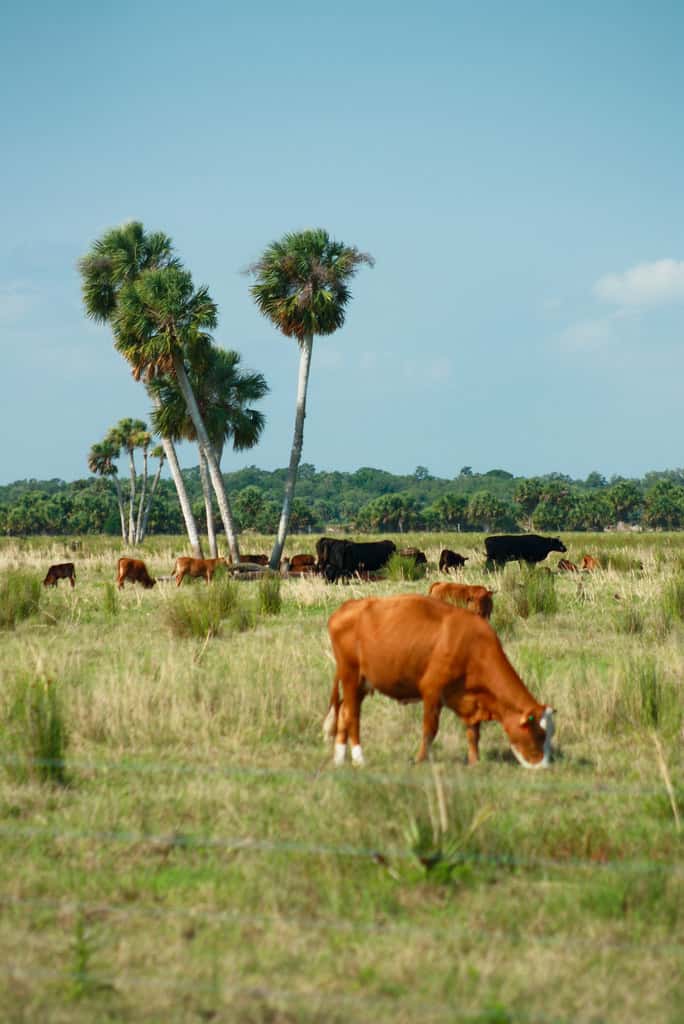
A 1,564-acre working cattle ranch in Highlands County has been permanently protected inside the Florida Wildlife Corridor through a conservation easement backed by roughly $6 million in combined state and federal funding. Conservation Florida announced the protection of Square One Ranch, a family-owned property that will continue operating as a cattle operation while the development rights are permanently retired.
The Governor and Florida Cabinet approved $4.1 million toward the project through the Florida Department of Agriculture and Consumer Services' Rural and Family Lands Protection Program. An additional $2 million came through the U.S. Air Force's Readiness and Environmental Protection Integration program, a Department of Defense mechanism that funds conservation near military installations to prevent development that would encroach on training operations.
The property sits within the Corridor and provides habitat for species including the Florida black bear, the crested caracara and the wood stork. Its location in Highlands County places it in the heart of the Everglades headwaters region, a section of the state where the Corridor narrows and where individual parcels carry outsized importance for connectivity.
What a conservation easement does
A conservation easement is a voluntary legal agreement in which a landowner sells or donates the development rights to a property while retaining ownership and continuing to work the land. The easement is recorded against the title and binds all future owners permanently. It is not a public park, and it does not create public access unless the agreement specifically provides for it.
For a working ranch, the practical effect is that the family keeps running cattle, keeps paying property taxes, and keeps managing the land, but the property can never be subdivided into residential lots or converted to commercial development. The landowner receives payment for the value of the rights being extinguished, which is typically the difference between the land's development value and its agricultural value.
This structure is the reason easements have become the dominant tool for Corridor protection. Florida cannot afford to purchase outright the millions of acres the Corridor encompasses, and many landowners have no interest in selling. Easements cost substantially less per acre than fee simple acquisition and keep land in productive private use.
The Florida Wildlife Corridor
The Florida Wildlife Corridor is a nearly 18-million-acre network of connected green space running the length of the state, from the Everglades north through the central ranchlands and the Ocala area and into the Panhandle and southern Georgia. Roughly 10 million acres already carry some form of protection. The remaining opportunity area, about 8 million acres, is the target of ongoing acquisition and easement work.
The Florida Wildlife Corridor Act, passed unanimously by the Legislature in 2021 and signed into law, formally recognized the Corridor in statute and directed state agencies to prioritize projects that advance connectivity. That legislation converted what had been an advocacy framing into an official planning objective.
The ecological logic is connectivity. Isolated conservation areas, however large, function as islands. Wide-ranging species need continuous habitat to maintain genetically viable populations, and the Florida panther is the clearest case. The panther population, concentrated in southwest Florida, requires northward expansion to be secure over the long run, and that expansion depends on unbroken habitat through exactly the central Florida ranchlands where Square One Ranch sits.
Why ranchland matters
Working cattle ranches make up a substantial share of the remaining unprotected land in the Corridor, and they are considerably better wildlife habitat than their agricultural classification suggests. Florida ranches typically retain native pasture, oak hammocks, cypress domes, wetlands and pine flatwoods, because clearing all of it was never economically necessary.
The result is a working landscape that supports black bear, caracara, sandhill crane, gopher tortoise, wading birds and, in the right locations, panther. Ranch wetlands also provide water storage and filtration that has direct downstream consequences for Lake Okeechobee and the Everglades system.
The threat to that landscape is not overgrazing. It is conversion. Florida's population growth generates continuous development pressure on the interior counties, and land that has been a ranch for four generations can become a subdivision in one transaction. Once converted, it never comes back. Easements exist to take that outcome permanently off the table.
The military funding angle
The $2 million from the Air Force's Readiness and Environmental Protection Integration program reflects a partnership model that has become significant in Florida conservation finance. The Department of Defense funds easements near installations because development close to bases restricts flight paths, generates noise complaints and constrains training.
Florida hosts a large military footprint, including MacDill Air Force Base in Tampa, Eglin and Tyndall Air Force Bases in the Panhandle, Naval Air Station Jacksonville and Mayport, Naval Air Station Pensacola, Patrick Space Force Base and Avon Park Air Force Range, which sits in Highlands and Polk counties. Avon Park's proximity is the likely basis for defense interest in this part of the state.
The arrangement produces genuine alignment. The military gets buffer land that stays undeveloped. Conservation groups get funding that would not otherwise exist. Landowners get paid. It is one of the few funding streams in Florida land conservation that has remained relatively stable through changing state budget cycles.
Funding pressures on the program
The Rural and Family Lands Protection Program, administered by the Department of Agriculture and Consumer Services, is the state's primary vehicle for agricultural easements. Demand for the program consistently exceeds available funding, and there is a substantial backlog of willing landowners waiting for their projects to be funded.
Florida Forever, the state's broader land acquisition program, has seen appropriation levels fluctuate significantly over the past two decades. Conservation advocates have argued that the pace of state funding does not match the pace at which land in the Corridor is being converted, and that the window for assembling a continuous corridor is finite rather than open-ended.
Each individual project therefore carries more weight than its acreage suggests. A 1,564-acre parcel in a narrow section of the Corridor can be the difference between connected habitat and a break in the chain. Location matters more than size in corridor conservation, which is why the Everglades headwaters region has been an acquisition priority.
The species that depend on it
The Florida black bear is among the clearest beneficiaries of corridor connectivity. Bears range widely, and populations that become isolated face genetic bottlenecks. Florida's bear population recovered substantially from mid-century lows, but that recovery is distributed across several subpopulations whose long-term viability depends on the ability to move between them.
The crested caracara, a raptor that occupies open prairie and improved pasture in central Florida, has a range closely tied to exactly the working ranchland the Corridor program targets. Unlike many species, it does not benefit from forested habitat; it needs open ground, which makes cattle operations a genuine asset rather than a compromise.
Wood storks are federally listed and depend on the seasonal drying of shallow wetlands to concentrate fish into feedable densities. That mechanism requires an intact hydrology across a large landscape, which is why wetland preservation on individual ranches contributes to a system-level function.
Water, not just wildlife
The Corridor's water function is arguably as consequential as its habitat function and receives far less attention. Highlands County sits within the Kissimmee River basin, which drains south into Lake Okeechobee and, from there, into the Everglades system.
Ranch wetlands in that basin store water during wet periods and release it slowly, moderating the volume and timing of flow reaching the lake. They also filter nutrients, particularly phosphorus, which is the primary driver of the algae problems that have affected Lake Okeechobee and the estuaries connected to it.
Converting ranchland to residential or commercial development typically means draining wetlands, adding impervious surface and increasing nutrient loading from fertilized landscaping and septic systems. The downstream cost of that conversion is borne by taxpayers funding Everglades restoration, which is why water managers treat upstream land protection as a cost-avoidance measure.
How landowners participate
The Rural and Family Lands Protection Program operates on applications from landowners, who are ranked according to criteria including location within the Corridor, ecological value, water resource benefit and cost. Landowners retain the right to decline at any point, and the program is entirely voluntary.
The financial calculation for a ranching family is specific. Selling development rights provides capital that can retire debt, fund estate planning or invest in the operation, without selling the land or ending the business. For multigenerational operations facing estate tax exposure on land whose development value far exceeds its agricultural value, easements can be the mechanism that keeps the ranch in the family.
Landowners interested in the program work through the Department of Agriculture and Consumer Services or through land trusts including Conservation Florida and the Trust for Public Land, which assist with valuation, appraisal and negotiation. The process typically takes years from application to closing.
What's next
The Governor and Cabinet, sitting as the Board of Trustees of the Internal Improvement Trust Fund, review and approve conservation easement acquisitions at regularly scheduled meetings. Additional Rural and Family Lands projects are in the pipeline, and the Cabinet agenda is where those approvals become public.
For Highlands County, the immediate effect is that a working ranch stays a working ranch. The family continues its cattle operation, the county retains agricultural land use and the associated tax base, and the habitat corridor through that section of the state remains intact.
The longer question is whether the pace of protection keeps up with the pace of development. Florida continues to add residents, and the interior counties along the Corridor are where a growing share of that growth is landing. Every easement recorded narrows the gap. Whether it narrows fast enough is a question the next decade will answer.
Spotted an issue with this article?
Have something to say about this story?
Write a letter to the editor