Annette Taddeo Enters Florida CFO Race, Setting Up a Challenge to Republican Blaise Ingoglia
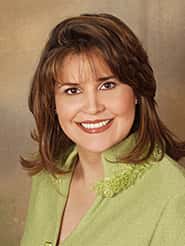
Former Democratic state senator Annette Taddeo announced this week that she is running for Florida chief financial officer, opening a high-profile statewide contest over insurance costs, government accountability, and how the state spends taxpayer money. Taddeo, a Miami Democrat with a long record in South Florida politics, framed her campaign as a check on the Republican majority that controls every lever of state government in Tallahassee.
What was announced
Taddeo declared her candidacy on Monday, entering the 2026 race for one of Florida's most powerful but least understood statewide offices. The chief financial officer manages the state's finances, oversees the Florida Department of Financial Services, and serves as the state fire marshal. The position also carries a seat on the state Cabinet, giving its holder influence over insurance regulation, state investments, and a range of administrative decisions.
The breadth of the office is part of what makes it consequential and, paradoxically, part of why it draws comparatively little attention from voters. The CFO sits at the intersection of insurance regulation, state accounting, and consumer protection, touching the finances of nearly every Florida resident even though many could not name the person who holds the job. Taddeo's challenge, and her opportunity, is to translate that technical portfolio into terms that resonate with households worried about the cost of living.
In her announcement, Taddeo described herself as a watchdog who would focus on the cost of living pressures facing Florida households, with particular emphasis on rising homeowner's insurance premiums and transparency in state contracting. She pointed to oversight of state spending as the core of the job, arguing that the office has not been used aggressively enough to scrutinize how public dollars are committed.
The CFO seat is currently held by Republican Blaise Ingoglia, who was appointed to the position last year and is now seeking election to a full term. Taddeo's entry sets up a clear partisan contrast in a state where Republicans have dominated statewide races for years, and it gives Florida Democrats a recognizable name at the top of a down-ballot contest that often escapes voter attention. The matchup, if it materializes in November, would pit an appointed incumbent seeking his own mandate against a veteran campaigner looking to break a long Democratic drought in statewide elections.
Who is Annette Taddeo
Taddeo is a familiar figure in Florida politics. She served in the Florida Senate representing a Miami-Dade district, where she built a profile on consumer and economic issues, and she has run for several offices over the years, including a previous bid for lieutenant governor as a running mate on a statewide ticket. Her background as a small-business owner has long been central to her political identity, and she has emphasized kitchen-table economics throughout her career.
That record gives her both name recognition and a defined political brand, two assets that are valuable in a contest for an office where most candidates start in relative obscurity. Her years in the Legislature and her prior statewide campaign mean she enters the race with experience navigating Florida's media markets and donor networks, even as she works to reintroduce herself to voters who may know little about the CFO's responsibilities.
As a Latina Democrat from Miami-Dade County, Taddeo brings a base in Florida's largest and most diverse county, a region that has trended toward Republicans in recent cycles but remains heavily contested. Her candidacy will test whether Democrats can regain ground in South Florida by centering affordability, insurance, and accountability rather than national culture-war themes. Miami-Dade's shift has been one of the defining stories of recent Florida elections, and a Taddeo campaign organized around pocketbook concerns will serve as a test of whether that shift can be slowed or reversed by a candidate with deep local roots.
Taddeo will first have to win her party's nomination. According to reports on the race, she will face U.S. Army veteran Earle Ford in the Democratic primary scheduled for August. The winner would advance to the general election against Ingoglia, assuming he holds the Republican nomination. A contested primary means Taddeo cannot pivot immediately to the general election, and the summer contest with Ford will shape how she introduces her message and how much of her resources she must commit before the fall campaign begins.
The lines of attack
Taddeo wasted little time drawing contrasts. She singled out the state's spending on the immigration detention facility in the Everglades known as Alligator Alcatraz, criticizing what she described as roughly a million dollars a day in costs, no-bid contracting, and a lack of accountability. She argued that scrutinizing exactly that kind of expenditure is the constitutional responsibility of the chief financial officer.
The critique reflects how Taddeo intends to run: by tying the technical duties of the CFO's office to concrete, high-visibility examples of state spending. By invoking the detention facility, which has drawn national attention and mounting cost estimates, she is attempting to make an obscure administrative office feel relevant to voters' frustrations about government waste. The strategy is to convert abstract questions of fiscal oversight into specific, memorable examples that voters can connect to their own skepticism about how their tax dollars are used.
That approach also carries political logic beyond the dollar figures. By focusing on contracting and accountability, Taddeo positions herself as a watchdog rather than a partisan combatant, a framing that can appeal to independents and even some Republicans who are wary of government spending regardless of which party directs it. Whether that message breaks through in a state where Republicans hold structural advantages will be one of the central questions of the campaign.
Insurance is likely to be the other pillar of her campaign. The CFO does not set insurance rates directly, but the office oversees the Department of Financial Services, which handles consumer complaints, regulates parts of the insurance market, and serves as a resource for policyholders. With Florida homeowners facing some of the highest premiums in the country, Taddeo is betting that voters want an aggressive consumer advocate in the role. The distinction between setting rates and advocating for consumers is a nuance she will have to communicate carefully, since voters frustrated by their premiums may expect more direct control over pricing than the office actually holds.
The Florida context
The chief financial officer is one of three independently elected Cabinet officers in Florida, alongside the attorney general and the agriculture commissioner. Together with the governor, they form the state Cabinet, which votes on clemency, land and environmental decisions, and the oversight of several state agencies. Control of these offices has been a Republican stronghold, and Democrats have struggled to mount competitive statewide campaigns in recent election cycles.
That history sets the backdrop for Taddeo's bid. Democrats have not won a Florida Cabinet race in years, and the party's statewide infrastructure has atrophied as losses accumulated. A credible, well-known candidate at the top of a down-ballot race can help rebuild that infrastructure, drawing volunteers, donors, and media attention that benefit the broader ticket even if the individual race remains an uphill climb.
The current officeholder, Ingoglia, was appointed to fill the seat and enters the race with the advantages of incumbency, including statewide name recognition built through his appointment and the fundraising network that typically accompanies a sitting Cabinet officer. Taddeo's challenge will be to nationalize the contest around affordability while introducing herself to voters outside her South Florida base. Incumbency in a statewide office confers a powerful platform, and Ingoglia can use the duties of the position itself to stay visible, an advantage challengers rarely match.
Florida's affordability squeeze gives the race real stakes. Property insurance, property taxes, and housing costs have dominated the state's political conversation, and the CFO's office touches several of those issues. The same week Taddeo launched her campaign, the Legislature was advancing a major property tax measure toward the November ballot, underscoring how central pocketbook concerns have become to Florida politics. With affordability already framing the broader election, a CFO candidate whose office intersects with insurance and spending has a natural opening to make the race feel consequential.
What it means for Floridians
For voters, the race offers a choice about how the state's financial machinery should be run and who should serve as the public's advocate on insurance and spending. The CFO's decisions ripple into everyday life through insurance consumer protection, the handling of unclaimed property, the fire marshal's safety oversight, and the management of billions of dollars in state funds.
Those responsibilities are easy to overlook precisely because they tend to function quietly in the background. Most residents encounter the office only when something goes wrong, such as a denied insurance claim or a dispute over unclaimed property, yet the cumulative reach of the position is broad. A campaign that succeeds in making those functions visible could change how voters think about an office they rarely consider.
A competitive CFO contest could also raise the profile of down-ballot statewide races that often see lower engagement than the governor's race or federal contests. If Taddeo succeeds in framing the campaign around affordability, it could draw more attention to the office and to the broader question of how Florida manages its money. Higher engagement in down-ballot races can have effects that extend beyond the CFO contest itself, shaping turnout and attention across the rest of the statewide ticket.
For now, the practical effect is the start of a long campaign season. Voters will hear competing claims about who can best protect their wallets, and the candidates will spend the summer building organizations, raising money, and sharpening their messages ahead of the August primaries.
What's next
The immediate milestone is the August primary, where Taddeo must first defeat Earle Ford to claim the Democratic nomination. From there, the general election campaign would run through November, with insurance costs, property taxes, and state spending likely to dominate the debate. The months between the primary and the general election will test whether Taddeo can consolidate Democratic support quickly and turn her attention to the larger task of competing statewide.
Expect both parties to treat the CFO race as part of a broader battle for relevance in statewide politics. For Democrats, a credible statewide candidate offers a chance to test whether an affordability-focused message can reverse recent losses. For Republicans, defending the seat is part of maintaining the unbroken control of the Cabinet that has defined Florida government for years. The contest, quiet for now, is poised to become one of the more closely watched statewide races on the 2026 ballot, a proxy for the larger question of whether Florida's political balance has settled or remains open to change.
Spotted an issue with this article?
Have something to say about this story?
Write us a letterComments
No comments yet. Be the first to weigh in.
Related Coverage

Audit of $54 Million PBSO Headquarters Renovation Finds Missing Receipts, Overcharges and $903,000 Paid Before Commissioners Approved Work
1h ago

St. Johns County commissioners revoke permits for all license plate readers on county roads in 3-2 vote
18h ago

Volusia County Council Takes Final Vote on Banning Large-Scale Data Centers as the Issue Splits Florida's Governor's Race
1d ago

Judge Disqualifies North Miami Mayor Alix Desulme From November Ballot Over Cashier's Checks, Leaving Race Unopposed
1d ago