Florida Supreme Court Upholds Death Sentences in the Jermaine Foster Case
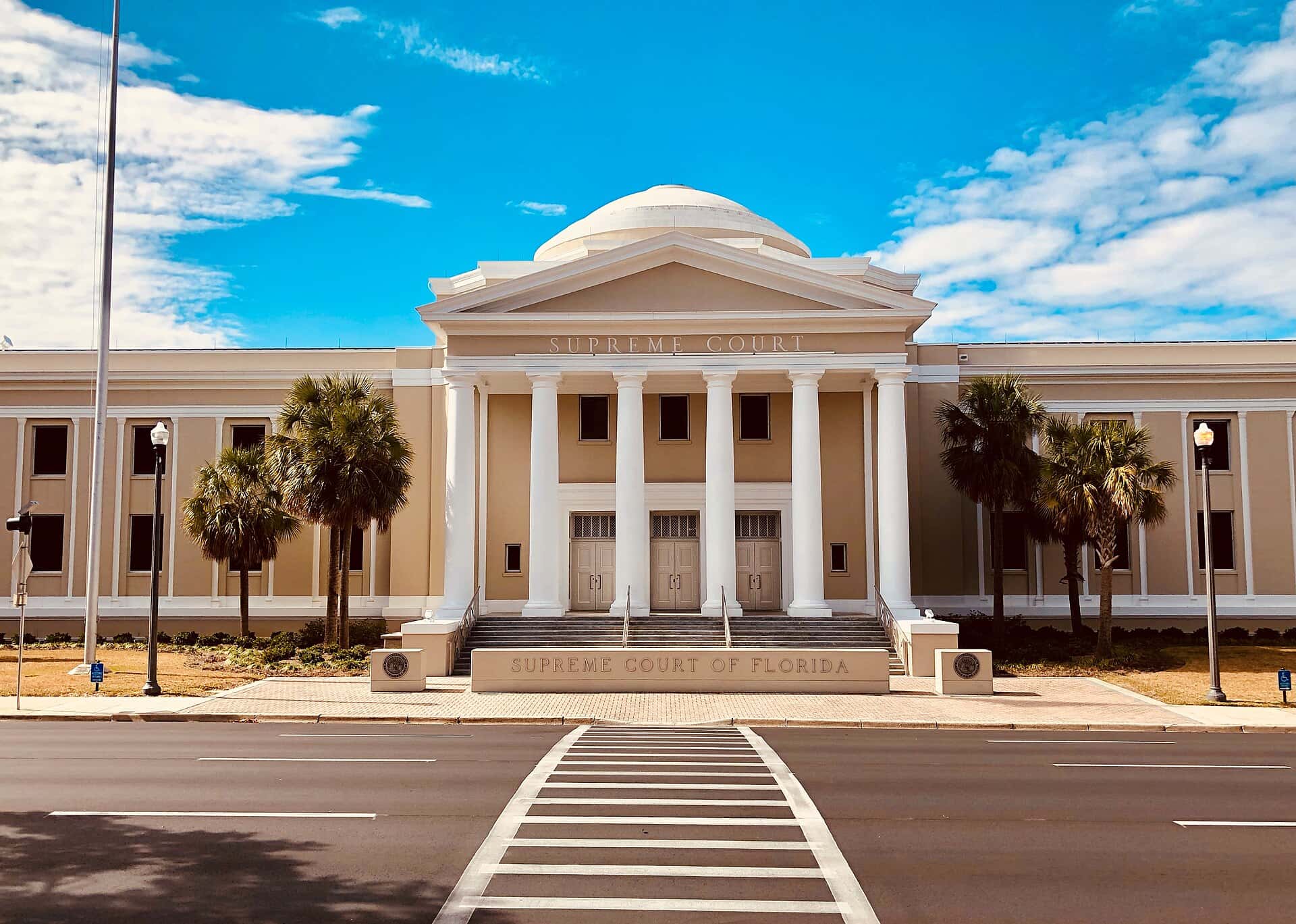
The Florida Supreme Court has upheld the death sentences of Jermaine Foster, rejecting his latest appeal in one of Polk County's longest-running capital cases. In a per curiam opinion issued on July 16, 2026, the state's highest court declined to disturb the two death sentences imposed after Foster's 1994 convictions for a pair of murders committed near Auburndale. The ruling came in case number SC2024-0944.
The decision keeps in place a punishment that has withstood decades of legal challenges. Foster was convicted more than thirty years ago of crimes established at trial and repeatedly affirmed on appeal, and the latest ruling marks another point at which the courts have declined to overturn the outcome. Unlike a pending criminal charge, this is a decided matter: the conviction stands as a matter of legal record, and the appellate ruling is a final action by the court on the questions it addressed.
The ruling also arrives at a consequential moment for Florida's death penalty, which has changed significantly in recent years and has been applied at a notable pace in 2026. As one of the latest chapters in a case that has moved through the courts for a generation, the Foster decision draws attention to how the state administers its most severe sanction and to the lengthy appellate road that capital cases travel.
The Court's Latest Ruling
The Florida Supreme Court issued its decision as a per curiam opinion, a form of ruling attributed to the court as a whole rather than to a single named author. In that opinion, dated July 16, 2026, the court declined to disturb Foster's death sentences and rejected the arguments raised in his latest appeal. The case was docketed as SC2024-0944.
A per curiam opinion in a capital appeal reflects the court's collective judgment on the claims before it. By declining to disturb the sentences, the justices left the existing punishment intact rather than ordering a new sentencing or other relief. The ruling addresses the specific challenges Foster raised in this round of litigation and resolves them against him.
The decision is the most recent action in a case that has generated appeals for decades. Capital cases in Florida commonly produce multiple rounds of review, spanning direct appeals and later challenges, and the Foster case has followed that pattern across many years. The July 2026 ruling adds to that long record without unsettling the underlying convictions or sentences.
Because this is a decided appellate ruling rather than an open accusation, the court's action can be described plainly: it upheld the death sentences and turned aside Foster's appeal. The conviction and the sentences were established through the trial and appellate process, and the latest opinion confirms that they remain in force.
The Crimes Established at Trial
The convictions trace back to events on November 28, 1993, near Auburndale in Polk County, at a location known as "The Hill." According to trial records affirmed on appeal, Foster and codefendants, armed with handguns and an automatic weapon, confronted a group of men as part of an armed-robbery scheme. What followed was a burst of deadly violence.
Foster shot and killed two of the victims, according to the facts established at trial. He also shot at another man, who survived the attack by pretending to be dead. Those facts were established through the trial process and affirmed on appeal, and they form the factual basis for the convictions that the courts have repeatedly upheld.
The crimes were prosecuted as first-degree murder along with related offenses tied to the attempted robbery and the taking of the men. The presence of multiple armed assailants and the use of an automatic weapon marked the episode as an act of severe and calculated violence, a character reflected in the charges that followed and the punishment ultimately imposed.
Out of restraint and consistent with the limited record provided, the individual victims are not named here beyond noting that two men were killed and a third survived by feigning death. The focus of the case, as it has moved through the courts, has been on the established facts of the crimes and the legality of the resulting convictions and sentences.
Conviction and Sentencing in 1994
Foster was convicted in 1994 of two counts of first-degree murder, one count of attempted first-degree murder, and four counts of kidnapping. The convictions covered the killing of the two victims, the shooting of the survivor, and the seizure of the men during the armed-robbery scheme. Together, the counts reflected the full scope of the violence attributed to Foster at trial.
Following the guilt phase, the jury recommended two death sentences for the murders. The trial court accepted that recommendation and imposed the two death sentences, setting the punishment that has remained the subject of appeals ever since. The imposition of capital punishment placed the case on the lengthy track of review that Florida death sentences undergo.
The 1994 convictions and sentences were the product of a jury's verdict and a trial court's judgment, and they have been affirmed through the appellate process over the years. That history is what distinguishes the matter from an open case: the guilt determination and the sentences are settled outcomes, not allegations awaiting proof.
Across the decades since, the case has returned to the courts through successive appeals, each testing different aspects of the convictions or sentences. The July 2026 ruling by the Florida Supreme Court is the latest such review, and like the affirmances before it, it left the core outcome from 1994 undisturbed.
Decades of Appeals
Capital cases in Florida rarely conclude quickly, and the Foster case illustrates why. Since the 1994 convictions, the matter has moved through repeated rounds of appellate litigation, a process that is standard for death-penalty cases and that can extend across many years and multiple stages of review. The latest appeal, resolved in July 2026, is one entry in that long sequence.
The layered nature of capital review reflects the gravity of the punishment at stake. Courts examine such cases with particular care, and defendants have avenues to raise challenges over time. That structure accounts for the extended timelines that often separate a conviction from the resolution of every legal question surrounding it.
In the Foster case, the courts have consistently declined to overturn the convictions or the death sentences through those successive appeals. The July 2026 per curiam opinion continues that trajectory, rejecting the arguments presented in the latest round and leaving the sentences in place. Each such ruling narrows the range of unresolved legal questions in the case.
The long history of the litigation underscores how a case rooted in events from 1993 can remain active in the courts for more than three decades. For the legal system, that longevity is a feature of how capital punishment is scrutinized; for observers, it is a measure of just how protracted the path of a death-penalty case can be.
Florida's Changing Death Penalty
The Foster ruling comes as Florida's death penalty has undergone significant change. In 2023, the state altered its law to allow a death sentence on a jury vote of at least 8 to 4, rather than requiring a unanimous jury recommendation. That change lowered the threshold at which a jury can recommend capital punishment in Florida.
The shift away from a unanimity requirement placed Florida among the states with a less demanding standard for imposing death sentences. Supporters of the change have framed it as a way to make capital punishment more attainable in serious cases, while critics have raised concerns about the implications of allowing a divided jury to send a defendant to death row. The Foster case itself dates to an earlier era, but it now sits within this altered legal landscape.
Alongside the legal change, Florida has been carrying out executions at a high pace in 2026. That heightened tempo has drawn attention to the state's administration of the death penalty and to the cases moving through the final stages of review. Rulings that leave death sentences intact, such as the one in the Foster case, take on added significance in that context.
Together, the 2023 change in the law and the elevated pace of executions form the backdrop against which the Foster decision was issued. The ruling does not by itself alter Florida's death-penalty framework, but it is part of the broader picture of how the state is applying capital punishment at a moment of active change and heightened activity.
A Polk County Case in the Statewide Spotlight
Although the Foster case originated in Polk County, its latest turn plays out on a statewide stage through the Florida Supreme Court. The crimes near Auburndale were local, but the questions surrounding the death sentences reach the state's highest court and connect to the broader debate over capital punishment in Florida. That combination gives the case both a local and a statewide dimension.
For Polk County, the case is a decades-old chapter that has periodically returned to public attention as appeals have moved through the courts. The events at "The Hill" in 1993 left a lasting mark, and each new ruling revives the memory of a violent episode that the community has carried for more than thirty years.
At the statewide level, the case feeds into the ongoing conversation about how Florida imposes and reviews death sentences. The Florida Supreme Court's role as the final state arbiter of such appeals places its rulings at the center of that conversation, and the Foster decision adds a recent example of the court declining to overturn a capital sentence.
The intersection of a specific Polk County crime and the state's overarching death-penalty system is what gives the ruling its resonance. It is at once the resolution of one long-running case and a data point in the larger story of capital punishment in Florida during a period of significant change.
What's Next
With the Florida Supreme Court declining to disturb the death sentences, the case has cleared another major hurdle in the appellate process, though capital litigation can involve further legal avenues. Defendants in Florida death-penalty cases have historically pursued additional challenges through the state and federal court systems, and whether any such avenues remain available to Foster would be a matter for the ongoing legal process to determine.
The broader death-penalty context ensures that the case will continue to be watched. With Florida operating under its revised sentencing law and carrying out executions at a high pace in 2026, rulings that uphold capital sentences carry weight beyond the individual case. The Foster decision fits within that environment as the latest affirmation of a sentence first imposed more than three decades ago.
For now, the July 16, 2026 ruling leaves Foster's two death sentences in place and rejects his latest appeal. The convictions established at trial in 1994 remain intact, affirmed once more by the state's highest court. The Florida Press will continue to report on the case and on the wider developments in Florida's death penalty as they unfold.
Spotted an issue with this article?
Have something to say about this story?
Write us a letterComments
No comments yet. Be the first to weigh in.
Related Coverage

Sarasota man indicted on federal threat charge over Instagram videos vowing to 'hunt' Jewish people
17h ago

Miami-Dade Jury Recommends Death for Alberto Sierra in 2012 Killings of His Estranged Wife and Her Two Young Daughters
19h ago

Leo Govoni special needs trust fraud trial pushed to May 2027 as families wait for missing $100 million
20h ago

Woman, 21, Charged in Fatal Dania Beach Hit-and-Run on Sheridan Street, BSO Says
1d ago