Relativity Space Commits to Major Space Coast Expansion With Thousands of Jobs by 2034
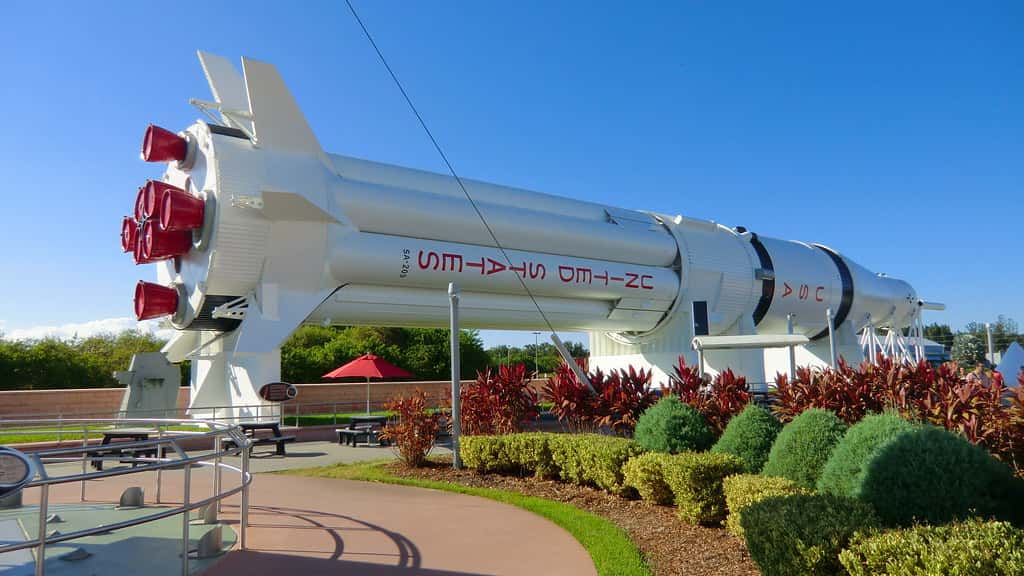
Florida officials on July 22, 2026, announced that Relativity Space will expand its operations on the state's Space Coast, a commitment the governor's office said will bring substantial capital investment and thousands of high-skill, high-wage jobs to Brevard County by 2034. Gov. Ron DeSantis unveiled the agreement at the Farnborough International Air Show in the United Kingdom, where he was leading a state trade mission focused on aerospace, defense, and advanced manufacturing.
The announcement adds another marquee name to the roster of commercial space companies deepening their footprint along Florida's Atlantic coast. Relativity Space, best known for its 3D-printed manufacturing approach and its Terran R rocket program, already maintains operations in the region that surrounds Cape Canaveral Space Force Station and NASA's Kennedy Space Center. The new commitment signals that the company intends to grow that presence over the next several years rather than hold it steady.
According to the governor's office, the expansion carries a jobs target measured in the thousands and a timeline that stretches to 2034, giving the company nearly a decade to scale up hiring and infrastructure. State officials framed the deal as evidence that Florida's aggressive courtship of the commercial space sector continues to pay off, even as other states compete for the same investment.
For Brevard County, long known as the launch heart of the American space program, the announcement represents both continuity and change. The region has been synonymous with rocketry since the earliest days of human spaceflight, but the current wave of activity is being driven less by government programs and more by private companies building, testing, and flying their own hardware.
What the Governor's Office Announced
The centerpiece of the announcement is a commitment by Relativity Space to expand its Space Coast operations with what the governor's office described as substantial capital investment and thousands of high-skill, high-wage positions phased in by 2034. State officials did not release a single fixed dollar figure for the company's total private investment, but they emphasized that the buildout would unfold over years rather than months.
The agreement also makes Relativity Space eligible for up to $134 million from the Florida Department of Transportation's Spaceport Improvement Program, a state funding mechanism designed to support infrastructure at Florida's spaceport territory. That figure represents a ceiling on potential state support tied to the project rather than a lump-sum grant, and it reflects the scale of infrastructure that modern rocket operations require.
The Spaceport Improvement Program sits within Florida's broader transportation and economic-development apparatus, which treats launch and landing infrastructure as part of the state's transportation network. By channeling money through that program, the state signals that it views spaceports as critical economic corridors on par with seaports and highways.
DeSantis delivered the news from Farnborough, one of the world's largest aerospace trade shows, where governments and companies routinely announce partnerships and orders. Choosing that venue placed Florida's pitch in front of an international audience of aerospace executives, defense contractors, and investors at a moment when the commercial launch market is expanding worldwide.
Who Relativity Space Is
Relativity Space built its reputation on an unconventional manufacturing philosophy: using large-scale 3D printing to produce major rocket components that traditional builders assemble from many separate parts. The company has argued that additive manufacturing can shorten production timelines, reduce part counts, and give engineers more flexibility to iterate on designs. That approach set it apart from established players as it worked to break into the launch business.
The company's current flagship effort is the Terran R rocket program, a larger, reusable vehicle aimed at the medium-to-heavy segment of the launch market. Reusable rockets have become the industry standard for cost-competitive access to orbit, and companies that cannot offer reusability face steep pressure on price. Terran R represents Relativity's bid to compete for commercial satellite launches, government payloads, and other missions.
Relativity's decision to concentrate growth on Florida's Space Coast reflects a practical reality of the launch business: proximity to established launch ranges, testing facilities, and a skilled aerospace workforce matters enormously. Building rockets near where they will fly reduces transportation challenges and keeps engineering and operations teams close to the pads where vehicles are integrated and launched.
The Brevard County region offers all of those advantages in one place. It combines federal launch infrastructure, a deep bench of aerospace talent, and a supply chain built up over decades. For a company scaling toward higher flight rates, locating manufacturing and operations there shortens the distance between the factory floor and the launch pad.
The Space Coast Economy
The Space Coast has undergone a striking transformation over the past 15 years. After the retirement of the Space Shuttle program, the region faced questions about its economic future and the fate of a workforce built around government spaceflight. The rise of commercial launch companies has since reshaped that outlook, drawing new employers and repurposing existing facilities.
High-wage aerospace jobs carry outsized economic weight because they tend to support additional employment in surrounding industries, from precision machining and electronics to construction, logistics, and professional services. When a company commits to thousands of positions phased in over years, the effect ripples outward into housing, retail, and local tax bases across Brevard County and neighboring communities.
State officials have made clear that they see the commercial space sector as a durable engine for that kind of growth. Florida has positioned itself as a destination for launch companies by pairing federal launch infrastructure with state incentives, workforce programs, and a regulatory posture designed to attract private investment. The Relativity Space commitment fits squarely within that strategy.
For local residents and workers, the promise of high-skill, high-wage employment offers a path into an industry that has historically anchored the regional economy. The challenge for the county will be ensuring that its workforce pipeline, housing stock, and infrastructure keep pace with the ambitions of the companies choosing to grow there.
Florida's Push to Lead Commercial Space
Florida has spent years cultivating an identity as the nation's leading commercial space state, and Space Florida, the state's aerospace economic-development agency, sits at the center of that effort. The agency works to recruit companies, finance infrastructure, and market Florida's spaceport assets to a global industry that has many potential homes to choose from.
Competition for aerospace investment is intense. Other states with launch ambitions, along with international spaceports, court the same companies with their own incentives and infrastructure. Florida's pitch leans on a combination of geography, established launch ranges, an experienced workforce, and a track record of high flight rates that few rivals can match.
Announcements like the Relativity Space commitment serve a dual purpose for the state. They deliver concrete jobs and investment, and they reinforce a broader narrative that Florida is the natural home for the commercial space industry. Each new expansion makes it easier for the state to attract the next company weighing where to build.
By pairing the announcement with state incentive eligibility, officials underscored that Florida intends to remain aggressive in the competition for aerospace jobs. The Spaceport Improvement Program eligibility signals that the state is prepared to back its rhetoric with infrastructure support tied to measurable commitments.
The Trade Mission Backdrop
The Relativity Space announcement came during a DeSantis trade mission to the United Kingdom, a trip built around promoting Florida industries and courting international partners. Trade missions give state leaders a platform to meet directly with executives, sign agreements, and raise the profile of their state's economy on a global stage.
Farnborough, the show where the announcement was made, is one of the aerospace industry's premier gatherings, alternating with the Paris Air Show as a venue where major deals and partnerships are unveiled. Making a domestic economic-development announcement from that stage allowed Florida to reach an international audience of potential investors and partners at a single event.
Trade missions also carry symbolic weight. They signal that a state views its economic future as tied to global markets and is willing to invest political capital in cultivating those ties. For Florida's aerospace ambitions, presenting the state as an internationally engaged hub reinforces its competitive positioning.
The timing placed Florida's commercial space story in front of decision-makers who shape where aerospace capital flows. Whether measured in jobs, investment, or reputation, the setting amplified an announcement that state officials clearly intended to resonate well beyond Brevard County.
What's Next
The commitment sets a 2034 horizon, which means the coming years will test how quickly Relativity Space translates its pledge into hiring, construction, and expanded operations on the Space Coast. Milestones will likely include facility buildout, staffing ramps, and progress on the Terran R program, all of which will shape how the local economy feels the impact.
Eligibility for up to $134 million through the Spaceport Improvement Program means state and company officials will need to work through the specific infrastructure investments that the funding supports. Because the figure represents a ceiling tied to the project rather than a guaranteed payout, the actual state contribution will depend on how the buildout proceeds.
For Brevard County, the near-term questions center on readiness: whether workforce-development programs, housing, and local infrastructure can absorb sustained aerospace growth. Local leaders and educators will be watching to align training pipelines with the high-skill jobs the expansion promises to create.
The broader test will be whether the Relativity Space commitment marks a one-time win or another step in a longer run of aerospace investment for Florida. State officials have staked a clear claim to leadership in commercial space, and the years leading to 2034 will show how far that claim carries as companies, workers, and communities adjust to the region's continued growth.
Spotted an issue with this article?
Have something to say about this story?
Write us a letterComments
No comments yet. Be the first to weigh in.
Related Coverage
Palm Beach County Bets About $15 Million in Public Money on Becoming a Quantum Computing Hub
18h ago

Scammers Clone Osceola Sheriff's Captain's Voice With AI in Fake Arrest Warrant Calls
1d ago

Neil Armstrong Apollo 11 Training Jacket Found in a Closet Goes Up for Auction at Titusville's American Space Museum
2d ago
Google DeepMind Nailed Hurricane Isaias' Landfall Days Out, New Analyses Show, as Older Models Missed by a Full Day
3d ago