Artemis III Hardware Stacks Up at Kennedy as the Space Coast Preps for the Moon
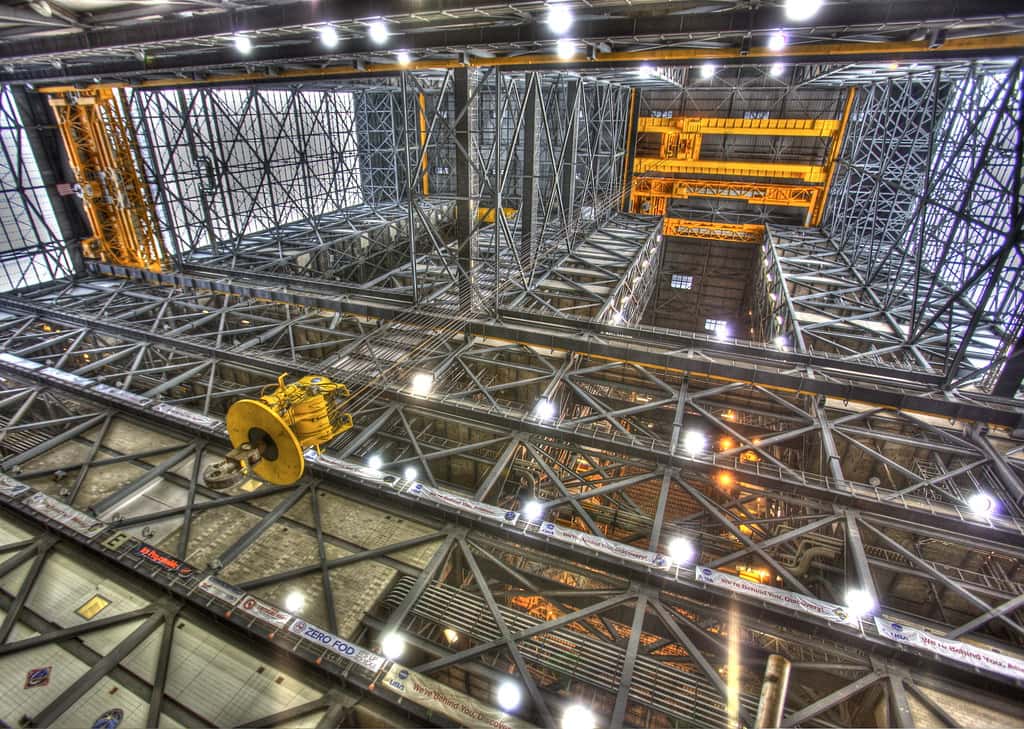
Piece by piece, the rocket that NASA hopes will help return astronauts to the Moon is coming together on Florida's Space Coast. At Kennedy Space Center, technicians have been stacking flight hardware for the Artemis III mission, the ambitious flight that anchors the agency's lunar exploration program. The steady progress keeps Florida at the heart of America's human spaceflight effort and sustains the launch cadence that has become an economic engine for the region.
The work at Kennedy is methodical and highly visible, from solid rocket booster segments being secured to the mobile launcher to the attachment of the crew capsule's heat shield. Each milestone brings the mission closer to flight and underscores the outsized role that Brevard County and its aerospace workforce play in the nation's space ambitions.
Building a Moon rocket
Inside Kennedy's Vehicle Assembly Building, crews recently secured the left-hand and right-hand aft assembly solid rocket booster segments for the Artemis III Space Launch System rocket to the mobile launcher, an early and essential step in stacking the towering vehicle. The boosters provide the immense thrust needed to lift the rocket and its crew off the pad.
Elsewhere at the center, in the Neil A. Armstrong Operations and Checkout Building, technicians attached the heat shield to the Artemis III Orion crew module. The heat shield is a critical piece of hardware, designed to protect astronauts from the searing temperatures of reentry as the capsule returns to Earth at high speed after its journey. Its installation marks meaningful progress on the spacecraft that will carry the crew.
The assembly process reflects the scale and complexity of a crewed Moon mission. Thousands of components must be integrated, tested, and verified before flight, and the work is spread across specialized facilities at Kennedy, each contributing to a vehicle that must perform flawlessly with human lives aboard.
The mission and its crew
Artemis III is a key step in NASA's plan to build a sustainable presence at the Moon. The mission is designed to launch astronauts aboard the Orion spacecraft atop the Space Launch System, testing the rendezvous and docking capabilities that future landings will require. The crew is slated to conduct rendezvous and docking tests in Earth orbit with commercially developed lunar landers.
NASA has identified astronauts assigned to the mission, who have appeared alongside the ground-systems teams preparing the hardware at Kennedy. Putting a human face on the mission connects the painstaking assembly work to its ultimate purpose: sending people farther than they have traveled in generations and laying the groundwork for a lasting return to the lunar surface.
The mission also serves as a proving ground for the broader Artemis architecture, which relies on a mix of NASA and commercial systems working together. Testing those elements in Earth orbit before committing to a landing reflects a deliberate, step-by-step approach to a program with enormous technical challenges and stakes.
Why the Space Coast matters
Kennedy Space Center and the surrounding Space Coast have been synonymous with American spaceflight for decades, and the Artemis program has reinforced that identity. The center is where the nation's most ambitious crewed missions are assembled and launched, and the concentration of facilities, expertise, and infrastructure there is difficult to replicate anywhere else.
That role translates into economic weight for Florida. The aerospace sector supports a large and specialized workforce in Brevard County, from engineers and technicians to the web of contractors and suppliers that sustain launch operations. A robust program of missions keeps that workforce employed and draws additional investment to the region.
The Space Coast has also benefited from a broader boom in launch activity, with commercial companies operating alongside NASA at an increasingly rapid pace. That combination of government and private spaceflight has made the region one of the busiest launch corridors in the world, amplifying its economic and strategic importance to the state.
A busy launch corridor
The Artemis work unfolds against a backdrop of relentless activity along the Space Coast. Commercial launch providers have been sending rockets from Cape Canaveral at a record pace, adding to the region's status as a hub of the modern space economy. The frequency of launches has become a defining feature of life in the area.
That cadence supports a diverse ecosystem that extends beyond any single program. Satellite deployments, resupply missions, and crewed flights all draw on the same regional infrastructure and talent pool, creating a self-reinforcing cluster of aerospace activity. The result is a local economy deeply intertwined with the fortunes of the space industry.
For Florida, that concentration is both an asset and a responsibility. The state has invested in supporting the aerospace sector, recognizing that its growth diversifies an economy long dependent on tourism and real estate. Keeping the Space Coast competitive is a priority that spans government, industry, and the universities that feed the workforce.
The commercial and government partnership
A defining feature of the modern Artemis program is its reliance on partnerships between NASA and private companies. The mission architecture calls for commercially developed lunar landers to work alongside NASA's own hardware, and the crew's planned rendezvous and docking tests are designed to validate that integrated approach. It is a departure from the fully government-run programs of the past.
That model concentrates activity on the Space Coast, where both NASA and commercial launch providers operate. The same region that assembles and launches NASA's Moon rocket also hosts the private companies building landers and flying their own missions, creating a dense ecosystem of aerospace activity. The proximity fosters collaboration and shared infrastructure that benefits the entire sector.
For Florida, the public-private structure amplifies the economic stakes. A program that draws on both government funding and private investment supports a broader base of companies and jobs than a purely governmental effort would, and it positions the state to benefit from the rapid growth of the commercial space industry alongside NASA's flagship missions.
The stakes of the return to the Moon
Artemis represents the United States' most ambitious human spaceflight effort in generations, aiming to return astronauts to the Moon and, ultimately, to establish a sustainable presence there as a stepping stone to Mars. The program carries scientific, strategic, and symbolic weight, and its progress is watched not only domestically but by other nations pursuing their own lunar ambitions.
The technical challenges are immense. Sending humans beyond low Earth orbit for the first time in decades requires new rockets, spacecraft, landers, and life-support systems, all of which must perform reliably with lives at stake. The step-by-step approach, testing capabilities in Earth orbit before committing to a landing, reflects the caution that such high stakes demand.
Florida sits at the center of that effort, as it has for the nation's signature space achievements since the earliest days of human spaceflight. The hardware taking shape at Kennedy is the tangible embodiment of the program's ambitions, and the Space Coast's role ensures that Florida remains bound up with the story of American exploration.
What it means for Floridians
For Space Coast residents, the Artemis milestones translate into jobs, investment, and the intangible pride of hosting the nation's return to the Moon. The program's progress helps sustain a workforce whose livelihoods depend on a steady pipeline of missions, and it reinforces the region's identity as the gateway to space.
For Floridians statewide, the aerospace sector represents a high-wage, high-skill industry that strengthens the broader economy and burnishes the state's reputation as a center of innovation. The spectacle of launches also draws visitors, tying the space industry to the tourism economy that remains a pillar of the state.
Inspiring the next generation
Beyond jobs and technology, the Artemis program carries an intangible value that Florida is well positioned to capture: inspiration. The prospect of returning astronauts to the Moon, and the visible progress toward it at Kennedy Space Center, captures the imagination of students and the public in a way few endeavors can. That inspiration feeds interest in science, technology, engineering, and mathematics education.
Florida's universities and schools stand to benefit from that enthusiasm, which can steer young people toward the fields that sustain the aerospace industry and the broader technology economy. The state has worked to build educational pipelines that connect students to careers in space and related sectors, and a high-profile program like Artemis strengthens the case for those investments.
The Space Coast's identity as a center of exploration also draws visitors, tying the space program to Florida's tourism economy. Launches and space attractions bring people to the region, and the excitement surrounding a return to the Moon amplifies that draw. In this way, the program's benefits extend well beyond the workers directly employed by it, reaching into education, tourism, and the state's sense of itself as a place where the future is built.
What is next
NASA will continue stacking and testing Artemis III hardware at Kennedy in the months ahead, working toward a targeted launch in the coming years. Each milestone will be closely watched as an indicator of the program's progress and of the timeline for humanity's return to the lunar surface.
For the Space Coast, the work is a reminder that Florida remains central to the next chapter of exploration, just as it was central to the first. From the earliest crewed flights to the space shuttle era to the commercial launches of today, the state's coastline has been the departure point for the nation's boldest journeys beyond Earth, and Artemis extends that legacy toward the Moon. The Florida Press will continue to cover the Artemis program, the region's launch activity, and their impact on the state's economy, keeping readers informed of each milestone as the hardware moves from the assembly buildings to the launch pad and, eventually, toward the Moon.
Spotted an issue with this article?
Have something to say about this story?
Write us a letterComments
No comments yet. Be the first to weigh in.
Related Coverage
Ukraine and Sudan TPS Hit Monday Deadline With No DHS Decision, Leaving Florida Families in Limbo
5h ago

Rubio Defends Trump's Waiver of New Russia Sanctions as Rick Scott Voices Doubts
8h ago

Miami's Cuban exiles sour on Trump and Rubio as Cuba action stalls nine months after Maduro's capture
9h ago

Florida's Latino voters stand apart as Hispanics nationally sour on Trump heading into the 2026 midterms
11h ago