Brightline Chapter 11 Explained: What the Railroad's Bankruptcy Means for Florida Riders and Orlando Service
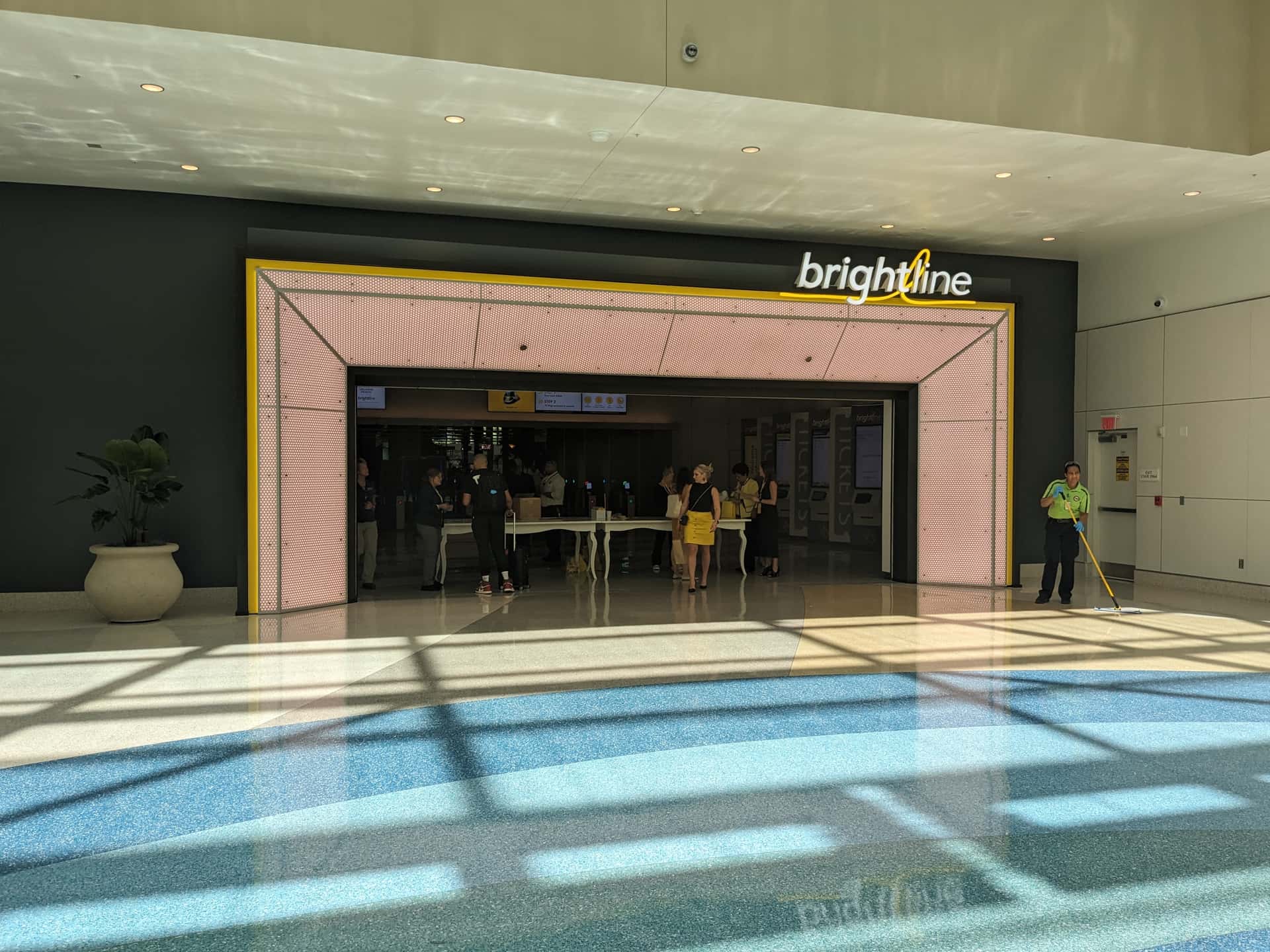
Brightline, the privately owned passenger railroad linking Miami and Orlando, is working through a Chapter 11 bankruptcy restructuring that its backers say will roughly halve the company's debt while keeping its trains running on normal schedules. Parent entities of the Fortress Investment Group-backed railroad filed for bankruptcy protection on Thursday, September 24, in federal court in New Jersey, and the case now moves into the phase where a judge must sign off on the new financing and the company's reorganization plan.
For Florida travelers, the key point from the filing is what it does not do. The operating company that runs Brightline's trains, Brightline Trains Florida, was not among the entities placed into bankruptcy, and the company has said service, staff and schedules continue as usual. Tickets remain on sale and trains continue to run between Miami, Aventura, Fort Lauderdale, Boca Raton, West Palm Beach and Orlando International Airport.
The restructuring is built around a deal with key creditors, known as a restructuring support agreement, under which supporting stakeholders committed $490 million in new long-term capital to the Florida operating company. The goal, according to the company and published reports, is to reduce Brightline Florida's debt load of about $5.5 billion to roughly $2.7 billion.
What was filed
According to court records described in news reports, 17 Brightline-related companies filed individual Chapter 11 petitions in the U.S. Bankruptcy Court for the District of New Jersey. The cases are being jointly administered under a single lead case before Judge Mark Edward Hall. Brightline Holdings LLC and certain other parent entities were among the filers, and the petition listed assets and liabilities each in the range of $1 billion to $10 billion.
Several affiliated companies are not part of the case. Published reports identified Brightline Florida Holdings LLC and AAF Operations Holdings LLC among the affiliates left outside the bankruptcy, along with the operating railroad itself. Brightline West, the separate venture developing a high-speed rail line between Southern California and Las Vegas, is also unaffected, and its backers have said its plans are not impacted by the Florida restructuring.
The filing followed weeks of reporting that a bankruptcy was coming. Bloomberg reported on September 22 that Brightline was preparing to file as soon as that week. Earlier, at the end of August, the company lined up a $350 million loan arranged in case it needed to seek bankruptcy protection, a sign that the restructuring had been in planning for some time.
Where the money comes from
The $490 million in new capital for Brightline Trains Florida is split into two pieces, according to the company's announcement as reported by several outlets: $140 million in additional senior debt and $350 million in new junior debt. That money is designed to give the railroad breathing room to operate while its balance sheet is reorganized.
The new financing and the broader plan still require approval from the bankruptcy court in New Jersey. Chapter 11 cases typically move through a series of hearings, beginning with so-called first-day motions that let a company keep paying employees and vendors and continue normal operations, followed later by hearings on financing, disclosure of the plan to creditors and, eventually, confirmation of a reorganization plan.
Municipal bond investors have been watching closely because a large share of Brightline's Florida debt was sold as tax-exempt bonds. The Bond Buyer, a publication that covers the municipal market, reported that the restructuring plan as filed leaves the principal of those municipal bonds untouched. How other classes of creditors are treated, and how much they recover, will be sorted out through the court process.
Why Brightline ran into trouble
The core problem, according to the company's filing and analysts who follow it, is that ridership and revenue did not grow fast enough to support the debt the railroad took on to build and extend its system. Brightline borrowed heavily to finance the 170-mile extension from West Palm Beach to Orlando International Airport, which opened in September 2023 and turned the railroad from a South Florida commuter-style service into an intercity line.
Reports on the bankruptcy described years of weaker-than-projected ridership that left the company unable to generate enough cash to cover operating costs and service its roughly $5.5 billion in debt. Projections used to market the bonds assumed faster growth than Brightline achieved, particularly on the Orlando segment, where the railroad competes with the car trip on Interstate 95 and Florida's Turnpike as well as with short flights. Coverage of the filing by Orlando and South Florida news outlets described a gap between the high-speed ambitions that drove the project and the lower financial returns the railroad actually produced.
Brightline has also faced public scrutiny over safety. Its trains share the Florida East Coast Railway corridor through densely populated coastal cities with dozens of at-grade road crossings, and the line has been involved in numerous fatal collisions with pedestrians and vehicles since service began. Those incidents have prompted local and federal attention to crossing safety along the route, although the bankruptcy filing centers on finances rather than safety.
What it means for Orlando
For Central Florida, Brightline's Orlando International Airport station has been one of the most visible transportation projects of the decade. The station sits inside the airport's South Terminal complex, allowing travelers to move from a plane to a train without leaving the airport property. It gave Orlando its first modern intercity passenger rail link to South Florida and a new option for tourists heading between the theme parks and the beaches and cruise ports to the south.
In the near term, nothing changes for Orlando riders. The company has said trains will continue to run on their usual schedule, and the operating company's exclusion from the bankruptcy is meant to shield day-to-day service. Travelers with tickets for upcoming trips do not need to take any action because of the filing.
The station also matters to the airport and to Central Florida's tourism economy. Orlando International is one of the busiest airports in the country, and airport and regional leaders promoted the rail connection as a way to give visitors a car-free link to South Florida's cruise ports and beaches. Keeping trains running through the restructuring preserves that connection while the company's finances are reworked.
Longer-term questions are harder to answer. Brightline had long discussed extending its line west from Orlando to Tampa, including a possible stop near Disney World, and that plan has already faced repeated delays and uncertainty over funding and right of way. A restructuring focused on cutting debt is unlikely to speed up an expensive new extension, and local officials in Orlando and Tampa Bay will be watching what the reorganized company's business plan says about growth.
What it means for South Florida
Brightline began carrying passengers in South Florida in 2018, first between West Palm Beach and Fort Lauderdale and then to downtown Miami. Stations at Aventura and Boca Raton were added later. For many South Florida riders, the train has become a practical alternative to I-95 traffic for trips between the three big coastal counties.
The railroad also sits at the center of a major real estate strategy. Its downtown Miami station complex, originally branded MiamiCentral, combined the train terminal with office, residential and retail space, and Brightline's model has tied its stations to development opportunities around them. How those real estate holdings are treated in the restructuring, and whether any are sold, will be a question for creditors and the court.
Commuter service plans that involve the corridor, including longstanding efforts to bring a regional commuter rail line to the Florida East Coast tracks through Miami-Dade and Broward, have depended partly on cooperation with Brightline and the corridor's owners. Local planners are likely to watch the bankruptcy for any effect on those negotiations, though the company has not said the filing changes its commitments.
The Florida context
Brightline has held a unique place in Florida's transportation landscape because it is privately financed and operated, in contrast to the publicly funded high-speed rail proposals that the state turned down in 2011 when then-Gov. Rick Scott rejected federal money for a Tampa-to-Orlando line. Supporters have pointed to Brightline as proof that private capital could build intercity rail in the United States. Critics have argued that its reliance on tax-exempt bond financing blurred the line between private risk and public support.
The state's role has been limited but real. Brightline's Orlando extension required agreements to use state-controlled right of way along the Beachline Expressway corridor between the airport and the coast, and state and local agencies have worked with the company on crossing upgrades and station access. The bankruptcy does not directly involve state funding, but state and local officials have an interest in keeping the service running as part of Florida's transportation network.
For Fortress Investment Group, the New York-based investment firm that has controlled Brightline and its predecessor All Aboard Florida, the restructuring is a way to keep the company operating while shedding much of the debt that weighed on it. The firm and other stakeholders who signed the restructuring support agreement are putting in fresh money as part of the deal, which signals that the backers still see value in the Florida railroad even at a much lower debt level.
What's next
The case now proceeds before Judge Mark Edward Hall in the U.S. Bankruptcy Court for the District of New Jersey. The court must approve the $490 million in new financing, and creditors will have an opportunity to weigh in on the reorganization plan before it can be confirmed. Brightline has not announced a target date for emerging from bankruptcy.
For riders, the practical guidance is unchanged: trains are running, tickets remain valid and the operating company is outside the bankruptcy. Any future changes to fares, schedules or stations would be announced by the company.
Bondholders, local governments along the corridor and transportation planners in Orlando, Tampa Bay and South Florida will be watching the court filings for details on how the restructured company plans to grow ridership and revenue. The Florida Press will continue to follow the case as it moves through the bankruptcy court.
Spotted an issue with this article?
Have something to say about this story?
Write a letter to the editorComments
No comments yet. Be the first to weigh in.
Related Coverage

Florida Regulators Approve Four More Homeowners Insurance Rate Cuts Affecting 62,000 Policies
23h ago
Brightline Parent Companies File for Chapter 11 as Florida Trains Keep Running
3d ago

Florida's Jobless Rate Falls for a Third Straight Month as State Adds 21,800 Jobs
3d ago

Florida Regulators Approve Four More Homeowners Rate Cuts as Citizens Drops Below 255,000 Policies
3d ago