Brightline Parent Companies File for Chapter 11 as Florida Trains Keep Running
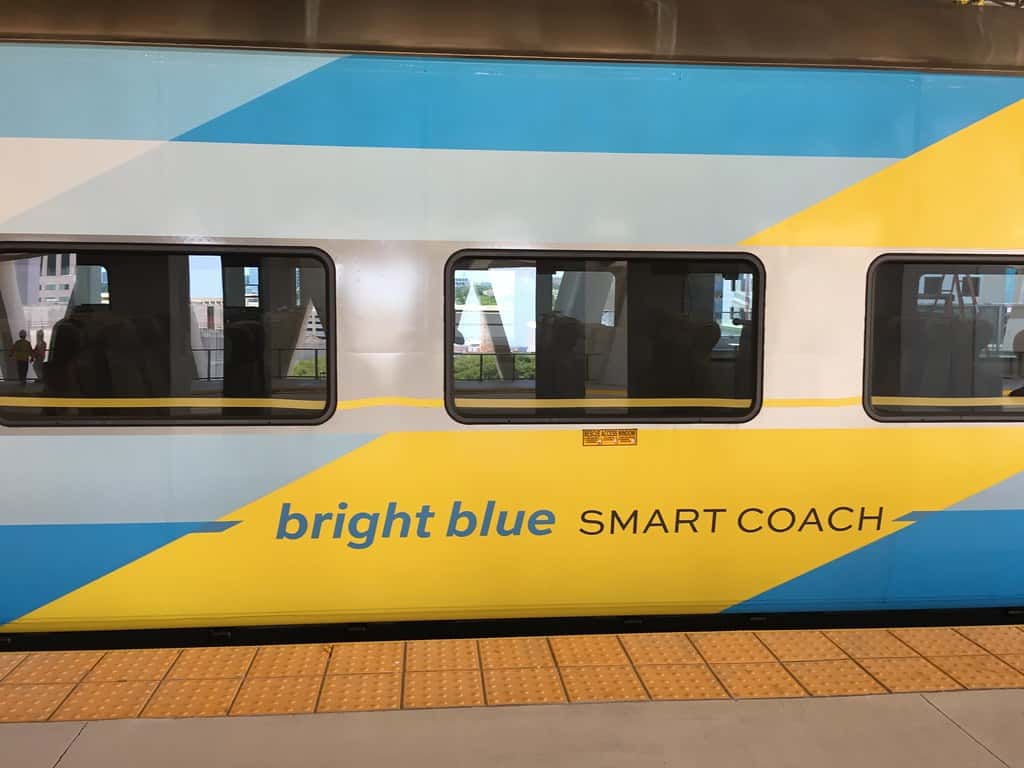
The parent companies behind Brightline, the privately financed passenger railroad that links Miami and Orlando, filed for Chapter 11 bankruptcy protection this week after years of revenue that failed to keep pace with the billions of dollars borrowed to build the line. Brightline Holdings LLC and certain affiliated parent entities filed the petition in New Jersey, listing assets and liabilities each in the range of $1 billion to $10 billion. Management framed the filing as a balance sheet restructuring rather than a shutdown.
The detail that matters most to Floridians who ride the trains is what was left out of the petition. Brightline Trains Florida LLC, the operating company that actually runs the service between MiamiCentral and Orlando International Airport, is not a debtor in the case. The railroad announced that trains are continuing to run on their published schedule, that tickets already purchased remain valid, and that stations in Miami, Aventura, Fort Lauderdale, Boca Raton, West Palm Beach, Boca Raton and Orlando remain open.
The restructuring arrives with fresh money attached. Supporting stakeholders committed to provide $490 million in new long term capital to the Florida operating company, consisting of roughly $140 million in additional senior debt and about $350 million in new junior debt. Separately, the company said it will receive about $258 million in post petition financing from bond insurer Assured Guaranty and other investors to carry it through the court process.
For Florida, the filing is a milestone in a long running experiment. Brightline was pitched more than a decade ago as proof that intercity passenger rail could be built and run in the United States without direct federal operating subsidy. The Chapter 11 case does not settle that question, but it does put the economics of the experiment in front of a bankruptcy judge for the first time.
What the filing does and does not cover
Chapter 11 is a reorganization proceeding, not a liquidation. A company that files under Chapter 11 keeps operating while it negotiates with creditors over how much debt it will repay and on what terms. Because the Florida operating entity was carved out of the petition, the trains themselves sit outside the immediate legal fight. The dispute is over the capital structure that sits above them.
That structure was assembled largely through tax exempt private activity bonds issued by Florida development finance authorities, a financing tool that let a private company borrow at rates closer to what a government issuer would pay. The bonds were sold to institutional investors on the strength of ridership and revenue projections that the railroad has not matched. Bond insurers, who guaranteed payment to some holders, are now among the parties funding the restructuring, which is a common pattern when an insured project runs into trouble.
Brightline West, the separate venture pursuing a high speed corridor between Las Vegas and Southern California, is a distinct set of entities and is not part of the Florida filing. That project has its own financing package and its own construction timeline, and company statements this week drew a clear line between the two.
Fortress Investment Group, the asset manager that has backed Brightline since its inception as All Aboard Florida, remains the controlling sponsor. Whether Fortress retains equity after the reorganization is one of the questions the case will resolve. In many Chapter 11 outcomes, existing equity is diluted heavily or wiped out entirely while creditors take ownership of the reorganized business.
How Brightline got here
Brightline opened its first segment between Miami and West Palm Beach in 2018, running on the Florida East Coast Railway corridor that Henry Flagler built in the late nineteenth century. The northern extension to Orlando International Airport opened in September 2023, adding roughly 170 miles of track and turning a South Florida commuter alternative into a genuine intercity service.
Ridership grew after the Orlando extension opened, but the growth curve did not match the projections that underpinned the debt. The Orlando run competes directly with Interstate 95 and Florida's Turnpike, and with a domestic air market that offers short hops between South Florida and Central Florida. Fare revenue, ancillary revenue from parking and food service, and real estate income around the stations all came in below the levels needed to service the borrowing comfortably.
Operating costs also proved stubborn. The railroad shares corridor with freight traffic for much of its route, runs at grade through dozens of South Florida communities, and has faced sustained scrutiny over grade crossing safety. Each of those factors carries cost, whether in insurance, in crossing upgrades, or in the slower schedules that grade crossings impose.
By the summer of 2026, reporting indicated the company was in active talks with bondholders over a restructuring, and preparations for a filing accelerated in the days before the petition was submitted. The agreement announced alongside the filing suggests the major creditor groups had largely negotiated terms in advance, which typically shortens the time a company spends in court.
What it means for riders
In the short term, very little should change for passengers. The operating company is funded, is outside the bankruptcy, and has said service continues. Riders holding tickets or loyalty balances have no immediate action to take, though travelers with trips booked far in advance may want to keep confirmation records handy, as is prudent with any company undergoing financial restructuring.
Over a longer horizon, a reorganization can change service levels. A reorganized Brightline with less debt has more room to invest in frequency, on time performance and station amenities. A reorganized Brightline under new ownership could also decide that certain schedules or station stops do not pay for themselves. Nothing in this week's filing signals either outcome, but both are within the range of what Chapter 11 can produce.
Commuters in Broward and Palm Beach counties have a particular stake. Brightline's short haul ridership between Fort Lauderdale, Boca Raton and West Palm Beach has become a real part of the region's travel mix, and local governments in those counties have built parking, transit connections and downtown development plans around the stations. A service reduction there would be felt well beyond the railroad's balance sheet.
The Tampa question
Brightline has spent years discussing an extension from Orlando to Tampa, a route that would give the state a genuine cross peninsula rail link. Preliminary corridor work and discussions with state agencies have advanced in fits and starts, but no construction has begun and no financing has closed.
A Chapter 11 filing does not formally kill that project, but it makes near term progress far less likely. Expansion capital is the first thing a restructuring company loses access to, and creditors negotiating a reduction in what they are owed on the existing line are unlikely to bless new borrowing for an untested one. Tampa Bay officials who have been planning around a future Brightline station now face an indefinite delay.
The same logic applies to proposed stops that Brightline has floated along the existing corridor, including sites in Stuart, Cocoa and other communities between the current endpoints. Those additions were always dependent on capital the company no longer obviously has.
Ripples for Florida's bond market
Because Brightline borrowed through tax exempt private activity bonds issued by Florida authorities, the case has implications beyond one railroad. Those bonds are held by mutual funds, insurers and institutional investors who buy municipal debt, and a restructuring that imposes losses will inform how the market prices the next Florida infrastructure project that seeks similar treatment.
Conduit bonds of this kind are not obligations of the state or of the issuing authorities. Taxpayers are not on the hook for Brightline's debt, and the state's own credit rating is not directly affected. What can be affected is appetite. If investors conclude that ridership projections for greenfield passenger rail are systematically optimistic, the borrowing cost for the next project rises.
Florida has a deep pipeline of infrastructure that has been pitched as privately financeable, from toll roads to port expansions to airport terminals. How the Brightline case resolves will be read closely by the bankers and public officials who put those deals together.
What the corridor is worth
Brightline operates on the Florida East Coast Railway corridor, a right of way assembled in the late nineteenth century that runs along the state's Atlantic coast through the densest stretch of South Florida development.
That corridor is an irreplaceable asset. Assembling a comparable right of way through modern South Florida would be impossible at any price, which is part of why the project attracted investment despite the operating uncertainties.
The value of the corridor is one reason creditors have an interest in keeping the railroad operating rather than liquidating. A functioning railroad on an irreplaceable right of way is worth more than the sum of its rolling stock and real estate.
Station area development was always part of the business model, with the company and affiliated entities holding real estate around the terminals. How that real estate is treated in the reorganization is one of the case's open questions.
What is next
The immediate steps are procedural. The bankruptcy court will take up first day motions covering the post petition financing, vendor payments and employee obligations. The company will then file a plan of reorganization setting out how creditors are treated, and creditor classes will vote on it. A prenegotiated case with committed financing can move through that sequence in a matter of months rather than years.
Riders should watch for any change to the published timetable, which would be the first practical signal that the restructuring is touching operations. Bondholders should watch the plan's treatment of the different debt tranches. Local officials in the station cities should watch for any filing that seeks to reject leases or development agreements, which is a standard tool in Chapter 11 and the mechanism through which a case like this touches local real estate.
For now, the trains are running, the money to keep them running has been committed, and the fight is upstairs in the capital structure. That is a meaningfully better starting position than many transportation bankruptcies begin from, and it is the reason Brightline's management spent Thursday emphasizing continuity rather than crisis.
Spotted an issue with this article?
Have something to say about this story?
Write a letter to the editor