Bukele Turns Haiti Gang Offensive Into Election Showcase as 2,500 Salvadoran Troops Fight Outside the UN Force, a War South Florida Haitians Watch Closely
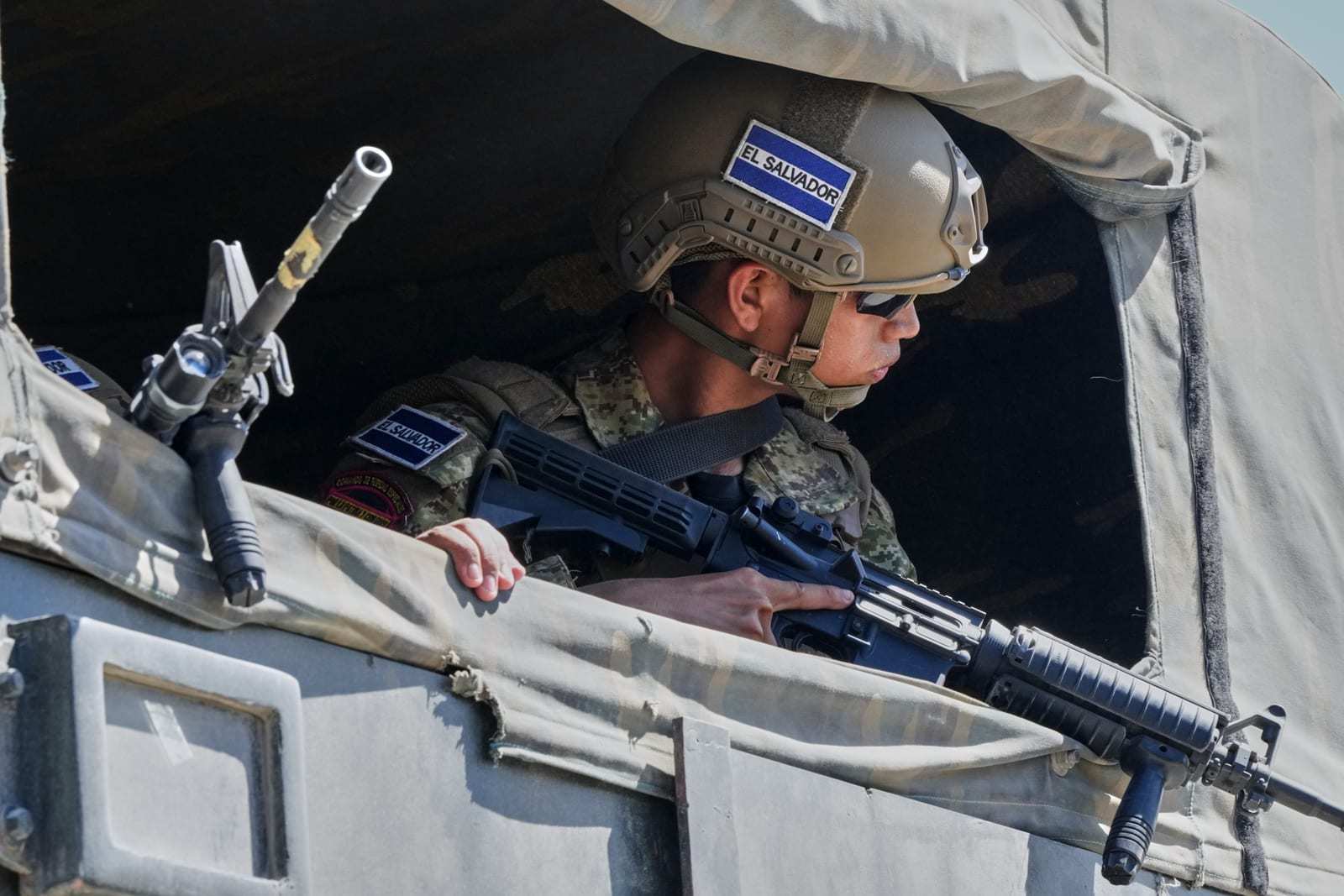
El Salvador President Nayib Bukele has turned his military offensive against Haiti's gangs into a social media campaign and, experts say, a political bet ahead of El Salvador's February presidential election, The Associated Press reported Wednesday, Nov. 11. About 2,500 Salvadoran soldiers are now operating in Haiti largely outside the United Nations-backed gang suppression force, with little public oversight, and on Tuesday Bukele celebrated an airstrike on the home of one of Haiti's most notorious gang leaders. For South Florida, home to the largest Haitian community in the United States, the offensive is unfolding in the country many residents fled and to which the federal government has resumed sending deportees since Haitians lost Temporary Protected Status this summer.
How the offensive began
The deployment started in mid-October, after four Salvadoran aviation technicians working with the U.N.-backed mission were attacked on Oct. 18 deep in gang-controlled territory and went missing, according to the AP. Since then El Salvador has sent about 2,500 troops to the Caribbean nation. A gang leader has claimed the four technicians are dead, but the AP reported on Tuesday that they remain missing.
As scrutiny of the operation grew, Bukele's message shifted from rescuing his countrymen to eradicating Haiti's gangs. Videos posted by Bukele, Salvadoran officials and pro-government influencers show helicopters bombarding a gang leader's house, civilians cheering soldiers and armored vehicles moving through Haitian streets, with captions in a mix of Haitian Creole, English and Spanish promising that Haiti will finally be free.
On Tuesday, Bukele posted a video of Salvadoran forces bombing a gang leader's house after previously asking for its coordinates on X. He wrote that his government had kept its promise and mocked the gang members who fled. The AP identified the target of the weekend operation, carried out by Haitian police and Salvadoran troops, as the home and headquarters of Wilson Joseph, known as Lanmò San Jou, leader of the 400 Mawozo gang. Joseph was not killed in the Sunday attack.
A campaign message aimed at home
Analysts interviewed by the AP said the offensive is as much about Salvadoran politics as Haitian security. Bukele is all but certain to win February's election, with approval ratings well above 90%, after the legislature controlled by his party moved the vote up from 2029 to 2027 and removed presidential term limits from the constitution. Critics say that opens the door for the populist president to stay in power indefinitely.
Salvadoran political communications strategist Roberto Dubon told the AP that the government is marketing the deployment like a superhero film and using Haiti as a testing ground to take Bukele's policies international. Luis Enrique Amaya, a Salvadoran security consultant, said the Haiti campaign offers Bukele a way to remind voters of his security record at a time when Salvadorans have grown used to life without constant gang fear and face a lagging economy. Amaya said Bukele will not allow his popularity to slip by even a single vote.
Bukele built his international profile by crushing El Salvador's two dominant gangs, suspending key constitutional rights and detaining more than 1% of the country's population. The Salvadoran investigative outlet El Faro, whose staff has since been exiled, reported that his government had also negotiated with those gangs. The crackdown has drawn accusations of mass human rights abuses.
Washington keeps its distance
The offensive has put Secretary of State Marco Rubio, a former U.S. senator from Florida and a Bukele ally, in an awkward spot. On Monday, Rubio told reporters the United States was not actively involved in the Salvadoran operation and threw his support behind the U.N.-backed gang suppression force, of which El Salvador is not a part. Rubio said there is no plan B, according to the AP.
Others have embraced Bukele. Dominican President Luis Abinader said Tuesday his government is providing El Salvador with logistics and intelligence and urged the U.N.-backed force to coordinate with the Salvadoran troops. Haitian Prime Minister Alix Didier Fils-Aimé thanked Bukele on X for his commitment against the gangs and is scheduled to visit El Salvador next week to discuss the troops' future, the AP reported.
A spokesperson for the gang suppression force told the AP the force is coordinating with Haitian authorities and international partners and that its activities follow its mandate, rules of engagement and human rights obligations. Amnesty International on Monday called on both governments to make public the agreement governing the deployment and explain the rules for use of force and how civilians can report abuses.
Why experts doubt a quick win
Haiti's gang landscape is far more complicated than El Salvador's. Roughly two dozen well-known gangs operate in Port-au-Prince, and dozens more have launched deadly attacks outside the capital. They are armed largely with weapons smuggled from the United States, better armed than Salvadoran gangs ever were, and entwined with parts of Haiti's political elite.
Diego Da Rin, Haiti analyst for the International Crisis Group, told the AP that Salvadoran pressure could push Haitian police and international forces to organize better, but could also drive rival gangs into new coalitions, as has happened before. He warned that the Salvadoran troops' eagerness for quick, symbolic victories puts civilians at serious risk of being caught in crossfire, particularly if the soldiers do not operate under strict rules like those of the U.N.-backed force.
Tiziano Breda, an analyst with Armed Conflict Location and Event Data, said the most likely outcome is a series of quick shows of force followed by a withdrawal, and warned that the cost, which Bukele's government says it is covering, could breed resentment in a country where one in four people still live in poverty. Sophie Rutenbar of the Global Initiative Against Transnational Organized Crime said Haiti is now extremely crowded with security forces, including Haitian police and soldiers, the U.N.-backed force, a private security firm founded by Erik Prince and the Salvadoran troops, and that little is known about how they coordinate. She said Haitian sentiment toward the Salvadorans is largely positive for now.
The view from South Florida
For Haitian families in Miami-Dade, Broward and Palm Beach counties, the gang war is not an abstraction. Little Haiti and North Miami are majority Haitian, and many residents have relatives in Port-au-Prince and the surrounding areas where gangs have killed, kidnapped and displaced residents for years.
The stakes have risen since the end of Haiti's Temporary Protected Status. The U.S. Supreme Court ruled in June that the administration could end the designation, and protections expired at the start of August, leaving about 150,000 Haitians in South Florida, out of roughly 350,000 nationwide, without TPS, WLRN reported. The administration has said it plans at least two deportation flights a week to Haiti, each carrying about 125 people. Haitians in South Florida have described pulling back from work, church and driving out of fear of detention, according to WLRN.
That makes the outcome of Bukele's offensive a practical question for families here: whether the country deportees are returning to becomes safer, or whether the fighting spreads. Experts quoted by the AP warned that either is possible, and that civilians have already been killed in attacks aimed at gangs.
What's next
Fils-Aimé's visit to El Salvador next week is expected to shape how long the Salvadoran troops stay and whether they move closer to the U.N.-backed force. The fate of the four missing technicians remains unresolved, and El Salvador's presidential election is set for February. In South Florida, the question for Haitian families is whether any gains on the ground hold as deportation flights to Haiti continue.
Spotted an issue with this article?
Have something to say about this story?
Write us a letterComments
No comments yet. Be the first to weigh in.
Related Coverage
Ashley Moody Says Florida Has Now Recovered More Than $2.5 Billion in Delayed FEMA Reimbursements for 500-Plus Disaster Projects
1h ago
Trump Says Immigration Enforcement 'Might Be Too Tough' in First Interview Since Midterms, Putting Florida's Crackdown in the Spotlight
18h ago

IRS Sets 2027 Tax Brackets: Standard Deduction Rises to $33,200 for Couples, Child Tax Credit to $2,300. Here's What It Means for Floridians
21h ago
ICE Operation at Palatka Primary School Construction Site Leaves Workers Detained and a Putnam County Community Shaken
22h ago