CENTCOM Says U.S. Aircraft Disabled Ship Running Iran Blockade on Thanksgiving, the Sixth Since July
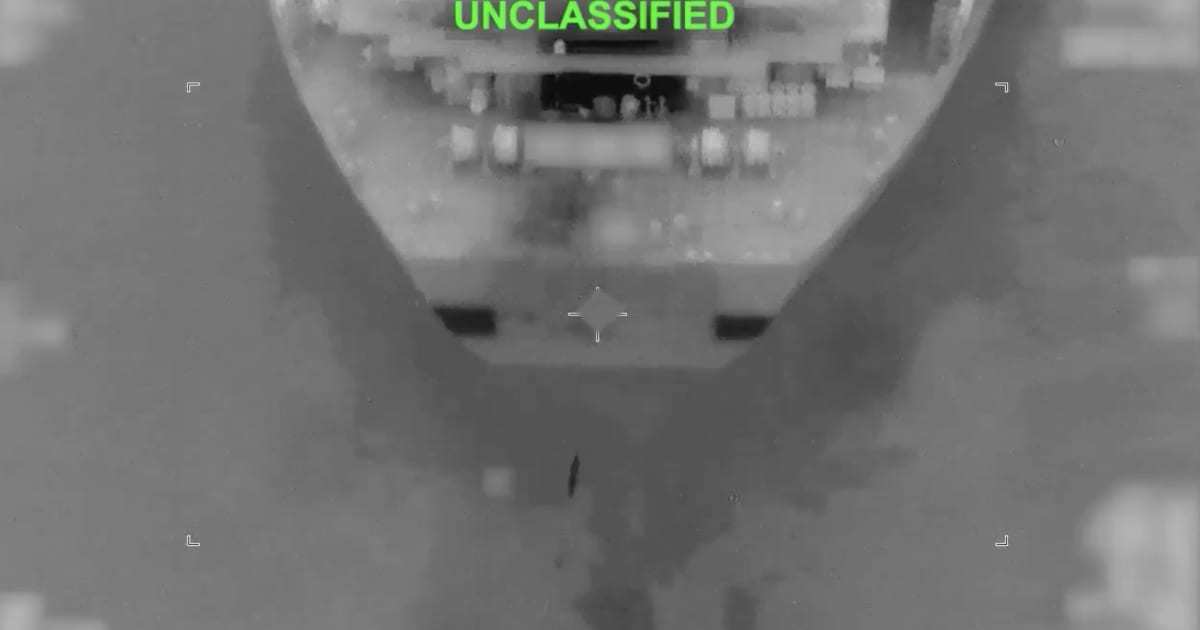
U.S. Central Command, the headquarters at Tampa's MacDill Air Force Base that directs American military operations across the Middle East, says one of its aircraft disabled a merchant ship trying to run the U.S. blockade of Iranian ports on Thursday, Nov. 26, 2026, as most Floridians sat down to Thanksgiving dinner. According to an Associated Press report published by WPTV, CENTCOM said the Palau-flagged M/V Pacific Archer left the Iranian port of Bandar Abbas and tried to push through the blockade in the Gulf of Oman despite multiple warnings, and a U.S. aircraft fired precision munitions at the ship's stern.
The strike knocked out the vessel's propulsion. CENTCOM said the civilian crew was unharmed. The military disclosed the incident on Friday, Nov. 27, adding another entry to a growing list of ships stopped by force since the blockade began in the spring.
What CENTCOM says happened
CENTCOM's account, as relayed by the AP, follows a pattern the command has described several times this year. A ship bound into or out of an Iranian port is warned by U.S. forces, the crew ignores the warnings, and an aircraft fires into the stern, engine room or smokestack to stop the vessel without sinking it. In the Pacific Archer's case, the command said the ship had already left Bandar Abbas, Iran's main commercial port on the Strait of Hormuz, and was heading out through the Gulf of Oman when it was hit.
The AP tally puts the Pacific Archer as at least the 15th disclosed vessel disabled by the U.S. military since the blockade began in the spring, and the sixth since the blockade resumed this summer. The United States says it has redirected 158 merchant ships since the blockade was reimposed in July. The report did not say what the Pacific Archer was carrying, who owns it, or where the disabled ship was taken after the strike, and CENTCOM's own release on the incident could not be independently reviewed for this story.
Not every enforcement action has ended without casualties. In June, a strike on a Guinea-Bissau-flagged tanker that was trying to evade the blockade killed three people, according to the AP.
How the blockade got here
The first U.S. blockade of Iranian ports ran from April 13 to June 18, NPR reported, and was lifted during peace talks with Tehran. It came back at 4 p.m. Eastern time on July 14 after Iranian attacks on commercial ships in the Strait of Hormuz and the unraveling of an interim ceasefire deal whose 60-day negotiating window had stalled. The Pentagon's notice, as described by USNI News, warned that ships that refuse to comply could face disabling or destructive fire, while neutral traffic bound to or from non-Iranian destinations would not be blocked.
Enforcement has picked up through the fall. On Oct. 11, CENTCOM said a U.S. fighter jet hit a Panama-flagged cargo ship in the Gulf of Oman, fully disabling its propulsion without harming the crew, Al Jazeera reported. At that point the command counted four commercial vessels disabled since the blockade resumed and 135 ships turned around. In roughly six weeks since then, the redirected count has climbed to 158 and the number of disabled ships has risen to six.
Where things stand with Iran
The Pacific Archer strike came during a tense week in the Gulf. According to CBS News' running coverage of the conflict, President Donald Trump said on Nov. 24 that no Iranian ship had gotten through the blockade since it began, apart from a brief summer pause. Iran's army chief, Maj. Gen. Amir Hatami, said the same day that the Strait of Hormuz would stay closed to unauthorized traffic until Tehran's seven conditions are met, and Iran's navy said several tankers struck mines in the strait on Nov. 23 and Nov. 24.
Diplomacy has not broken the standoff. Qatari mediators have been pressing to restart talks, Euronews reported, and Secretary of State Marco Rubio met Qatar's prime minister in Washington on Nov. 23, according to CBS. Iranian Foreign Minister Abbas Araghchi has said discussing a reopening of the strait is pointless while Iran's demands go unmet, a list that includes ending the U.S. blockade, unfreezing assets and lifting oil sanctions.
CENTCOM, meanwhile, said Gulf partners moved more than 108 million barrels of oil through the strait under U.S. protection in the week before Nov. 24, the largest weekly volume to date, CBS reported.
The Tampa connection
For Tampa Bay, the blockade is not a distant story. MacDill is home to two combatant commands, CENTCOM and U.S. Special Operations Command, and experts told FOX 13 in March that many operational decisions in the Iran conflict are made by the command's leadership and staff in Tampa. The base's 6th Air Refueling Wing flies KC-135 tankers that have refueled aircraft flying missions over Iran, according to the same report.
The war has reached the base's front gate before. In March, MacDill raised its force protection level to Charlie, the second-highest level, after a suspicious package was found near the Dale Mabry gate, and a separate threat briefly put the base under a shelter-in-place order, FOX 13 reported. Defense Secretary Pete Hegseth traveled to MacDill on March 5 for a war update from CENTCOM leaders, WUSF reported. Every disabled ship and redirected tanker in the Gulf of Oman is tracked and announced from the same headquarters on the shore of Hillsborough Bay.
What it means at the pump
The blockade and the fight over Hormuz have been a major driver of fuel costs this year, but the recent trend has favored Florida drivers. Brent crude traded below $90 a barrel on Nov. 24, its lowest level since late August, after peaking near $120 over the summer, CBS reported. AAA's state averages put Florida regular gasoline at about $3.34 a gallon on Nov. 28, down from about $4 a month earlier, and the national average at about $3.53. Mine strikes and new attacks in the strait remain the main risk to that relief.
What's next
CENTCOM has said the blockade remains in full effect, and nothing in the Pacific Archer announcement suggests a change in how it will be enforced. The next markers to watch are whether the Qatari-brokered contacts produce a new round of U.S.-Iran talks, whether Iran follows through on threats to break the blockade, and whether more ships leaving Bandar Abbas test the line. Each of those decisions will run through the command in Tampa, and Tampa Bay families with relatives deployed in the region will be watching CENTCOM's announcements as closely as anyone.
Sources
Spotted an issue with this article?
Have something to say about this story?
Write us a letterComments
No comments yet. Be the first to weigh in.
Related Coverage

College Board Cyberattack Shuts Down CSS Profile as Florida Seniors Head Into Financial Aid Deadlines
4m ago
VA abortion restrictions likely to last months longer as veterans' lawsuit slows, leaving Florida veterans few options
18h ago

Supreme Court hears AR-15 ban challenge Wednesday, with Florida and Parkland families on opposite sides
19h ago
Second federal judge blocks Trump's new birthright citizenship order, a ruling watched closely in immigrant-heavy Florida
20h ago