DACA Renewals Now Take Months Instead of Weeks, Leaving Florida Dreamers at Risk of Losing Jobs, Licenses and Deportation Protection
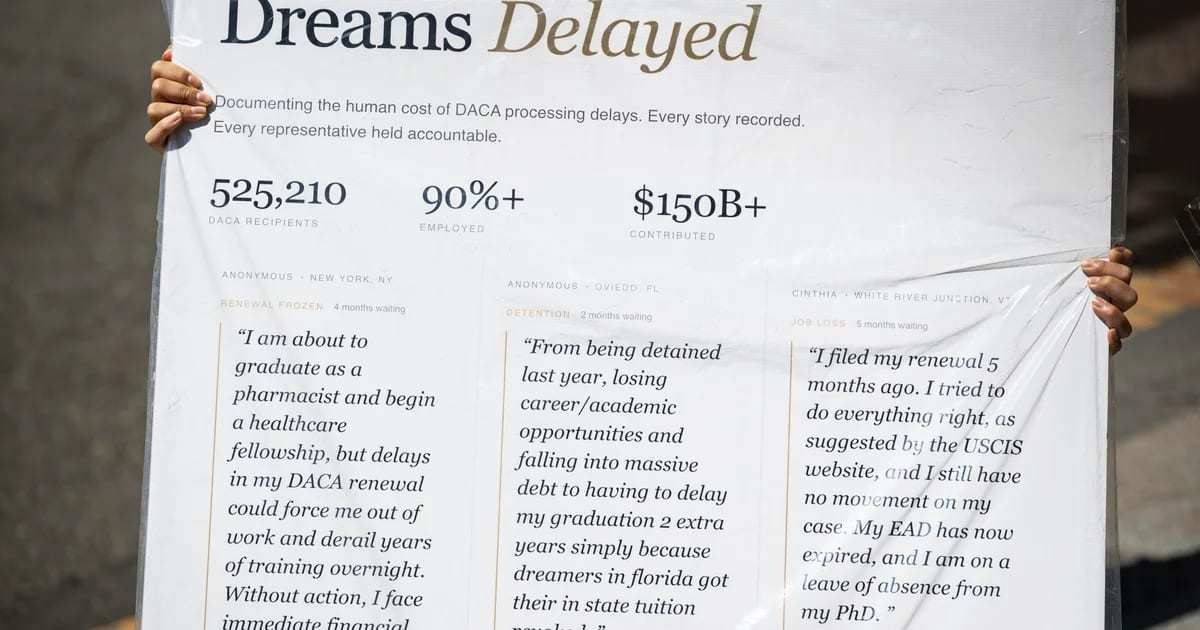
Renewing protection under the Deferred Action for Childhood Arrivals program, a routine paperwork step that once took a couple of weeks, now takes about seven months on average by U.S. Citizenship and Immigration Services' own estimates, and Dreamers in Florida whose renewals stall past their expiration dates are losing work permits, driver's licenses and the shield against deportation that DACA provides. WLRN and WUSF reported on Tuesday, Nov. 24, on the toll of the slowdown, which comes as the administration steps up arrests of DACA recipients and the program's future remains tied up in federal court.
Florida has one of the largest DACA populations in the country. USCIS counted 19,510 active recipients living in the state at the end of 2025, fourth among states, according to the National Immigration Forum's tabulation of agency data. Nationwide, the count fell to 436,350 as of June 30, 2026, down by nearly 100,000 since January 2025.
From weeks to months
USCIS advises recipients to file renewals 120 to 150 days before their current grant expires and says on its DACA page that it adjudicates most renewals within 120 days. That guidance assumed waits far shorter than today's. The agency reported a median processing time of about one month for renewals in fiscal 2023, and WUSF reported that waits in earlier years ran roughly two weeks to two months. Now, USCIS' processing estimates put the average at about seven months, longer than the entire recommended filing window.
In an email to WUSF, USCIS said it has placed "renewed emphasis on robust alien screening and vetting" and is eliminating policies of the former administration that it said prioritized applicants' convenience ahead of Americans' safety and security.
Each renewal costs between $500 and $600, WUSF reported. USCIS continues to accept new, first-time DACA requests but is not processing them under the court orders described below, so renewals are the only way recipients can keep their status.
What a lapse means in Florida
When a DACA grant expires before renewal, the recipient loses the employment authorization that comes with it, and with it the ability to work legally. A lapse can also cost a recipient a driver's license, Real ID eligibility and health insurance, WUSF reported. Most significantly, it ends deferred action, the formal protection against deportation.
WUSF profiled a recipient identified only as Angel, who was brought from Mexico at age 6, lives in south Hillsborough County and earned a computer engineering degree from the University of Florida. His renewal has been pending for six months and his status was set to expire on Thanksgiving Day. He told the station he is applying for jobs but is unsure he could accept an offer, and worries about losing the ability to drive himself and his parents. "It's tiring that there is no solution for us," he said.
The risk is sharper in Florida because of how broadly state and local police now work with immigration authorities. Every Florida county has a 287(g) agreement with ICE for its jail, and hundreds of agencies use the task force model that lets officers act on immigration status during routine stops. WUSF has reported that encounters with state and local law enforcement on Florida roads have led to arrests and transfers to ICE custody, the scenario Angel described fearing.
Florida has also narrowed other paths for Dreamers. A sweeping 2025 state immigration law ended the waiver that allowed students with DACA, along with other undocumented students who attended a Florida high school for three years, to pay in-state tuition, NPR reported, with more than 6,500 students losing waivers starting July 1, 2025. DACA does not make recipients eligible for federal student aid, which is why Angel relied on private scholarships to attend community college before transferring to UF.
Arrests of DACA recipients
In a February letter to the office of Sen. Dick Durbin, the Department of Homeland Security said it had arrested 261 DACA recipients and deported 86. Former Homeland Security Secretary Kristi Noem said 241 had criminal histories but did not specify the charges. WUSF noted that independent analyses have found ICE's criminal classifications include minor traffic violations and misdemeanors, and that people with active DACA status and valid work authorization have also been detained.
Advocates go to court for answers
Immigrant advocates have sued the federal government to learn why renewals are stalling. The Justice Action Center filed the case in federal court in Northern California on behalf of two California organizations that serve DACA recipients, after USCIS and ICE did not respond to a Freedom of Information Act request the groups sent in May 2026 seeking records on the delays. DHS has responded to criticism by noting that DACA does not confer legal status. No ruling in that case has been reported.
The larger legal cloud
The delays play out against long-running litigation over whether DACA is lawful at all. A federal judge in the Southern District of Texas ruled in 2023 that the program's 2022 final rule was unlawful. On Jan. 17, 2025, the Fifth Circuit Court of Appeals found the work authorization portion of the program unlawful while allowing deferred action from deportation to continue, limited the effect of its ruling to Texas and sent the case back to U.S. District Judge Andrew Hanen.
As of the most recent public reporting this fall, Hanen had not issued the modified order implementing that ruling. On Sept. 29, the federal government filed a proposal for how the Texas-only limits should work, tying work authorization to a recipient's address of record. For now, the ruling as written does not restrict renewals outside Texas, so Florida recipients can still renew both deferred action and work permits, if their applications are decided in time.
What's next
For Florida's roughly 19,500 recipients, the practical advice from USCIS has not changed: file within the 120 to 150 day window before expiration, since filing earlier does not speed a decision. But with average waits now longer than that window, many recipients will face a gap regardless. The pending records lawsuit, Hanen's eventual order in Texas and whether the new Congress takes up legislation for Dreamers will determine whether the slowdown is temporary or the new norm.
Spotted an issue with this article?
Have something to say about this story?
Write us a letterComments
No comments yet. Be the first to weigh in.
Related Coverage

Trump Pledges to Work With Democrats on a 10% Credit Card Rate Cap. Here's What It Could Mean for Florida Households
18h ago

Former Melbourne Man Jonathan Rinderknecht Found Guilty of Starting Deadly Palisades Fire at Retrial
21h ago

FBI Investigating Apparent Hack of National Crime Database Florida Police Rely On Every Day
21h ago
Democrats Clinch Biggest House Majority Since 1992 as Florida's Delegation Holds at 20-8 and Gilbert, Dandiya Head to Washington
22h ago