Dengue Advisories Spread Across Florida Counties as Health Officials Warn
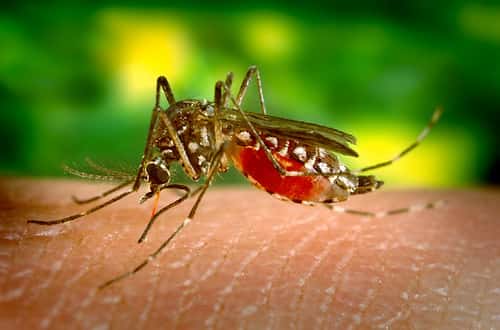
Florida health officials have issued mosquito-borne illness advisories in multiple counties after confirming cases of locally acquired dengue, and the state surgeon general has urged residents to take precautions as outdoor activity picks up in early fall. The advisories cover Hillsborough, Orange, and Pinellas counties, three of the state's most populous.
State Surgeon General Dr. Joseph A. Ladapo joined local officials in Hillsborough County on September 4 to press the message. According to the Florida Department of Health, Hillsborough is experiencing an unusual increase in locally acquired dengue infections, which means people are being infected by mosquitoes in Florida rather than contracting the illness while traveling abroad.
The Florida Department of Health in Orange County issued an advisory citing increased mosquito-borne disease activity and confirmed a locally acquired dengue case in a September 2 update. The Pinellas County health department issued its own advisory following two confirmed locally acquired cases.
What locally acquired means
The distinction between a travel-associated case and a locally acquired case is the single most important thing in any dengue advisory. Florida records travel-associated dengue cases every year, because the state has enormous travel volume to and from regions where the virus circulates widely. A traveler who is infected abroad and diagnosed after returning home poses no direct risk to neighbors.
A locally acquired case is different. It means the virus completed a transmission cycle inside Florida: an infected person was bitten by a local mosquito, that mosquito became infectious, and it then bit someone else. Once that cycle is established in a neighborhood, additional cases can follow.
This is why county health departments respond to a small number of local cases with a formal advisory. The number of confirmed cases is not itself alarming. What the advisory signals is that conditions exist for the virus to spread further if mosquito populations are not reduced.
The mosquito that matters
Dengue is transmitted primarily by Aedes aegypti, a mosquito species that is well established across much of Florida and that behaves very differently from the species most people picture when they think of mosquito nuisance.
Aedes aegypti is a container breeder. It does not need a swamp or a retention pond. It reproduces in small volumes of standing water close to homes: plant saucers, bird baths, clogged gutters, tarps, buckets, discarded tires, and the trays under potted plants. A bottle cap of water is enough for some container species.
It also bites during the day rather than at dawn and dusk, and it prefers to feed on humans. That combination makes it an unusually efficient vector for urban disease transmission and means that neighborhood-scale source reduction, emptying containers around a house, is genuinely effective in a way that broader spraying alone is not.
What dengue does
Most dengue infections produce either no symptoms or a self-limiting illness. When symptoms appear, they typically include high fever, severe headache, pain behind the eyes, joint and muscle pain, nausea, and a rash. The joint pain is severe enough that the illness has long carried the informal name breakbone fever.
A minority of cases progress to severe dengue, which involves plasma leakage, bleeding, and organ impairment, and which requires medical management. Warning signs that health authorities emphasize include severe abdominal pain, persistent vomiting, bleeding from the gums or nose, and lethargy or restlessness, particularly as fever subsides.
People who have previously been infected with one dengue serotype face elevated risk of severe illness if they are later infected with a different serotype. That is a meaningful consideration in Florida, where a substantial share of residents have connections to regions where dengue is endemic and may have been infected years earlier.
What residents can do
Health departments issuing these advisories consistently recommend the same set of steps, and the recommendations are effective precisely because Aedes aegypti breeds so close to where people live.
- Drain standing water weekly from anything that holds it: plant saucers, buckets, toys, tarps, wheelbarrows, and clogged gutters.
- Discard or store items that collect rainwater, including old tires and unused containers.
- Cover skin with long sleeves and long pants when practical, particularly during daytime hours.
- Use repellent containing an EPA-registered active ingredient, following the label directions.
- Repair torn screens on windows and doors, and keep doors closed.
The weekly cadence on draining matters. Mosquito development from egg to adult takes roughly a week under Florida conditions, so emptying containers every seven days interrupts the cycle before adults emerge.
Beach and water advisories too
Mosquito-borne illness is not the only health advisory active in Florida this month. County health departments have also issued water quality advisories at several coastal locations after testing found elevated levels of Enterococcus bacteria, which is used as an indicator of fecal contamination in recreational water.
The Florida Department of Health in Miami-Dade County issued an advisory for Crandon Park North in Key Biscayne in late August after elevated readings. Testing at Bahia Beach also produced results that did not meet the recreational water quality criteria the department uses.
These advisories are typically short-lived and are lifted once follow-up sampling meets standards. They generally follow heavy rainfall, which flushes runoff into coastal waters, and they are more common during Florida's wet season. Residents can check current advisory status through their county health department before swimming.
Why fall is a risk period
Florida's mosquito season does not follow the calendar the way it does in northern states. Warm temperatures and the wet season combine to sustain mosquito populations well past summer, and September often sees peak abundance rather than decline.
Rainfall patterns matter more than temperature at this point in the year. A period of heavy rain fills containers across a neighborhood simultaneously, producing a synchronized emergence of adult mosquitoes roughly a week later. That is why advisories frequently follow wet stretches.
Mosquito control districts across Florida conduct surveillance trapping and treat areas where counts rise, and they intensify that work around confirmed case locations. Their effectiveness depends heavily on residents handling the container breeding sites on private property, which control districts cannot reach.
Florida's history with the disease
Dengue is not new to Florida. The state experienced significant outbreaks in the early twentieth century, when the virus circulated widely across the Gulf coast, and transmission was common enough that it shaped public health practice in the region.
Mosquito control programs, screened windows, air conditioning, and the general improvement of housing stock effectively ended sustained local transmission for several decades. Florida became a state that recorded imported cases rather than local ones.
That changed beginning around 2009, when locally acquired cases reappeared in Key West after decades without them. Since then, Florida has recorded clusters of local transmission in multiple counties in most years, with Monroe, Miami-Dade, Broward, and Hillsborough among those affected at various points.
The reasons for the return are debated but generally involve some combination of increased global travel volume, expanded distribution of the vector mosquito, and warming temperatures that lengthen the season during which transmission is possible. The practical implication is that Florida should be understood as a place where dengue transmission occurs, not as a place where it might.
How mosquito control districts operate
Florida's mosquito control system is unusual in American public health. Many counties operate independent mosquito control districts with their own taxing authority, elected or appointed boards, and dedicated professional staff.
Those districts conduct surveillance trapping to measure mosquito populations by species, test collected mosquitoes for viruses, and apply control measures ranging from larvicide in standing water to truck-mounted and aerial adulticide applications.
The species distinction drives everything. Controlling the nuisance mosquitoes that breed in marshes requires different tactics than controlling Aedes aegypti in residential containers. Broad aerial application, effective against marsh species, has limited effect on a mosquito that spends its life in a suburban backyard and rests inside sheltered spaces.
That is why the response to a dengue cluster looks different from routine mosquito control. Districts conduct door-to-door inspections in the affected area, treat containers directly, and apply targeted spraying around the specific addresses where transmission occurred. Residents who decline access to their property create gaps in that response.
The other viruses in the same mosquito
Aedes aegypti transmits more than dengue, and Florida's advisories are written to cover mosquito-borne illness broadly for that reason.
Chikungunya produces fever and severe joint pain that can persist for months after the acute illness resolves. Zika, which drew intense attention during a South Florida outbreak in 2016, is generally mild in adults but carries serious risk of birth defects when contracted during pregnancy. Yellow fever is transmitted by the same species, though it does not currently circulate in Florida.
The practical implication is that the same prevention measures address all of them. Draining containers, using repellent, and maintaining screens reduces exposure to every virus the species carries.
Florida also records cases of illnesses carried by different mosquito species, including West Nile virus and eastern equine encephalitis, which are transmitted by mosquitoes that breed in different habitats and that bite at different times of day. County advisories generally specify which illness has been detected, and the specificity matters because it changes both the geography of risk and the hours of highest exposure.
What's next
County health departments will continue surveillance and will update or lift advisories based on new case counts. Advisories generally remain in effect until officials are satisfied that local transmission has stopped, which typically requires several weeks without new locally acquired cases.
Residents who develop fever along with severe headache, eye pain, joint pain, or rash, particularly in an advisory county, should contact a health care provider and mention the possibility of dengue so testing can be considered. Dengue is diagnosed with laboratory testing, not on symptoms alone, and early identification helps public health officials map where transmission is occurring.
The broader point health officials have made repeatedly is that this is a shared problem with a distributed solution. Mosquito control districts can treat public land and respond to complaints. What happens in a few hundred backyards on a given block determines whether a neighborhood has an Aedes aegypti population large enough to sustain transmission.
Spotted an issue with this article?
Have something to say about this story?
Write us a letterComments
No comments yet. Be the first to weigh in.
Related Coverage

Florida ABA Therapy Providers Say Molina Has Not Paid Them Since Taking Over Children's Medical Services Plan
50m ago

Moffitt Opens 250,000-Square-Foot Cancer Research Center at Speros Campus in Pasco County
20h ago

DeSantis Says Florida Fentanyl Deaths Fell Nearly 60% Since 2023, Crediting State's Trafficking Crackdown
3d ago

Miami Archbishop Thomas Wenski Accuses AG James Uthmeier of 'Classic Bullying' Over Catholic School Vaccine Rules
3d ago