DeSantis Pushes Back on Expected Fed Rate Hike as Florida Mortgage Rates Top 7%
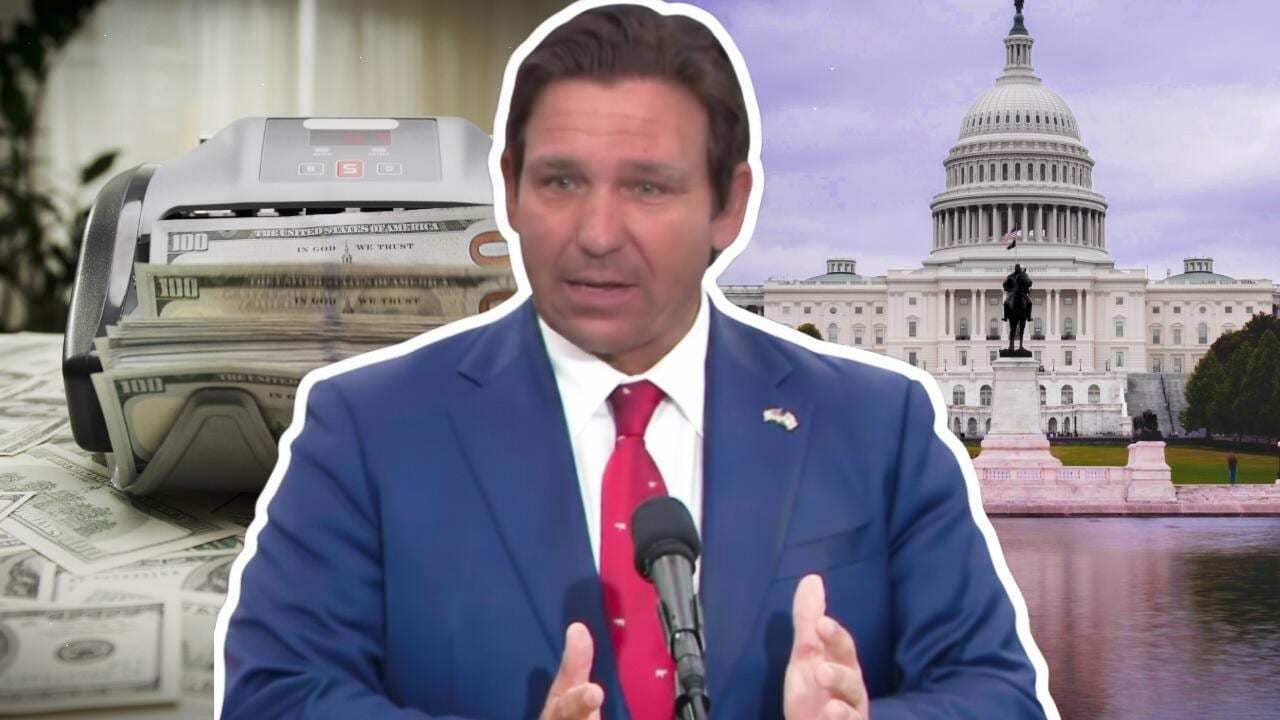
Gov. Ron DeSantis is pushing back on the Federal Reserve's expected interest rate increase in December, arguing on social media that higher rates reward people who already own assets while doing little for Floridians who live on paychecks and savings. His comments land as Fed officials signal a near-certain quarter-point hike at their Dec. 8-9 meeting and as 30-year mortgage rates sit above 7%, a level that has already cooled Florida's housing market.
In posts on X on Monday, Nov. 23, DeSantis said a policy built around the Fed's 2% inflation target "would preference those with assets (stocks, real estate, etc) over those who rely on income and savings," and asked, "Haven't we had enough of that since post-2008?" according to WKMG News 6 in Orlando. In a second post the same day, he wrote, "A rate hike won't cure the underlying problems. Need spending/borrowing reform." Asked by another user what he would do instead, he replied, "Less borrowing and spending."
What DeSantis is arguing
The governor's posts were a response to an argument made a day earlier by hedge fund manager Bill Ackman, the chief executive of Pershing Square. On Nov. 22, Ackman wrote on X that the Fed "will put the U.S. and world in recession if it continues to raise rates in a failed attempt to drive inflation to 2%," and argued that "3% inflation is a more realistic ambition in the new world," WKMG reported.
DeSantis framed the problem as fiscal rather than monetary: in his view, federal deficit spending and borrowing are driving prices, and raising the cost of credit treats the symptom while squeezing working households. He has long supported a federal Balanced Budget Amendment, which would require Washington to stop spending more than it collects. WKMG noted that more than 20 states have signed on to calls for such an amendment.
The governor has no formal role in setting interest rates. The Federal Open Market Committee, the Fed's rate-setting panel, operates independently of elected officials. But his comments put Florida's chief executive on record against a move that would touch nearly every borrower in the state.
Why the Fed is leaning toward a hike
The Fed raised its benchmark rate in September for the first time in three years, lifting the federal funds target range by a quarter point to 3.75% to 4%. At its Oct. 27-28 meeting, the committee held the range steady in a 10-2 vote, saying in its statement that "inflation remains elevated." Fed Governor Lisa Cook and Cleveland Fed President Beth Hammack dissented, preferring an immediate quarter-point increase.
Minutes of that meeting, released Nov. 18, showed nearly all officials expect a quarter-point increase in December, according to an Associated Press report published by Florida Realtors. Two officials floated a half-point move. Futures traders tracked by the CME FedWatch tool put the odds of a December hike near 95%.
Fed Governor Christopher Waller has said core inflation, which excludes food and energy, ran at about a 3.5% annual rate over the past three months, well above the Fed's 2% goal. He told CNBC that inflation is "headed in the wrong direction and it's spreading out" and has backed considering a half-point increase. New York Fed President John Williams pushed back on that idea, telling Axios, "I don't think the situation calls for dramatic action."
The most recent consumer price data supported the hawks. The Bureau of Labor Statistics reported that the Consumer Price Index rose 0.4% in October after a 0.6% gain in September, with core prices up 0.3%. Over the 12 months ending in September, consumer prices were up 3.7%. The November CPI report is scheduled for Dec. 10, the day after the Fed's decision.
Mortgage rates already above 7%
For Florida homebuyers, the expectation of tighter policy is already priced into loans. Freddie Mac's weekly survey released Nov. 19 put the average 30-year fixed mortgage rate at 7.28%, up from 7.11% a week earlier and 6.26% a year ago. The 15-year fixed rate averaged 6.66%, up from 6.45% a week earlier and 5.54% a year ago.
| Loan type | Nov. 19, 2026 | Week earlier | Year earlier |
|---|---|---|---|
| 30-year fixed | 7.28% | 7.11% | 6.26% |
| 15-year fixed | 6.66% | 6.45% | 5.54% |
Mortgage rates do not move in lockstep with the federal funds rate; they follow longer-term Treasury yields, which reflect where investors expect inflation and Fed policy to go. That is why rates have climbed even before the December decision.
What it means for Florida's housing market
Florida Realtors' October report, released Nov. 16, showed the effect. Closed sales of existing single-family homes fell 10.1% from a year earlier to 19,049, while the statewide median sale price rose 2.2% to $420,000. New pending sales, a signal of future closings, dropped 15.7%.
The condo and townhouse market, already under pressure from post-Surfside inspection and reserve requirements, softened further. Closed sales fell 5% to 6,862, and the median price dropped 3.3% to $290,000. Condo inventory stood at 8 months of supply, compared with 4.6 months for single-family homes.
| October 2026 | Single-family | Condo-townhouse |
|---|---|---|
| Closed sales | 19,049 (down 10.1%) | 6,862 (down 5%) |
| Median price | $420,000 (up 2.2%) | $290,000 (down 3.3%) |
| New pending sales | Down 15.7% | Down 11.9% |
| Months of supply | 4.6 | 8 |
"Higher mortgage rates are making affordability a bigger challenge," said Chuck Bonfiglio Jr., the 2026 president of Florida Realtors. The group's chief economist, Brad O'Connor, said that if rates stay above 7%, "we should expect sales to remain subdued and inventory to gradually rebuild," while cautioning that "it's important not to confuse slowing demand with a distressed housing market."
Who feels a December hike first
A quarter-point increase would lift the federal funds target range to 4% to 4.25%. The most direct effect falls on borrowing tied to the prime rate, which banks generally set 3 percentage points above the top of the Fed's range and which moves within days of a Fed decision.
- Home equity lines of credit: Most HELOCs carry variable rates pegged to prime, so Floridians who tapped home equity for roof replacements, hurricane repairs or condo special assessments would see their payments rise.
- Credit cards: Variable card rates typically follow prime, adding to the cost of carrying a balance.
- Adjustable-rate mortgages: Borrowers whose ARMs are due to reset face higher rates, though the timing depends on each loan's terms.
- Small businesses: Lines of credit and many Small Business Administration loans also float with prime.
Savers stand to benefit somewhat. Yields on high-yield savings accounts, money market funds and certificates of deposit tend to rise after Fed hikes, a point that cuts against DeSantis's argument for retirees and others living on interest income, though higher inflation erodes those gains.
The broader debate
DeSantis and Ackman are pressing from different directions toward the same conclusion: that the Fed should not keep tightening. Ackman wants the target itself loosened to 3%. DeSantis wants Washington to cut borrowing so the Fed has less inflation to fight. Inside the Fed, the debate is over speed, not direction; officials are arguing about a quarter point versus a half point, not whether to pause.
Economists have warned that the tradeoff is real. University of Central Florida economist Sean Snaith told WKMG that bringing inflation down can come at the cost of higher unemployment.
What's next
The Federal Open Market Committee meets Dec. 8-9 in Washington, with a decision and updated economic projections due Dec. 9. Freddie Mac updates its mortgage rate survey weekly, and Florida Realtors' November housing figures are expected next month. For Florida borrowers with variable-rate debt, any increase would typically show up on statements within a billing cycle or two of the Fed's decision.
Spotted an issue with this article?
Have something to say about this story?
Write us a letterComments
No comments yet. Be the first to weigh in.
Related Coverage

Cygnus Cargo Ship Named for Jim Lovell Targets Sunday Launch From Cape Canaveral
1h ago
White House Removes National Cyber Director Sean Cairncross After a Week of Outages That Reached Florida's DMV, Airports and Banks
17h ago
Thanksgiving Dinner Costs More for the First Time Since 2022, and the South's Bill Rose Faster Than the Nation's
17h ago
States Sue HUD to Block Mixed-Status Housing Rule, but Florida Families Face the Dec. 14 Deadline Without Their State in the Fight
17h ago