DeSantis Touts $20 Billion Plan to Widen All 320 Miles of Florida's Turnpike, Adds Truck Parking and Plaza Upgrades
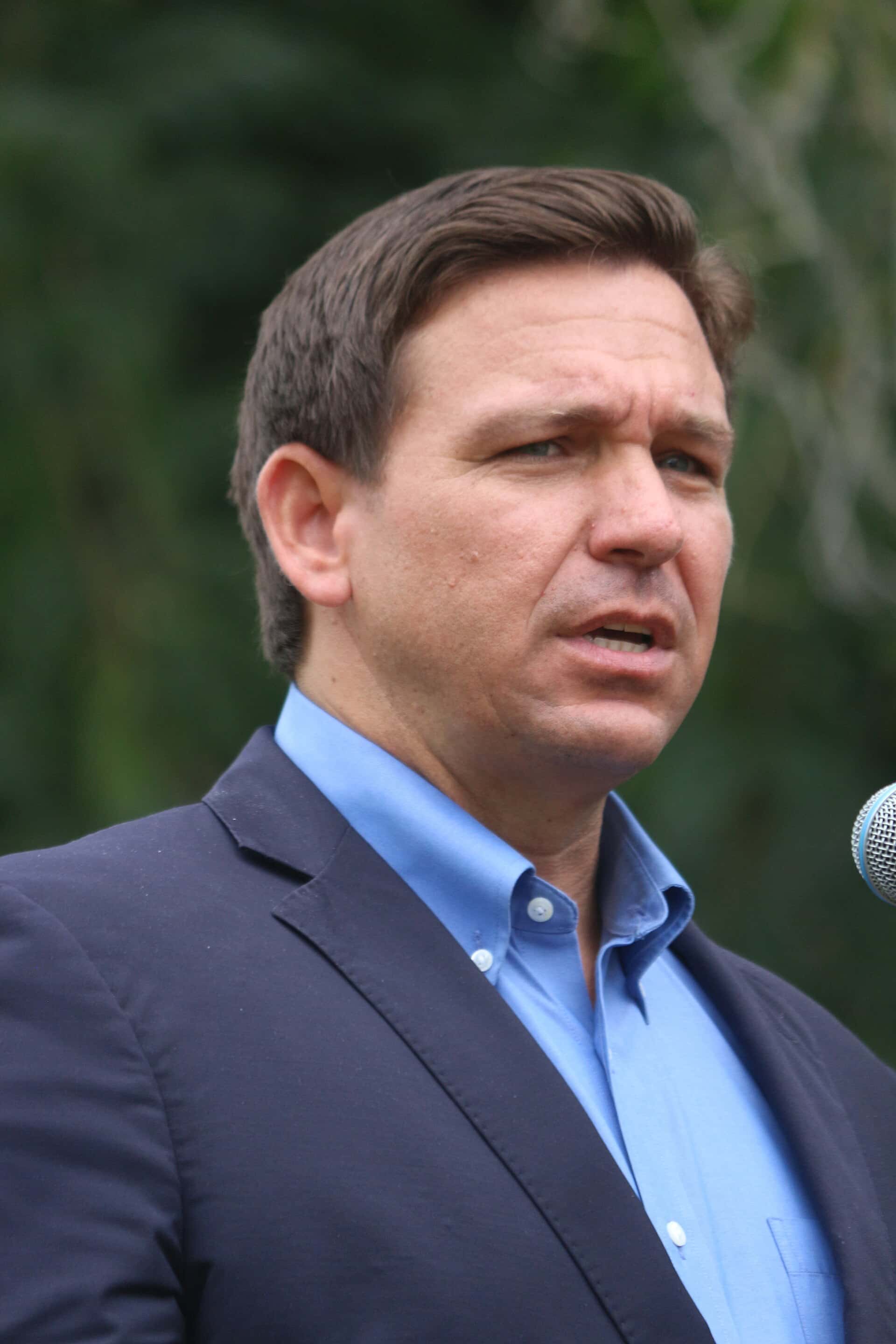
Gov. Ron DeSantis highlighted a more than $20 billion program to widen Florida's Turnpike along its entire 320-mile mainline this week, alongside roughly $62 million for upgraded service plazas and expanded truck parking. The governor made the announcement at Florida's Turnpike Enterprise in Orlando, joined by Florida Department of Transportation Secretary Jared W. Perdue.
Every section of the mainline, which runs from Florida City in south Miami-Dade County to Interstate 75 in Wildwood, is planned to be expanded to six or more lanes, according to the governor's office. Once complete, the work will add more than 965 lane miles of capacity, a measure that counts each mile of each new travel lane.
The state says the mainline widening initiative is already 55 percent complete. The announcement also included nearly $54 million for truck parking and nearly $8.5 million for new food concepts and amenities at service plazas.
The investment touches communities along the length of the state, from Miami-Dade, Broward and Palm Beach counties through St. Lucie, Indian River, Osceola, Orange, Lake and Sumter counties. For the millions of residents and visitors who use the Turnpike each year, the program means years of additional construction before the full benefit of the new lanes arrives, and it raises fresh questions about how the state will pay for and price the road in the decades ahead.
What the widening covers
Florida's Turnpike is the state's signature toll road, carrying commuters, freight and tourists through South Florida, the Treasure Coast and Central Florida. The mainline links the Miami metro area with Orlando and connects to I-75 near The Villages, making it a primary route for traffic between the state's two largest population centers.
The widening program, according to the governor's office, will bring every mainline segment to at least six lanes, with some heavily traveled segments wider. Coverage of the announcement noted that parts of the system are slated for 10-lane configurations in the most congested urban areas.
Because the work has been underway for years, many drivers have already seen its effects in the form of new lanes, rebuilt interchanges and long-running construction zones. The 55 percent completion figure means a significant share of the program, and its traffic disruptions, still lies ahead.
Florida law doubles traffic fines for speeding in posted construction zones when workers are present, and state officials routinely urge drivers to slow down as crews work alongside live traffic. With nearly half the program still to come, those zones will remain a fixture on the Turnpike for years.
Truck parking expansion
About $53.8 million of the new funding will go toward commercial trucking infrastructure, adding and improving roughly 150 dedicated truck parking spaces split between the Turkey Lake and Ocoee service plazas in the Orlando area, according to the state and trade coverage of the announcement.
Truck parking shortages are a persistent safety concern nationwide. Federal hours-of-service rules require commercial drivers to stop and rest after set periods behind the wheel, and when legal parking is unavailable, drivers often park on highway shoulders or ramps, which creates crash risks.
Trucking industry groups have repeatedly cited a lack of safe parking as one of their top operational concerns, and federal transportation officials have encouraged states to expand truck parking on major freight corridors.
Central Florida is a particular pressure point because of the volume of freight moving to and from distribution centers along the I-4 and Turnpike corridors. The added spaces are intended to give drivers more safe places to rest along one of the state's busiest freight routes.
Service plaza upgrades
The nearly $8.5 million in service plaza funding will pay for renovations at six plaza sites, including updated spaces for 19 retail and food vendors, according to the governor's office. Vendors named in the announcement include Jimmy John's, Zaxby's, Villa Pizza and Vending Oasis.
Service plazas on the Turnpike are operated under concession agreements, and periodic renovations are part of how the Turnpike Enterprise keeps those facilities current. Upgrades typically include new restaurants, convenience stores, restrooms and fueling options.
For travelers, the plazas are often the only stop on long stretches of the mainline, particularly between South Florida and Orlando, so their quality and capacity directly affect the experience of millions of drivers each year.
Combined with the truck parking money, the plaza and parking spending totals roughly $62 million, a small share of the overall widening program but one aimed at the experience drivers have when they leave the travel lanes.
A highway with a long history
Background: Florida's Turnpike opened in 1957 as the Sunshine State Parkway, initially connecting Miami-Dade County with Fort Pierce. It was extended north through Orlando to Wildwood in the 1960s and later took the Florida's Turnpike name. The road was built to serve a state whose population was a fraction of today's.
The system has since grown beyond the mainline to include several expressways and connector roads, among them the Homestead Extension, the Sawgrass Expressway in Broward County and the Polk Parkway, all managed by the Turnpike Enterprise.
Tolling has also changed. The Turnpike has moved to all-electronic, cashless tolling across much of the system, with drivers paying through SunPass and compatible transponders or through toll-by-plate billing, eliminating the need to stop at toll booths.
The shift to cashless tolling freed space at former toll plazas and allowed engineers to redesign interchanges, work that has gone hand in hand with the widening program in several regions.
How the Turnpike is funded
Background: Florida's Turnpike Enterprise is a business unit of the Florida Department of Transportation and is funded primarily by toll revenue rather than general state tax dollars. Toll collections are used to pay for operations, maintenance and capital projects across the system, and the enterprise issues revenue bonds backed by those tolls.
That structure means the widening program is largely paid for by Turnpike users. It also means toll policy and capacity investments are tightly linked, because new lanes are financed by the revenue the road generates.
Some coverage of the event reported that DeSantis raised the possibility of eventually ending Turnpike tolls for Florida residents. The governor's office did not detail a specific proposal, and any such change would raise significant questions about how the system's debt and future construction would be financed. Changes to toll policy on that scale would likely require action by the Legislature.
Florida has experimented with toll relief before. Background: In 2022 and 2023 the state ran temporary toll relief programs that credited frequent SunPass users who logged a set number of monthly transactions, an approach that reduced costs for commuters without ending tolls outright.
Why it matters for Florida drivers
Florida has added well over a million residents in recent years, and population growth in Central Florida, the Treasure Coast and the corridor between Orlando and The Villages has put heavy pressure on the state's highways. The Turnpike and I-4 are among the most congested routes in the state.
State transportation officials argue that adding capacity now is necessary to keep pace with growth projected over the coming decades. Critics of highway expansion have long countered that new lanes can draw additional traffic over time, and that rail, transit and land use planning also need investment.
The widening also matters during hurricane season. The Turnpike is a primary evacuation route for South Florida and the Treasure Coast, and added lanes increase the volume of traffic that can move north when evacuation orders are issued.
Background: During the mass evacuation ahead of Hurricane Irma in 2017, northbound traffic on the Turnpike and I-75 slowed to a crawl for long stretches, and the state suspended tolls to keep vehicles moving. That experience shaped later planning for evacuation capacity on the state's major highways.
Part of a broader push
The Turnpike announcement follows a series of transportation investments DeSantis has promoted during his final year in office, including express lane projects on I-4 and road widening funding in individual counties. The governor is term-limited, and his administration has used recent months to highlight infrastructure spending approved in the state budget.
Florida's work program, the five-year schedule of transportation projects adopted by FDOT, includes many of the Turnpike segments that remain under construction or in design. Projects in the work program can be adjusted based on revenue and legislative appropriations.
Perdue, who has led FDOT since 2022, has emphasized safety, freight movement and congestion relief as the department's priorities during the current growth cycle.
Background: In 2023, DeSantis and the Legislature launched the Moving Florida Forward initiative, which committed roughly $4 billion in surplus state revenue to accelerate 20 major road projects across the state. That effort was funded separately from the Turnpike, whose widening relies on toll revenue.
What's next
Construction on remaining mainline segments will continue in phases over the coming years, according to the state, with the full widening to six or more lanes still underway. FDOT and the Turnpike Enterprise post segment-by-segment project information and lane closure notices for drivers.
The truck parking and service plaza projects are expected to move forward separately from the mainline widening, with the plaza renovations bringing new vendors to the six sites as work is completed.
Any proposal to change toll policy for Florida residents would need further detail from the governor's office and likely legislative action, which could come during the 2027 session in Tallahassee, when a new governor will be in office.
For drivers, the near-term effect will be more construction and, over time, more lanes. Drivers can sign up for FDOT traffic alerts and check the Florida 511 system for real-time lane closures and construction updates along the Turnpike.
Spotted an issue with this article?
Have something to say about this story?
Write a letter to the editorComments
No comments yet. Be the first to weigh in.
Related Coverage

Uthmeier Asks Highlands County Judge to Bar OpenAI From Offering ChatGPT to Florida Minors
16h ago

Twelve New Florida Laws Take Effect Oct. 1, From Nitrous Oxide Limits to a Career Offender Registry
17h ago

Florida Rolls Out Redesigned Driver Licenses With Castillo de San Marcos, Manatee and Space Shuttle Discovery
1d ago

Florida Governor's Race Enters Final Five Weeks With Split Polls and No Debate Between Donalds and Jolly
2d ago