DeSantis Widens Emergency Order as Pasture Mealybug Spreads to 25 Florida Counties
Governor Ron DeSantis has amended a state emergency order in response to the pasture mealybug, an invasive insect that has spread to 25 Florida counties in roughly five months and is damaging sugarcane, cattle forage and turfgrass across the peninsula. The pest was first confirmed in Florida in May in St. Lucie County. It has since been documented from the southern end of the state to Jackson County on the Panhandle's northern boundary.
State agriculture officials and University of Florida researchers describe an insect that feeds on the base and crown of grass plants, drawing out sap and leaving pasture yellowed, thinned and in some cases dead. Confirmed counties include Okeechobee, Hardee, Highlands, Glades, Hendry, Charlotte, Lee and Collier, a list that tracks closely with Florida's cattle and sugar country.
The amended executive order is designed to speed the state's response by easing procedural barriers that would otherwise slow emergency pesticide approvals, movement controls and coordination between state agencies and federal regulators. Emergency orders of this type are a standard tool when an agricultural pest moves faster than the normal regulatory calendar allows.
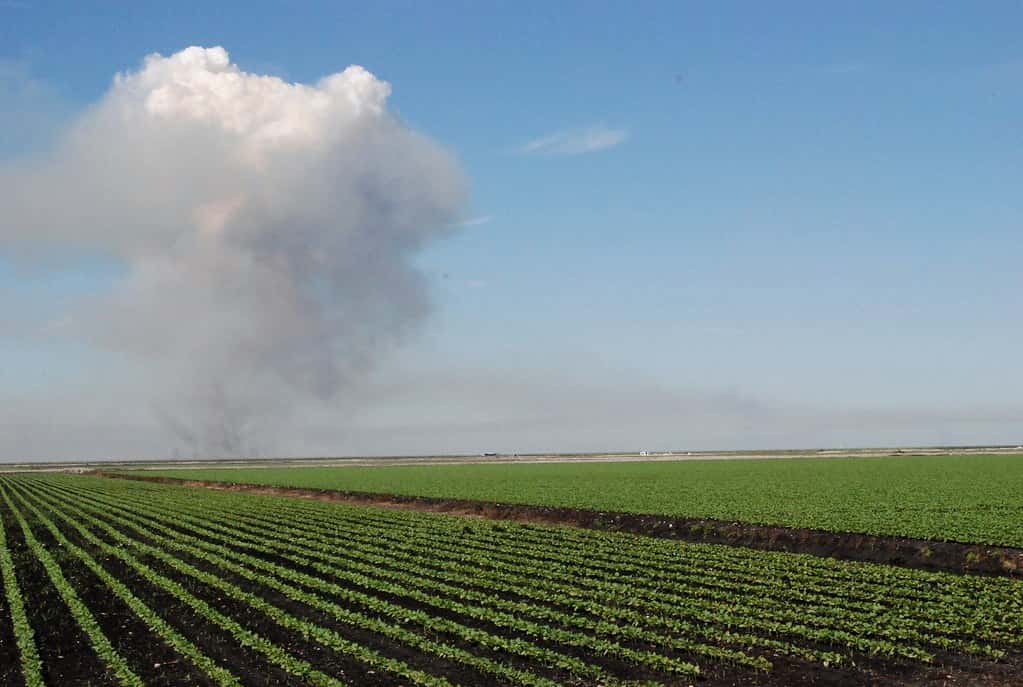
For a state where agriculture remains a multibillion dollar sector, the stakes are not abstract. Sugarcane in the Everglades Agricultural Area, limpograss and bahiagrass pasture supporting one of the nation's larger cow and calf herds, and the sod industry that supplies lawns across the Southeast all sit in the pest's path.
What the pasture mealybug is
Mealybugs are small soft bodied insects covered in a white waxy secretion that gives them a powdery appearance. The species now spreading in Florida is native to Australia and Southeast Asia and was first detected in the United States in Texas, then in Louisiana, before appearing in Florida grass fields this spring.
The insect feeds at the crown of the plant and along stolons, the horizontal runners that grasses use to spread. That feeding location is part of what makes it difficult. Much of the population sits at or below the soil surface and under the thatch layer, where contact insecticides applied to leaf surfaces do not reach and where scouts do not see damage until the plant above is already declining.
Symptoms reported in Florida fields begin with yellowing and stunting in irregular patches, progressing to browning and stand loss. Because those symptoms resemble drought stress, nutrient deficiency and several other problems, early infestations have been misdiagnosed, which allowed populations to build before the cause was identified.
University of Florida's Institute of Food and Agricultural Sciences has published pest alerts and identification guidance for growers and extension agents, and the Florida Department of Agriculture and Consumer Services maintains a dedicated page tracking confirmed detections and recommended responses.
Which crops and industries are exposed
Limpograss pasture has taken the most visible damage so far. Limpograss is widely planted in South Florida because it holds nutritional quality into the winter, making it valuable for cattle producers who need standing forage in the dry season. Losing limpograss stands forces ranchers to buy hay or supplement feed, a direct and immediate cost.
Sugarcane is the higher profile exposure. Florida produces a large share of the nation's sugarcane, concentrated south of Lake Okeechobee in Palm Beach, Hendry, Glades and Martin counties. Cane is a grass, and the mealybug feeds on it. The degree of yield loss the pest can inflict on a mature cane crop under Florida conditions is still being assessed, which is precisely why researchers are treating the situation as urgent rather than settled.
Turfgrass and sod add a third exposure. Florida's sod farms supply residential and commercial landscaping across the region, and the pest has been documented on turf species. A sod field that cannot be certified clean is a field that cannot ship, and movement restrictions imposed to slow spread can be as costly to a grower as the insect itself.
Beyond the direct crops, there is an ecological dimension. The insect is not selective about which grasses it will feed on, which means native grasses, roadside vegetation and conservation lands are also potential hosts. That broad host range is what makes eradication unrealistic and containment the practical goal.
What the state is doing
The amended executive order is the legal scaffolding for a faster response. It allows state agencies to move on emergency procurement, to coordinate survey work across county lines, and to pursue emergency use approvals for pesticide products that are not currently labeled for this pest on these crops in Florida.
That last piece is the bottleneck researchers have been most vocal about. Testing has identified insecticide options that show promise against the pasture mealybug, but a product can only be applied to a crop for a pest if the label permits it. Adding a new use requires action by the Environmental Protection Agency and by state regulators, a process that emergency exemptions can shorten but not eliminate.
Survey and detection work continues in parallel. Confirming which counties are infested, and at what density, determines where treatment resources go and whether movement controls on sod, hay or planting material are justified in a given area. Every new county confirmation also updates the guidance extension agents give to growers in neighboring counties.
Researchers are additionally examining biological control, meaning natural enemies that suppress mealybug populations in the pest's native range. Biological control programs take years to develop and vet, so they are a medium term option rather than a response to this season's damage.
What ranchers and growers can do now
Extension guidance emphasizes scouting. Because the insect hides at the crown and under thatch, checking for it means pulling plants and examining the base rather than walking a field and looking at leaf color. Producers who find white waxy masses at the base of grass plants are asked to report the find to the state so detections can be mapped.
Movement discipline is the other lever growers control. Moving hay, sod, or vegetative planting material from an infested field to a clean one is the fastest way to establish a new population. Cleaning equipment between fields, and sourcing planting material from areas not known to be infested, are low cost measures that slow spread.
For ranchers facing forage loss, the practical questions are about stocking rate and feed budget. Reducing grazing pressure on damaged stands gives them a chance to recover, but that requires somewhere else to put the cattle or a willingness to sell earlier than planned. Those are business decisions with real consequences in a year when input costs remain elevated.
The wider pattern of invasive pests in Florida
Florida is unusually exposed to invasive species. The state's subtropical climate lets organisms from many parts of the world survive year round, and its ports, airports and volume of international trade and travel supply a steady stream of arrivals. Citrus greening, the laurel wilt fungus, the Africanized honey bee and a long list of invasive plants and reptiles are all part of the same story.
Each new arrival follows a similar sequence. Detection, often late. A scramble to identify the organism and understand its host range. An emergency regulatory response. Then a long period during which the pest becomes a permanent management cost rather than a solved problem. Citrus greening is the cautionary example, having reshaped an entire Florida industry over two decades.
Whether the pasture mealybug follows that arc depends heavily on what happens in the next year. Pests that are contained early sometimes remain regional nuisances. Pests that establish widely before effective controls exist tend to become permanent.
What the emergency order mechanism does
Florida's governor holds broad authority to issue executive orders addressing emergencies, including agricultural ones. Such orders can suspend procedural requirements that would otherwise slow procurement, waive certain licensing or transport rules, and direct agencies to coordinate.
Amending an existing order rather than issuing a new one indicates the state is extending or broadening an already active response, typically by adding counties, adding authorities or extending the duration.
Orders of this kind also create the legal predicate for requesting federal assistance. The U.S. Department of Agriculture has programs supporting state responses to plant pest emergencies, and a declared state emergency strengthens such requests.
Duration is limited by statute, with orders requiring renewal at defined intervals. That renewal cycle is one way to track whether the state considers the situation still urgent.
How Florida tracks plant pests
The Florida Department of Agriculture and Consumer Services operates the Division of Plant Industry, which conducts surveys, maintains diagnostic laboratories and issues pest alerts. It is the agency that confirms detections and that publishes the county level maps growers rely on.
Detection depends heavily on reports from the field. Extension agents, crop consultants and growers themselves identify unusual damage and submit samples, and the diagnostic laboratories confirm the organism's identity.
The University of Florida's Institute of Food and Agricultural Sciences operates the extension service that connects that research to producers, with offices in every county and specialists assigned to particular crops and pest categories.
That combination of regulatory agency and extension network is the infrastructure Florida uses for every invasive pest event, and its speed determines how much of a crop can be protected before a pest establishes broadly.
What is next
The near term milestones are regulatory and scientific. Watch for emergency use approvals on specific insecticide products for pasture, sugarcane and turf, which would give growers a legal treatment option this season. Watch also for updated county detection maps from the Department of Agriculture, which indicate whether the spread is continuing at the pace seen since May.
The Florida Legislature convenes in the new year, and agricultural interests will likely seek funding for survey, research and grower assistance. The cattle and sugar industries are politically organized in Tallahassee, and an emergency order in September often becomes a budget line item by spring.
For Floridians outside agriculture, the most likely point of contact is the lawn. If the pest establishes in turfgrass across residential areas, homeowners and landscapers will encounter it in the form of dying St. Augustine and bahiagrass patches that do not respond to water or fertilizer. State guidance to homeowners is expected to expand as detections in urban and suburban settings are confirmed.
Spotted an issue with this article?
Have something to say about this story?
Write a letter to the editor