Editorial: Florida's Summer Primary Belongs to the Few Who Show Up

Roughly 1.29 million Floridians had cast ballots through Tuesday in a state with about 14 million registered voters. Election Day will add to that total, and Florida summer primaries have historically drawn somewhere in the range of a fifth to a third of registered voters. However Tuesday finishes, the arithmetic points to the same conclusion: a minority of the electorate is choosing the people who will run the state.
This is not an argument that anything improper is happening. Florida's election administration is professional, its early voting window is generous by national standards and its mail ballot system is widely used. The problem is not access. The problem is that the elections which actually determine outcomes in Florida happen in August, when much of the state is not paying attention.
Where the real decisions get made
In a large share of Florida's legislative districts, the general election is a formality. District lines drawn to produce reliable partisan majorities mean the candidate who wins the dominant party's primary will win in November, often by 20 points or more. The August contest is the election. The November one ratifies it.
The same holds for many county offices. Sheriff, property appraiser, clerk of court and tax collector races in numerous Florida counties are settled in the primary because only one party fields serious candidates. Under Florida law, when all candidates for an office belong to the same party and the winner will face no opposition in November, the primary opens to all voters. That rule exists precisely because the state recognizes the primary is the decisive contest in those races.
School board seats operate on a different rule that produces a similar result. Those races are nonpartisan and open to every registered voter, and a candidate who takes more than half the vote in August wins outright without a November runoff. Voters who skip the primary because they think of it as a party affair frequently miss the only opportunity they will get to weigh in on the board that governs their children's schools.
The closed primary problem
Florida's closed primary system compounds the concentration. Voters registered with no party affiliation, a group that has grown substantially and now represents a large share of the Florida electorate, are locked out of partisan primaries entirely. They can vote on nonpartisan and universal-primary contests, and that is the extent of it.
That means a growing bloc of Florida voters has no voice in the elections that determine who represents them in Tallahassee and Washington. They receive a general election choice between two nominees selected by other people. Whatever one thinks about the merits of closed primaries as a matter of party autonomy, the practical effect in a state with this many districts drawn for one party is real disenfranchisement in the races that matter.
Voters who want a say in partisan primaries can register with a party, and the deadline to do so for this cycle passed on July 20. Anyone frustrated by finding a short ballot Tuesday should note that date for the next cycle. That is not a satisfying answer to a structural problem, but it is the answer available under current law.
Why turnout stays low
August is a difficult month to hold an election in Florida. Families are managing the start of the school year. Many residents travel. The weather discourages the kind of neighborhood canvassing that drives turnout in cooler months. Media attention concentrates on the general election, which is still nearly three months away.
Campaign incentives reinforce the pattern. A candidate running in a low-turnout primary optimizes for the voters most likely to participate, which means the most reliably partisan segment of the party. That produces campaigns pitched to a narrow slice of the electorate, which in turn gives the broader electorate less reason to engage. The cycle sustains itself.
None of this is unique to Florida. Summer primaries produce low turnout in most states that hold them. But Florida's combination of a summer primary date, closed primaries and a large share of uncompetitive general election districts concentrates decision-making more tightly than most.
What could change
Several structural reforms get discussed in Florida periodically. Moving the primary date to a month with more public attention is the simplest. Opening primaries to voters registered with no party affiliation, either through a top-two system or a semi-open primary, would enfranchise a large bloc currently excluded. Independent or more constrained redistricting would reduce the number of districts where November is a foregone conclusion.
Each carries tradeoffs and each faces political obstacles, because the people who would decide these questions were elected under the current rules. Reform proposals that reduce incumbent security do not typically advance through legislative bodies composed of incumbents.
That leaves the ballot initiative route, which Florida has used before to change election and districting rules, and which now requires a 60 percent supermajority to pass a constitutional amendment. The initiative process itself has become substantially harder to navigate under petition requirements adopted in recent years.
What Floridians can do this week
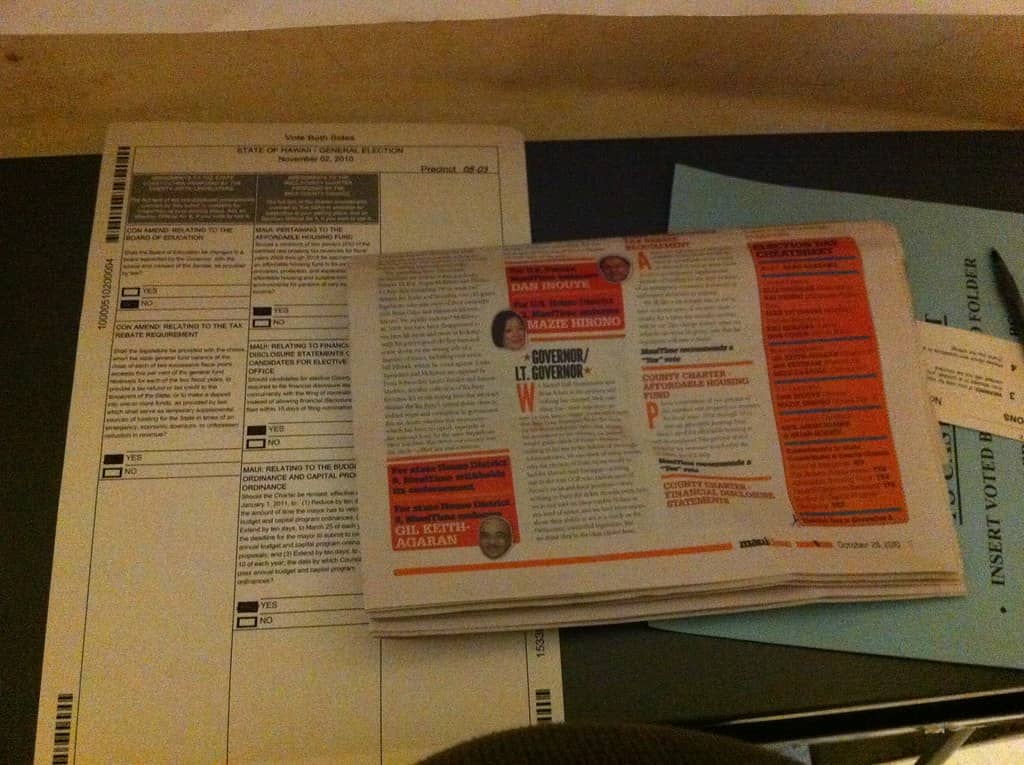
The immediate answer is unglamorous: vote Tuesday, and read the whole ballot before doing so. County supervisors of elections post sample ballots by precinct. Reviewing one takes ten minutes and reveals contests most voters do not know are on the ballot, particularly school board races, judicial retention questions and local referendums on sales taxes and bond issues.
Voters holding unreturned mail ballots should hand deliver them to a supervisor of elections office or authorized drop-off location. Florida requires mail ballots to be received by 7 p.m. Tuesday, not merely postmarked by then, and mail delivered after that deadline does not count regardless of when it was sent.
Voters who requested a mail ballot but would prefer to vote in person may do so by bringing the unvoted mail ballot to their polling place to surrender it.
What the turnout numbers actually describe
It is worth being precise about the arithmetic, because vague claims about low turnout invite dismissal.
Florida has roughly 14 million registered voters. Through Tuesday, about 1.29 million had cast primary ballots. Election Day participation will add to that, and if Florida follows its historical summer primary pattern, the final figure will land somewhere between roughly 2.8 million and 4.2 million votes.
Within that total, partisan primaries divide further. A Republican primary for governor draws only from registered Republicans who participate, and a Democratic primary only from registered Democrats. So the nominee of each party is chosen by a subset of a subset.
Run the numbers on a competitive multi-candidate primary and the concentration becomes stark. A candidate winning a plurality in a crowded field may secure a nomination with support from a number of voters representing a small single-digit percentage of the state's registered electorate. That candidate then appears on a November ballot where millions will vote, many of whom had no role in selecting them.
The counterargument worth taking seriously
There is a reasonable response to all of this, and it deserves acknowledgment rather than dismissal.
Voting is available. Florida offers a lengthy early voting window, no-excuse mail voting, and Election Day polling places. A voter who wants to participate faces fewer barriers here than in a number of other states. When people choose not to vote in an election they could easily vote in, the resulting outcome carries democratic legitimacy whether or not turnout was high.
There is also a case that primary electorates being more engaged is not purely a defect. Voters who participate in August are, on average, paying closer attention to the candidates than voters who show up only in November and choose by party label. Engagement has value.
Both points are fair. Neither resolves the structural issue, which is not that engaged voters decide primaries but that in most Florida districts the primary is the only election that decides anything. When the general election is decorative, confining the real choice to a low-turnout closed contest concentrates power in a way that would trouble people across the political spectrum if they examined it closely.
The remedy available this week is not structural. It is showing up.
A note on what this page is arguing
This editorial is not a complaint that the wrong people vote. Everyone who casts a ballot Tuesday is doing exactly what the system asks of them, and there is nothing suspect about an engaged voter having more influence than a disengaged one.
The argument is narrower and, we think, harder to dismiss. Florida has arranged its elections so that the decisive contest in a large share of races occurs in August, is closed to a growing bloc of registered voters, and draws a fraction of the participation that November does. Each of those features is defensible on its own. Together they concentrate the actual choice more than most Floridians realize.
Reasonable people disagree about the remedies. Open primaries, a different primary date and redistricting reform each carry costs and each faces opposition from people with sincere objections rather than merely self-interested ones. This page does not claim any of them is obviously correct.
What is worth insisting on is that Floridians understand the system they are operating in. A voter who skips Tuesday believing the real election is in November has, in many districts, skipped the real election. That is a fact about how Florida is organized, not an opinion about it.
The stakes
Tuesday's ballot includes nominations for governor in the first open race since 2018, a United States Senate special election, every congressional district, state legislative seats, and in many counties the sheriff and school board members who will make decisions affecting daily life more directly than anyone in Washington.
Whoever emerges will govern a state facing unresolved fights over property insurance costs, housing affordability, water quality, school funding and hurricane preparedness. Those decisions will bind every Floridian, including the ones who did not participate in selecting the people making them.
The polls are open Tuesday from 7 a.m. to 7 p.m. The people who show up will decide. That is how it works, and it is worth being one of them.
Spotted an issue with this article?
Have something to say about this story?
Write a letter to the editor