A Quiet Hurricane Season Is the Worst Reason to Skip Preparation
Florida is more than two months into hurricane season and has not been threatened once. Three named storms have formed, Arthur, Bertha and now Cristobal, and none has become a hurricane. NOAA has raised its odds of a below-normal season to 75 percent, up from 55 percent in May, and a strengthening El Niño is expected to keep suppressing development through the rest of the season.
All of that is accurate, and none of it says anything useful about whether a hurricane will hit your house. The distinction between basin-wide activity and individual risk is the most consistently misunderstood concept in hurricane communication, and every quiet August produces the same drift toward complacency.
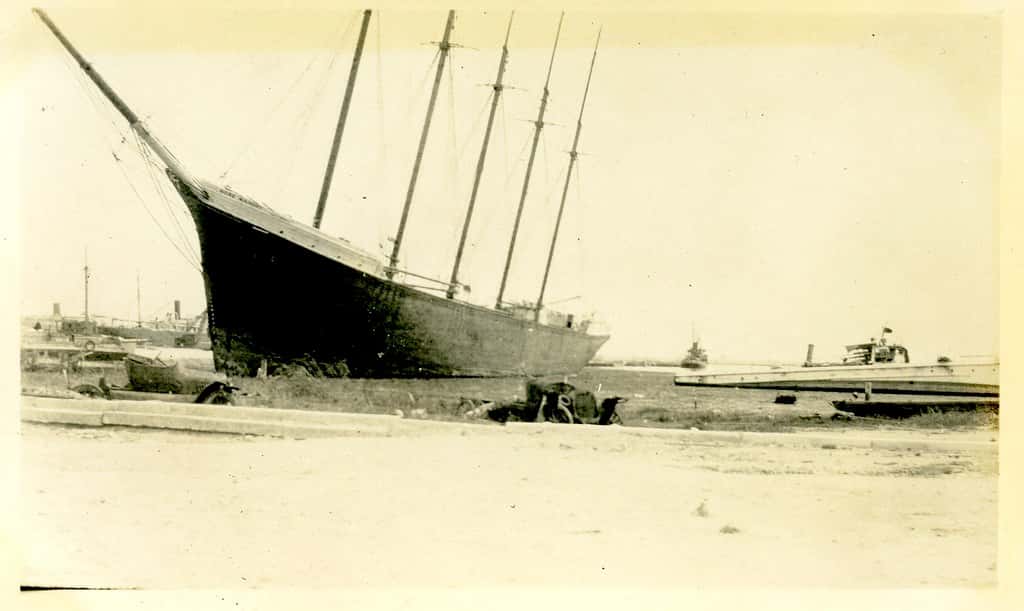
Here is the argument in one sentence: Hurricane Andrew struck South Florida in 1992 during a season that produced only seven named storms, one of the quietest on record, and it remains one of the most destructive storms in American history.
The forecast is about counts, not about you
NOAA's updated outlook calls for 7 to 13 named storms this season, 2 to 6 hurricanes and 0 to 2 major hurricanes. Those are basin-wide totals. They describe how many storms will exist somewhere in the Atlantic, the Caribbean and the Gulf over roughly six months.
They do not describe where those storms will go. Landfall depends on steering patterns that are not predictable weeks in advance, let alone months. A season with 20 storms that all recurve into the open Atlantic produces zero American landfalls. A season with seven storms, one of which tracks into Biscayne Bay as a Category 5, produces Andrew.
Seasonal forecasts are genuinely useful. They help emergency management agencies allocate resources, help insurers price risk and help the reinsurance market function. They are aggregate planning tools. They were never designed to tell an individual household in Cape Coral or Jacksonville whether to buy plywood, and they cannot.
The forecast that matters for a household is the one issued when a storm exists and has a track. Everything before that is background.
What quiet seasons actually do to behavior
The pattern is well documented and it is human rather than Floridian. Preparedness behavior decays with time since the last event. Households that stocked supplies after a direct hit maintain them for a season or two, then stop replacing expired water and batteries, then stop checking.
Florida's population turnover accelerates this. The state adds hundreds of thousands of new residents annually, many from states with no hurricane experience. A resident who moved to Tampa in 2025 and has now lived through a quiet 2026 season has a mental model built on two data points, neither of which involved a storm.
Insurance is where the decay shows up most expensively. Flood coverage lapses when a homeowner decides the premium is not worth it in a quiet year. That decision is rational on any single-year basis and catastrophic in the year the storm arrives, and the National Flood Insurance Program's standard 30-day waiting period means the decision cannot be reversed once a storm is named.
What actually matters in August
Know your evacuation zone, by address, before a storm exists. Florida evacuates by zone, not by county, and residents who do not know their zone either evacuate unnecessarily and clog the roads or fail to evacuate when ordered. County emergency management websites have address lookups. This takes two minutes.
Understand watches and warnings. A watch means conditions are possible, generally within 48 hours. A warning means conditions are expected, generally within 36 hours. Evacuation decisions in most counties key to the warning, and residents who treat a watch as a warning burn preparation energy at the wrong time.
Handle insurance now. Most Florida carriers stop writing new policies and coverage increases once a storm is named and approaching. Flood coverage carries a 30-day waiting period. Mid-August is roughly the last moment at which flood coverage purchased today would be in force through the season's statistical peak around September 10.
Document your property. Photograph every room, every exterior elevation and every major appliance and system. Store the images somewhere that is not in the house. Claims adjusters are far more responsive to documented pre-loss condition than to a homeowner's recollection, and this is the single highest-value hour anyone can spend before a storm.
What the state can control and what it cannot
Florida has built genuinely capable emergency management infrastructure. The Division of Emergency Management coordinates with 67 county agencies, the state's building code is among the strongest in the nation for wind resistance, and post-storm response has improved measurably across the past two decades of repeated events.
What the state cannot do is make individual households ready. Shelter capacity assumes most residents shelter in place or evacuate to family rather than to public shelters. Evacuation route capacity assumes only the zones ordered to leave actually leave. Both assumptions fail when preparedness decays.
The building code deserves specific mention because it is the most consequential hurricane policy Florida has. Structures built to post-1992 and post-2002 standards perform dramatically better than older stock, which is why hurricane damage in Florida is now heavily concentrated in older buildings and in surge zones where no code protects against water.
Surge is the part the code cannot solve. Wind standards do not stop water, and Florida's fatality counts in recent storms have been driven overwhelmingly by surge in residents who stayed in evacuation zones. That is the failure mode that preparation actually prevents.
The season is not over
Florida's climatological peak runs from mid-August through late September, with the statistical maximum around September 10. The state is entering that window now, and the African wave train that produces the season's most dangerous long-track storms has just begun to activate.
Forecasters are currently watching two disturbances in the tropical Atlantic behind Cristobal, one of which has been given a high chance of becoming a tropical depression. Neither threatens Florida at this moment. That sentence has preceded a great many Florida hurricanes.
A below-normal season with 7 to 13 named storms still produces 7 to 13 named storms. The state's history contains no shortage of quiet years that Floridians remember for one specific week.
The lessons Florida has already paid for
The argument for preparation does not rest on hypotheticals. Florida has run the experiment repeatedly, and the results are consistent.
The fatality pattern in recent Florida hurricanes has been dominated by storm surge, and the victims have overwhelmingly been residents who remained in evacuation zones. Post-storm reviews have found the same explanations each time: residents who did not know their zone, residents who had ridden out previous storms and generalized from that experience, and residents who could not evacuate because they lacked transportation or a destination.
The first two are addressable by information. The third is addressable only by planning in advance, which is why county emergency management agencies maintain special needs registries and transportation assistance programs that require pre-registration. A resident who needs assistance evacuating and registers in August receives it; one who calls when the warning is issued frequently does not.
The post-storm phase produces its own fatalities, from carbon monoxide poisoning by improperly placed generators, from heat exposure during multi-day outages, and from medical conditions that deteriorate without power for equipment or refrigerated medication. Each of these is preventable with planning that costs nothing in a quiet year.
The insurance clock nobody watches
The most expensive preparation failure is invisible until it is too late, and it involves paperwork rather than plywood.
Florida property insurers impose binding restrictions once a named storm enters a defined area, which means coverage cannot be purchased, increased or modified during the window when residents are most motivated to do so. Those restrictions are standard across the market and are not negotiable.
Flood insurance carries its own barrier. NFIP policies have a standard 30-day waiting period before coverage becomes effective, with narrow exceptions. A policy purchased when a storm appears in the Atlantic will not cover that storm, and in most cases will not cover anything until well into September.
Deductibles are the third item residents discover at the worst moment. Florida policies typically carry a separate hurricane deductible expressed as a percentage of the dwelling coverage rather than a flat dollar amount, which on a $500,000 home at a 5 percent deductible means $25,000 out of pocket before coverage responds. Knowing that number in August allows planning; learning it in October does not.
None of this requires more than an hour with a policy declarations page and an agent. It is the highest-return preparation available and the one most consistently skipped.
What a good preparation afternoon looks like
The argument for preparation collapses if the ask is unrealistic, so here is the realistic version, achievable in a single afternoon and costing very little.
Look up your evacuation zone by address on your county emergency management website and write it down somewhere you will find it. Identify where you would go if ordered to leave, and confirm the person or place expecting you actually expects you. Most Floridians who evacuate stay with family or in hotels, not in shelters, and the plan works only if it has been discussed.
Photograph every room, every exterior wall, the roof if you can see it safely, the electrical panel, the water heater and the air handler. Upload the images to cloud storage. Do the same with your insurance declarations page, your deed, your identification and your prescriptions.
Check the expiration dates on the water, batteries and non-perishable food you already have, and replace what has expired. Confirm you have a week of any prescription medication and a plan for anything requiring refrigeration.
Call your insurance agent and ask three questions: what is my hurricane deductible in dollars, do I have flood coverage, and am I receiving every wind mitigation credit I qualify for. That call frequently saves more money than it costs in time.
The bottom line
The seasonal outlook is a statement about the Atlantic basin. Your risk is a statement about your address, your building, your elevation and your evacuation zone. Those two things are related only loosely, and treating the first as information about the second is the specific error that quiet seasons encourage.
Nothing in this argument requires alarm. It requires an afternoon: look up your zone, check your insurance, photograph your house, replace the water and batteries you stopped replacing. That is the entire ask, and it costs almost nothing in a year when nothing happens.
In the year something happens, it is the difference between an inconvenience and a catastrophe. Florida has had enough of those years to know the pattern, and the state's newest residents have not.
The 2026 season runs through November 30.
Spotted an issue with this article?
Have something to say about this story?
Write a letter to the editor