Endangered Species Act Rules Take Effect Today With Florida Wildlife at Stake
Two federal rules revising how the Endangered Species Act is administered take effect today, Aug. 20, with consequences that fall heavily on Florida. The first removes automatic protections for newly listed threatened species. The second requires regulators to weigh economic impacts before designating critical habitat.
Conservation groups have said more than 100 Florida species could be affected, including the Florida panther, the manatee, and several sea turtle species. Millions of acres of Florida land would become easier to develop if the rule changes survive the legal challenges that environmental organizations have filed against them.
A third rule, scheduled to take effect Sept. 14, would change the long-standing regulatory definition of the word harm under the Act so that degrading a species' habitat would no longer count as harming it.
The distinction between endangered and threatened matters more than the terminology suggests. Species are listed as threatened precisely when agencies determine the situation is serious but not yet critical, which is the point at which intervention is most likely to succeed and least likely to be expensive. Protecting a species while it still has a viable population is far cheaper than recovering one that has collapsed. Removing default protections at that stage inverts the logic that made the threatened category useful in the first place, which is the core of the objection conservation groups have raised.
What the blanket 4(d) rule did
The Endangered Species Act distinguishes between endangered species, which are at risk of extinction, and threatened species, which are likely to become endangered. Endangered species receive statutory protections automatically. Threatened species do not; the law leaves it to the agencies to write species-specific rules under Section 4(d).
Since 1975, the U.S. Fish and Wildlife Service applied what became known as the blanket 4(d) rule, which automatically extended endangered-level protections to newly listed threatened species unless the agency wrote a specific alternative. That default meant protection began when listing began.
Eliminating the blanket rule reverses the default. A newly listed threatened species now receives no automatic protections while the agency works through species-specific rulemaking, a process that can take years. Conservation groups have argued that this leaves species unprotected precisely during the period when the government has formally determined they are heading toward extinction.
Critical habitat designation is frequently misunderstood as a prohibition on land use. It is not. Designation triggers a consultation requirement when a federal agency funds, permits, or carries out an action affecting the area, and it does not by itself restrict what a private landowner may do on land requiring no federal permit. That said, in Florida the federal nexus is common: wetlands permitting under the Clean Water Act reaches a great deal of development in a state where wetlands are pervasive, which makes designation consequential here in a way it is not everywhere.
The critical habitat economics rule
The second rule revises how the agencies apply Section 4(b)(2) of the Act, which governs critical habitat exclusions. Critical habitat designation identifies the specific geographic areas essential to a species' conservation, and it triggers consultation requirements when federal actions or federal permits are involved.
The revision requires regulators to consider economic impacts before protecting habitat and expands the circumstances under which areas can be excluded from designation. The practical effect is to make it easier to leave economically valuable land out of critical habitat maps.
In Florida, that intersects directly with development. The state's remaining large blocks of undeveloped land, in Southwest Florida, the Everglades headwaters, and the corridor connecting Central and South Florida, are also among the state's most valuable development targets and its most ecologically significant habitat.
The list extends well beyond the charismatic species. Florida hosts an unusual concentration of endemic plants and animals found nowhere else, including scrub jays confined to the sand ridges of Central Florida, several species of beach mice restricted to specific stretches of coastal dune, and numerous plants limited to habitats measured in square miles rather than counties. Species with narrow ranges have no capacity to relocate when their habitat is developed, which is why habitat protection functions as the entire conservation strategy for many of them.
Which Florida species are exposed
The Florida panther is the highest-profile example. Fewer than 200 adult panthers are estimated to survive, concentrated primarily in Southwest Florida south of the Caloosahatchee River. The panther's principal threat is habitat loss and fragmentation, followed closely by vehicle strikes on roads that cut through remaining habitat.
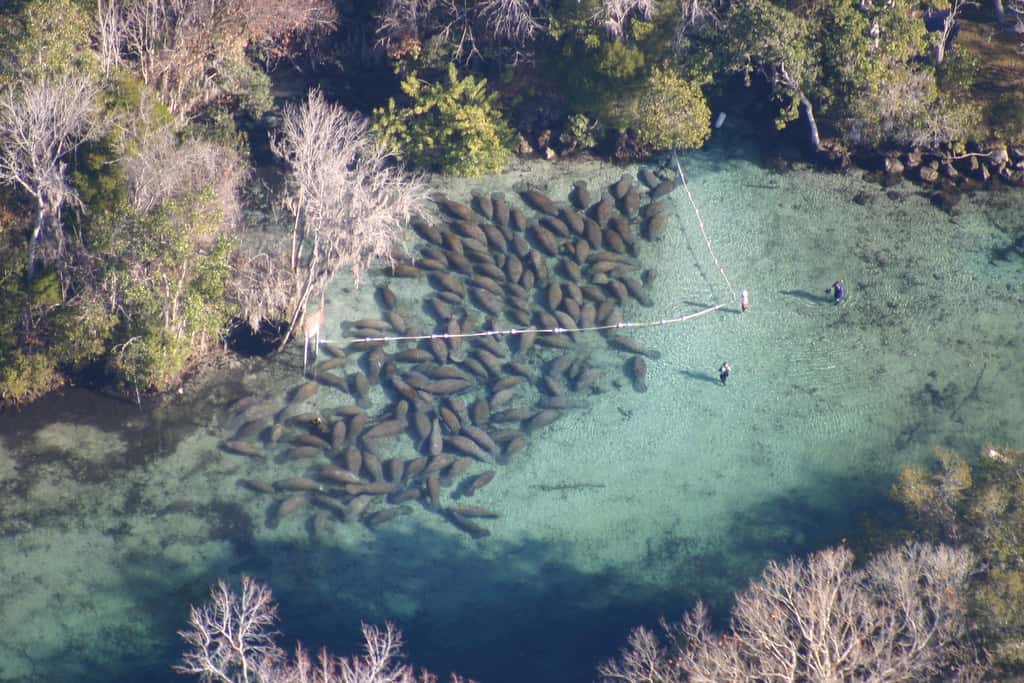
Manatees are listed as threatened, which places them squarely in the category affected by the blanket 4(d) change. Florida's manatee population endured a mass mortality event from 2020 to 2022 driven by seagrass loss in the Indian River Lagoon, a starvation die-off tied to water quality degradation. Conservation groups have said the new rule structure leaves threatened species like manatees exposed while agencies conduct additional rulemaking.
Sea turtles nest along Florida's Atlantic and Gulf beaches in numbers that make the state one of the most important nesting areas in the Western Hemisphere. Loggerhead, green, and leatherback turtles all nest here, and beach habitat protections are a central element of their conservation.
The Sweet Home decision, decided six to three, turned substantially on the ordinary meaning of the word take in the statute, which Congress defined to include harm. The majority found the agency's habitat-inclusive reading reasonable. Narrowing the regulatory definition now does not overrule that decision, because the Court held the agency's interpretation was permissible rather than required. That legal posture is precisely what makes the change vulnerable to challenge and also what makes it defensible: agencies generally retain discretion to revise interpretations they were permitted but not obligated to adopt.
The harm definition and why it matters most
The rule taking effect Sept. 14 may prove the most consequential of the three. Under the current regulatory definition, harm includes significant habitat modification that actually kills or injures wildlife by impairing essential behaviors like breeding, feeding, or sheltering.
That definition was upheld by the U.S. Supreme Court in 1995 in Babbitt v. Sweet Home Chapter of Communities for a Great Oregon. It is the legal basis on which habitat destruction has been treated as a prohibited take under the Act for three decades.
Narrowing it so that habitat degradation no longer counts as harm would substantially reduce the Act's reach over private land. For a species like the Florida panther, whose survival depends almost entirely on the availability of large connected tracts of habitat, the distinction between killing an animal directly and destroying the land it needs is not meaningful in practice.
Florida's growth is not evenly distributed, and the pressure falls hardest where habitat remains. Southwest Florida, particularly Collier, Lee, and Charlotte counties, has been among the fastest-growing regions in the country, and it overlaps almost exactly with the last substantial panther range. Central Florida's growth corridor between Orlando and Tampa runs through ranch land that functions as the connective tissue of the state's wildlife corridor. The geography of development and the geography of remaining habitat are close to the same map.
The Florida development context
Florida added roughly a thousand new residents per day at recent peaks and continues to grow, and that growth expresses itself as land conversion. The state's remaining agricultural and ranch lands, particularly in the interior, are under continuous development pressure.
Florida has responded with its own conservation programs. The Florida Wildlife Corridor, a legislatively supported effort to connect protected lands from the Everglades to Georgia, has received state funding and represents a bipartisan conservation commitment unusual in its scale. Florida Forever and the Rural and Family Lands Protection Program acquire conservation easements.
Those state programs operate independently of federal ESA regulation, which means Florida retains tools even if federal protections narrow. Whether state acquisition can move fast enough to offset reduced federal habitat protection is an open question, and it depends on legislative appropriations that vary year to year.
Timing is the practical problem litigation cannot easily solve. A development permitted under narrower habitat rules and then built is not undone if a court later vacates those rules two or three years on. Habitat converted to subdivision does not revert. That asymmetry, in which regulatory relaxation produces irreversible physical outcomes while regulatory restoration produces only prospective ones, is why conservation groups typically seek preliminary injunctions rather than waiting for final judgment, and why courts weigh irreparable harm heavily in these cases.
The litigation
Environmental organizations have filed lawsuits challenging the rule changes. Earthjustice and other groups have argued the rulemakings exceed the agencies' statutory authority and conflict with the Act's text and purpose.
Litigation over ESA regulations has a long history, and courts have repeatedly vacated or upheld agency rules on both sides of the policy divide. Rules that take effect can be stayed, vacated, or upheld, and the process typically takes years.
In the meantime, the rules operate. Permitting decisions, habitat designations, and listing determinations made under them will proceed while the litigation is pending, and unwinding actions taken during that period is difficult even if the rules are eventually struck down.
State and private conservation channels operate independently of any of this. Florida Forever remains the state's land acquisition program, the Rural and Family Lands Protection Program purchases agricultural easements that keep ranch land undeveloped, and land trusts across the state hold conservation easements negotiated directly with landowners. Those mechanisms depend on willing sellers and appropriated funds rather than on federal regulation, and they have moved substantial acreage into permanent protection over the past decade.
What's next
The two rules are effective today. The harm redefinition follows on Sept. 14. Federal Register publication is the authoritative source for the rule text, and the Fish and Wildlife Service publishes implementation guidance.
Floridians who want to weigh in on species-specific rulemaking should watch for public comment periods, which the agencies are required to open when they write 4(d) rules for individual threatened species. Those comment periods are the point at which the substance of protection for a given species is determined.
Florida's own conservation programs, including the Wildlife Corridor, continue on their state funding cycles. The Florida Fish and Wildlife Conservation Commission handles state-level wildlife regulation, which operates alongside but separately from federal ESA administration.
Spotted an issue with this article?
Have something to say about this story?
Write a letter to the editorComments
No comments yet. Be the first to weigh in.
Related Coverage
Treasury mails $500 ACA 'refund' checks, with nearly 128,000 Floridians in line for payments
2h ago

Rep. Salazar's immigration break with Trump reshapes FL-27 race a month before Election Day
2h ago
Florida loses 51 Medicare Advantage plans for 2027, the most of any state, as open enrollment nears
4h ago

FAA draft review finds no significant impact from Blue Origin's plan for 50 New Glenn launches a year at Cape Canaveral
6h ago