Everglades Reservoir Timeline Accelerates With Federal Money Behind It
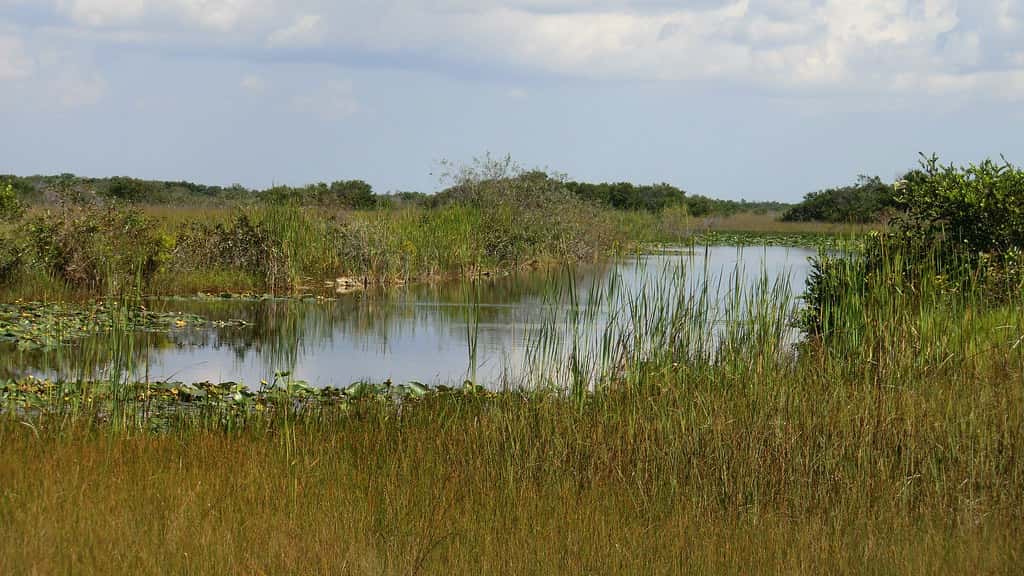
The U.S. Army Corps of Engineers is working toward completion of the Everglades Agricultural Area Reservoir by Dec. 31, 2029, an accelerated timeline supported by more than $2 billion in federal funding directed to the Corps' Jacksonville District. The acceleration moves the project forward by more than five years from its previous schedule.
The reservoir is the central component of Everglades restoration south of Lake Okeechobee. It is designed to store, clean, and send as much as 120 billion gallons of freshwater south annually to the Everglades and Florida Bay, while reducing the toxic discharges that have periodically devastated the Caloosahatchee and St. Lucie estuaries.
The accelerated scope includes 6,500 acres of engineered wetlands, known as stormwater treatment areas, which remove nutrients from Lake Okeechobee water before it moves south, along with the pump station required to move water through the system.
The Comprehensive Everglades Restoration Plan, authorized by Congress in 2000, is the umbrella under which this project sits. It comprises dozens of individual components, is cost-shared roughly evenly between the federal government and the State of Florida, and was originally projected to take three decades. It has taken longer, for reasons familiar to anyone who follows large public works: land acquisition disputes, funding that arrived in annual increments rather than in blocks, litigation, and engineering revisions as understanding of the system improved. The reservoir acceleration represents a departure from that pattern.
The problem the reservoir solves
Lake Okeechobee sits at the center of South Florida's water system, and it is polluted. More than a century of agriculture around its shores has loaded the lake with nitrogen and phosphorus, and the Herbert Hoover Dike that contains it limits how much water the lake can safely hold.
When lake levels rise, the Corps discharges water east through the St. Lucie Canal and west through the Caloosahatchee River to protect the dike. Those discharges carry nutrient-laden freshwater into estuaries that depend on brackish conditions, and they have repeatedly triggered blue-green algae blooms that have closed beaches and damaged the economies of Lee, Martin, and St. Lucie counties.
The historic flow was south, through the Everglades to Florida Bay. Twentieth-century drainage and the creation of the Everglades Agricultural Area severed that connection. The reservoir is an attempt to restore a version of it: capture water that would otherwise be discharged east and west, clean it, and send it south.
The phosphorus target is what makes the engineering hard. Water entering the Everglades Protection Area is governed by a numeric standard of 10 parts per billion of total phosphorus, a threshold established through litigation and codified in state rule. That is an extraordinarily low concentration, far below what conventional wastewater treatment achieves, and it can only be reached through large-area biological treatment in constructed wetlands operating over long residence times. It is the reason the treatment component requires thousands of acres rather than a compact facility.
Why treatment matters as much as storage
Storage alone does not solve the problem. Water sent south from Lake Okeechobee at its current nutrient concentrations would damage the Everglades, which is a naturally nutrient-poor system whose plant communities are adapted to low phosphorus.
Elevated phosphorus converts sawgrass marsh into cattail monoculture, changing the ecosystem's structure and eliminating habitat for the wading birds that are the Everglades' most visible indicator species. That is why the stormwater treatment areas are integral rather than supplementary.
Florida's existing stormwater treatment areas have demonstrated that engineered wetlands can substantially reduce phosphorus concentrations, though achieving the low targets required by consent decrees governing Everglades water quality has been a persistent technical challenge.
Everglades restoration also intersects with the sugar industry, which farms much of the Everglades Agricultural Area between Lake Okeechobee and the conservation areas. Land acquisition for restoration projects has repeatedly involved negotiations with sugar growers, and the industry's agricultural runoff is a significant nutrient source that state best management practice programs are designed to reduce. Those programs have produced measurable phosphorus load reductions, though whether the reductions are sufficient has been contested in court and in the Legislature for decades.
The federal and state cost share
The reservoir is a Comprehensive Everglades Restoration Plan project, authorized under a cost-sharing framework between the federal government and the State of Florida. The state, through the South Florida Water Management District, has been building components on its side while federal appropriations funded the Corps' portion.
Gov. Ron DeSantis has said the state has dedicated $8 billion over the past seven years to Everglades restoration and water quality improvements. That level of state commitment has been sustained across legislative sessions with bipartisan support.
Everglades restoration has been one of the few consistently bipartisan environmental priorities in Florida politics. It has survived changes in governor, legislative leadership, and congressional delegation composition, largely because the coastal communities damaged by discharges span both parties' constituencies.
Lee County's experience is the clearest illustration of the economic stakes. Blue-green algae blooms fed by Caloosahatchee discharges have closed waterfront businesses, canceled fishing charters, and produced airborne irritants that sent people to emergency rooms during severe episodes. Property values along affected waterways respond to bloom frequency, and real estate listings in the region now routinely address water quality. For a coastal county whose economy runs on waterfront amenity, discharge management is not an environmental abstraction but a direct determinant of local revenue.
What it means for the coasts
For Lee County and the Caloosahatchee estuary, and for Martin and St. Lucie counties on the east coast, the reservoir represents the prospect of fewer and smaller damaging discharges. Those communities have absorbed direct economic harm from algae blooms, with waterfront businesses, fishing guides, and tourism operators bearing the losses.
The effect will not be complete. The reservoir is sized to capture a substantial portion of discharge volume but not all of it, and extreme wet-season conditions will still require some releases. Restoration planning has always described the goal as significant reduction rather than elimination.
Florida Bay, at the southern end of the system, is the other beneficiary. The bay has suffered seagrass die-offs during periods of high salinity caused by insufficient freshwater flow, and those die-offs have cascading effects on the fishery and on the Keys economy that depends on it.
The reservoir's design capacity is also a compromise reached through negotiation rather than a purely technical determination. Earlier proposals contemplated a larger footprint with a shallower depth, which would have required more land but performed better hydrologically. The version being built is deeper and more compact, using less land at the cost of a more complex pumping requirement. Whether the built system delivers the modeled water volumes and quality is the question that will only be answered once it operates through a full range of wet and dry years.
The engineering and the risk
Accelerating a project of this scale by more than five years is not routine. Large water infrastructure projects involve land acquisition, design, environmental review, procurement, and construction sequencing, and compressing that timeline requires either parallel execution of steps normally taken sequentially or a substantial increase in resources applied.
The funding is the mechanism. More than $2 billion directed to the Jacksonville District allows the Corps to contract multiple components simultaneously rather than phasing them as appropriations arrive year by year.
Schedule risk remains real. Hurricanes disrupt construction. Supply chain and labor availability in South Florida construction are constrained by competing demand. And the pump station, which moves water into and out of the reservoir, is a complex piece of infrastructure with its own delivery timeline.
Springs protection is the North Florida analogue, and it is driven by different causes. Florida's spring systems, among the largest concentrations of freshwater springs on earth, have experienced declining flows from groundwater withdrawal and rising nitrate concentrations from fertilizer and septic systems. The state has designated outstanding springs and adopted basin management action plans, but the fundamental tension between agricultural and municipal water demand and spring flow has not been resolved in most basins.
Where this sits among Florida's water problems
The reservoir addresses Lake Okeechobee discharges and Everglades flow. It does not address several of Florida's other significant water quality problems: the Indian River Lagoon's seagrass loss, springs degradation in North Central Florida driven by nitrate loading and groundwater withdrawal, or red tide on the Gulf Coast.
Those are separate systems with separate causes. Red tide, caused by blooms of Karenia brevis, occurs naturally offshore and is aggravated by nutrient runoff when blooms move inshore. The organism produces brevetoxins that kill fish and cause seizures in manatees.
Manatee mortality has been a recurring Florida crisis, driven by seagrass loss in the Indian River Lagoon from 2020 through 2022 and compounded by red tide events. Federal Endangered Species Act rule changes taking effect this month have raised additional concerns among conservation groups about protections for the species.
Florida voters have shown consistent support for water and land conservation funding. The 2014 Water and Land Conservation Amendment, approved with roughly 75 percent of the vote, dedicated a portion of documentary stamp tax revenue to conservation purposes, and subsequent litigation and legislation have shaped how that money is spent. Conservation funding has remained among the few Florida policy areas where public opinion is not sharply divided along partisan lines.
What's next
The Corps' Jacksonville District publishes project status information for the Everglades Agricultural Area Reservoir and related Comprehensive Everglades Restoration Plan components. Construction milestones will be reported as they are reached.
The South Florida Water Management District governing board meets monthly and handles the state side of restoration projects. Those meetings are public and are where operational decisions about water management are made.
Lake Okeechobee levels and discharge decisions are made by the Corps under the Lake Okeechobee System Operating Manual. Current lake levels and any planned releases are published, and coastal residents can track them directly during wet season.
Spotted an issue with this article?
Have something to say about this story?
Write a letter to the editorComments
No comments yet. Be the first to weigh in.
Related Coverage

DeSantis and Cabinet protect more than 10,770 acres, from Putnam County woods to Martin County ranches
7h ago

Record King Tides and Heavy Rain Swamp South Florida Streets as Water Managers Warn the Season Peaks Oct. 27
1d ago

Florida's loggerhead sea turtles set preliminary nesting record
3d ago
Florida Anglers Get a 14-Day Fall Atlantic Red Snapper Season Starting Oct. 9
5d ago