Suncoast Waterkeeper Threatens Clean Water Act Suit Against Nokomis Scrapyard Over Metal Runoff Into Dona Bay
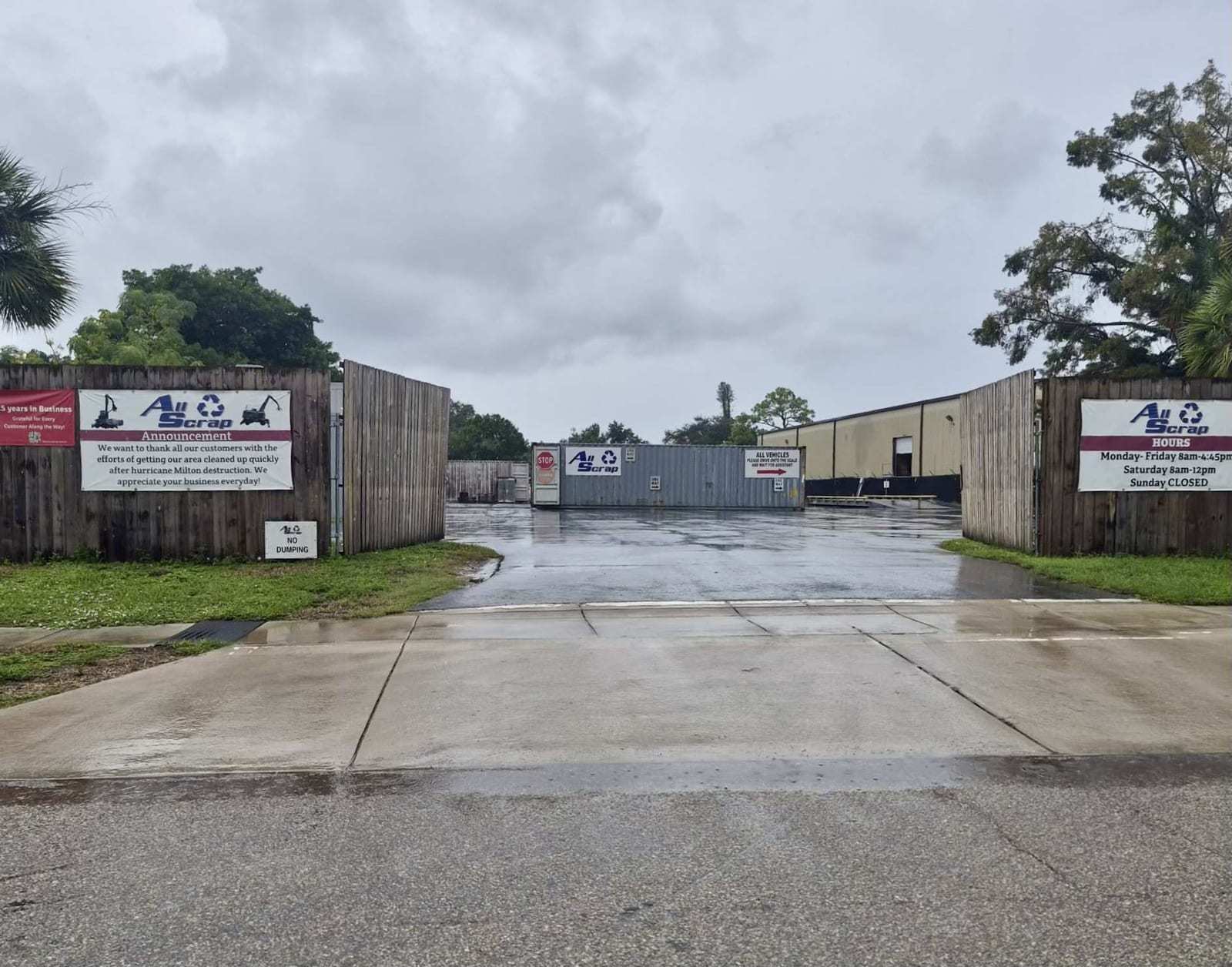
A Sarasota County environmental group is threatening to take a Nokomis scrapyard to federal court, alleging that metal-laden stormwater from the site is flowing into Dona Bay and Roberts Bay. Suncoast Waterkeeper filed a formal notice of intent to sue All Scrap Nokomis under the Clean Water Act on Oct. 21, after its own sampling found iron in the yard's runoff at more than 10 times the federal industrial stormwater benchmark, Suncoast Searchlight reported.
The notice starts a 60-day clock. Under the Clean Water Act, the group must wait 60 days before it can file suit, which puts the earliest filing date around Dec. 20. All Scrap Nokomis did not respond to two phone calls and two emails from Suncoast Searchlight seeking comment, and Suncoast Waterkeeper Executive Director Abbey Tyrna said the company had not responded to the notice either.
What the testing found
Suncoast Waterkeeper began a water quality investigation in July after a stream of complaints from residents about polluted discharge from the yard. A July sample collected by the group contained 10.7 milligrams of iron per liter of stormwater runoff, more than 10 times the industrial stormwater benchmark. The group also detected 0.9 milligrams per liter of zinc, above the 0.117 benchmark, along with elevated concentrations of other pollutants.
Those benchmarks were set in 1995 and are enforced through state permits for stormwater discharge, according to the Suncoast Searchlight report. Tyrna said the samples indicate the scrapyard has not taken the precautions needed to comply with its permit.
Scrapyards like All Scrap Nokomis are covered by federal and state permitting that requires a stormwater pollution prevention plan to control heavy metal discharges. Without such a plan, Tyrna said, stormwater can leave a facility carrying high pollution levels that harm Sarasota County's ecosystems.
"If everybody who gets a permit to pollute doesn't abide by their permits, then we would have a much different Suncoast," Tyrna said.
How metals reach the bays
When rain falls on scrap metal or industrial equipment, it can pick up contaminants and carry them off a property and into larger waterways. Contamination can also come from stored or dumped materials such as leaking vehicle parts, and the U.S. Environmental Protection Agency recommends that scrap recyclers keep equipment prone to spills and leaks indoors or under a roof to limit its exposure to rain.
Residents have complained that runoff from the Nokomis yard enters a drainage ditch that leads to Dona Bay. Tyrna said the stormwater leaving the facility filters into both Dona Bay and Roberts Bay, the shallow estuaries that border Nokomis and the Venice area.
Heavy metals can harm aquatic life as they wash into those waters. Tyrna said they can contaminate plants and macroinvertebrates such as crayfish, mollusks and aquatic insects, and that birds and other wildlife that feed on those animals then take in the contamination.
"It's contaminating the food web," Tyrna said. "It's a problem not just as it's being discharged, but it'll be a problem for a while."
A yard with a history of disputes
The Clean Water Act notice is the latest in a series of fights over the Nokomis yard.
All Scrap drew significant community pushback after the 2024 hurricane season, when storm debris and scrap metal were stockpiled outdoors near the Legacy Trail, the popular paved rail trail that links Sarasota and Venice. Residents raised concerns about heavy truck traffic, improper debris storage and stormwater runoff.
Sarasota County warned All Scrap two years ago that it was violating metal stockpiling and land use regulations, Suncoast Searchlight reported. Last year the county denied the business's use permit. County staff told commissioners at an appeal hearing in June 2025 that the denial was based on photos, code enforcement site visits and neighbors' reports showing violations of outdoor storage rules, and that the company could seek a special exception to allow outdoor storage on the property, according to a summary of that meeting. The company contested the county's decision, and that challenge is still playing out in court.
The key dates in the dispute, as reported:
| When | What happened |
|---|---|
| 2024 hurricane season | Storm debris and scrap stockpiled outdoors near the Legacy Trail draw resident complaints |
| 2024 | Sarasota County warns All Scrap of stockpiling and land use violations |
| 2025 | County denies the yard's business use permit; company challenges the decision in court |
| July 2026 | Suncoast Waterkeeper samples runoff, finds 10.7 mg/L iron and 0.9 mg/L zinc |
| Oct. 21, 2026 | Waterkeeper files notice of intent to sue under the Clean Water Act |
| About Dec. 20, 2026 | 60-day notice period ends; group may file suit |
Why a citizen group is enforcing federal law
Florida carries out the federal Clean Water Act's industrial stormwater rules through a state permitting program that allows certain facilities to discharge some pollutants as long as they meet the law's requirements. Facilities are subject to on-site evaluations, but the system relies predominantly on self-reporting, meaning the facilities themselves report whether they are in compliance.
The Clean Water Act also lets private citizens and groups sue violators directly, after giving 60 days' notice. Suncoast Waterkeeper is using that provision here.
"Suncoast Waterkeeper's enforcement of the federal Clean Water Act aims to ensure that the industrial activities at the site will conform to best management practices and that pollutants in their stormwater discharges are reduced," environmental lawyer and Suncoast Waterkeeper founder Justin Bloom said in a statement. "The facility must comply with the Clean Water Act, which provides us the right to enforce its provisions."
Tyrna said the group's role is to follow up on what neighbors report. "That's why it's important for Suncoast Waterkeeper to follow up when somebody reports something," she said, "to make sure they're doing their job of protecting the environment."
She stressed that the group's complaint is about compliance, not the size of the business. "They must operate responsibly and protect the waters we all depend on," Tyrna said.
Advocates also note that scrapyards, when properly run, serve an environmental purpose by recycling metals and keeping toxic waste out of landfills. The dispute is over whether this one is keeping its pollution on site.
What it means for Sarasota County waters
Dona Bay and Roberts Bay are part of the network of estuaries along southern Sarasota County's Gulf coast, and the yard sits near the Legacy Trail. For nearby residents who have complained since 2024 about truck traffic and debris piles, the notice adds federal pressure on top of the county's land use case.
What's next
If All Scrap responds and corrects the problem within the 60-day window, Tyrna said, Suncoast Waterkeeper will test the water leaving the facility again to confirm that contaminant levels are within legal limits. If not, the group can file a federal lawsuit once the notice period expires around Dec. 20. Separately, the company's court challenge to Sarasota County's permit denial remains pending.
Spotted an issue with this article?
Have something to say about this story?
Write us a letterComments
No comments yet. Be the first to weigh in.
Related Coverage
NOAA Proposes Reopening Part of Florida's Rare Oculina Bank Coral Reef to Shrimp Trawling
1d ago
Polk Ranch, St. Johns River Land and DeSoto Pasture Permanently Protected as Florida Buys Development Rights on Nearly 830 Acres
4d ago
SS United States Opens to Divers After Settling Upright Off Destin as the World's Largest Artificial Reef
5d ago
Plan to Mine Sugar Land Next to the EAA Reservoir South of Lake Okeechobee Faces Skeptical Water Managers
6d ago