FDLE Undercover Operations Lead to Child Exploitation Arrests
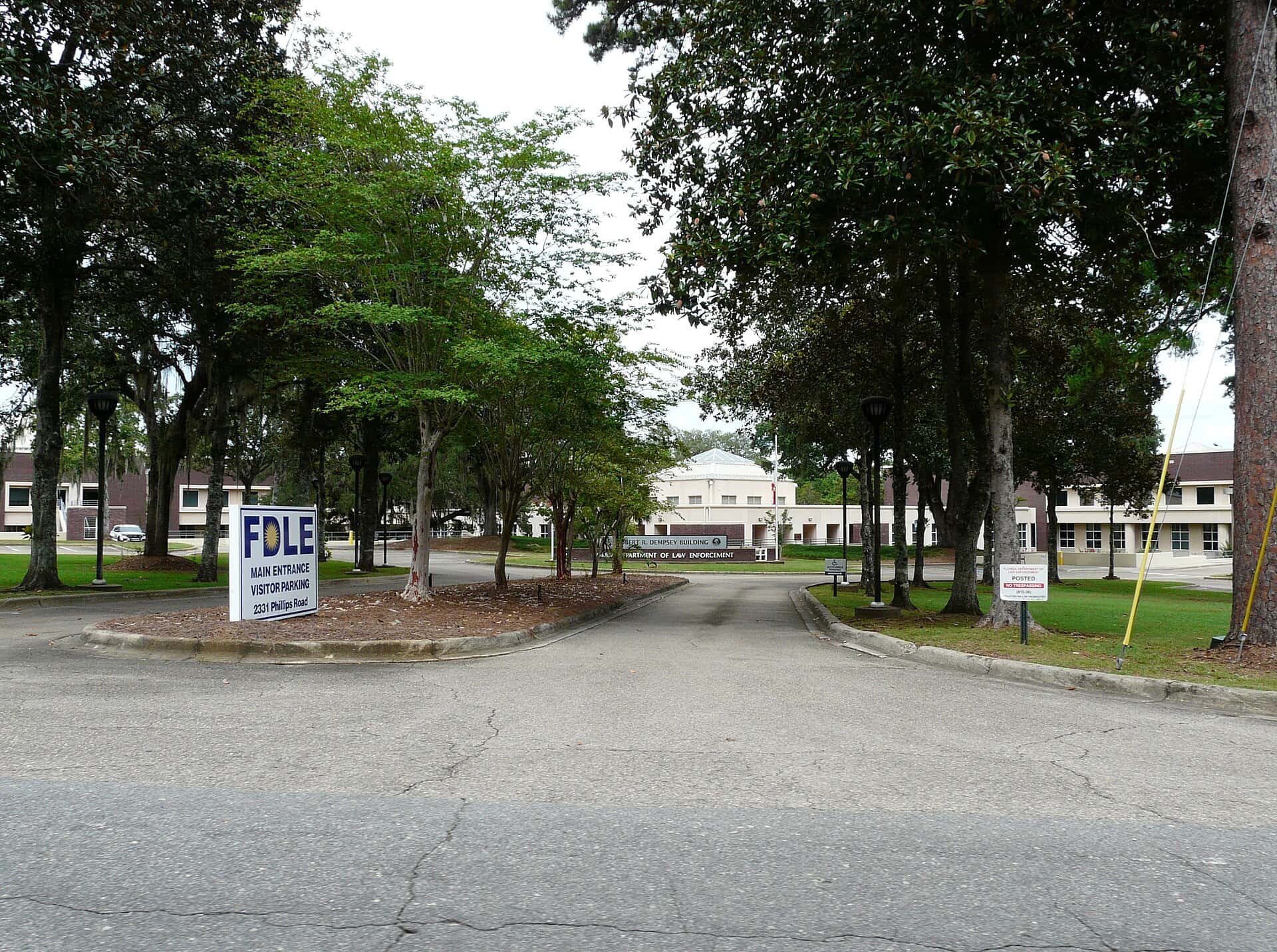
The Florida Department of Law Enforcement has announced arrests in two separate child exploitation investigations this month, both arising from undercover internet operations conducted by state agents working with federal and local partners. The cases resulted in felony charges against men in the Florida Keys and in Pasco County.
In the first case, FDLE working with Homeland Security Investigations arrested Melvin Donald Ellington, 76, of Summerland Key, on 11 counts of possession of child sexual abuse material. FDLE obtained an arrest warrant on August 24, and Ellington was taken into custody at the Monroe County Detention Center. The Office of the State Attorney for the 16th Judicial Circuit is prosecuting.
In the second case, Samuel Strouth, 31, of Dade City, was arrested on 14 counts of possession of child sexual abuse material and one count of possession with intent to promote. Both men are presumed innocent, and the charges against them have not been proven in court.
How the Pasco County case developed
According to FDLE, the Strouth case followed a months-long undercover internet investigation. On September 3, agents from the FDLE Brooksville Field Office and the agency's Special Operations Team, assisted by the Hernando County Sheriff's Office, served a search warrant at a property.
FDLE stated that a preliminary review of seized equipment uncovered several hundred files of child sexual abuse material. Strouth was booked into the Hernando County Jail.
The additional count of possession with intent to promote reflects a distinct charge under Florida law. Possession and distribution are treated as separate offenses, with distribution carrying more serious penalties, and the charging decision indicates investigators believe evidence supports the distribution element.
Forensic review of seized devices typically continues after an initial arrest, and charges in cases of this kind are sometimes amended as that analysis progresses.
How these investigations work
FDLE operates as Florida's statewide law enforcement agency, with responsibilities spanning criminal investigations, forensic laboratory services, criminal justice information systems and support to local agencies. Its investigative work in this area runs through Internet Crimes Against Children task forces, a network of federal, state and local agencies.
Undercover internet investigations typically involve agents operating in online environments where such material is exchanged. Identifying a specific individual requires linking online activity to a physical location and a person, work that generally proceeds through subpoenas to service providers and technical investigation.
That process explains why these investigations take months. Establishing probable cause sufficient to obtain a search warrant requires building an evidentiary record that will survive judicial scrutiny, and rushing it risks losing the case at the suppression stage.
Digital forensic examination follows the search. Examiners must establish not only what material exists on a device but that the person charged is responsible for it, which in shared-device situations can require substantial technical analysis.
The multiagency structure
Both cases involved multiple agencies. The Monroe County case paired FDLE with Homeland Security Investigations, the investigative arm of the Department of Homeland Security. The Pasco case involved FDLE field office agents, the agency's Special Operations Team and the Hernando County Sheriff's Office.
That structure reflects the practical reality of these investigations. Federal agencies bring jurisdiction over interstate and international activity, along with resources and relationships with service providers. State agencies bring investigative capacity and the connection to state prosecution. Local agencies provide operational support and knowledge of their jurisdictions.
Prosecution can proceed in either state or federal court depending on the facts and on coordination between prosecutors. The Ellington case is being handled by the state attorney for the 16th Judicial Circuit, which covers Monroe County.
What Florida law provides
Florida law treats possession of child sexual abuse material as a felony, with each file capable of supporting a separate count. That structure is why charging documents in these cases often list numerous counts, as in the 11 counts in the Monroe case and 14 in the Pasco case.
Possession with intent to promote, the additional charge in the Pasco case, carries a higher offense level. Florida sentencing operates under a scoresheet system in which multiple counts accumulate points, and cases involving numerous counts can produce substantial guideline sentences.
Conviction also carries registration requirements and supervision conditions that persist after any period of incarceration.
Where to report
FDLE encourages reporting of suspected child exploitation, and the agency maintains reporting channels along with the national CyberTipline operated by the National Center for Missing and Exploited Children.
Local law enforcement agencies also receive reports, and Internet Crimes Against Children task force affiliates operate throughout Florida. Reports can be made anonymously.
Parents and educators seeking guidance on online safety can find resources through FDLE and through the National Center for Missing and Exploited Children, which publishes material aimed at recognizing warning signs and establishing protective practices.
The ICAC task force network
Internet Crimes Against Children task forces operate as a federally funded network coordinating investigations across agencies, and Florida participates through multiple regional affiliates.
The structure exists because these cases routinely cross jurisdictional lines. Online activity originating in one county may involve servers in another state and material produced anywhere in the world, which means no single agency can investigate effectively alone.
Task forces provide shared training, forensic capacity and deconfliction, the process by which agencies avoid inadvertently investigating one another's undercover operations.
Florida's affiliates cover regions of the state, and local agencies participate alongside FDLE and federal partners including Homeland Security Investigations and the FBI.
Digital forensics capacity
The technical work that follows a search warrant has become a limiting factor in cases of this kind, because device storage capacity has grown faster than examination capacity.
A single household may contain phones, computers, tablets, external drives and cloud accounts, each requiring examination. Encryption adds complexity, and examiners must document their methods carefully enough to withstand challenge in court.
Laboratory backlogs have been a persistent issue for agencies nationwide, and Florida has invested in expanding forensic capacity through FDLE's laboratory system.
The preliminary review that identified several hundred files in the Pasco County case represents an initial assessment rather than a complete examination, and the full analysis typically takes considerably longer.
Prosecution and sentencing
Cases involving child sexual abuse material proceed through either state or federal court, and the choice carries practical consequences.
Federal sentencing guidelines for these offenses are severe, and federal cases frequently produce longer sentences than comparable state prosecutions. Federal jurisdiction generally requires an interstate commerce connection, which internet transmission typically supplies.
Florida state prosecutions proceed through the circuit court in the county where the offense occurred, handled by the elected state attorney for that circuit. The Monroe County case falls to the 16th Judicial Circuit.
Convictions carry sex offender registration requirements, residency restrictions and supervision conditions that continue after any period of incarceration, along with the possibility of civil commitment proceedings in certain cases.
FDLE's statewide role
The Florida Department of Law Enforcement functions differently from a municipal police department or a sheriff's office, and its structure explains the kinds of cases it takes.
The agency operates regional field offices across the state, including the Brooksville office involved in the Pasco case, and maintains specialized investigative units that local agencies can request assistance from.
Its laboratory system provides forensic services to agencies throughout Florida, covering DNA, firearms, chemistry and digital evidence. Many smaller departments depend entirely on FDLE labs.
The agency also maintains the state's criminal history repository, conducts background screening, and operates the Missing Endangered Persons Information Clearinghouse.
That combination of statewide jurisdiction, specialized capacity and support relationships positions FDLE for investigations that cross county lines or require resources local agencies lack.
Recent enforcement activity
These cases follow other actions announced this year by state authorities in the same area. In August, the Attorney General's office and FDLE announced the arrest of a Palm Beach County court official on child sexual abuse charges.
The Attorney General's office has also announced convictions and arrests arising from broader operations targeting sexual predators, reflecting a sustained enforcement emphasis.
Announcements of this kind serve a deterrent purpose alongside the enforcement itself, and agencies publicize them deliberately.
They also serve an informational purpose for the public, signaling that reporting mechanisms produce results and encouraging additional reports.
Why these cases take months
The interval between the start of an investigation and an arrest reflects legal requirements rather than administrative delay, and understanding it clarifies how these cases are built.
Establishing probable cause for a search warrant requires connecting online activity to a physical address and a person. That involves subpoenas to internet service providers, analysis of account records and often extended observation.
Courts scrutinize warrants in these cases closely, because the evidence sought is on personal devices in a residence. A warrant obtained on a thin record risks suppression, which would end the prosecution regardless of what the search found.
Investigators therefore build the record deliberately, and the months-long timeline FDLE described in the Pasco case reflects that process working as designed.
Agencies also note that the investigative timeline protects the integrity of any eventual prosecution, since evidence gathered without proper authorization can be excluded regardless of what it shows.
What's next
Both cases will proceed through the Florida court system, with arraignment followed by pretrial proceedings. Digital evidence cases frequently involve substantial pretrial litigation over the search warrants that produced the evidence and over the forensic methods used to analyze it.
FDLE has indicated that its undercover operations in this area are ongoing, and additional arrests from the same investigative programs are expected. The agency publishes arrest announcements through its newsroom.
Both men named here have been charged and not convicted. They are entitled to the presumption of innocence under Florida law, and the descriptions of the investigations reflect allegations set out in FDLE's public statements rather than facts established in court.
Spotted an issue with this article?
Have something to say about this story?
Write a letter to the editor