Federal Judge Blocks Sarasota From Releasing Christian Ziegler's Seized Phone Data Despite State Appeals Ruling
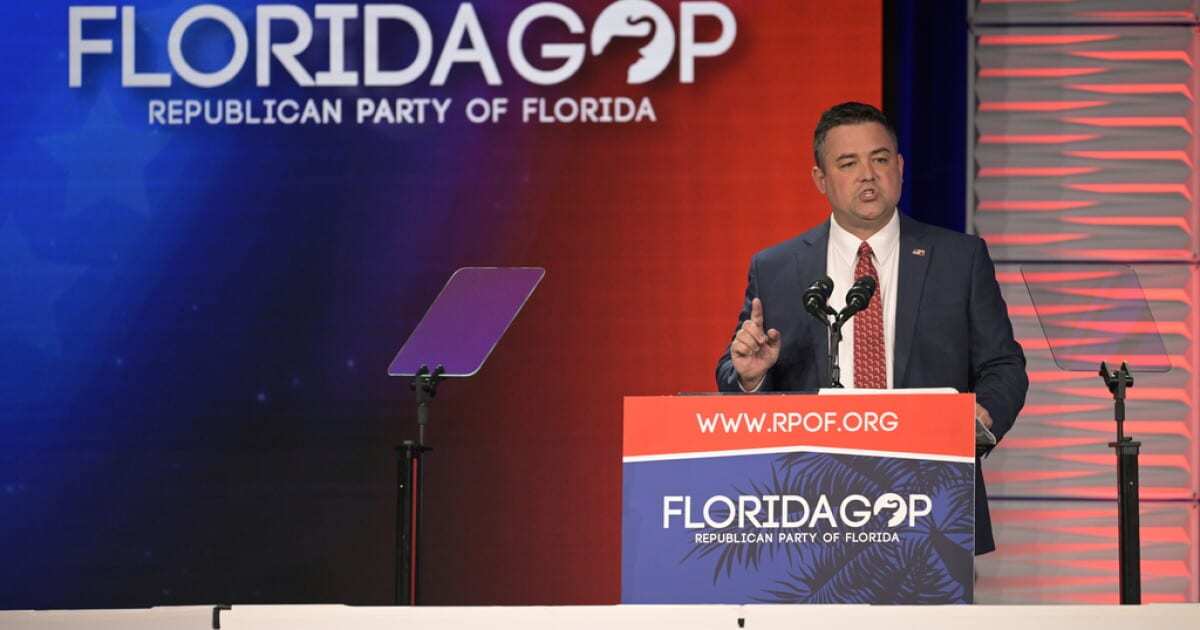
A federal judge in Tampa has temporarily barred the City of Sarasota from releasing the private phone and online data police seized from former Republican Party of Florida Chairman Christian Ziegler, even though a Florida appeals court ruled in September that the records are public under state law. Senior U.S. District Judge Charlene Edwards Honeywell signed the temporary restraining order on Monday, Nov. 16, finding that releasing the material before the court decides whether it was seized unconstitutionally would cause harm that money could not undo.
The order, in Ziegler v. City of Sarasota, case No. 8:25-cv-02992 in the U.S. District Court for the Middle District of Florida, forbids the city from producing any of the data "in response to any public-records request under Chapter 119, Florida Statutes," the state's public records law. It runs through Nov. 30 unless extended, and Honeywell set a preliminary injunction hearing for Nov. 23. The city did not oppose the request.
What the order does
Christian Ziegler and his wife, Bridget Ziegler, a co-founder of Moms for Liberty who has served on the Sarasota County School Board, asked the court for an emergency order blocking both the city and State Attorney Ed Brodsky of the 12th Judicial Circuit from disseminating the data. Honeywell granted the motion as to the city and denied it as to Brodsky.
Under the order, the city and its officers, employees, attorneys and anyone acting with it are barred from releasing, producing, disclosing, publishing or transferring any portion of the seized data to a third party, and from altering or modifying it. The city may still keep and use the material to defend the lawsuit, including sharing it with its lawyers, experts and the court, but any court filing that reproduces it must be submitted under seal. The order leaves in place an evidence-preservation order the court entered on Jan. 28, 2026, at the city's request, and Honeywell waived the usual bond requirement because the order only preserves the status quo.
The restraining order expires Nov. 30 unless the court extends it, for good cause, by up to 14 days. The parties are due back before Honeywell by videoconference at 1:30 p.m. on Nov. 23 for a hearing on whether to convert it into a preliminary injunction that would last for the rest of the case.
Why the state attorney is not covered
Honeywell dismissed the claims against Brodsky on Nov. 2 under the Younger abstention doctrine, a rule that generally keeps federal courts from interfering in pending state proceedings. The Zieglers named him again in a second amended complaint, but the judge wrote that the claims against him are identical to the ones she already dismissed, so he cannot be bound by an injunction in the case. According to the order, only a very small subset of the seized material was ever sent to the State Attorney's Office.
What police seized
During its 2023 investigation of Ziegler, the Sarasota Police Department obtained three search warrants and seized all of the data on his cellphone, his Google Drive and his Instagram account. According to the order, which summarizes the Zieglers' filings, the material includes a video of a sexual encounter, more than 1,200 marital communications between the couple, and intimate photographs, videos and messages involving Bridget Ziegler that are unrelated to any investigation. In an affidavit, Christian Ziegler said police took more than one terabyte from his phone alone, including his entire internet search history, more than 30,000 videos and hundreds of thousands of photographs.
The investigation began in October 2023, when a woman accused Ziegler of sexual battery. Police later expanded it to examine possible video voyeurism. On March 6, 2024, the State Attorney's Office announced it would not file charges, citing insufficient evidence, and closed the case. Ziegler, who denied wrongdoing, was never charged with any crime. The Republican Party of Florida removed him as chairman on Jan. 8, 2024, in a 199-3 vote.
How the judge weighed the claims
To win a temporary restraining order, the Zieglers had to show, among other things, a substantial likelihood of success on the merits. Honeywell found they were likely to succeed on three of the four claims she examined:
- Christian Ziegler's Fourth Amendment claim that the warrants were unconstitutionally overbroad. "It can hardly be said that a warrant that authorized such an all-encompassing search of a cell phone fulfilled the specificity requirement of the Fourth Amendment," she wrote.
- His Fifth Amendment claim that the city's continued retention of his data, for the purpose of releasing it to the public and without compensation, amounts to an unconstitutional taking.
- Bridget Ziegler's claim that the city violated her Fourteenth Amendment privacy rights, which the judge found likely to succeed while assuming, without deciding, that she has standing to bring it.
Honeywell found Christian Ziegler's own Fourteenth Amendment privacy claim unlikely to succeed as currently written, because it alleges only that the city is keeping the data, and the precedent she cited requires that private information actually be shared.
On harm, the judge wrote that "no amount of money can erase from public knowledge the conversations, photographs, and videos that were intended to be confidential between marital partners." She found that the threatened injury to the couple outweighs any harm to the city, and that keeping the material private would not hurt the public interest.
The state court fight
The federal order collides with a long-running state public records battle. On July 1, 2024, a Sarasota circuit judge ruled for the Zieglers, finding all three warrants overbroad in violation of the Fourth Amendment, permanently barring release of the data and ordering it destroyed.
On Sept. 2, 2026, Florida's Second District Court of Appeal unanimously reversed that ruling in a case brought by the Florida Center for Government Accountability and its executive director, Michael Barfield, joined by media companies Gannett, McClatchy and Scripps. Writing for the panel, Chief Judge Lucas said the trial court had "machinated unwritten exemptions into the Public Records Act" and that the law contains no statutory exemption for public records that were allegedly obtained illegally. The court said the exclusionary rule applies only in criminal trials, that spousal privilege governs courtroom testimony rather than public access to records, and that whether to create such exemptions is a question for the Legislature. It also questioned whether the Zieglers had standing at all, noting that "no Florida court has ever held that a third party has standing to contest a public records request."
According to Honeywell's order, the state case is now pending discretionary review at the Florida Supreme Court. The state trial court's injunction remains in effect for now, but once the appeals court's mandate issues, that injunction will dissolve and records custodians could release the data in response to pending requests. The federal order is meant to stop that from happening before Honeywell rules on whether the seizure itself was unconstitutional.
Timeline
The case has moved between state and federal court for three years.
| Date | Development |
|---|---|
| Oct. 2023 | Sarasota police open investigation of Ziegler |
| Jan. 8, 2024 | Florida GOP removes Ziegler as chairman, 199-3 |
| March 6, 2024 | State Attorney declines to file charges |
| July 1, 2024 | Circuit court bars release, orders data destroyed |
| Jan. 28, 2026 | Federal evidence-preservation order entered |
| Sept. 2, 2026 | Second DCA rules records are public |
| Nov. 2, 2026 | Federal court dismisses state attorney |
| Nov. 16, 2026 | Honeywell blocks city from releasing data |
| Nov. 23, 2026 | Preliminary injunction hearing |
| Nov. 30, 2026 | Restraining order expires unless extended |
What's next
The Nov. 23 hearing will decide whether the block on releasing the data continues while the federal case proceeds. The city, which did not oppose the restraining order, has separately sought dismissal of two of the Zieglers' counts in an earlier version of the complaint, according to court records and the Sarasota News Leader. The outcome will also shape what Florida's public records law can reach: the state courts have so far said seized evidence in a closed case is a public record, and a federal judge is now testing whether the Constitution allows it to be released.
Spotted an issue with this article?
Have something to say about this story?
Write us a letterComments
No comments yet. Be the first to weigh in.
Related Coverage

Could South Florida Build the Navy's Next Drone Boats? Boatbuilders Eye Defense Work
2h ago

CMS Lets States Delay Medicaid Work Requirement Enforcement to June 30, 2027: What It Means for Florida
3h ago
Civil rights groups ask DHS watchdogs to investigate Miramar ICE office where detainees say they were held for days and denied medication
3h ago

Haiti Closes Candidate Enrollment for Its First Elections in a Decade, With 33 Presidential Hopefuls and South Florida's Diaspora Watching
1d ago