Florida Aquifers Stay in Deficit as Drought Keeps Watering Limits in Force
Recent rainfall across Central Florida has not been enough to lift the state's aquifers out of deficit, and mandatory landscape watering restrictions remain in force across large portions of Florida heading into the final stretch of the wet season. Water managers reported this week that groundwater levels in the region continue to sit below normal, and that the recovery needed to end the current shortage orders has not yet materialized.
The situation is unusual for late August. Florida's wet season typically runs from late May through October and is expected to refill surficial and Floridan aquifer storage after the spring dry season. This year, persistent Saharan dust intrusions suppressed convective rainfall for stretches of the summer, and the resulting deficit has carried a drought that began in the winter deep into what should be the wettest part of the calendar.
Where the water levels stand
Aquifer levels across Central Florida remain at a deficit despite rainfall in recent weeks, according to reporting on water management district monitoring data. District officials have described the shortfall in cumulative terms: the region's total annual rainfall has run well below average when measured across the twelve months ending in July, and a few weeks of storms does not close a gap measured in inches over a year.
The Southwest Florida Water Management District has reported that water levels in aquifers, rivers and lakes across its territory have continued to decline and that many gauges sit in severely abnormal territory. The St. Johns River Water Management District has cited declining spring flows at Silver Springs and other artesian systems as part of the basis for its shortage declaration.
Spring flow is a particularly sensitive indicator in Florida because artesian springs discharge directly from the Floridan aquifer. When potentiometric surface pressure drops, spring discharge falls with it, and that decline registers before many other surface water indicators show stress.
What the restrictions require
The rules differ by district, and Floridians who move between regions frequently get this wrong. The Southwest Florida Water Management District has kept residents under one-day-per-week watering restrictions with tightened watering hours across its sixteen-county territory, which includes Citrus, DeSoto, Hardee, Hernando, Hillsborough, Manatee, Pasco, Pinellas, Polk, Sarasota and Sumter counties in full, along with portions of Charlotte, Highlands and Lake counties.
The St. Johns River Water Management District's shortage order, declared in March, limits irrigation to one day per week on a schedule tied to address parity, prohibits watering between 10 a.m. and 4 p.m., and caps application at three quarters of an inch per zone.
The South Florida Water Management District operates a permanent year-round framework rather than a drought-triggered one. Its standing rule allows two days per week, with odd-numbered addresses on Wednesday and Saturday, even-numbered addresses on Thursday and Sunday, and common areas on Tuesday and Friday, with the same 10 a.m. to 4 p.m. prohibition.
Why the midday prohibition matters
The ban on irrigation between 10 a.m. and 4 p.m. is the least understood element of Florida's watering rules and arguably the most consequential. Evapotranspiration losses peak during those hours. Water applied to turf at midday in a Florida August can lose a substantial fraction to evaporation before it reaches the root zone, which means the homeowner pays for water that never does the job it was applied for.
Irrigation efficiency is not a marginal question in Florida. Residential landscape irrigation accounts for a large share of public supply withdrawals statewide, and in some suburban utility service areas it represents the single largest category of household water use. Shifting the same volume of water to early morning application does not reduce the amount a lawn receives but substantially reduces the amount the aquifer gives up.
Local governments enforce these rules through code enforcement, and penalties escalate with repeat violations. Enforcement intensity varies considerably between jurisdictions.
The agricultural and environmental pressure
Drought stress in Florida does not fall only on lawns. Agricultural producers, particularly in the citrus belt and in row crop areas of the interior peninsula, depend on irrigation drawn from the same aquifer system. Growers already contending with citrus greening pressure face additional input costs when supplemental irrigation demand rises.
Environmental systems absorb the rest. Reduced spring discharge concentrates nutrients in spring runs, which can accelerate algal growth in systems that are already nutrient-loaded. Lower lake and river stages reduce habitat availability for fish and wading birds, and wetland systems that depend on seasonal hydroperiods can shift toward drier community types when a wet season underperforms.
Low surface water levels also raise wildfire risk. The Florida Forest Service tracks drought conditions through the Keetch-Byram Drought Index, and elevated readings during what should be a wet period create fire behavior conditions more typical of March and April.
What it means for Floridians
For households, the practical implications are immediate. Landscape plantings established during a normal wet season may show stress under restricted irrigation, and residents replacing plants should weigh drought-tolerant species that Florida-Friendly Landscaping guidance recommends.
Utility customers may also see rate structure effects. Many Florida water utilities use tiered pricing that escalates sharply above baseline household consumption, so a household maintaining pre-drought irrigation volumes can see a bill increase disproportionate to the increase in gallons used.
Well owners on private supply face a different exposure. Shallow surficial aquifer wells are the most vulnerable to seasonal drawdown, and in prior Florida droughts some private well owners have needed to lower pumps or deepen wells when static water levels fell.
Local impact across the state
Brevard County has so far avoided the drought conditions affecting other Central Florida counties, according to reporting on regional conditions, an illustration of how uneven rainfall distribution can be across the peninsula during a summer dominated by dust-suppressed convection.
Tampa Bay's regional water supply system draws from a diversified portfolio that includes surface water from the Alafia and Hillsborough rivers, groundwater wellfields and a seawater desalination facility, which gives the region some buffering capacity that single-source utilities lack.
South Florida's situation is distinct because Lake Okeechobee operations, governed by the Army Corps of Engineers manual adopted in 2024, function as a regional storage and supply question as well as an ecological one. Lower lake stages reduce the risk of damaging estuary discharges but also reduce the water available for dry season supply to agricultural and urban users south of the lake.
How Florida's water system is governed
Florida manages water through five regional water management districts established under state law, each covering a hydrologic region rather than following county lines. The Northwest Florida, Suwannee River, St. Johns River, Southwest Florida and South Florida districts each have a governing board appointed by the governor and confirmed by the Senate.
That structure means water policy is set by appointed boards rather than elected officials, and the governor's appointment power over those boards is one of the more consequential and least visible authorities of the office. Districts issue consumptive use permits, declare water shortages, set restriction phases and manage regional water supply planning.
The Florida Department of Environmental Protection provides state-level oversight, and local utilities and municipalities implement and enforce the rules on the ground. A resident dealing with a watering violation is dealing with local code enforcement, not with the district that set the rule.
That layered structure is why restriction rules differ across the state and why residents moving between regions encounter different requirements. It is a feature of the design rather than an inconsistency.
The Floridan aquifer
Most of Florida's drinking water comes from the Floridan aquifer system, one of the most productive aquifers in the world, a limestone formation that underlies the entire state and extends into Georgia, Alabama and South Carolina.
Its productivity is also its vulnerability. Limestone is soluble, and the same karst geology that makes the aquifer yield water so readily also creates direct pathways between the surface and the groundwater. Contamination that would be filtered through soil in other regions can reach Florida's aquifer with limited attenuation.
Sinkhole formation is the other consequence of karst geology, and it is influenced by groundwater levels. Rapid changes in the water table, whether from drought or from heavy pumping, can destabilize the overburden above limestone voids. Florida's sinkhole activity concentrates in a band through the west-central part of the state.
Saltwater intrusion is the coastal risk. When freshwater pressure in the aquifer declines, saltwater migrates inland along the coast, and coastal wellfields in South Florida and along the Gulf coast have had to be relocated or abandoned as a result. That process is largely irreversible on human timescales.
How Florida utilities are adapting
The long-run response to a growing population drawing on a finite aquifer has been supply diversification, and Florida utilities have pursued several approaches.
Tampa Bay Water operates the largest seawater desalination facility in the country alongside surface water treatment and groundwater wellfields, an intentional portfolio designed to reduce dependence on any single source. That diversification is why the Tampa Bay region has more operational flexibility during drought than utilities dependent solely on groundwater.
Reclaimed water systems are widespread across Florida. Treated wastewater distributed through separate purple pipe networks for irrigation reduces the potable demand for landscape watering, which is the single largest discretionary use category. Communities with extensive reclaimed systems face different restriction requirements than those without.
Aquifer storage and recovery, which injects treated surface water into the aquifer during wet periods for withdrawal during dry ones, has been deployed at various scales with mixed results and ongoing regulatory questions.
Conservation pricing, in which per-gallon rates escalate sharply above baseline household use, has proven among the more effective demand management tools available to utilities.
What's next
Water management district governing boards will continue to evaluate shortage orders at scheduled meetings, and any modification or extension of current phases would come through board action. Districts typically reassess as the wet season ends in October, when the calendar shifts toward the dry months and recovery becomes far less likely until the following summer.
The near-term forecast matters more than usual this year. A wet season that finishes below normal leaves the state entering the November through May dry period with depleted storage, which raises the probability of more restrictive shortage phases in the spring of 2027.
Residents can confirm which schedule applies to their address through their water management district or local utility, since municipal ordinances in some jurisdictions are stricter than the district baseline.
Spotted an issue with this article?
Have something to say about this story?
Write us a letterComments
No comments yet. Be the first to weigh in.
Related Coverage
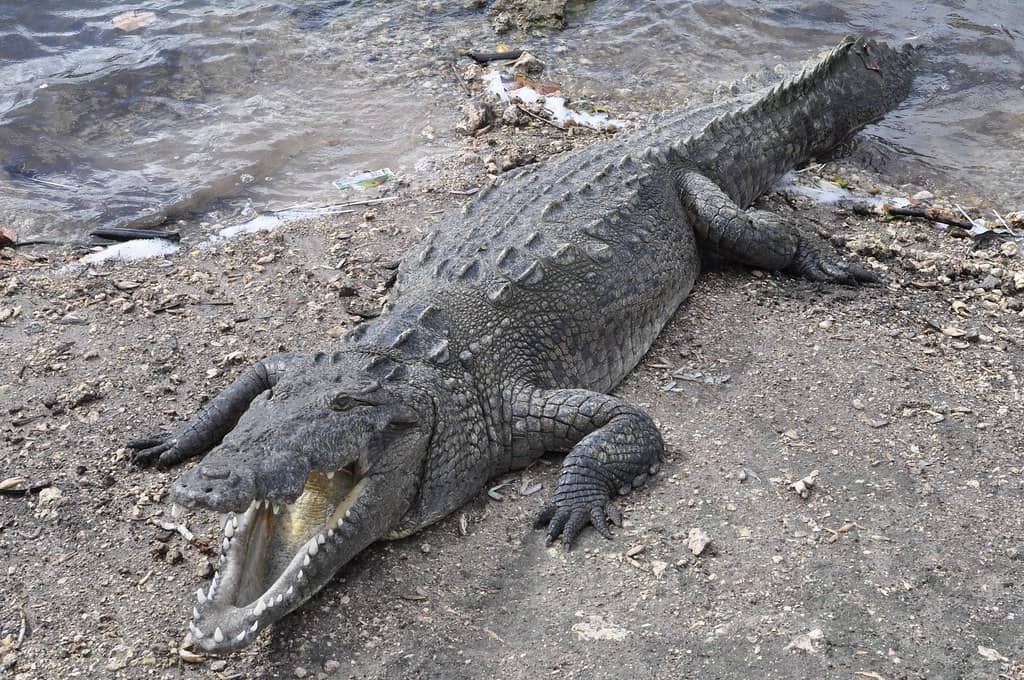
Lead pellets from shot iguanas linked to first known crocodile poisoning death in Florida
1d ago

DeSantis and Cabinet protect more than 10,770 acres, from Putnam County woods to Martin County ranches
5d ago

Record King Tides and Heavy Rain Swamp South Florida Streets as Water Managers Warn the Season Peaks Oct. 27
6d ago

Florida's loggerhead sea turtles set preliminary nesting record
Oct 1