Florida Begins Teaching History of Communism Standards in Public Schools
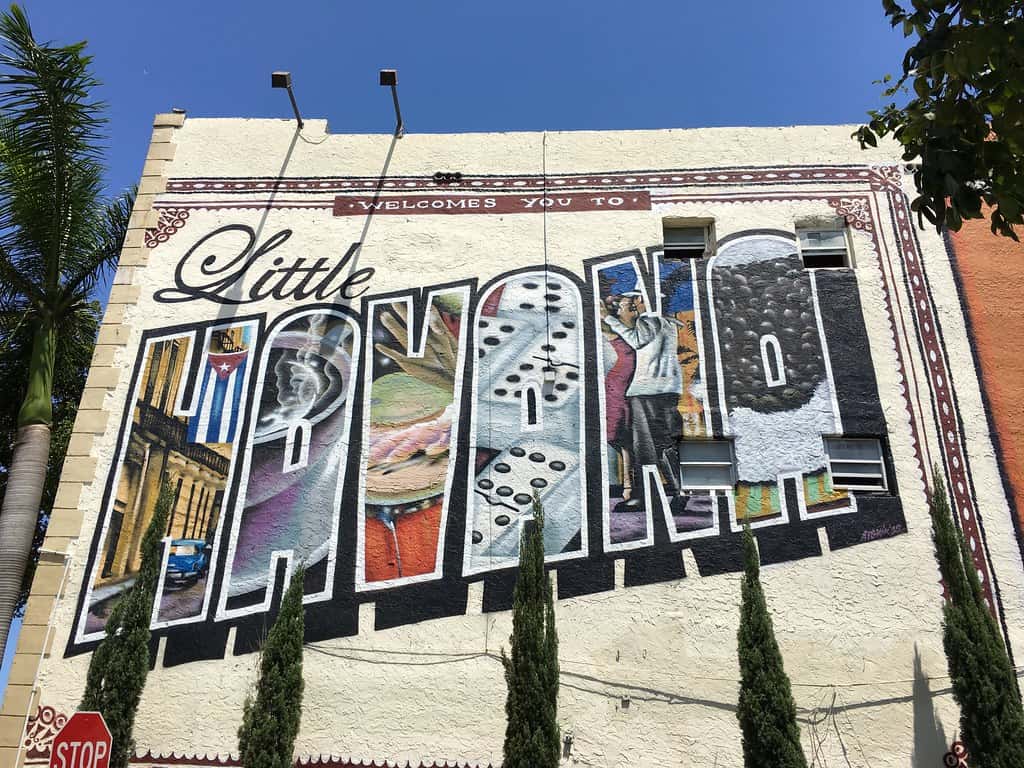
Florida public school students are now working through a required course of study on the history of communism, the result of standards the state describes as the most comprehensive of their kind in the country. Governor Ron DeSantis marked the rollout at a press conference at the Bay of Pigs Museum and Library in Miami, a venue chosen for its connection to the Cuban exile community that shaped South Florida. The standards reach across grade levels and carry specific content requirements that districts must build into their curriculum.
What the standards require
The standards establish a sequence of instruction rather than a single course. Florida's approach introduces age-appropriate content in the elementary grades and builds toward more detailed historical study in middle and high school. The framework covers the ideological foundations of communism, the establishment of communist governments in the twentieth century, and the documented human cost of those regimes.
The state has emphasized breadth of geography. The standards address the Soviet Union, the People's Republic of China, Cambodia under the Khmer Rouge, North Korea, and the communist governments of Eastern Europe. They also cover the Western Hemisphere, including Cuba, Venezuela, and Nicaragua, which carry particular resonance for Florida families with direct experience of those countries.
Districts are responsible for implementation, which means selecting instructional materials that align to the standards and providing teachers with the training to deliver them. Florida's instructional materials process runs on a review cycle, and publishers have had to adjust social studies offerings to meet the new requirements. That work has been under way since the standards were adopted.
Why Miami was the setting
The Bay of Pigs Museum and Library in Little Havana commemorates Brigade 2506, the Cuban exile force that landed in Cuba in April 1961 in a failed attempt to overthrow Fidel Castro's government. The site functions as a memorial and a community gathering place for exiles and their descendants.
South Florida's demographics explain the choice. Miami-Dade County is home to the largest Cuban American population in the United States, along with substantial Venezuelan, Nicaraguan, and Colombian communities. For many families in those communities, the history in question is not distant. It is the reason they are in Florida.
The state has leaned on that lived experience in building the program. The standards contemplate the use of survivor testimony and primary accounts from people who left communist countries, material that is more readily available in Florida than in most states. Several South Florida institutions have built oral history collections that districts can draw on.
The legislative path
The standards trace back to legislation the Florida Legislature passed directing the Department of Education to develop instruction on the history of communism. Lawmakers set out required content areas and gave the department responsibility for translating those into grade-level expectations. The Florida Board of Education then adopted the resulting standards.
That two-step structure, statute followed by rulemaking, is how Florida handles most curriculum mandates. The Legislature sets the requirement and the Department of Education supplies the specificity. It gives the state consistency across 67 county school districts while leaving instructional delivery to local decision-making.
The program also connects to a broader set of civics and history requirements Florida has adopted over the past several years, including expanded instruction in the founding documents and a civic literacy requirement in higher education. The state has presented these as a package aimed at what officials describe as historical and civic knowledge gaps.
What it means for teachers and districts
The practical burden falls on social studies departments. Adding required content to an already full scope and sequence means something else gets compressed, and department chairs across the state have been working through that arithmetic. World history and United States history courses carry the bulk of the new material at the secondary level.
Professional development is the second challenge. Teachers who trained in general social studies may have limited background in, for example, the economic history of the Soviet collectivization period or the mechanics of the Cambodian genocide. Districts have approached this differently, with some building summer institutes and others relying on publisher-provided training tied to adopted materials.
Resource availability varies by district size. Miami-Dade, Broward, Hillsborough, Orange, and Palm Beach have curriculum staff capable of developing supplementary materials in house. Smaller rural districts in the Panhandle and North Florida typically do not, and they depend more heavily on state-provided resources and adopted textbooks.
Debate over the approach
Supporters argue that American students have historically received little instruction on communist regimes and that the death tolls associated with those governments are poorly understood. They point to survey data showing limited knowledge of twentieth century political history among younger Americans as justification for a dedicated requirement.
Critics have raised questions less about whether the subject should be taught than about how. Some social studies educators have argued that mandated content framed in a particular direction can crowd out the analytical work that history instruction is supposed to develop. Others have noted that the standards arrive alongside other state directives affecting what can be taught, and that the combination leaves teachers uncertain about where the lines fall.
Florida officials have responded that the standards are historical rather than ideological, and that they rest on documented events and established scholarship. The department has published the standards so that parents and teachers can review the specific expectations rather than rely on characterizations of them.
Local impact across the state
In Miami-Dade, the standards align closely with community expectations, and the district has long included Cuban history in its offerings. The new requirements formalize and extend material that many schools already covered, and local institutions provide a deep bench of speakers and archival resources.
Tampa Bay and Central Florida districts serve substantial Puerto Rican, Venezuelan, and Colombian populations, and the Venezuelan and Nicaraguan content carries particular relevance in Orange, Osceola, and Hillsborough counties. Orange County Public Schools has seen significant growth in students from Venezuelan families over the past decade.
In North Florida and the Panhandle, the material is less connected to local family history, and districts there are approaching it as standard world history content. That difference in context does not change the requirement, but it does change how teachers frame the material for their students.
What the content covers
The twentieth century material forms the core. Students study the Bolshevik Revolution and the establishment of the Soviet state, the collectivization of agriculture and the famine that followed in Ukraine and elsewhere, the purges of the 1930s, and the labor camp system. The scale of those events is documented in archival material opened after the Soviet collapse.
The Chinese material covers the establishment of the People's Republic, the Great Leap Forward and the famine it produced, and the Cultural Revolution. Historians' estimates of mortality in the Great Leap Forward famine range into the tens of millions, and the event is generally regarded as the deadliest famine in recorded history.
Cambodia under the Khmer Rouge receives dedicated attention. The regime emptied cities, abolished currency and private property, and killed a substantial fraction of the country's population between 1975 and 1979. The Cambodian case is frequently taught alongside the Holocaust in genocide education because of its documentary record and the subsequent international tribunal.
The Western Hemisphere content covers the Cuban Revolution and the consolidation of the Castro government, the expropriations and emigration that followed, and more recent developments in Venezuela and Nicaragua. For Florida students, that material connects directly to the communities around them.
How Florida compares to other states
Several states have adopted requirements touching on communist regimes over the past few years, and Florida's is among the more detailed. Arizona, Texas, and a handful of other legislatures have passed related measures, though the scope and specificity vary considerably.
Most states address the subject within general world history standards rather than through a dedicated strand. The difference matters in practice, because content that appears as a bullet in a broad standard receives whatever time a teacher can allocate, while a dedicated requirement with its own grade-level expectations competes for time more successfully.
Florida's approach also differs in its use of survivor testimony as an explicit instructional resource. Holocaust education in Florida has long incorporated survivor accounts, and the state has substantial infrastructure supporting that work including the Holocaust Memorial Resource and Education Center in Maitland. The communism standards borrow that model.
National organizations focused on this subject have provided curriculum resources to states adopting requirements. Districts evaluating supplementary materials assess them against the state standards and against Florida's instructional materials review criteria, which govern what can be adopted with public funds.
What's next
Implementation continues through the 2026-27 school year, with districts phasing content in as instructional materials arrive and teachers complete training. The Department of Education monitors implementation through its regular accountability processes, and districts report on curriculum alignment as part of ordinary state reporting.
Assessment is the open question. Florida's statewide testing program does not currently include a dedicated social studies assessment at every grade level, which means measuring whether the standards are producing the intended learning is harder than it is for reading and mathematics. The state has not announced a separate assessment tied to the communism standards.
Parents who want to see the specific expectations can review the adopted standards through the Department of Education, and districts publish their instructional materials adoptions locally. School board meetings remain the venue where implementation decisions get made and where residents can weigh in on how their district is handling the requirement.
Florida law also gives parents the right to review instructional materials used in their child's classroom and establishes a process for objecting to specific materials. Districts publish the procedures for both.
Spotted an issue with this article?
Have something to say about this story?
Write us a letterComments
No comments yet. Be the first to weigh in.
Related Coverage

Miami-Dade, Broward and Palm Beach Ask Voters to Renew School Tax That Funds Teacher Pay
1d ago

Walk-through weapons detectors arrive at Duval County elementary schools under $2 million plan
2d ago
Under State Pressure, Palm Beach County Schools Pull and Review More Than 1,800 Library Books
3d ago

OCPS Rejects Special Magistrate's Plan as School Board Takes Up Teacher Contract Impasse
4d ago