Florida Bets on Flying Cars and Autonomous Test Tracks as SunTrax Expands Into Air Mobility
Florida is positioning itself as a testing ground for the next generation of transportation technology, expanding a state-run research campus in Polk County from its original focus on self-driving cars into aviation, and setting a target of active flying vehicle testing before the end of the year.
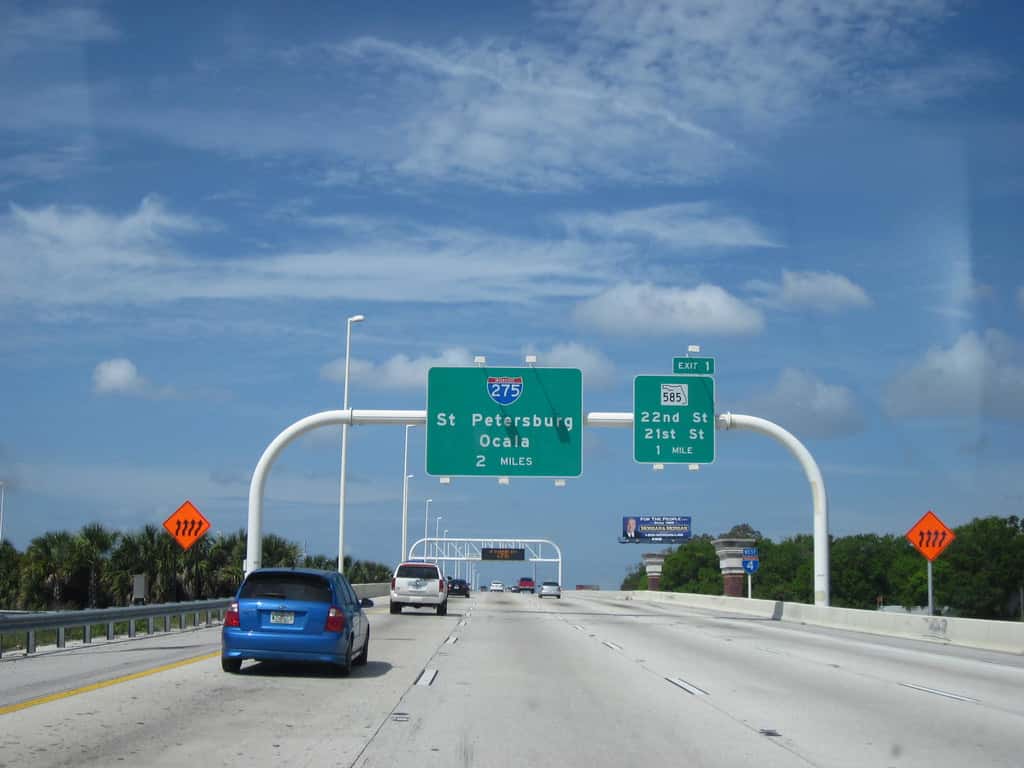
Governor Ron DeSantis highlighted the SunTrax facility on August 10, describing the 775-acre campus along the Interstate 4 corridor as a nation-leading site for research and development of emerging transportation technologies. The campus was initially built to test connected and autonomous vehicle systems and has now expanded to include air technology.
Four days later, the governor announced the accelerated start of construction on a $56 million project to rebuild Clyde Morris Boulevard in Daytona Beach, and used the occasion to highlight a new research partnership between Embry-Riddle Aeronautical University and the Florida Department of Transportation on emerging transportation technology.
What SunTrax is
SunTrax sits between Orlando and Tampa in Polk County, a location chosen because it puts the facility inside Florida's fastest-growing corridor and within reach of the engineering talent at the University of Central Florida, the University of South Florida and Embry-Riddle. The campus is operated in connection with Florida's Turnpike Enterprise.
The original build focused on tolling technology and on connected and autonomous vehicle testing. Those two functions are related: automated toll collection depends on vehicle-to-infrastructure communication, which is the same class of technology that autonomous driving systems use to read road conditions and coordinate with traffic management systems.
The facility's core asset is a controlled environment. Testing autonomous systems on public roads carries liability, regulatory and safety constraints that a closed campus removes, and manufacturers can run failure scenarios at SunTrax that they cannot responsibly run in traffic.
The expansion into air technology reflects where the industry has moved. Electric vertical takeoff and landing aircraft, commonly grouped under the term advanced air mobility, have progressed from concept demonstrations toward Federal Aviation Administration certification programs, and the companies pursuing that certification need test infrastructure.
Why Florida
Florida has courted the aerospace and mobility sectors deliberately for two decades, and the state's advantages are structural rather than incidental. Year-round flying weather supports test schedules that northern states cannot match. The existing aerospace workforce built around Cape Canaveral, Kennedy Space Center and the defense installations across the state provides an engineering labor pool.
The regulatory posture matters as much. Florida has passed legislation over multiple sessions creating a permissive framework for autonomous vehicle operation, and state officials have marketed that framework directly to manufacturers weighing where to locate testing and eventually production.
The state's traffic problems provide the demand case. Florida's population growth has outpaced highway capacity expansion in the Interstate 4 corridor, in South Florida and increasingly in Southwest Florida, and congestion has become a persistent political issue. Advanced air mobility is pitched partly as a response to that, though the passenger volumes involved are small relative to highway throughput.
Embry-Riddle's presence in Daytona Beach anchors the aviation research side. The university is among the largest aviation-focused institutions in the country, and its partnership with the state transportation department creates a channel between academic research and the agency that would eventually have to integrate any new mobility mode into Florida's transportation network.
What flying vehicle testing actually means
The phrase flying cars carries more science fiction weight than the technology warrants at this stage. What is closest to commercial reality is electric vertical takeoff and landing aircraft carrying a pilot and a small number of passengers over short urban and regional routes, operating from dedicated landing sites rather than from driveways.
Certification is the gating factor. The Federal Aviation Administration must certify both the aircraft type and the operational rules under which it flies, and it must establish pilot certification standards for a category of aircraft that did not previously exist. Several manufacturers have been working through that process for years.
State-level testing programs operate underneath that federal framework. A state can provide facilities, streamline local permitting and coordinate infrastructure planning, but it cannot certify an aircraft or authorize commercial passenger operations. Florida's role is to make itself the easiest place to do the work that leads to federal approval.
Ground infrastructure is where state and local government has the most direct influence. Landing sites, charging capacity, air traffic integration with existing general aviation and airspace deconfliction around Florida's dense corridor of commercial airports all involve state and local decisions.
The road projects alongside it
The Clyde Morris Boulevard reconstruction in Daytona Beach is a conventional highway project, and its inclusion in the same announcement cycle is not accidental. State officials have paired the futuristic testing story with visible road improvements, an approach that answers the obvious question about whether Florida is investing in transportation technology at the expense of transportation basics.
The $56 million project on State Road 483 is described as delivering safety and efficiency improvements, and it was accelerated to begin two years ahead of its original schedule. Project acceleration has been a recurring theme in Florida Department of Transportation announcements, driven by a work program that has carried substantial funding in recent budget cycles.
Florida's transportation capital program is large by state standards, reflecting both population growth and the political salience of congestion. The state maintains an extensive turnpike system that generates its own revenue, which gives Florida more flexibility on project financing than states dependent entirely on fuel tax receipts and federal formula funds.
What it means for Floridians
In the near term, very little changes for the average Florida driver. Testing at a closed facility does not put autonomous vehicles or electric aircraft into daily use, and the certification timelines for advanced air mobility extend well beyond this year regardless of what testing occurs at SunTrax.
The economic development case is more immediate. Testing facilities attract engineering employment, supplier relationships and eventually manufacturing decisions. Florida's competition for those investments is with states including Texas, Ohio, California and North Carolina, each of which has its own testing infrastructure and incentive packages.
The longer-term question for Florida communities is land use. If advanced air mobility reaches commercial operation, the landing infrastructure has to go somewhere, and siting decisions involving noise, traffic and property values will be made at the county and municipal level. Those debates have not begun in most Florida jurisdictions.
What autonomous vehicle testing has produced so far
Florida's autonomous vehicle framework dates to legislation passed across multiple sessions establishing that vehicles operating with automated driving systems may use public roads without a human operator, subject to insurance and equipment requirements. That framework is among the most permissive in the country.
Commercial deployment has followed in limited forms. Autonomous shuttle programs have operated in several Florida communities, and freight-focused autonomous trucking companies have tested along interstate corridors. Neither has scaled to the level early projections anticipated.
The gap between projection and deployment is an industry-wide pattern rather than a Florida-specific one. Autonomous driving proved substantially harder than early demonstrations suggested, particularly in the long tail of unusual situations that human drivers handle without conscious effort, and timelines have slipped across the sector.
Florida's specific conditions add difficulty. Heavy summer rainfall degrades sensor performance, the state's high proportion of older drivers and tourists produces unpredictable traffic behavior, and the road network includes a substantial mileage of unmarked and poorly marked surfaces.
The infrastructure question nobody has answered
Advanced air mobility depends on landing infrastructure that does not currently exist at scale anywhere. A network of vertiports serving urban and regional routes requires land, electrical capacity for charging, passenger facilities and integration with ground transportation, and each of those is a local government decision.
Airspace integration is the federal side of the same problem. Florida already carries some of the busiest airspace in the country, with major commercial airports in Miami, Fort Lauderdale, Orlando, Tampa and Jacksonville, extensive general aviation activity, military operating areas and launch corridors on the Space Coast.
Adding a new class of low-altitude commercial traffic to that environment requires air traffic management approaches that are still being developed. The Federal Aviation Administration has been working through concepts for managing high-density low-altitude operations, and the answers will determine what is operationally possible.
Noise is the community variable most likely to determine local acceptance. Electric aircraft are quieter than helicopters, which is the comparison the industry emphasizes, but quieter than a helicopter is not the same as unobtrusive, and repeated operations over residential areas generate opposition in most jurisdictions where they have been proposed.
Florida's transportation funding picture
Florida's Department of Transportation operates one of the larger state work programs in the country, funded through fuel taxes, vehicle fees, federal formula funds and turnpike toll revenue. The turnpike system's self-funding structure gives the state financing flexibility that fuel-tax-dependent states lack.
Fuel tax revenue faces a long-term erosion problem as vehicle efficiency improves and electric vehicle adoption grows. Florida, like every state, will eventually confront the question of how to fund roads when the tax tied to fuel consumption no longer tracks road use.
Tolling is the mechanism Florida has leaned on most heavily. The state operates extensive tolled facilities and has expanded electronic tolling infrastructure, which is one reason SunTrax began as a tolling technology testbed before broadening its mission.
Capacity expansion has not kept pace with population growth in the state's fastest-growing corridors. That gap is the practical reason emerging mobility technologies receive political attention in Florida, though none of them addresses near-term congestion at meaningful scale.
What's next
State officials have indicated Florida will be actively testing flying vehicles by the end of the year. What that testing consists of, which manufacturers participate and whether it involves piloted or uncrewed flights are details that will emerge as the program moves from announcement to operation.
The Embry-Riddle and Florida Department of Transportation research partnership will produce the technical work underpinning any eventual integration into Florida's transportation planning. University research partnerships of this kind typically publish findings on multi-year cycles.
For residents in Polk County and along the Interstate 4 corridor, the practical developments to watch are the facility's expansion permits and any changes to airspace use notices in the area. For Daytona Beach, the Clyde Morris Boulevard construction schedule and associated traffic impacts are the near-term concern.
Spotted an issue with this article?
Have something to say about this story?
Write a letter to the editorComments
No comments yet. Be the first to weigh in.
Related Coverage

USF and Tampa Electric Build Digital Twin of Power Grid With $3.8 Million Grant
17m ago
Orange County Moves Toward a One-Year Pause on AI Data Centers Over Water and Power Concerns
6d ago

University of Florida Research Spending Hits Record $1.34 Billion as State Universities Expand Their Labs
Sep 21

Gene-Edited Rootstock Gives Florida Citrus Growers a New Weapon Against Greening
Sep 19