Florida Bets on SunTrax as a Proving Ground for Transportation Tech
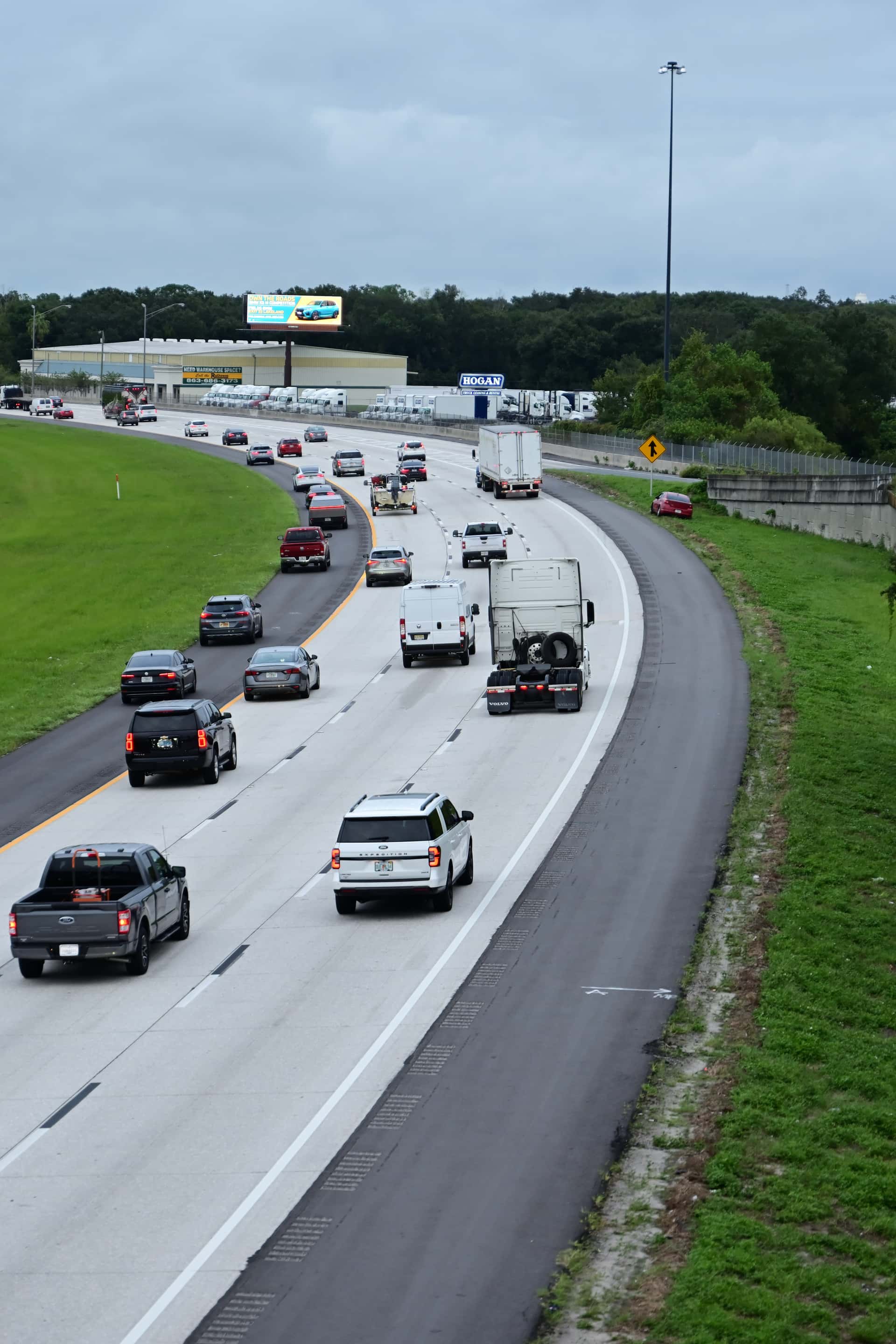
Florida is positioning a Polk County research facility as the center of its transportation technology strategy, with the governor's office highlighting SunTrax as a leading site for research and development of emerging transportation technologies and innovations.
SunTrax occupies a large tract in Auburndale, between Tampa and Orlando along the Interstate 4 corridor. The facility is built around a closed oval test track with a large interior area configured for controlled testing of connected and automated vehicle systems, tolling technology and other applications that require a road environment without public traffic.
The state has paired that investment with conventional highway work. The governor's office announced in August that construction on a $56 million project along Clyde Morris Boulevard, State Road 483, in Daytona Beach is starting two years ahead of its original schedule, bringing safety and efficiency improvements to a heavily used Volusia County corridor.
What SunTrax does
The facility was developed by Florida's Turnpike Enterprise, the division of the Florida Department of Transportation that operates the state's toll road system. Its original purpose centered on tolling technology, where Florida has been an early adopter of electronic collection systems that read transponders at highway speed.
The infrastructure that supports tolling research, a controlled high-speed loop with instrumented infrastructure, turned out to be well suited to the broader category of connected and automated vehicle testing. That expansion has drawn interest from vehicle manufacturers, technology firms and university research programs.
The interior area of the oval provides space for scenarios that cannot be safely tested on public roads, including simulated intersections, urban street grids and edge-case situations that automated driving systems must handle. Testing in that environment produces data without exposing the public to risk.
Why Florida is investing here
Florida has among the highest traffic fatality rates of large states, and its road network carries a mix of resident, commuter, tourist and freight traffic that produces distinctive safety challenges. Vehicle technology that reduces crashes has a large potential effect on those numbers.
The state also has a specific interest in freight and logistics. Florida's ports, including PortMiami, Port Everglades, Port Tampa Bay and JAXPORT, move substantial cargo volume, and the trucking that connects those ports to distribution networks runs on state highways.
Economic development is the third motivation. States competing for advanced manufacturing and technology investment increasingly point to testing infrastructure as an asset, and a facility of SunTrax's scale is not easily replicated.
The Daytona project and conventional infrastructure
The Clyde Morris Boulevard work in Daytona Beach represents a more familiar category of state transportation spending. State Road 483 serves substantial local traffic and provides access to institutions and commercial areas in the Volusia County corridor.
Accelerating a project by two years typically involves moving up design completion, right-of-way acquisition and contractor procurement, and depends on funding availability within the department's work program. The Florida Department of Transportation maintains a rolling five-year work program that identifies scheduled projects.
Safety and efficiency improvements on a corridor of this type generally include intersection reconstruction, turn lane additions, signal timing improvements, drainage work and pedestrian and bicycle facilities. Project-specific details are published in department documents for each work program item.
What it means for Floridians
For drivers, the near-term effect of technology research is indirect. Vehicle systems tested at facilities like SunTrax reach the road years later, through manufacturer product cycles rather than through state action.
The more immediate effect is on tolling. Florida's toll system covers a substantial share of the state's limited-access mileage, particularly in South Florida, Central Florida and along the Turnpike. Changes in collection technology affect how tolls are charged and how out-of-state and rental vehicles are handled.
For Volusia County residents, the Daytona Beach project means construction activity along a corridor they use, with the associated lane closures and detours, followed by the improvements the project is designed to deliver.
Local impact across the state
Polk County, where SunTrax is located, sits in the middle of the Interstate 4 corridor between Tampa and Orlando, a stretch that has absorbed substantial population and warehouse development over the past decade. The county's central position makes it a logistics hub.
Central Florida more broadly has become a focus for transportation investment, driven by growth in the Orlando metropolitan area and by the tourism traffic that moves through it. The corridor carries some of the state's heaviest volumes.
Northeast Florida, including the Daytona Beach area and Jacksonville, has its own set of corridor projects in the department's work program, reflecting growth patterns and freight movement tied to JAXPORT.
What gets tested on a closed track
Automated driving systems require validation across an enormous range of scenarios, including many that occur rarely on public roads but must be handled correctly when they do. A pedestrian stepping between parked cars, a vehicle running a red light, debris in a travel lane and sensor performance in heavy rain all fall into that category.
Public road testing accumulates those scenarios slowly, because rare events are by definition rare. A controlled facility lets engineers stage the scenario repeatedly, varying speed, lighting and weather conditions, and collect data across dozens of runs in a day.
Sensor performance testing is a related use. Automated systems combine cameras, radar and in many cases lidar, and each sensing method degrades differently under adverse conditions. Florida's rainfall intensity and its bright sun and heat provide environmental conditions that matter for validation.
Vehicle-to-infrastructure communication is a third category. Systems that let vehicles receive information from traffic signals, work zones or roadway sensors require instrumented infrastructure to test against, which a purpose-built facility can provide and a public road generally cannot.
Tolling technology and Florida's turnpike system
Florida's Turnpike Enterprise operates a substantial network of toll facilities, and the state has been among the more aggressive adopters of all-electronic tolling, which eliminates cash lanes and reads transponders or license plates at highway speed.
That transition changed the operational problem. Cash collection required toll plazas, staffing and the traffic disruption of vehicles slowing to pay. All-electronic collection removes those elements but introduces new ones, including image recognition accuracy, interoperability with other states' transponder systems and the handling of rental and out-of-state vehicles.
Accuracy matters at scale. A small error rate in license plate reading, applied across hundreds of millions of transactions annually, produces a large absolute number of misread events, each of which generates customer service work and potential billing disputes.
Testing that technology under controlled conditions, at speed, with known vehicles and known plates, is precisely what a closed high-speed loop enables. That was the facility's original purpose before its scope expanded.
The freight and logistics dimension
Florida's position as a peninsula shapes its freight economy. Goods entering through its seaports move north by truck and rail, and the state's highway network carries that volume alongside resident and tourist traffic.
Truck platooning, in which vehicles travel in close coordination using automated systems to maintain spacing, has been among the applications tested at facilities of this type. The efficiency case rests on reduced aerodynamic drag and improved throughput on congested corridors.
Port infrastructure investment has continued across Florida, with terminal expansions at PortMiami, Port Everglades, Port Tampa Bay and JAXPORT. The landside connections that move containers away from those terminals are the constraint that determines throughput.
Interstate 4 and Interstate 95 carry the heaviest volumes, and both corridors have absorbed capacity projects over the past decade. Technology that improves throughput without adding pavement is attractive in corridors where right-of-way acquisition is expensive or infeasible.
Florida's road safety problem
Florida consistently records among the highest traffic fatality totals of any state, and its rates for pedestrian and bicyclist deaths have been particularly elevated. Several Florida metropolitan areas appear regularly near the top of national rankings for pedestrian danger.
The contributing factors are structural. Much of Florida's development occurred during the era of wide arterial roads designed primarily for vehicle throughput, with long distances between crossings and limited separation between fast-moving traffic and people walking.
Year-round warm weather means people walk and cycle throughout the year, including at night, which increases exposure relative to states where those activities are seasonal. Tourist drivers unfamiliar with local roads add another element.
Vehicle technology addresses part of this. Automatic emergency braking with pedestrian detection, which is becoming standard across new vehicles, has shown measurable reductions in the crash types that account for a large share of pedestrian fatalities. Validation of those systems is precisely the kind of work closed-course facilities support.
Where the money comes from
Florida's transportation program is funded through a combination of state fuel taxes, vehicle registration fees, toll revenue and federal formula funds distributed through the Federal Highway Administration. Those streams support the department's five-year work program.
Toll revenue occupies a distinctive position because it is generated by and reinvested in the turnpike system rather than flowing into the general transportation fund. That structure is why the Turnpike Enterprise operates with a degree of autonomy within the department.
Fuel tax revenue faces a long-term structural challenge as vehicle efficiency improves and electric vehicles grow as a share of the fleet. States including Florida have studied alternative mechanisms, including mileage-based fees, though none has been broadly adopted.
Federal transportation funding arrives through multi-year authorization legislation, and Florida's share is determined by formulas that account for population, road mileage and vehicle miles traveled. The state's growth affects its allocation over time.
What's next
The Florida Department of Transportation publishes its work program annually, identifying projects scheduled over a five-year horizon. That document is the authoritative source for which corridors are slated for work and when.
Research activity at SunTrax proceeds under agreements between the Turnpike Enterprise and the entities conducting testing. The facility's role in any specific technology program is generally disclosed by the participating organizations rather than by the state.
The Clyde Morris Boulevard project will proceed on its accelerated schedule, with construction phasing and traffic impacts published through the department's district office serving Volusia County.
Spotted an issue with this article?
Have something to say about this story?
Write a letter to the editorComments
No comments yet. Be the first to weigh in.
Related Coverage
Florida's data center law: what SB 484 does as DeSantis touts it
11h ago
FPL, Tampa Electric and Duke File Data Center Plans as Florida's New Ratepayer Protection Law Hits First Deadline
1d ago

USF and Tampa Electric Build Digital Twin of Power Grid With $3.8 Million Grant
4d ago
Orange County Moves Toward a One-Year Pause on AI Data Centers Over Water and Power Concerns
Sep 23