Florida Directs Nearly $23 Million to Defense, Spaceport and Workforce Projects
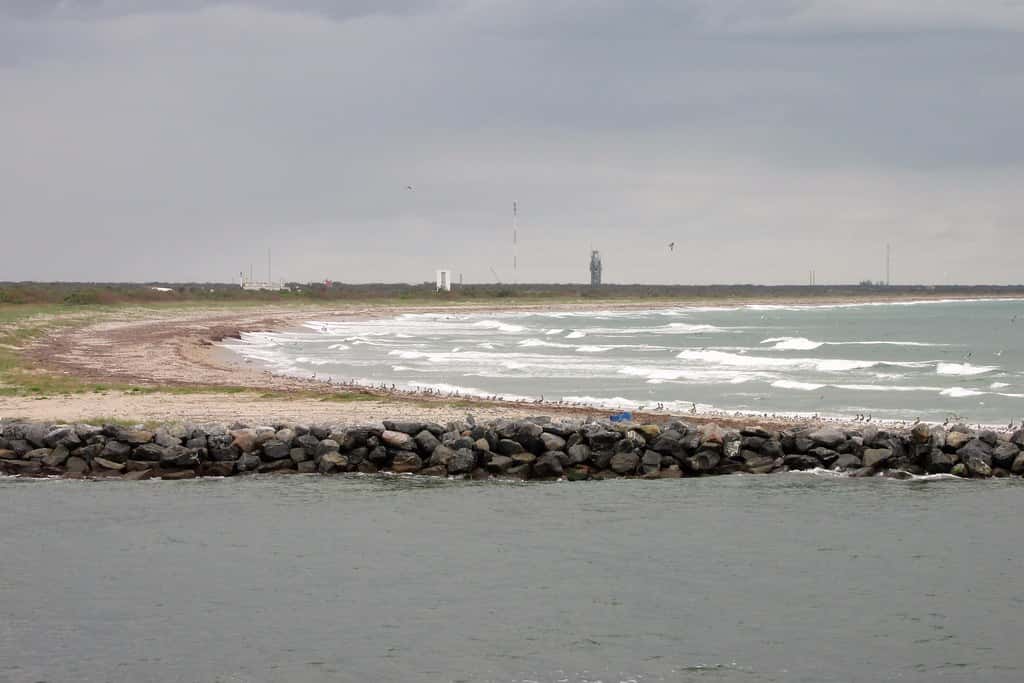
Florida is directing nearly $23 million into defense manufacturing, spaceport infrastructure and workforce training programs, a package the governor's office says is aimed at strengthening the state's defense industrial base and supporting national security supply chains that run through Florida ports, shipyards and aerospace facilities.
The awards flow through four separate programs. Roughly $15.3 million comes through the Florida Job Growth Grant Fund. Up to $5 million comes through the Florida Department of Transportation's Spaceport Improvement Program in partnership with Space Florida. More than $3.1 million comes through the Defense Reinvestment Grant Program and the Florida Defense Support Commission Grant Program.
Florida State College at Jacksonville received the largest single share at more than $7 million. The City of Palm Bay received $3.5 million toward a redevelopment plan that the city says will free up roughly 960,000 square feet for future industrial and commercial use. Polk State College received $1.7 million to create a commercial vehicle driving program serving aerospace, defense and other industries.
The common thread across the awards is workforce. Florida's defense and aerospace employers have consistently identified skilled labor availability, not facility capacity or contract volume, as the constraint on growth, and most of this package addresses training pipelines rather than production capacity directly.
Why Florida's defense sector is large
Florida hosts one of the largest concentrations of military installations in the country. MacDill Air Force Base in Tampa is home to U.S. Central Command and U.S. Special Operations Command. Naval Air Station Jacksonville and Naval Station Mayport anchor a substantial naval presence in the northeast.
The Panhandle carries Eglin Air Force Base, one of the largest military installations in the world by land area, along with Tyndall Air Force Base near Panama City and Naval Air Station Pensacola. Patrick Space Force Base and Cape Canaveral Space Force Station sit on the Space Coast alongside Kennedy Space Center.
Around those installations sits a supplier economy: contractors, maintenance operations, simulation and training companies, and manufacturers producing components that feed national defense programs. That economy employs a substantial share of Florida's manufacturing workforce.
Shipbuilding is a distinct piece. Florida yards handle construction, repair and conversion work, and the national shortage of shipyard labor has been a recurring theme in congressional testimony about Navy readiness. Training programs that produce welders, electricians and machinists address that directly.
What the Job Growth Grant Fund does
The Florida Job Growth Grant Fund, the largest component of this package at roughly $15.3 million, funds public infrastructure and workforce training projects proposed by local governments and state colleges. It is structured to pay for things that enable private investment rather than subsidizing private companies directly.
That structure explains why colleges appear so prominently among recipients. A training program at a state college produces workers who can be hired by any employer in the region, which makes it an infrastructure investment in the labor market rather than an incentive for one firm.
Florida State College at Jacksonville's $7 million award is consistent with the region's defense profile. Jacksonville's combination of naval installations, ship repair capacity and port operations creates demand for skilled trades that the college is positioned to supply.
Polk State College's $1.7 million commercial vehicle driving program addresses a different bottleneck. Aerospace and defense manufacturing depends on logistics, and commercial driver shortages have constrained supply chains across industries since the pandemic period.
The spaceport component
Up to $5 million flows through the Spaceport Improvement Program, administered by the Florida Department of Transportation in partnership with Space Florida, the state's aerospace economic development agency.
Florida treats spaceports as transportation infrastructure, which is an unusual and consequential policy choice. It allows spaceport improvements to draw from transportation funding structures and it integrates launch facilities into the state's transportation planning process alongside airports and seaports.
The investment lands during a period of extraordinary launch activity on the Space Coast. Cape Canaveral has been operating at a launch cadence that would have been unimaginable a decade ago, driven primarily by SpaceX Falcon 9 operations from both Cape Canaveral Space Force Station and Kennedy Space Center.
NASA and SpaceX are targeting 11:10 a.m. Eastern on Thursday, October 1 for the Crew-13 launch to the International Space Station from Cape Canaveral, one more entry in a cadence that has made launch operations a routine part of Brevard County's economy rather than an occasional event.
Palm Bay's redevelopment piece
The City of Palm Bay's $3.5 million award funds a redevelopment plan the city says will open roughly 960,000 square feet for future industrial and commercial development. Palm Bay sits in southern Brevard County, within the Space Coast economy but outside the immediate launch complex area.
That location matters. Brevard's aerospace growth has been concentrated near the launch facilities, and the supplier and support businesses that grow alongside a launch industry need industrial land that is not on the beachside barrier or inside restricted zones.
Land preparation is the kind of expense that sits awkwardly in a private investment calculation. A company evaluating a Florida site wants land that is serviced and permitted, and public investment in readiness is what converts a parcel from a possibility into a candidate.
Whether the square footage fills is the open question. Redevelopment plans create capacity; they do not create demand. The measure of success will be occupancy and employment several years out rather than the award announcement itself.
The Panhandle share
The western Panhandle received more than $4 million from the package, a meaningful share for a region whose economy is disproportionately tied to military installations and the businesses serving them.
Pensacola, Fort Walton Beach and Panama City form a corridor where defense employment is not one sector among many but the foundation of the regional economy. Tyndall Air Force Base's reconstruction after Hurricane Michael in 2018 reshaped Bay County's construction and workforce picture for years.
The Defense Reinvestment Grant Program and the Florida Defense Support Commission Grant Program, which together account for more than $3.1 million of the package, exist specifically to support communities hosting military installations and to strengthen the case for retaining and growing missions there.
Base realignment risk is the background concern those programs address. Communities that can demonstrate strong infrastructure, workforce availability and local support are better positioned when the Department of Defense evaluates where to place or consolidate missions.
What it means for Florida workers
The practical opportunity for Floridians is in the training programs. Defense and aerospace manufacturing pays substantially above the state's median wage, and the credentials involved are generally certificate and associate degree programs rather than four-year degrees.
That distinction matters in a state where the cost and time commitment of a bachelor's degree is a barrier for many working adults. A welding certification or an aviation maintenance credential can be completed in months and leads directly into employment at defense wages.
Florida State College at Jacksonville, Polk State College and the rest of the Florida College System operate the programs where most of this training happens, and those institutions serve a student population that skews older, more part-time and more likely to be working while enrolled than the state university system.
Security clearance eligibility is an underappreciated factor. Many defense positions require clearances, and the process takes time and screens on criminal history, financial history and foreign contacts. Workers considering the sector should understand that requirement before investing in training.
The economic development context
Florida's economic development strategy has leaned on a few consistent pillars: no state income tax, a business regulatory environment marketed as favorable, and targeted infrastructure and workforce investment rather than large direct cash incentives to individual companies.
The Job Growth Grant Fund is the clearest expression of that approach. Its structure, funding public infrastructure and public training capacity, reflects a bet that the binding constraint on Florida business growth is capability rather than cost.
Whether that bet is correct is genuinely debated among economic development researchers. Studies of state incentive programs generally find modest effects, and distinguishing investment that caused growth from investment that followed growth is methodologically difficult.
What is not debated is that Florida's defense and aerospace sectors have grown substantially, and that the Space Coast in particular has undergone a transformation since the Space Shuttle program ended in 2011 and left thousands of aerospace workers without jobs.
Where the money does not go
It is worth being clear about scale. Nearly $23 million is a significant grant package and a rounding error against Florida's overall defense economy, which involves federal contracts and payroll measured in tens of billions annually.
These awards do not build ships, produce munitions or fund research. They fund training capacity, land preparation and spaceport improvements: the enabling layer beneath the activity that actually generates defense revenue in Florida.
The federal contracts that drive the sector are awarded in Washington, and Florida's congressional delegation, the third largest in the House, is the mechanism through which the state competes for them. State grants complement that process; they do not substitute for it.
Federal budget uncertainty remains the largest variable. Defense spending levels, continuing resolutions and appropriations timing shape contractor hiring far more than any state program, and Florida's defense communities track that calendar closely.
What's next
The grant recipients now move into implementation, which for college programs means curriculum development, equipment purchase, instructor hiring and accreditation steps before the first students enroll. That process typically runs a year or more from award to first cohort.
Palm Bay's redevelopment work will follow a municipal timeline involving site preparation, utility extension and permitting. Industrial land readiness projects generally take several years from funding to occupancy.
The spaceport improvements will proceed on the Space Florida and FDOT project schedule, in coordination with the launch operators and range authorities whose operations the improvements support.
Floridians interested in the training programs should watch for announcements from Florida State College at Jacksonville, Polk State College and other Florida College System institutions, which publish program launches and enrollment windows through their continuing education and workforce divisions.
Spotted an issue with this article?
Have something to say about this story?
Write a letter to the editor