Florida Marks 25 Years Since September 11 With Flags at Half-Staff
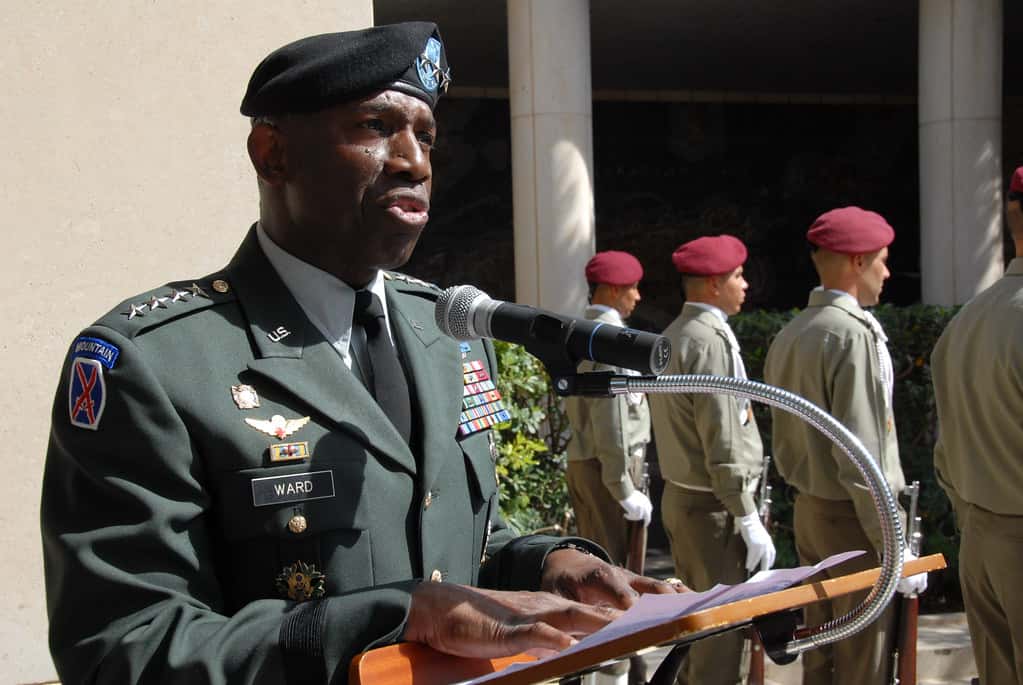
Flags at local and state buildings, installations, and grounds throughout Florida flew at half staff from sunrise to sunset on Friday, September 11, under a directive from Governor Ron DeSantis marking the 25th anniversary of the September 11, 2001 attacks. The governor issued a Patriot Day proclamation honoring the 2,977 people killed that day, including first responders, local law enforcement officers, and military personnel.
Remembrance events were held across the state. In the Palm Beaches and the Treasure Coast, ceremonies ran from early morning through late evening, with the heaviest concentration during the 8 a.m. hour marking the moment the first aircraft struck the World Trade Center at 8:46 a.m.
Twenty five years places the anniversary at a threshold. A Floridian born in 2001 is now 25 years old, and the majority of students in Florida's public schools have no memory of the day at all.
Florida's direct connections to that day
Florida's relationship to September 11 is closer than that of most states, and the connections run through several threads.
President George W. Bush was in Sarasota that morning, reading with second grade students at Emma E. Booker Elementary School when his chief of staff informed him of the second aircraft strike. The photographs from that classroom became among the most widely circulated images of the day, and the school remains a site of historical significance.
Several of the hijackers had lived and trained in Florida in the months before the attacks, taking flight instruction at schools in Venice and elsewhere in the state. That fact reshaped how flight training in the United States is regulated and monitored.
Florida also sent responders north. Urban search and rescue teams from the state deployed to New York in the days after the collapse, and Florida residents were among those working at the site during the recovery period.
Beyond that, Florida's large population of retired and active military personnel, its concentration of veterans, and its several major military installations meant the wars that followed touched the state heavily across the subsequent two decades.
What changed in Florida after 2001
The most visible institutional change was in aviation security. Florida's airports, including major international hubs in Miami, Orlando, Tampa, and Fort Lauderdale, absorbed the transition to federalized screening and the physical reconfiguration that came with it.
Port security changed as well, and that mattered disproportionately in Florida. The state's cruise terminals and cargo ports operate under security regimes established after 2001, including credentialing requirements for workers and screening for passengers and containers.
Emergency management structures were rebuilt around the incident command approach, and Florida, which already had a mature emergency management apparatus because of hurricanes, integrated counterterrorism into an existing framework rather than building one from scratch.
The state also established the domestic security structure that has become relevant again this year. Florida's Chief of Domestic Security role, currently held by the commissioner of the Florida Department of Law Enforcement, traces to the post 2001 reorganization of state security functions.
The policy echo on the anniversary itself
The 25th anniversary was marked by a policy action as well as by commemoration. Governor DeSantis and the Florida Cabinet approved an emergency rule on Friday establishing the process by which the state designates organizations as domestic or foreign terrorist groups.
The timing was deliberate, and it drew both support and criticism. Supporters framed it as an appropriate response on a day dedicated to remembering an attack carried out by a terrorist organization. Critics, including civil liberties organizations, argued that using the anniversary to advance a contested policy conflated remembrance with a present day political dispute.
The rule itself is procedural and designates no organization. It establishes how the state's Chief of Domestic Security would bring a designation to the governor and Cabinet and when such a designation would take effect.
What it means for Floridians now
For Floridians who lived through 2001, the anniversary is a personal marker. For those who did not, it is history, and the transmission of that history now runs through schools, museums, and family conversation rather than through shared memory.
Florida's public schools observe Patriot Day under state guidelines, and many districts incorporate age appropriate instruction. What students learn about the day, and how it is framed, has become a curriculum question the way earlier historical events did once their participants aged out of the classroom.
For first responder communities in Florida, the anniversary carries particular weight. The 343 firefighters killed at the World Trade Center remain a reference point within the profession, and Florida fire departments hold their own observances.
The health consequences for responders have continued to accumulate. The World Trade Center Health Program, which covers responders and survivors, serves enrolled members nationwide, including many who retired to Florida after service in New York. Illness related to exposure at the site has continued to emerge decades later.
The generational transition
At 25 years, September 11 sits at roughly the distance that separated Pearl Harbor from the mid 1960s, or the Kennedy assassination from the late 1980s. It is the point at which an event moves from lived experience toward historical narrative.
That transition changes how commemoration works. Ceremonies shift from gatherings of participants toward observances organized for people who were not there, and the emphasis moves from grief toward instruction.
Florida's demographic profile complicates the picture. The state's substantial in migration means many current residents were living elsewhere in 2001, including in the New York metropolitan area. Florida has a large population of retired New York City police officers and firefighters, which gives the anniversary a distinctly personal character in parts of the state.
The military dimension across two decades
Florida's connection to what followed September 11 runs through its military installations more heavily than almost any other state's, and the consequences shaped communities across the peninsula and the Panhandle.
MacDill Air Force Base in Tampa hosts United States Central Command, the combatant command responsible for military operations across the Middle East and Central Asia. That meant the planning and direction of two decades of conflict ran through Tampa, and the base's role expanded substantially after 2001.
Special operations forces also concentrate in Florida. United States Special Operations Command is headquartered at MacDill, and special operations units deployed at rates far exceeding conventional forces across the two decades that followed.
The state's other installations, including Eglin and Tyndall Air Force Bases in the Panhandle, Naval Air Station Pensacola, Naval Station Mayport and NAS Jacksonville in Northeast Florida, and Patrick Space Force Base on the Space Coast, all carried elevated operational tempo.
The human consequences accumulated in the surrounding communities. Repeated deployments, casualties, and the long term health effects of service including traumatic brain injury, post traumatic stress, and burn pit exposure fell on families living near those bases. Florida has one of the largest veteran populations in the country, and a substantial portion served in the post 2001 period.
What the anniversary asks of a state that keeps changing
Florida's population has grown by millions since 2001, and a large share of current residents arrived after the attacks. That demographic reality complicates the idea of collective memory in a way that a more stable state would not experience.
Many of those arrivals came from the New York and New Jersey region, which means Florida holds a significant population with direct personal connection to the day, including retired first responders who worked at the site. Local observances in South Florida and along the Treasure Coast frequently reflect that, drawing people who were there.
At the same time, Florida's international in migration means a growing share of residents experienced September 11 from outside the United States or were not born yet. For them, the anniversary is an American commemoration they observe rather than one they remember.
Schools bear much of the transmission burden. Florida requires Patriot Day observance, and how districts approach it varies from a moment of silence to substantive instruction. What students learn depends heavily on individual teachers and on curriculum choices made at the district level.
Museums and memorials fill part of the gap. Several Florida communities maintain memorials incorporating World Trade Center steel, distributed to fire departments and municipalities across the country in the years after the recovery.
The long health tail
The consequences of September 11 have continued to produce casualties long after the day itself, and that fact is not widely understood outside the affected communities.
The dust cloud generated by the collapse contained pulverized concrete, asbestos, silica, heavy metals, and combustion products. Responders and area residents inhaled that material over weeks and months during the recovery operation.
The resulting illnesses have included respiratory and digestive conditions, and a range of cancers with long latency periods. The number of responders who have died from those illnesses now exceeds the number of first responders killed on the day itself.
The World Trade Center Health Program provides monitoring and treatment for enrolled responders and survivors regardless of where they now live, which matters for Florida given how many retired New York personnel relocated here. The September 11th Victim Compensation Fund provides financial compensation for certified conditions.
Enrollment requires documentation of presence in the exposure zone during the qualifying period, and eligibility extends to people who lived, worked, or attended school in the area, not only to responders. Advocacy organizations have worked for years to reach people who qualify and do not know it.
What's next
Commemoration will continue annually, and Florida's Patriot Day observance is established by state practice. Flags were returned to full staff at sunset Friday.
For families connected to the attacks, the World Trade Center Health Program and the September 11th Victim Compensation Fund remain active, and enrollment and claim information is available through federal channels.
The policy question that emerged on the anniversary, Florida's terrorist designation framework, moves forward on its own track. Specific designations would follow a Cabinet vote and publication in the Florida Administrative Register, with a 30 day delay before taking effect.
Spotted an issue with this article?
Have something to say about this story?
Write us a letterComments
No comments yet. Be the first to weigh in.
Related Coverage

U.S. Measles Cases Top 4,500 in 2026, More Than Double Last Year, as Florida Weighs Looser School Vaccine Rules
6h ago
Trump Offers $1 Million Reward for Voter Fraud Tips as Nearly 2.8 Million Floridians Cast Early Ballots
7h ago
Trump Administration Touts $193.7 Million for Rural Florida Health Care as Telehealth, Mobile Clinics and Paramedic Programs Roll Out
7h ago

Lois Frankel Faces Republican Deborah Adeimy in Palm Beach County's Redrawn 23rd District, a Safe Seat Under DeSantis's New Map
9h ago