Trump Administration Touts $193.7 Million for Rural Florida Health Care as Telehealth, Mobile Clinics and Paramedic Programs Roll Out
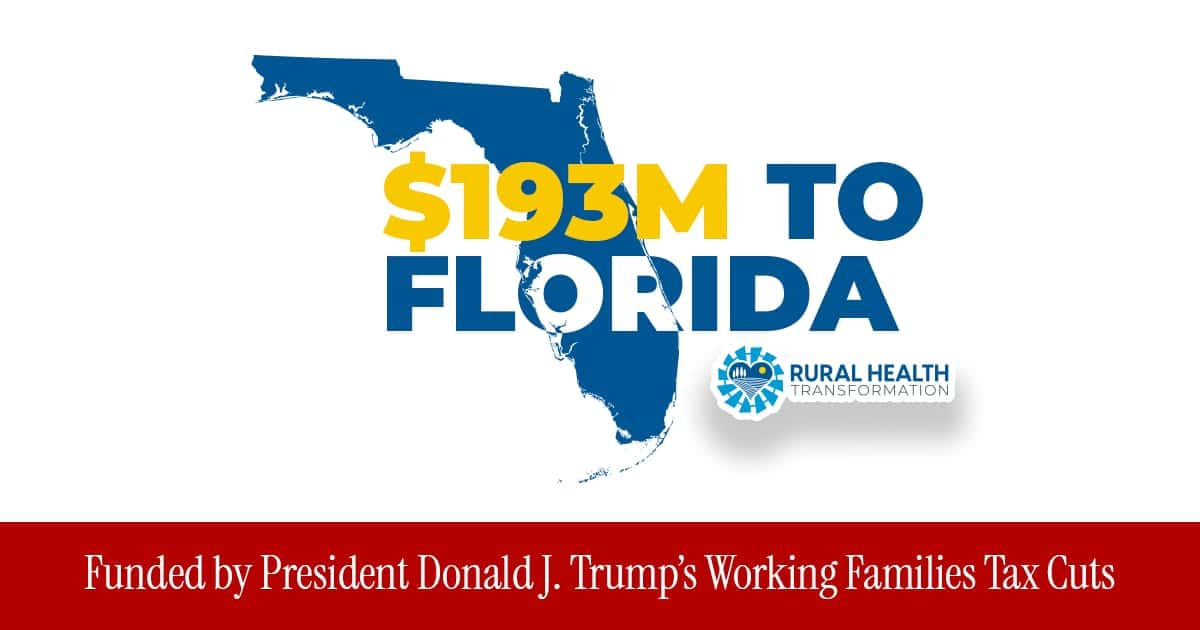
The Centers for Medicare and Medicaid Services announced on Oct. 23 that $193.7 million from the federal Rural Health Transformation Program is going to 45 organizations across Florida to expand telehealth, mobile health clinics, community paramedicine and other services meant to bring preventive and specialty care closer to rural residents. About $81 million of the money is headed to Northwest Florida, where health officials have pointed to acute shortages of local specialists.
The announcement highlights the first year of a five-year federal program that Florida is using to shore up care in 31 rural counties, even as hospitals warn that Medicaid cuts in the same 2025 federal law that created the fund will cost the state's health system far more over the next decade.
What CMS announced
According to the CMS release and coverage of it, Florida's awardees plan to use telemedicine, remote patient monitoring, pharmacy-based health services, diagnostic kiosks and community paramedicine, in which paramedics provide checkups and follow-up care in patients' homes rather than only responding to emergencies. Projects also include mobile treatment vans and expanded specialty clinics. The funding covers federal fiscal year 2026.
CMS Administrator Dr. Mehmet Oz said the investment is aimed at reducing the geographic barriers that leave rural residents driving hours for basic specialist visits, according to reports on the announcement. The release did not list award amounts for individual organizations.
Florida's announcement is one of a series of state-by-state releases CMS has issued this fall. Neighboring Georgia, for example, was announced to receive nearly $219 million for rural workforce and technology projects.
How the money reached Florida
The Rural Health Transformation Program is a $50 billion fund created by the One Big Beautiful Bill Act, the tax and spending package President Donald Trump signed in July 2025. It distributes $10 billion a year to states from 2026 through 2030.
On Dec. 29, 2025, CMS announced first-year awards to every state. Florida received about $209 million, just above the national average of roughly $200 million, according to the Florida Phoenix. Awards ranged from $147 million for New Jersey to $281 million for Texas. Gov. Ron DeSantis announced Florida's award on Dec. 31, saying the state's plan would expand clinical training and rural rotations, provide start-up money for rural and satellite clinics, invest in mobile health units, support remote patient monitoring, set up behavioral health telehubs and expand telespecialty services.
"For rural hospitals, this funding is a lifeline," David Walker, chief executive of George E. Weems Memorial Hospital in Apalachicola, said in the governor's release.
The Florida Agency for Health Care Administration runs the program, and the money flows through the state's Medicaid program. In April 2026, the Legislature's Joint Legislative Budget Commission approved moving the $209 million into a new state rural health account, clearing the way for applications. Florida's federal application proposed serving 31 counties and about 1.2 million residents, according to WUSF, and applicants were not required to be located in rural areas, as long as their projects served them.
Who is getting the money
On Aug. 11, DeSantis announced nearly $188 million in more than 80 awards across those 31 rural counties, divided among four regions. The CMS figure of $193.7 million for 45 organizations, announced in October, counts the awards differently; some organizations hold more than one award. The state's regional breakdown was:
| Region | Awards | Funding |
|---|---|---|
| Northwest | 35 | $81 million |
| Northeast | 14 | $51 million |
| Southwest | 21 | $45 million |
| Southeast | 11 | $12 million |
Recipients include hospitals, federally qualified health centers, rural health clinics, universities and community organizations. Among those that have disclosed their awards:
- Calhoun-Liberty Hospital in Blountstown received $11.2 million, according to WFSU.
- Madison County Hospital Health System received $4.4 million.
- Florida State University's College of Medicine received more than $19 million for six projects in Northwest and Southwest Florida, covering preventive care, at-home care, food insecurity, behavioral health, telehealth and workforce training. FSU said it was the largest award to a Florida higher education institution and the second largest overall.
- Parrish Medical Center reported more than $5.2 million in first-year grants.
Senate President Ben Albritton, a Wauchula Republican who has made rural issues a priority with his "Rural Renaissance" agenda, called the August awards "a transformational day for rural Florida as we implement the first year of a five-year initiative."
Why rural Florida needs it
Rural hospitals rely heavily on Medicaid and Medicare and tend to operate on thin margins. Five rural hospitals in Florida have closed over the past decade, and the Center for Healthcare Quality and Payment Reform has identified additional Florida hospitals at risk of closure. In many rural counties, residents travel long distances for specialty care such as cardiology, oncology or maternity services.
The program's emphasis on telehealth, mobile units and community paramedics reflects that reality: rather than building new hospitals, the projects aim to bring screenings, chronic disease monitoring and specialist consults to patients where they live.
The Medicaid backdrop
The rural fund was added to the 2025 law partly to blunt the effect of its Medicaid provisions, which cut nearly $1 trillion from the program nationally over a decade, according to the Florida Phoenix. Some health policy experts have questioned whether $50 billion over five years can offset those reductions, particularly for rural hospitals that depend on Medicaid revenue.
The Florida Hospital Association has warned that the cuts threaten services that depend heavily on Medicaid, including delivery rooms, neonatal intensive care units, psychiatric units and rural hospitals. KFF has estimated that about 990,000 Floridians could lose coverage under the law. Florida is one of the states that has not expanded Medicaid under the Affordable Care Act, which means some of the law's provisions aimed at expansion states do not apply, but hospital groups say the state's providers will still feel the overall reductions.
What's next
Awardees face a federal deadline of Sept. 30 to show significant progress on their projects, according to FSU, and the Florida Phoenix has reported that second-year funding depends in part on what facilities actually spend by Sept. 30, 2027. The Agency for Health Care Administration has said it plans to seek a similar amount of federal money next year, with awards continuing through 2030.
For rural Floridians, the practical test will be when the new services open. Neither the federal nor the state announcements set dates for when specific telehealth hubs, mobile clinics or paramedic programs will begin seeing patients, so residents in the affected counties should watch for announcements from their local hospitals, health centers and county health departments.
Spotted an issue with this article?
Have something to say about this story?
Write us a letterComments
No comments yet. Be the first to weigh in.
Related Coverage
Trump Offers $1 Million Reward for Voter Fraud Tips as Nearly 2.8 Million Floridians Cast Early Ballots
23m ago

Lois Frankel Faces Republican Deborah Adeimy in Palm Beach County's Redrawn 23rd District, a Safe Seat Under DeSantis's New Map
3h ago

Justice Department Appeals Miami Judge's Ruling That Federal Noncitizen Voting Ban Was Unconstitutional in Broward Case
3h ago

Florida Joins FTC and 19 Other States in Lawsuit Accusing Dollar General of Overcharging Shoppers at Checkout
4h ago