Florida Opens the 2026-27 School Year With a Record $30 Billion K-12 Budget and Per-Student Funding of $9,338
Florida's 2.8 million public school students returned to classrooms in August under a state budget that allocates roughly $30 billion to the K-12 system and sets per student funding at $9,338, the highest level in state history. The figure comes from the 2026-27 budget signed in June, which the governor's office has described as a record investment.
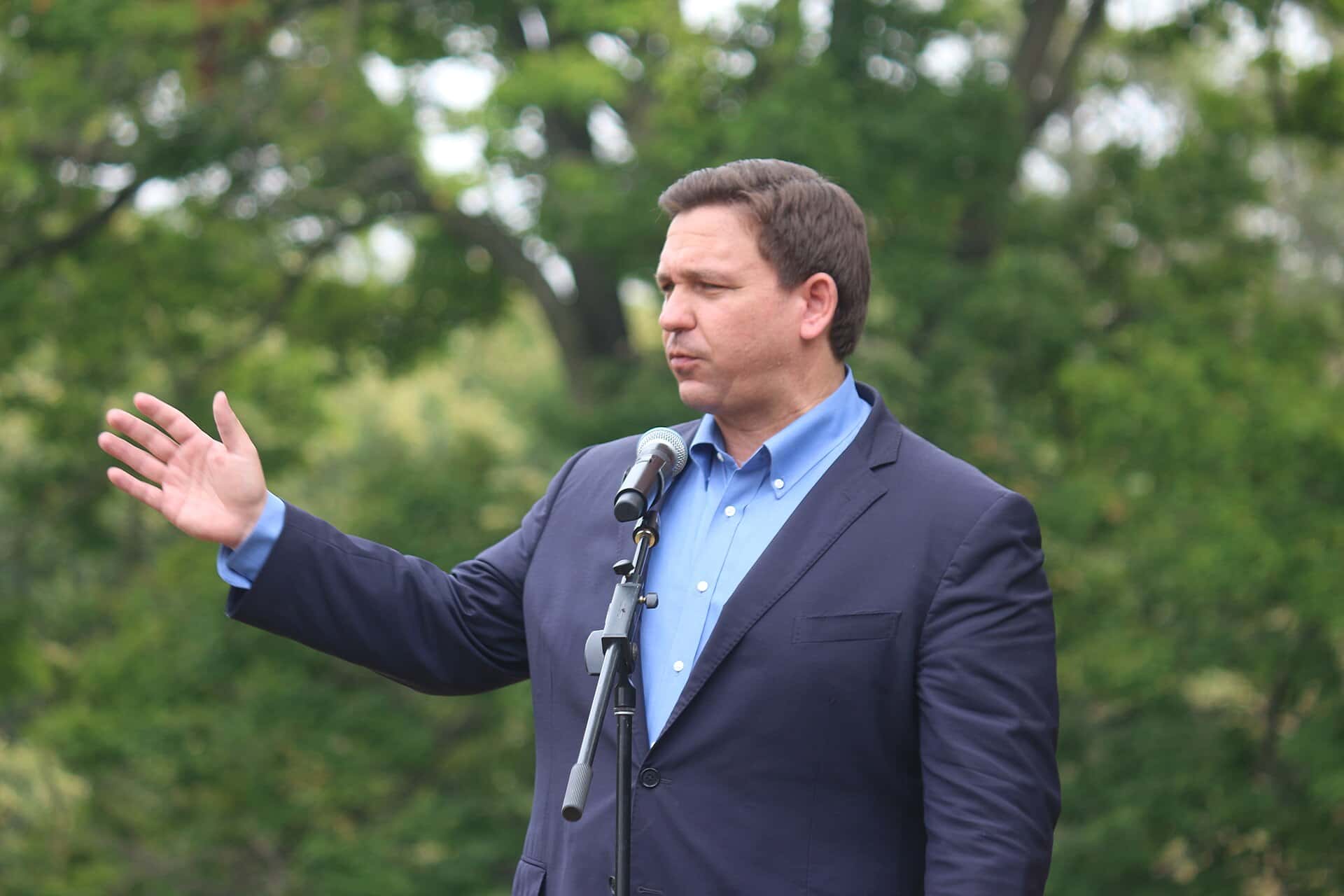
Commissioner of Education Henry Mack spent the first two weeks of the year traveling the state, visiting early learning providers, K-12 schools, state colleges, and workforce education partners. Governor Ron DeSantis marked the start of the year with an August appearance highlighting improvements on progress monitoring assessments, teacher salary increases, and the expansion of education choice programs.
For Florida families, the numbers matter less than what they buy. Per student funding determines district capacity to hire, to keep class sizes down, to fund transportation, and to maintain buildings, and how that money is distributed across districts and programs shapes what a particular school can offer.
What the budget provides
The $9,338 per student figure represents total funding per unweighted full time equivalent student under the Florida Education Finance Program, the formula that distributes state and local dollars to the state's 67 county districts plus charter schools and special districts.
The formula weights students by program. Students in exceptional student education, English language learner programs, and certain career and technical programs generate additional funding, so the per student average conceals substantial variation in what any individual student's enrollment produces.
The formula also includes a district cost differential intended to account for regional differences in the cost of hiring. That adjustment has been contested for years by districts in high cost coastal markets, which argue it does not adequately reflect their labor market.
A significant portion of the K-12 total is locally raised through the required local effort, a property tax millage the state sets that districts must levy to receive state funds. Rising property values in Florida have increased local contributions, which affects how much of the total is genuinely new state money.
Teacher pay and staffing
Florida has allocated funds specifically for teacher salary increases in each of the past several budget cycles, with an emphasis on raising the minimum starting salary for classroom teachers. That approach has raised entry level pay substantially while compressing the gap between new and veteran teachers, a tension districts have raised repeatedly.
The compression issue is straightforward arithmetic. When money is targeted at minimum salaries, experienced teachers whose pay already exceeds the new minimum receive smaller increases, which reduces the financial return on staying in the classroom over a career.
Staffing shortages persist in specific categories across Florida districts, particularly in mathematics, science, exceptional student education, and school based mental health roles. Bus driver and paraprofessional vacancies have also been chronic in several large districts.
Districts have responded with alternative certification pathways, retention bonuses, and in some cases housing assistance in the highest cost markets. Those approaches vary considerably by district financial capacity.
Education choice and enrollment shifts
Florida's expansion of education choice, which made scholarship eligibility broadly available regardless of family income, has changed enrollment dynamics across the state. Funds follow students to private schools and to home education programs through scholarship accounts.
The practical effect on district budgets depends on whether departing students were previously enrolled in public schools or were already in private or home education. Students in the latter category represent new state expenditure without a corresponding reduction in district costs.
Districts also face a fixed cost problem. When enrollment declines by a small percentage spread across many schools, the district loses per student revenue without being able to close buildings or reduce staffing proportionally, because the students who leave come from many classrooms rather than from a few.
Enrollment is simultaneously growing rapidly in interior counties absorbing inland migration, which means Florida's districts are experiencing opposite pressures depending on geography. Fast growing districts need construction capital; slower growing ones need to manage decline.
Student performance
The Department of Education reports that student performance on Florida's progress monitoring assessments has increased in both English language arts and mathematics since 2023. Progress monitoring replaced the previous end of year testing model with three assessments administered across the school year.
The design intent of progress monitoring is to give teachers usable information during the year rather than results that arrive after students have moved on. Because the system is relatively new, longitudinal comparisons to the previous testing regime require caution.
Florida participates in the National Assessment of Educational Progress, which allows comparison against other states on a common instrument. Those results are released on a separate schedule and provide an independent check on state reported trends.
Graduation rates, which districts report annually, and postsecondary enrollment figures offer additional measures. Florida's state college system serves as the primary postsecondary pathway for a large share of graduates.
What it means for Florida families
For parents, the most useful information is district specific rather than statewide. School board budget hearings, which occur in late summer and early fall, establish local millage rates and reveal how state allocations translate into staffing at individual schools.
Families considering scholarship programs should understand the practical differences between public and private school obligations. Private schools accepting scholarships are not bound by the same requirements regarding services for students with disabilities, and transportation is generally the family's responsibility.
For students with disabilities, the individualized education program remains the operative document in public schools, and parents retain procedural rights under federal law that do not transfer to private settings.
Families in fast growing interior counties should watch school concurrency and capacity discussions, because rapid residential development can outpace classroom construction and lead to rezoning or portable classrooms.
Where the per-student number comes from
The $9,338 figure is worth unpacking because it is frequently compared against numbers that measure different things. Florida's per student funding under the Education Finance Program counts state and required local revenue distributed through the formula.
It does not include all money that reaches schools. Federal funds, including Title I for schools serving concentrations of low income students and funding under the Individuals with Disabilities Education Act, flow separately. Local discretionary millage, capital outlay millage, voter approved referenda, and food service revenue also sit outside the figure.
Total per pupil spending as reported to the federal government is therefore higher than the formula figure, which is why comparisons between states require using the same measure on both sides. National rankings typically use total current expenditure per pupil, a broader measure than Florida's headline formula number.
Capital funding operates on an entirely separate track through local capital outlay millage and state facility funding. That separation is why a district can report record operating funding while lacking money to build classrooms, a distinction that matters acutely in fast growing counties.
How districts differ across Florida
Florida's 67 county school districts range from Miami-Dade, among the largest in the nation, to districts serving a few hundred students in rural counties. The formula attempts to account for that range, but the practical realities diverge sharply.
Large urban districts benefit from scale in purchasing, transportation routing, and specialized program offerings. They also carry higher facility maintenance burdens on aging buildings and serve student populations with greater concentrations of need.
Small rural districts cannot achieve scale. A district with one high school must staff every required course regardless of enrollment, which means a class of eight students in an advanced subject costs the same to teach as a class of thirty. Transportation costs per student are higher because routes are longer.
Fast growing districts in interior counties face the capital problem most acutely, needing new construction while operating revenue arrives on a lag behind enrollment. Districts with declining enrollment face the mirror image, holding fixed costs against falling revenue.
Charter schools, which are public schools operated by independent governing boards, receive formula funding for enrolled students and now educate a substantial share of Florida's public school population, particularly in South Florida. Their growth affects district enrollment planning and facility utilization.
What parents can actually influence
Education policy in Florida is set at several levels, and knowing which body decides what makes participation more effective than general frustration.
The Legislature sets funding levels, graduation requirements, assessment policy, and the statutory framework for choice programs. Those decisions are made in Tallahassee during the annual session, and public input runs through committee testimony and through legislators' offices.
The State Board of Education adopts rules implementing statutes, including academic standards and accountability measures. Its meetings are public and streamed, and it accepts public comment on proposed rules.
District school boards, elected locally, decide school calendars, attendance boundaries, program placement, budgets within state constraints, and personnel policy. These are the decisions that most directly affect a specific child's school, and school board meetings are where a handful of speakers can change outcomes.
School advisory councils, which exist at individual schools and include parents, staff, and community members, participate in school improvement planning and in decisions about discretionary funds. They are the level closest to the classroom and typically the least contested for participation.
Parents seeking to address an individual student's situation, including services for a disability, work through the school and district rather than through policy bodies, and federal law provides specific procedural rights in that process.
What's next
The Legislature convenes its 2027 regular session in January, and education funding will again be among the largest items. Whether per student funding continues to rise depends on general revenue projections and on competing demands including health care and infrastructure.
District enrollment counts taken in October drive funding recalculations during the year, which means the final allocation to any district depends on actual attendance rather than on projections.
The State Board of Education meets on a published schedule and takes up rule changes affecting graduation requirements, assessment, and accountability. Those meetings are open and streamed.
For most families, the immediate practical step is participation at the district level. School board meetings determine calendars, boundaries, and program offerings, and they are the level of government where individual attendance most reliably affects outcomes.
Spotted an issue with this article?
Have something to say about this story?
Write us a letterComments
No comments yet. Be the first to weigh in.
Related Coverage

Panhandle Schools Ordered to Reopen Wednesday After Isaias as UWF Stays Closed and Postpones Diaz Inauguration
6h ago
No Florida College or University Has Joined the Armed Guardian Program Five Months After HB 757 Became Law
7h ago

More Than 300 Books Removed From Central Florida Schools as State Orders Districts to Pull More
8h ago
Uthmeier to Investigate Broward Schools Laptop Contracts After Watchdog Says Staff Misled the Board
2d ago