Dengue Reaches Seminole County as Osceola Launches Aerial Spraying and Orange Cases Climb

Dengue is now touching four Central Florida counties. Seminole County health officials confirmed a locally acquired case tied to the Winter Springs area this week, and Osceola County began countywide aerial spraying as a precaution. Next door, Orange County keeps sending planes over Apopka and Pine Hills, where the state's latest surveillance report puts locally acquired infections at eight this year, more than the five the county has announced.
The Central Florida cases are a small slice of what news reports have described as Florida's largest locally acquired dengue outbreak in decades. The Florida Department of Health's arbovirus report for Oct. 11 to 17 counted 425 locally acquired cases statewide in 2026, including 57 reported that week alone. Most of them are in Hillsborough County. But the steady trickle of cases around Orlando has pushed every county in the metro area to step up mosquito control as heavy rain keeps breeding sites full.
Seminole confirms a case in Winter Springs
The Florida Department of Health in Seminole County issued a mosquito-borne illness advisory on Oct. 21 after confirming a locally acquired human dengue case. WFTV reported it was the first such advisory for Seminole County this year.
The patient doesn't live in the Winter Springs area but works there regularly and reported mosquito bites near the workplace, WKMG News 6 reported. Officials have not released the patient's age or condition. Two more possible cases are being tested, and health officials have not yet said whether they will be classified as locally acquired.
Alan Harris, director of Seminole County Emergency Management, said mosquito control crews have increased monitoring. The county fogged more than 32,000 acres last month and treated areas with larvicide, News 6 reported. Surveillance includes mosquito traps, mosquito collection and sentinel chickens, which are tested for several viruses, not only dengue. Harris said more measures would follow if the pending cases are confirmed as local infections, and he pointed to the recent wet weather, saying a lot of rain "means breeding of mosquitoes and more mosquitoes."
Because the Seminole case was confirmed after the state's Oct. 17 reporting cutoff, it does not yet appear in the Department of Health's weekly county tally.
Osceola turns to aircraft
The Osceola County Board of County Commissioners authorized the county's Mosquito Control program to hire a contractor for countywide aerial spraying, a multi-day campaign that begins overnight, News 6 reported on Oct. 22. County officials cited recent heavy rain, an approaching weather front and an uptick in locally transmitted mosquito-borne illness in the region reported by the Department of Health.
The state's Oct. 11 to 17 report lists no locally acquired dengue cases with exposure in Osceola County this year, so the spraying is preventive. Osceola has recorded three travel-associated dengue cases in 2026, according to the same report.
Spraying cannot take place during rain or when winds top 10 mph, and any missed treatments will be moved to alternate October dates during the same overnight hours, the county said. The aerial work follows U.S. Environmental Protection Agency recommendations, and crews are continuing ground treatments with biological larvicide and evening spraying. The county encouraged beekeepers worried about the treatments to contact Osceola County Mosquito Control.
Orange County: the region's largest cluster
Orange County's first locally acquired case this year was confirmed Sept. 2 in Pine Hills, according to the county. Two more were confirmed in the Apopka area on Sept. 18, the same day the county's mosquito-borne illness advisory was raised to an alert. Two additional Apopka-area cases were confirmed Oct. 12, bringing the county's announced total to five: four in the Apopka area and one in Pine Hills.
The Department of Health's latest weekly report counts more. It lists eight locally acquired cases with exposure in Orange County in 2026, with illness onset in August (three), September (two) and October (three). Six of those were identified as the DENV-2 serotype, the strain behind most of Florida's cases this year, and two were not typed. Orange County has not publicly updated its count beyond five, and the state report does not say where the newest cases were exposed.
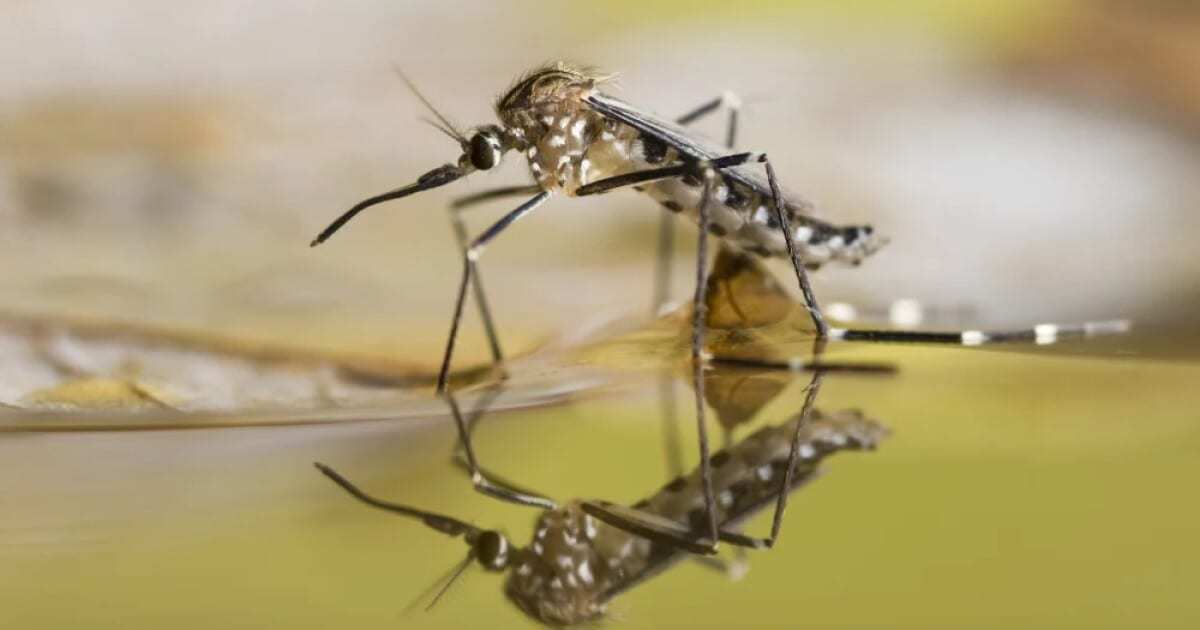
Mosquito Control began aerial treatments targeting the Aedes aegypti mosquito, the main carrier of dengue, in mid-October. Flights were scheduled to start at 7 p.m. on Oct. 16, and an Oct. 19 update set further treatments to begin at 7 p.m. on Tuesday, Oct. 20, and Saturday, Oct. 24. News 6 reported that small planes sprayed over Apopka on Tuesday night.
Treatment zones in Apopka include neighborhoods near U.S. Highway 441, Main Street and Park Avenue, South Apopka and Clarcona, Paradise Heights and areas north of Lake Apopka, with Apopka High School excluded. In Pine Hills, the zones cover the West Colonial Drive and North Pine Hills Road area, neighborhoods near West Washington Street and the Bel-Aire Woods and Orlo Vista communities.
Steve Harrison, manager of Orange County Mosquito Control, said in an Oct. 12 release that "we are planning to aerial spray over the next two to three weeks." The county expects a 99% reduction in the targeted mosquito population and promises at least 48 hours' notice before each treatment through social media, its Mosquito Control website and OC Alert. County officials have said residents "do not need to take additional precautions" for pets, livestock or gardens because the products are approved by the EPA and the Florida Department of Agriculture and Consumer Services.
Where Central Florida counties stand
The table below combines the state's Oct. 11 to 17 surveillance report with county announcements made since then.
| County | Local cases, 2026 | Travel cases, 2026 | Status and response |
|---|---|---|---|
| Orange | 8 (state); 5 (county, as of Oct. 12) | 7 | Illness alert; aerial spraying in Apopka, Pine Hills |
| Seminole | 1 confirmed Oct. 21; 2 pending | 4 | Illness advisory issued Oct. 21; added monitoring |
| Brevard | 1 | 2 | Illness advisory; targeted treatments |
| Osceola | 0 | 3 | Countywide aerial spraying under way |
| Polk | 1 | 4 | Illness advisory |
Brevard's single local case this year, which had a September onset according to the state, was reported publicly on Oct. 17, and officials did not disclose where the person was infected, WFTV reported. The county responded with increased mosquito monitoring, targeted treatments and overnight spraying. Brevard knows the pattern well: in 2025 it was the center of Florida's locally acquired dengue activity, with 27 cases by mid-September of that year, according to Central Florida Public Media.
The statewide picture
Central Florida's handful of cases sits alongside a much larger outbreak to the west. Of the 425 locally acquired cases the state has counted this year, 346 had exposure in Hillsborough County and 51 in Pinellas. Miami-Dade has nine, Pasco four and Citrus two, with single cases in Brevard, Broward, Manatee, Palm Beach and Polk. The state reports case onsets in July (21), August (160), September (226) and October (18). The October number is likely to rise as recent illnesses are confirmed and reported.
Florida has also recorded 320 travel-associated dengue cases this year, most of them in Miami-Dade County, which matters for Central Florida because a traveler infected abroad can pass the virus to local mosquitoes. As of Oct. 17, Orange was one of eight counties under the state's higher-level mosquito-borne illness alert, while Brevard and Polk were among 10 counties under an advisory. Orange is also seeing West Nile virus activity in its sentinel chickens, though no human West Nile cases have been reported there this year.
What residents are being told
County and state officials across the region are repeating the same guidance. Drain standing water from buckets, gutters, plant saucers and other containers, and flush birdbaths at least every three days. Wear long sleeves and pants outdoors, especially around dusk and dawn. Use an EPA-registered repellent containing DEET, picaridin or oil of lemon eucalyptus. Dengue is not spread from person to person, but symptoms such as fever, flu-like illness and rash can appear within about two weeks of a bite, and anyone with those symptoms should see a doctor.
What's next
Orange County's next scheduled aerial treatment is set for 7 p.m. Saturday, Oct. 24, weather permitting, as part of a campaign the county expects to last two to three weeks from its mid-October start. Osceola's contractor flights will continue over multiple nights, with weather backup dates through the rest of October. In Seminole County, test results on the two pending cases will determine whether the county expands mosquito control beyond monitoring.
The Department of Health's next weekly arbovirus report, covering Oct. 18 to 24, should be the first to include Seminole's confirmed case and will show whether Orange County's count has climbed past eight. Until rain eases and cooler weather slows the Aedes aegypti population, county mosquito programs across the region say they will keep up surveillance and treatments.
Spotted an issue with this article?
Have something to say about this story?
Write us a letterComments
No comments yet. Be the first to weigh in.
Related Coverage
Tampa Bay Dengue Outbreak Slows as Hillsborough Logs Its Smallest Weekly Rise Since August and Extends Emergency to Nov. 12
1d ago

Federal Appeals Court Upholds Ruling That Florida's Medicaid Termination Notices Were Unconstitutional, Keeping Income Cutoffs on Hold
1d ago

Amazon driver found in idling van in Fruitland Park died of carbon monoxide poisoning, medical examiner rules
2d ago

UnitedHealthcare Sends Lee Health a New Offer, but the Hospital System Says It Falls Short as the Jan. 1 Network Exit Nears
3d ago