Florida ordered license plate readers off state roads, but Palm Beach County's sheriff kept his
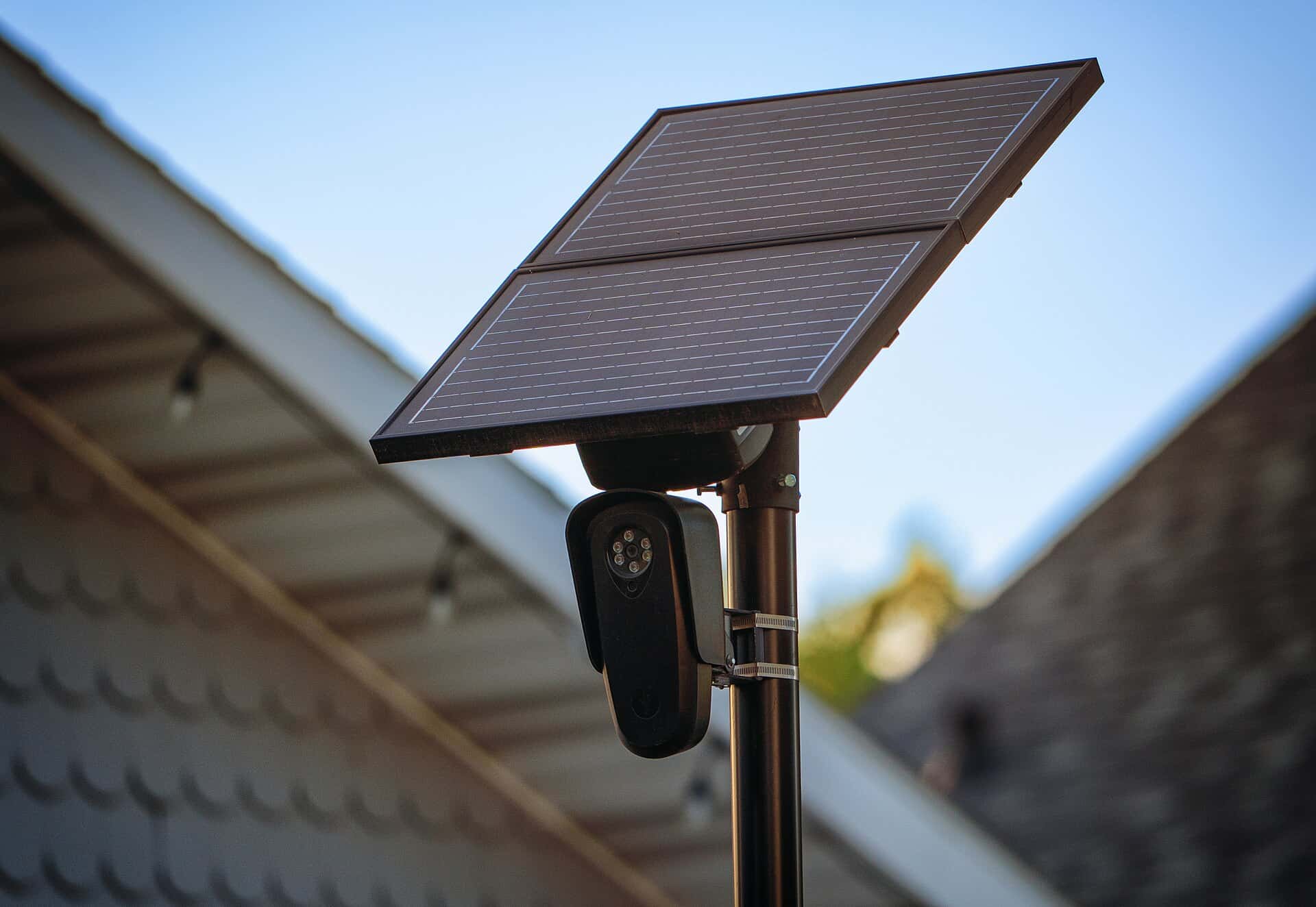
Six weeks after the DeSantis administration ordered local police and sheriffs to pull automated license plate reader cameras off Florida's state highways, the Palm Beach County Sheriff's Office still has them up. Sheriff Ric Bradshaw told WPTV that his agency received an exemption tied to its role in protecting President Donald Trump when he is in Palm Beach County, and that he has no plans to take the cameras down.
The exemption, which Bradshaw described in an interview aired Thursday, Oct. 15, 2026, makes Palm Beach County an outlier as agencies elsewhere in Florida have removed cameras from state roads or ended their programs altogether.
What the state ordered
On Monday, Aug. 31, 2026, the Florida Department of Transportation released a memorandum revoking existing approvals for automated license plate recognition systems that local agencies had installed along roads in the State Highway System. Agencies were given 30 days to remove the devices. FDOT said it would take down any that remained after the deadline and would stop approving new requests to install the readers in state highway rights of way.
The memo, written by FDOT Assistant Secretary Will Watts, based the agency's authority on section 316.0777 of the Florida Statutes, according to Florida Politics. It covered cameras made by Flock Safety, Axon and other vendors, and said FDOT would move faster on any camera it considered an immediate safety concern. FDOT cited the "exponential increase" in deployments, along with concerns about misuse, data privacy and surveillance, as reasons for immediate action, FOX 13 reported.
The order applies only to state highways. Cameras on city and county roads and on private property were not covered.
Why DeSantis wanted them gone
Gov. Ron DeSantis framed the move as a civil liberties issue. "I think it's out of control," he said of the technology, according to FOX 13. He has said he supports giving law enforcement tools to investigate crimes but does not want Florida to become a surveillance state, and he has called on the Legislature to take up the issue as part of a broader artificial intelligence bill of rights.
"Well, I've been on the record as saying that what we don't want in the state of Florida is to have a digital AI surveillance state where everything we're doing is being tracked at all times," DeSantis said on the day of the announcement, as reported by NBC 6. He noted that the state itself uses plate readers for toll-by-plate billing, which he said was a different situation from using them for criminal penalties.
DeSantis also raised the prospect of companies profiting from location data. "If they can create a dossier on your movements, they would be able to make a fortune in selling that to companies for advertising and for product placement and all these other things," he said, according to Florida Politics.
Democrats criticized the governor from the other side. Florida Democratic Party Chair Nikki Fried said the technology had been allowed to spread without sufficient safeguards, FOX 13 reported, and Democratic gubernatorial nominee David Jolly urged DeSantis to call a special session on license plate readers.
How other agencies responded
Many sheriffs moved quickly. Jacksonville Sheriff T.K. Waters said his office would discontinue the use of plate reader technology throughout Duval County effective immediately, and Putnam County Sheriff Gator DeLoach said his department would end its program and cancel its contract, according to Florida Politics. Clay County Sheriff Michelle Cook said the decision would not hinder her agency's crime-fighting work. Law enforcement in Volusia County said it would comply while stressing that the readers had helped solve crimes, NBC 6 reported, and in Pensacola, Mike Wood of the Pensacola Police Department told WEAR that the cameras are used in searches for missing persons, stolen vehicles and people wanted for serious crimes.
In South Florida, Pembroke Pines Vice Mayor Mike Hernandez told NBC 6 that cameras in his city would stay up on city roads for now but not on Pines Boulevard, a state road.
The scale is significant. At least 100 law enforcement agencies in Florida use Flock cameras, part of a national network estimated at more than 100,000 cameras, with nearly 7,500 plate readers in the state, according to Florida Politics.
Palm Beach County's exemption
Bradshaw told WPTV's Michael Hoffman that his agency's situation is different because of presidential security. Trump's Mar-a-Lago estate is in Palm Beach, and the sheriff tied the exemption to the agency's role in protecting him when he is there.
"We filed a brief with the Department of Highway Safety up there in Tallahassee that, along with the Secret Service, and says, 'Hey, this is why we can't take them down,' and they granted us that exemption," Bradshaw said. WPTV's report did not specify which state agency formally approved the exemption, and the original order came from FDOT.
Hoffman asked why, if the exemption is tied to protecting the president, the agency still uses the cameras for unrelated investigations. "Well, because the law enforcement activities came first, the president came second," Bradshaw said. "We've been using them for six years, so he just became part of the system."
Bradshaw said the cameras are legal and that he would not take them down. "They're a great investigative tool. We help the public with them, and it's a crime prevention tool that we use to solve cases," he said. The Sheriff's Office also has plate reader cameras on county roads, which the state order does not reach.
The case for and against the cameras
The Sheriff's Office says the readers have played a role in major investigations, including the search for Ryan Routh after the apparent assassination attempt against Trump at Trump International Golf Club in West Palm Beach in 2024. The agency said the cameras were also used on Tuesday, Oct. 13, as deputies tracked a robbery suspect in a pursuit that ended in a deputy-involved shooting, WPTV reported.
"It's a very good tool to find people that we're looking for in a law enforcement capacity," Bradshaw said. "Not just for the heck of it." He said someone audits the agency's use of the system every week, and he rejected the idea that the readers amount to surveillance, calling each image "just a snapshot of a particular point in time." He also argued that people traveling in public have no expectation of privacy.
Critics point to misuse. In Haines City, an officer was arrested after investigators alleged he searched Flock data for his estranged wife's vehicle more than 700 times between September 2024 and June 2026, and a former Sumter County detective was fired and charged after investigators alleged she used Flock and other databases to gather information about her husband's former wife, FOX 13 reported. Both cases are allegations. The ACLU has run a petition campaign called "Get the flock out" seeking removal of the cameras from neighborhoods, according to NBC 6.
Flock founder and CEO Garrett Langley has argued for stronger safeguards instead of bans. The company has said it is making its audit system mandatory for law enforcement customers, will require most searches to carry a case code tying them to an investigation by the end of the year, and is cutting its default data retention period from 30 days to seven, FOX 13 reported.
What's next
The fight over plate readers now moves toward the 2027 legislative session. DeSantis has pointed to New Hampshire, which bans fixed cameras along public roads and requires quick purging of data from cameras mounted on police vehicles, as a possible model, according to Florida Politics. Any statewide limit on cameras on city and county roads would require new legislation.
In Palm Beach County, the cameras on state roads stay up for as long as the exemption Bradshaw described remains in place.
Spotted an issue with this article?
Have something to say about this story?
Write us a letterComments
No comments yet. Be the first to weigh in.
Related Coverage
Florida mistakenly released two Deportation Depot detainees, then returned them to custody
1h ago

Clearwater approves $7.5 million FrankCrum settlement over erased Black cemetery as residents seek resolution
4h ago

Byron Donalds calls for a multi-tier property tax system beyond Amendment 3
4h ago

Broward judge rules Tamarac Commissioner Morey Wright off the Nov. 3 ballot, sparking clash at City Hall
5h ago