Coast Guard Cutter Tampa offloads $226.7 million in cocaine and marijuana at Port Everglades
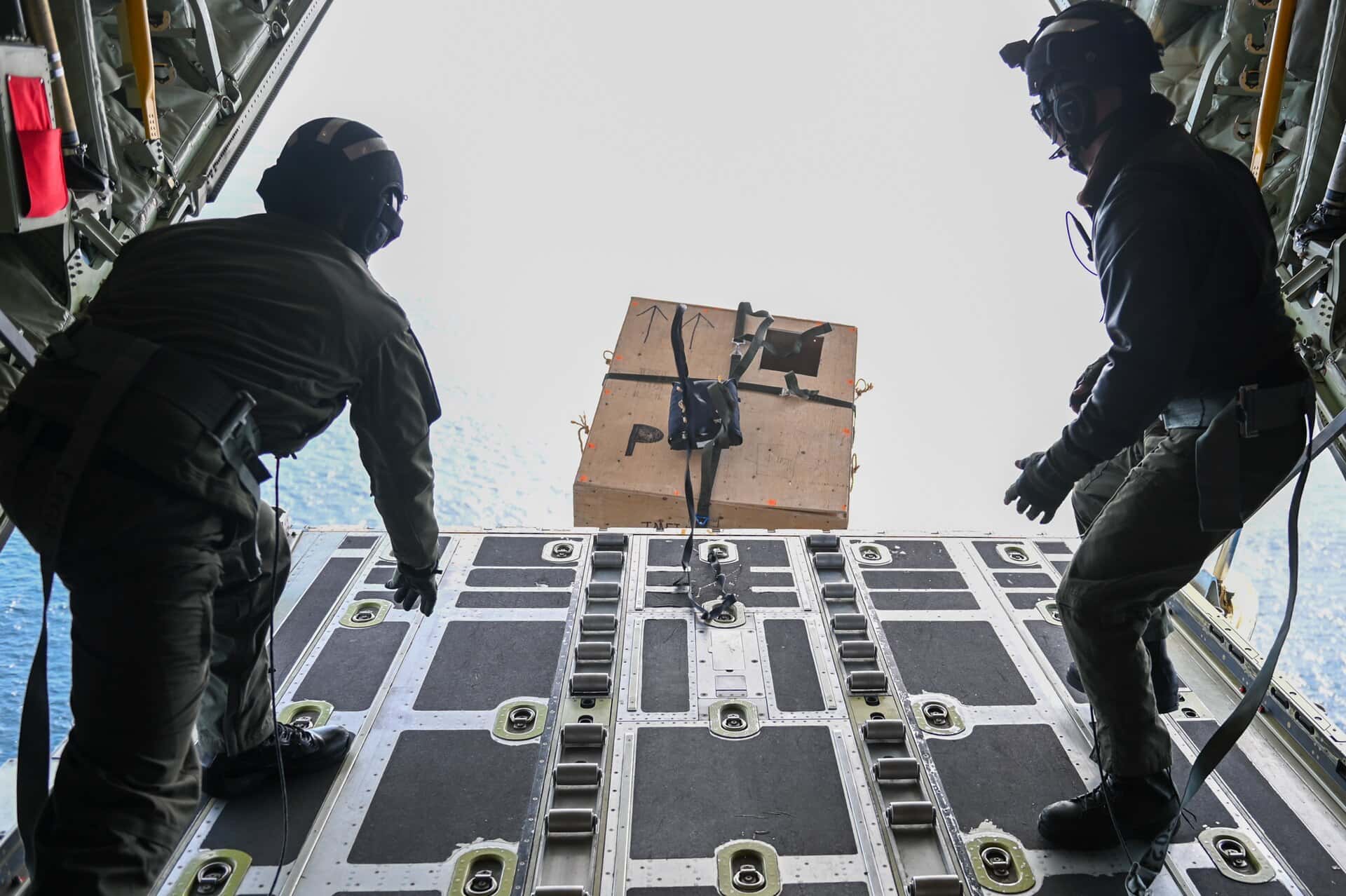
The crew of the Coast Guard Cutter Tampa offloaded about 29,600 pounds of cocaine and 3,355 pounds of marijuana at Port Everglades in Fort Lauderdale on Wednesday, Oct. 14, a haul the Coast Guard valued at roughly $226.7 million. The drugs were seized in six interdictions in international waters of the Eastern Pacific Ocean, according to the Coast Guard, and the offload made Broward County's port once again the landing point for one of the largest counter-drug hauls of the year.
The seizures were part of Operation Pacific Viper, the Coast Guard's surge campaign against maritime drug smuggling off Central and South America. Speaking at the port, Vice Adm. Jo-Ann F. Burdian, commander of Coast Guard Atlantic Area, said the cocaine alone amounted to about 13 metric tons. "Thirteen metric tons of cocaine is enough to deliver 10 million potentially fatal doses," she said, according to WSVN.
What came ashore
The Tampa's crew brought the contraband into Port Everglades Wednesday morning, WSVN reported. The station said the cutter's six interdictions took place over about 60 days at sea.
The key figures from the offload are below.
| Item | Amount |
|---|---|
| Cocaine | About 29,600 pounds |
| Marijuana | About 3,355 pounds |
| Estimated value | About $226.7 million |
| Interdictions | Six, in the Eastern Pacific |
| Suspects detained | 15, according to WSVN |
The Coast Guard credited a mix of its own units and partners for the cases, according to its release as summarized in news reports: the Tampa, a Tactical Law Enforcement Team Pacific boarding detachment, the Coast Guard's Helicopter Interdiction Tactical Squadron, the Coast Guard Southwest District, Joint Interagency Task Force South and the Navy destroyer USS Gridley. Joint Interagency Task Force South, based in Key West, coordinates detection and monitoring of smuggling routes across the region and hands off targets to ships like the Tampa.
Faster, more powerful smuggling boats
The Tampa's commanding officer, Cmdr. Joshua DiPietro, said each case on the patrol "presented unique hazardous challenges," WSVN reported. The smuggling boats averaged about 1,000 horsepower, ran three or four high-powered outboard engines and measured 35 to 45 feet long, according to the station.
"The vessels we saw this patrol were much more powerful than what I've seen the rest of my career," DiPietro said.
Stopping those boats often falls to the Coast Guard's airborne marksmen. Capt. Kent Reinhold, commanding officer of the Helicopter Interdiction Tactical Squadron, described the work as "stopping a speeding vessel from a maneuvering helicopter at night over an open ocean," according to WSVN. The Jacksonville-based squadron's helicopter crews are trained to disable a fleeing boat's engines with precision fire so boarding teams can move in.
What happens to the drugs and the suspects
Some of the seized drugs will be kept as evidence, but most will be destroyed, according to the Coast Guard. The 15 people detained in the interdictions will be repatriated rather than prosecuted using federal resources, WSVN reported, citing recent changes in how maritime drug cases are handled.
That marks a shift from the long-standing pattern in which many suspects caught at sea in the Eastern Pacific and Caribbean were brought to Florida to face charges in federal court under the Maritime Drug Law Enforcement Act. In February 2025, Attorney General Pam Bondi issued a memo setting the Justice Department's priorities for cartel cases, and news reports since then have described the department as rarely prosecuting low-level crew members intercepted at sea, with the Coast Guard typically returning them to their home countries instead.
Burdian framed the mission as an attack on the organizations behind the trade. "Our goal is to dismantle these violent criminal networks," she said, according to WSVN.
Operation Pacific Viper's running total
The Coast Guard launched Operation Pacific Viper in August 2025 to add cutters, aircraft and boarding teams in the Eastern Pacific, the main corridor for cocaine moving north from South America. The operation has accounted for more than 250,000 pounds of cocaine seized since it began, according to Coast Guard figures reported in coverage of Wednesday's offload. In August 2025, the Department of Homeland Security described an offload tied to the effort as the largest in the Coast Guard's history.
The Tampa is a 270-foot medium endurance cutter homeported in Portsmouth, Virginia, under Coast Guard Atlantic Area. The ship shares its name with the Gulf Coast city, and this is not its first big South Florida offload: the cutter has returned to Port Everglades with Eastern Pacific seizures several times in recent years, including a 2019 offload in which it was credited with six seizures totaling more than 18,000 pounds of cocaine.
This patrol dwarfs the Tampa's previous one. In April, the same cutter, under the same commanding officer, offloaded about 3,825 pounds of cocaine worth more than $28.7 million at Coast Guard Base Miami Beach after two Eastern Pacific interdictions, according to a Coast Guard release posted by the Department of Homeland Security. That 74-day patrol netted nearly $45 million in drugs in all, and at the time the Coast Guard said Operation Pacific Viper had seized more than 215,000 pounds of cocaine and apprehended 160 suspected traffickers. Wednesday's single offload was worth roughly five times that entire spring patrol.
Why Port Everglades keeps getting the call
Port Everglades and Miami Beach's Coast Guard base are routine offload points for Eastern Pacific patrols. Cutters returning from months off Central and South America often stop in South Florida, close to federal labs, evidence facilities and the agencies that coordinate the cases, before heading home to ports farther north.
Florida is also home to much of the command structure behind the broader drug war at sea. U.S. Southern Command, headquartered in Doral, oversees military operations across Latin America and the Caribbean, including the campaign of military strikes on suspected drug boats in the Caribbean and Eastern Pacific that began in September 2025. By the end of 2025, those strikes had killed at least 115 people, CBS News reported. The Coast Guard's interdictions, by contrast, are law enforcement boardings in which suspects are detained and drugs are seized as evidence.
Port Everglades has handled several of the largest of those Coast Guard offloads. In December 2024, for example, the Cutter Hamilton brought $182.8 million worth of cocaine into the Broward County port, Local 10 reported at the time.
What's next
Operation Pacific Viper continues in the Eastern Pacific, and cutters returning from the region have regularly brought their seizures through South Florida. The Coast Guard has not said when the Tampa will deploy again.
Spotted an issue with this article?
Have something to say about this story?
Write us a letterComments
No comments yet. Be the first to weigh in.
Related Coverage

Eight states sue OpenAI over ChatGPT's harm to children, following Florida's lead
4m ago

Supreme Court won't shield Seminole County print examiner sued by freed death row inmate Clemente Aguirre-Jarquin
19h ago
Nearly 177,000 Florida immigrants flagged as federal Medicaid cutoff for refugees and asylees takes effect
21h ago
Inflation hits 3.7% as gasoline jumps 9.1% in September: what it means for Florida
23h ago