DeSantis Expands SunTrax to Test Flying Cars in Florida's Transportation Future
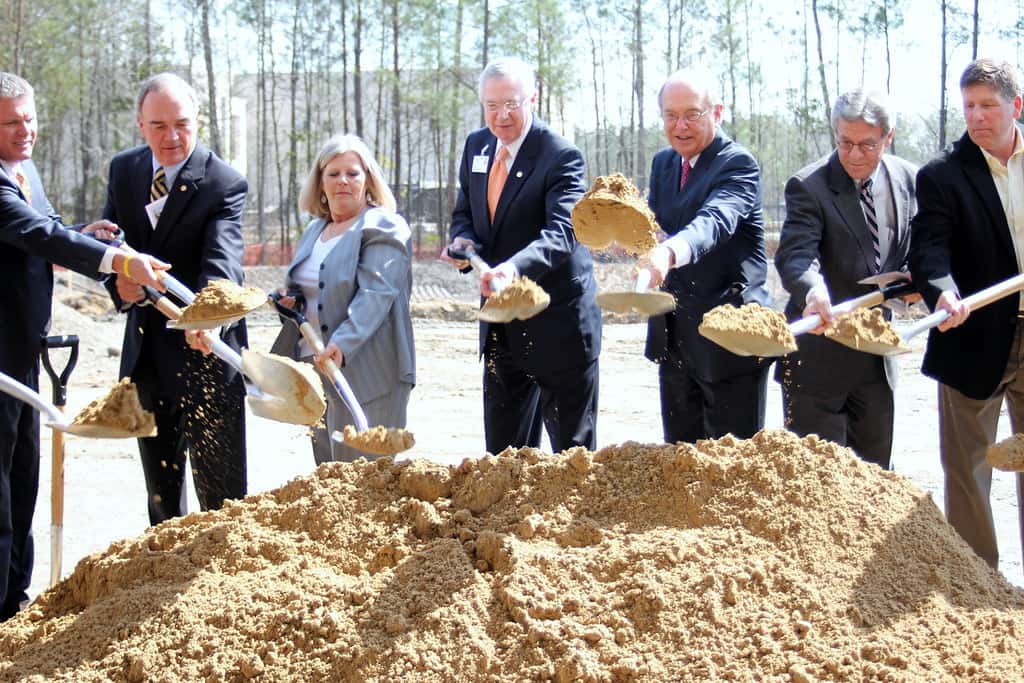
Gov. Ron DeSantis announced an expansion of SunTrax, the state-owned transportation research and development facility, purpose-built to support the safe development of advanced air mobility technology. The announcement positions Florida to compete for a share of an aviation sector that has drawn substantial private investment but has not yet reached commercial passenger operations anywhere in the United States.
SunTrax is operated under the Florida Department of Transportation as a closed-course facility for testing emerging transportation technologies. The expansion extends its scope from ground-based automated vehicle research into the airspace above it, and the governor's office described the facility as nation-leading in that role.
What advanced air mobility actually means
Advanced air mobility, abbreviated AAM, is the industry term for aircraft designed to carry passengers or cargo on short regional routes using electric or hybrid propulsion, typically with vertical takeoff and landing capability. The popular shorthand is flying cars, though the vehicles under development resemble multi-rotor aircraft far more than automobiles.
The operating concept is short-hop urban and regional transport: airport to downtown, suburb to city center, mainland to island. The economics depend on aircraft that are quiet enough to operate near populated areas, efficient enough to compete with ground transportation on cost, and certified to a safety standard that passengers and regulators will accept.
None of those conditions has been met at commercial scale. The Federal Aviation Administration governs aircraft certification and airspace integration, and no state can authorize commercial passenger operations independently. What a state can do is build the testing infrastructure, establish the regulatory and permitting framework for ground facilities, and make itself the place where the industry chooses to locate.
Why Florida is a plausible market
Florida's geography makes the AAM value proposition unusually concrete. The state's metropolitan areas are strung along two coasts with limited east-west connectivity. Traffic congestion in the Miami-Fort Lauderdale-West Palm Beach corridor, the Tampa Bay region and Central Florida ranks among the worst in the country. The Florida Keys are connected to the mainland by a single road. Barrier islands throughout the state depend on bridges that become chokepoints during evacuations.
The state also has an aviation industry base that extends well beyond its commercial airports. Embry-Riddle Aeronautical University in Daytona Beach trains a substantial share of the country's civilian aviation workforce. The Space Coast supports an aerospace supply chain built around Kennedy Space Center and Cape Canaveral Space Force Station. Central Florida hosts a simulation and training cluster tied to the defense industry.
Year-round flyable weather is the other structural advantage, with the significant caveat of summer convective thunderstorms and hurricane season disruption.
What SunTrax provides
SunTrax operates as a closed course, which is the essential feature. Testing emerging vehicle technologies on public roads or in shared airspace requires regulatory approvals that are slow to obtain and that constrain what can be tested. A dedicated facility lets developers run scenarios, including failure scenarios, without exposing the public to risk and without seeking approval for each test campaign.
For ground vehicle research, the facility has supported connected and automated vehicle testing, tolling technology development and infrastructure sensor work. Extending that model to AAM means providing takeoff and landing infrastructure, controlled airspace for flight testing, and the instrumentation to collect data regulators will eventually require.
The state's investment in the facility functions as industrial policy. Companies developing these aircraft need testing capacity, and testing capacity is scarce. A state that supplies it gains leverage in attracting the engineering operations, manufacturing and eventual service networks that follow.
What it means for Floridians
The honest near-term answer is that most Floridians will not encounter an air taxi for years. FAA type certification for a new aircraft category is a multi-year process, and operational integration into the national airspace system adds further time. Early commercial service, when it arrives, will likely be limited in route count and priced well above ground alternatives.
The more immediate implications are economic. Aerospace engineering, aircraft manufacturing, battery and propulsion systems work, and the maintenance and operations workforce that supports any aviation sector all represent employment categories that pay above Florida's median wage. Florida's economy remains heavily weighted toward tourism, health care and construction, and diversification into higher-wage technical sectors has been a stated state priority across multiple administrations.
There is also a public safety dimension worth watching. Vertical takeoff aircraft have obvious applications in emergency medical transport, search and rescue, and post-hurricane damage assessment and supply delivery in a state where road access is regularly cut by storms.
Local impact across the state
SunTrax sits in Polk County, in the corridor between Tampa and Orlando, which places it within reach of both metropolitan workforces and adjacent to the Interstate 4 industrial corridor.
Daytona Beach and the Space Coast are the most likely beneficiaries of any AAM workforce buildout, given the existing aviation and aerospace training pipelines at Embry-Riddle and the technical schools serving the launch industry.
South Florida is the most plausible early market for commercial service, given congestion levels, the density of high-value travel demand and the geography of the region's airports relative to its business districts.
Rural Florida's stake is different and less discussed. Regional air mobility has potential application in connecting communities that lost scheduled air service decades ago, though the economics of serving low-density markets have defeated every previous attempt at short-haul aviation.
The certification hurdle
The reason no advanced air mobility aircraft carries paying passengers in the United States today is certification, and understanding that process explains why timelines have repeatedly slipped across the industry.
The Federal Aviation Administration certifies aircraft types against airworthiness standards, and the electric vertical takeoff designs under development do not fit cleanly into existing categories. They are not conventional airplanes, and they are not helicopters. Establishing the criteria against which they will be evaluated has itself been a multi-year regulatory undertaking.
Beyond type certification, manufacturers need production certification to build aircraft at scale, and operators need certification to fly commercial passenger service. Pilots need training standards and certification pathways that do not yet fully exist for the category.
Battery technology is the persistent engineering constraint. Energy density determines range and payload, and electric aircraft face a physics problem that ground vehicles do not: an aircraft must carry its energy storage aloft, and the weight penalty compounds.
Noise is the constraint that determines public acceptance. Multi-rotor aircraft operating over residential areas at meaningful frequency would generate sustained community response if they are not substantially quieter than helicopters, and manufacturers have made noise reduction a central design priority for exactly that reason.
Florida's broader transportation agenda
SunTrax sits within a state transportation program that spans considerably more than emerging aviation.
Florida's population growth has outpaced highway capacity expansion for years, and the Florida Department of Transportation manages a substantial capital program covering the interstate system, the Turnpike Enterprise and state roads. Interstate 4 through Central Florida and Interstate 95 along the east coast carry among the heaviest volumes in the state.
Rail has developed differently in Florida than in most states. Brightline operates privately funded intercity passenger rail connecting South Florida to Orlando, a service model that has no direct parallel elsewhere in the country. Commuter rail operates in South Florida and Central Florida.
Port infrastructure connects to the freight network, with PortMiami, Port Everglades, Port Tampa Bay, JAXPORT and Port Canaveral all requiring landside connectivity to move cargo.
Hurricane evacuation is the constraint that shapes Florida transportation planning in ways unfamiliar to other states. Evacuation clearance times determine how much warning coastal populations need, and roadway capacity is the binding factor in those calculations.
The economics of the sector
Advanced air mobility has attracted substantial private capital across multiple companies pursuing similar concepts, and the industry's consolidation phase has already begun, with some entrants failing or being acquired.
The business case rests on cost per seat mile falling far enough to compete with ground transportation for time-sensitive trips. Achieving that requires high aircraft utilization, low maintenance costs, autonomous or single-pilot operation, and the infrastructure density to make short trips convenient.
None of those conditions is established. Early service, when it arrives, will most likely resemble premium helicopter charter in price and accessibility, serving a narrow market while the industry works toward scale.
For a state investing in testing infrastructure, that uncertainty is the relevant risk. The return on the investment depends on an industry that has not yet proven its economics, and states competing for the sector are making similar bets.
The offsetting consideration is that the testing infrastructure has value regardless. SunTrax was built for ground vehicle and tolling technology research, and that function continues independent of what happens in aviation.
What states are competing for
Florida is not alone in courting the advanced air mobility sector, and the competition among states follows a familiar economic development pattern.
Ohio has invested in testing infrastructure tied to its aerospace research base. Texas has leveraged its regulatory posture and existing aviation industry. California hosts several manufacturers developing the aircraft themselves. Each state is offering some combination of testing capacity, permitting clarity, workforce pipelines and financial incentives.
What differentiates the offers is generally not money but readiness. A company preparing for certification flight testing needs facilities available now, regulatory relationships already established and a workforce it can hire from immediately. States that can supply those things win the operations.
Florida's argument rests on its aviation and aerospace base, its year-round flying weather, its congestion profile and its willingness to build the physical infrastructure. Whether that converts into manufacturing and headquarters operations rather than testing alone is the question that determines the return on the investment.
What's next
The practical milestones ahead are federal rather than state. FAA certification decisions on the leading aircraft designs, rulemaking on pilot certification and operational requirements, and airspace integration frameworks all have to advance before any state-level infrastructure gets used commercially.
Florida's role in the interim is building capacity and establishing the ground infrastructure framework. That includes questions state and local governments will need to answer: where landing facilities can be sited, what noise standards apply, how they connect to existing transit, and who pays for them.
The Florida Department of Transportation manages SunTrax operations, and further detail on the expansion's timeline and capacity would come through the department and through Florida's aviation planning process.
Spotted an issue with this article?
Have something to say about this story?
Write a letter to the editor