Florida's Property Tax Amendment Heads to the November Ballot With a $250,000 Homestead Exemption on the Line
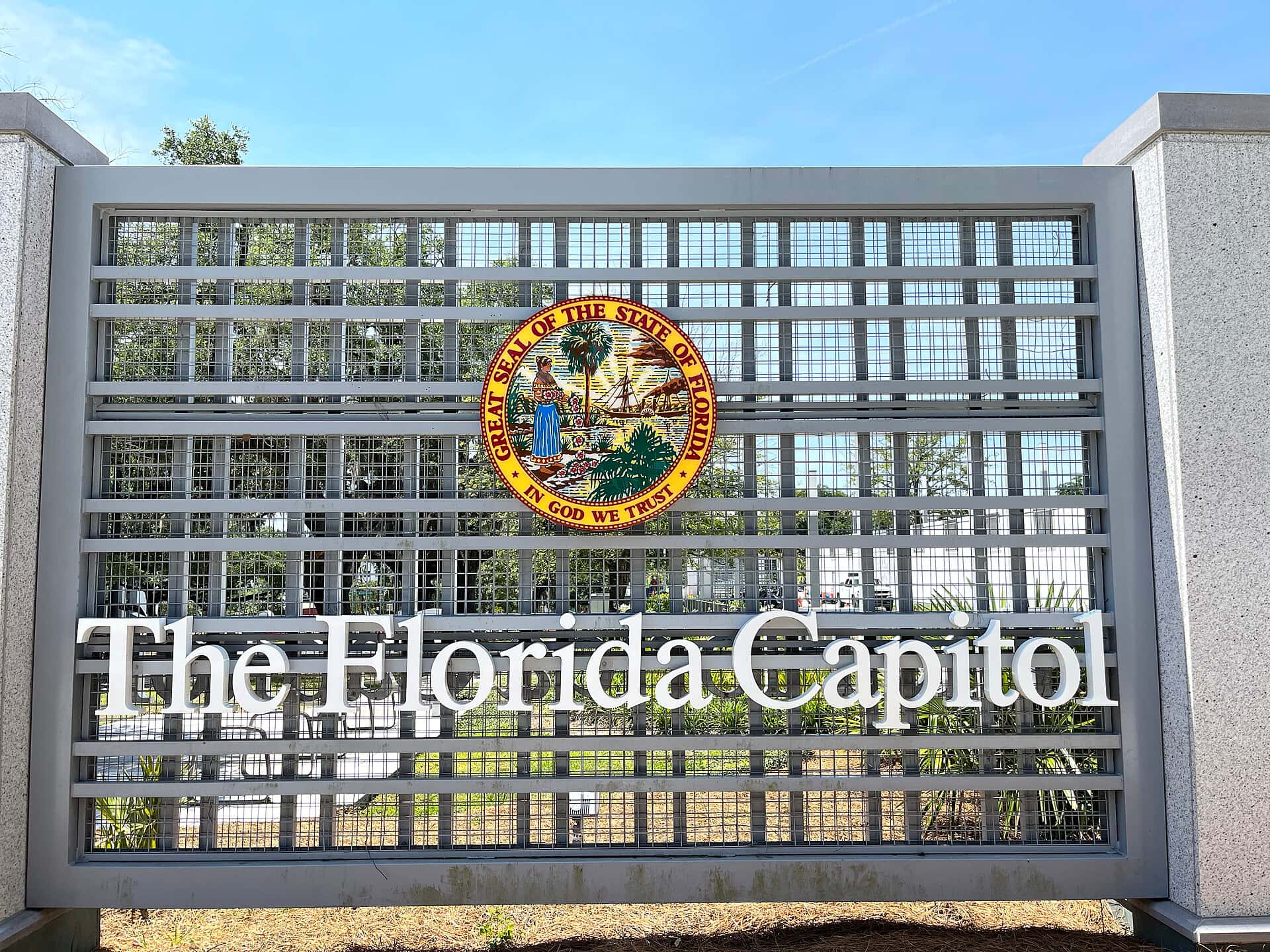
Florida voters will decide on November 3 whether to write the largest property tax cut in state history into the Florida Constitution. The measure, backed by Governor Ron DeSantis and approved by the Legislature in June, would raise the homestead exemption in stages to $250,000 and, according to the governor's office, eliminate non-school property taxes entirely for roughly 60 percent of homesteaded homeowners.
With ballots going out to overseas and military voters and vote by mail requests already being processed, the campaign over the amendment is moving from Tallahassee into county commission chambers and city halls across the state. Local governments that depend on property tax revenue are running their own numbers, and the results vary sharply from one county to the next.
Like every proposed constitutional amendment in Florida, this one needs at least 60 percent approval to take effect. That threshold has ended measures with clear majority support before, including the 2024 recreational marijuana proposal, and it makes the outcome genuinely uncertain despite the popularity of tax cuts in the abstract.
What the amendment would do
The proposal phases in over two years. On January 1, 2027, the homestead exemption would rise from the current $50,000 to $150,000. One year later, on January 1, 2028, it would rise again to $250,000. The exemption applies to the non-school portion of property taxes, which is the share that funds counties, municipalities and special districts.
School property taxes are not covered by the expanded exemption. That structural choice reflects both the constitutional requirement that the state provide for a uniform system of public schools and the practical reality that school levies represent a large fraction of a typical Florida tax bill. A homeowner whose non-school taxes fall to zero would still owe the school portion.
The measure also carries a residency condition. New Florida residents would have to wait five years before qualifying for the increased exemption. Supporters describe that as protection for long term residents. Critics have questioned how it would interact with constitutional limits on treating residents differently based on how long they have lived in a state.
The Legislature passed the joint resolution placing the measure on the ballot by votes of 30 to 9 in the Senate and 75 to 26 in the House, margins that reflected some bipartisan support alongside sustained Democratic opposition.
The Florida context
Property taxes have become one of the most acute affordability pressures in Florida, and for reasons that have little to do with tax rates. Assessed values climbed steeply through the post pandemic housing surge, and while the Save Our Homes cap limits annual assessment increases on homesteaded property to three percent or the change in the consumer price index, whichever is lower, the cumulative effect over several years has been substantial.
That pressure compounds the state's insurance problem. Florida homeowners have spent the past several years absorbing property insurance premiums that rank among the highest in the country, even as recent filings have begun to show rate decreases in most counties. For a household weighing whether it can stay in its home, the tax bill and the insurance bill arrive as a single burden.
The state's own fiscal position is part of the argument for the cut. The governor has pointed to a reserve fund that has grown substantially and to constitutional limits on how much additional money can be placed in it. Supporters of the amendment argue that a state collecting more than it can hold in reserve should return money to homeowners.
What local governments say
County and city officials have raised the sharpest objections, and their concern is straightforward. Non-school property taxes are the primary funding source for sheriff's offices, fire rescue departments, emergency medical services, road maintenance, libraries and parks. A large exemption removes a substantial share of the base that pays for those services.
The effect is not uniform. In counties where the typical homesteaded value sits well above $250,000, including much of South Florida and the coastal southwest, a $250,000 exemption removes a smaller proportion of taxable value than it does in inland and rural counties where median values are lower. Some rural county budgets could see the majority of their homesteaded tax base disappear.
Local officials also point out that non-homesteaded property, including rentals, second homes and commercial parcels, would not receive the exemption. That raises the possibility that the tax burden shifts toward landlords and businesses, with knock on effects for rents and commercial leases, or that millage rates rise to compensate.
The case supporters are making
Proponents argue that Florida homeowners have effectively been taxed on paper gains they never realized. A household that bought a home a decade ago and has no intention of selling has watched its assessment climb because of what neighbors paid, not because of anything the household did.
They also frame the measure as a defense of homeownership itself. The argument, made repeatedly during the legislative debate, is that a homeowner who has paid off a mortgage but still faces a five figure annual tax bill does not truly own the property. Removing the non-school portion for most homesteaded owners, in this view, restores something closer to genuine ownership.
Supporters further contend that local governments have benefited from years of rising assessments without corresponding millage reductions, and that the amendment forces a discipline that voluntary rate cuts have not produced.
What it means for Floridians
For a homesteaded owner, the practical effect depends almost entirely on assessed value. An owner whose assessed value after existing exemptions falls below $250,000 would owe no non-school property tax once the measure is fully phased in. An owner well above that line would see a fixed reduction rather than elimination.
Renters have no direct benefit and face indirect risk. Rental property does not qualify for a homestead exemption, so any millage increase adopted to offset lost revenue would fall on landlords, who generally pass such costs through in lease terms.
Recent arrivals face the five year waiting period. That includes the substantial number of households that have moved to Florida since 2021, many of whom bought at peak prices and carry the highest assessments in their neighborhoods.
Local impact across the state
In Miami-Dade, Broward and Palm Beach counties, where median homesteaded values run well above the exemption threshold, the amendment would deliver meaningful savings without wiping out the local tax base. County budget offices in those jurisdictions have modeled revenue reductions that are significant but survivable with adjustments.
In the Panhandle, north central Florida and the interior counties along the state's spine, the picture is different. Median assessed values in several of those counties sit near or below the proposed exemption, meaning the non-school homesteaded base could largely vanish. Sheriff's offices in those counties have been among the most vocal opponents.
Tampa Bay and Central Florida fall in between, with wide variation inside individual counties. A Hillsborough or Orange County homeowner in an older inland neighborhood may see the tax eliminated while a neighbor two zip codes away sees a partial reduction.
How Florida property taxes are calculated
A Florida property tax bill is the product of taxable value and the millage rates set by each taxing authority with jurisdiction over the parcel. A single bill typically includes county, municipal, school district and special district levies, each with its own rate.
Taxable value starts with the county property appraiser's assessment of just value, which is market value adjusted for costs of sale. For homesteaded property, the Save Our Homes provision caps annual increases in assessed value at three percent or the change in the consumer price index, whichever is lower.
Exemptions are then subtracted from assessed value to produce taxable value. The current $50,000 homestead exemption applies in two tiers, with the first $25,000 exempt from all levies and the second $25,000 exempt from non school levies on value between $50,000 and $75,000.
The proposed amendment operates on that structure by dramatically enlarging the non school portion of the exemption. It does not change the assessment process, the Save Our Homes cap or the millage setting authority of local governments.
What happened to portability and other existing protections
Florida homesteaded owners already carry several protections that would remain in place. Portability allows an owner who sells a homesteaded property and buys another in Florida to transfer accumulated Save Our Homes savings, up to a statutory limit, to the new property.
Additional exemptions exist for specific populations, including seniors meeting income limits in jurisdictions that have adopted the local option, veterans with service connected disabilities, surviving spouses of first responders and military members killed in the line of duty, and widows and widowers.
Those exemptions stack with the general homestead exemption, meaning a qualifying senior veteran can already have substantial value exempted before the proposed amendment applies. For those owners, the new exemption would eliminate the remaining non school liability entirely in many cases.
None of these protections extend to non homesteaded property. Second homes, rentals, vacant land and commercial parcels are assessed at just value with a separate ten percent annual cap on non homestead assessment increases that applies only to non school levies.
What's next
Between now and November 3, expect organized campaigns on both sides. Local government associations, public safety unions and school groups have signaled opposition or concern, while the governor's political operation and allied business groups are expected to fund the supporting effort.
Voters should watch for county specific fiscal analyses, which several property appraisers and county budget offices have committed to publishing before early voting begins. Those documents, more than statewide averages, will tell an individual homeowner what the measure does to their own bill and their own county's services.
If the amendment passes, the Legislature convenes its regular session on March 2, 2027, and would face immediate decisions about state assistance to fiscally constrained counties. If it fails, the property tax debate does not end. The governor has argued for going further, and legislative leaders have already discussed alternative approaches for a future ballot.
Spotted an issue with this article?
Have something to say about this story?
Write us a letterComments
No comments yet. Be the first to weigh in.
Related Coverage

Florida ordered license plate readers off state roads, but Palm Beach County's sheriff kept his
1h ago

Florida mistakenly released two Deportation Depot detainees, then returned them to custody
2h ago

Clearwater approves $7.5 million FrankCrum settlement over erased Black cemetery as residents seek resolution
4h ago

Byron Donalds calls for a multi-tier property tax system beyond Amendment 3
5h ago