Florida's University Presidential Searches Keep Producing a Single Public Finalist
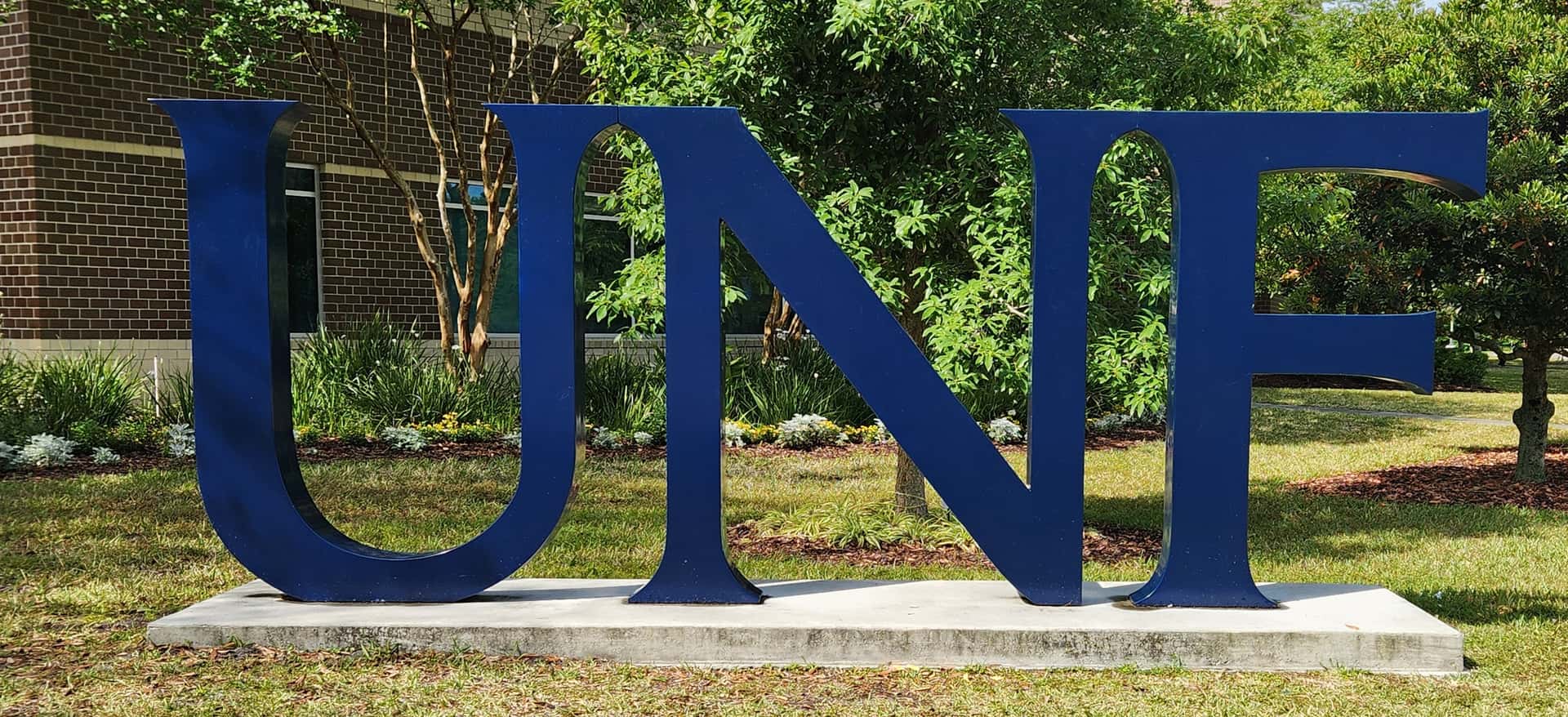
The University of North Florida's presidential search produced four finalists and exactly one who was willing to be publicly identified, a pattern that has repeated across Florida's public university system and that continues to shape how the state's largest institutions choose their leaders. UNF's search committee advanced Michael Shannon, president of the University of North Georgia, as its finalist, subject to approval by UNF trustees and by the Florida Board of Governors.
The single-finalist outcome is not an anomaly at UNF. It has become the norm across the State University System, and it traces directly to a change in Florida law that shielded presidential search records from public disclosure. Candidates who would not apply if their interest became public now apply, and the result is a process in which the public generally learns one name.
The question that follows is whether the tradeoff has been worth it. Supporters argue confidentiality expands the candidate pool by protecting sitting executives who cannot risk a public search. Critics argue it removes the scrutiny that made Florida's university governance accountable, and that the state has traded transparency for a field the public cannot evaluate.
How Florida's search rules changed
Florida's public records law has long been among the most expansive in the country, and for decades it applied to university presidential searches. Applicant names, resumes, committee correspondence and interview materials were public, which meant a provost at another institution who applied for a Florida presidency saw that fact reported in their home state's press.
A 2022 state law created an exemption for those records, shielding applicant information from disclosure while preserving public access at the finalist stage. The stated rationale was competitive: Florida was losing candidates to states with confidential processes, and search consultants told legislators that the best sitting presidents would not apply under full disclosure.
The practical effect has been to compress public visibility into a narrow window at the end. Search committees deliberate in private, and the public sees the process only when finalists are designated. When only one finalist consents to public identification, the window essentially closes.
Open government advocates have objected consistently, arguing that university presidencies are among the most consequential public appointments a state makes, controlling budgets in the hundreds of millions of dollars and shaping institutions that educate hundreds of thousands of students. Their position is that the public interest in scrutiny outweighs the recruiting advantage.
The University of Florida's unfinished search
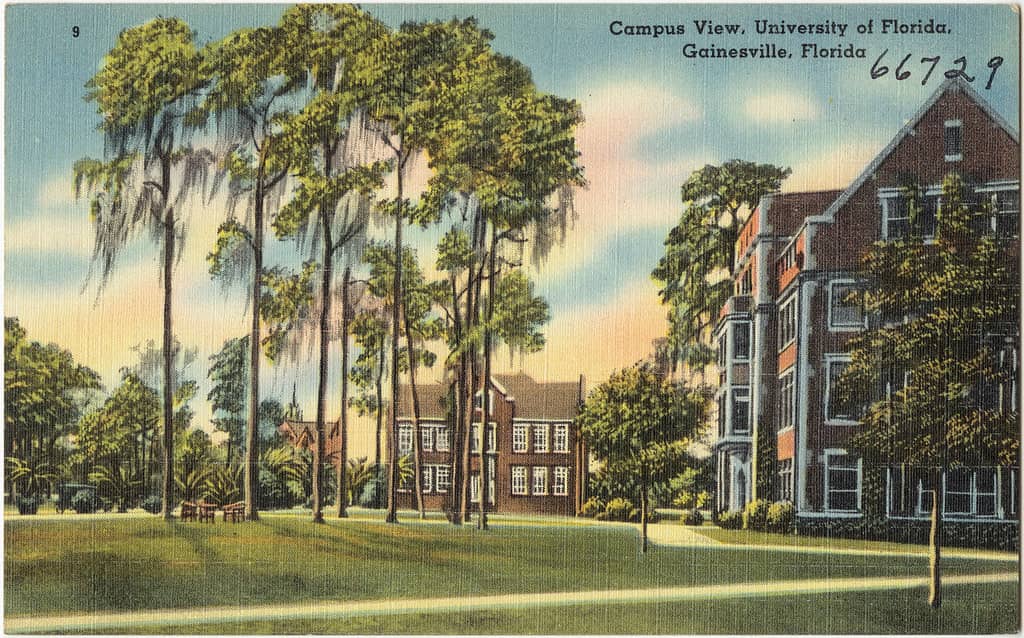
The state's flagship provides the clearest illustration of how contested these processes have become. The University of Florida's Board of Trustees moved to hire Santa Ono as president in 2025, and the Florida Board of Governors declined to confirm the selection, an extraordinary override of a trustee decision that sent the university back to the beginning.
UF trustees subsequently voted in December 2025 to begin the search for the university's 14th president, and a new search committee was formed. The board chair has indicated that UF's interim president intends to apply for the permanent position, which is a common pattern and one that shapes a search's dynamics considerably.
The Ono episode established that the Board of Governors will exercise its confirmation authority as a substantive check rather than a formality. That changes incentives at every institution: trustees now select with the governing board's preferences in view, and candidates weigh the possibility that a successful trustee vote is not the end of the process.
For UF specifically, the stakes are institutional standing. The university has pursued top-tier national ranking as an explicit strategic objective, and leadership instability works against that ambition. Faculty recruitment and research funding both respond to perceptions of governance stability.
Who Michael Shannon is
Shannon comes to the UNF finalist position as a sitting president, having led the University of North Georgia. Presidents of comparable regional public universities are the conventional candidate pool for institutions of UNF's size and mission, which serves roughly 16,000 students in Jacksonville.
The University of North Georgia occupies a distinctive niche as one of the nation's senior military colleges, combining a civilian student body with a corps of cadets. Leading an institution with that dual character involves governance relationships, including with military organizations, that differ from a conventional regional university.
UNF's own profile is that of a metropolitan university closely tied to the Jacksonville economy, with strengths in nursing, business, engineering and education, and a substantial commuter and transfer population. The institution's priorities have centered on enrollment growth, regional workforce alignment and research capacity development.
The appointment requires sequential approval, first by UNF's trustees and then by the Board of Governors. Both steps are ordinarily procedural when a search produces a consensus finalist, though the UF experience demonstrates that the second step carries real authority.
The broader restructuring of Florida higher education
Presidential searches are one visible piece of a wider reshaping of Florida's public higher education governance over the past several years. Legislation and board action have altered tenure review, general education curriculum requirements, diversity program funding and accreditation relationships, moving decision authority toward state-level bodies.
Governance appointments have tracked that shift. Boards of trustees and the Board of Governors are appointed by the governor and by the Board of Governors itself, giving the executive branch substantial indirect influence over institutional leadership across the system.
New College of Florida became the most prominent test case, with a reconstituted board and a new leadership direction that drew national attention and significant faculty departures. Supporters described it as an overdue correction; critics described it as political capture of an academic institution.
The Board of Governors has emphasized system performance under this framework, pointing to affordability, graduation rates and national rankings as evidence that the approach is working. Board leadership, including incoming chair Alan Levine, has framed the agenda around building on that performance.
Why single-finalist searches matter to students and faculty
A president shapes an institution's trajectory in ways that affect students directly, through tuition and fee decisions, program creation and elimination, capital priorities and student services investment. Faculty experience presidential leadership through hiring authorization, research support and the tenure and promotion environment.
Shared governance traditions hold that faculty and students should have meaningful input into presidential selection. A confidential process with one public finalist limits that input to the final stage, when the effective decision has already been made by the search committee and trustees.
Faculty senates across the State University System have raised this objection repeatedly, and the response from governing boards has generally been that faculty representatives serve on search committees and therefore participate in the confidential deliberations. Whether committee membership substitutes for broad consultation is the disputed point.
Students have the weakest position in the process. Student body presidents typically hold a committee seat, but the four-year turnover of the student population means institutional memory about past searches resides almost entirely with administrators and faculty.
How Florida compares with other states
Confidential presidential searches are common nationally, and Florida's 2022 change moved the state toward rather than away from the prevailing practice. Many states never subjected search records to disclosure, and several that did have narrowed access over the past two decades on the same competitive reasoning.
The states that retain open searches tend to have strong public records traditions comparable to Florida's former posture, and their experience does not clearly show a recruiting penalty. Institutions in those states continue to hire sitting presidents and provosts from elsewhere.
What distinguishes Florida is the combination of confidential searches with an assertive system-level confirmation authority. In most states, a governing board's approval of a trustee selection is pro forma. Florida's Board of Governors has demonstrated that it is not.
That combination concentrates decision-making in a small number of appointed officials operating largely outside public view until the outcome is settled. Whether that produces better presidents than the alternative is an empirical question that will take years of institutional performance to answer.
What it means for Jacksonville
UNF's leadership matters to Northeast Florida's economy in concrete ways. The university is a primary supplier of nurses, teachers, accountants and engineers to the Jacksonville metropolitan area, and its program decisions shape the regional labor supply within a few years.
Jacksonville's economic development strategy has leaned on higher education partnerships for workforce pipelines, particularly in health care and logistics, two sectors central to the regional economy. A new president's priorities influence how aggressively the university pursues those partnerships.
Research capacity is the longer-term variable. UNF has pursued growth in sponsored research, which brings federal funding into the region and supports graduate programs, and presidential leadership substantially determines whether that ambition is funded and staffed.
The university also functions as a civic institution, hosting public programming and serving as a regional convening point. Those roles are less measurable than enrollment figures but shape how Jacksonville residents experience the institution.
What's next
UNF's trustees must vote on Shannon's appointment, after which the Board of Governors takes up confirmation. Contract negotiation follows approval, and start dates for university presidencies typically fall at a semester boundary to minimize disruption.
At the University of Florida, the search for the 14th president continues under the reconstituted committee, with the interim president expected to be among the applicants. The outcome will be watched closely as the clearest signal of how the Board of Governors intends to exercise its authority following the Ono override.
The policy question underneath both searches stays open. Florida has chosen confidentiality and centralized confirmation, and the system's leadership argues the results justify the approach. The evidence that will settle the argument is the performance of the presidents these processes produce, measured over years rather than news cycles.
Spotted an issue with this article?
Have something to say about this story?
Write a letter to the editor