FPL Puts Honeybees and Livestock on Solar Sites in a Statewide Agrivoltaics Pilot
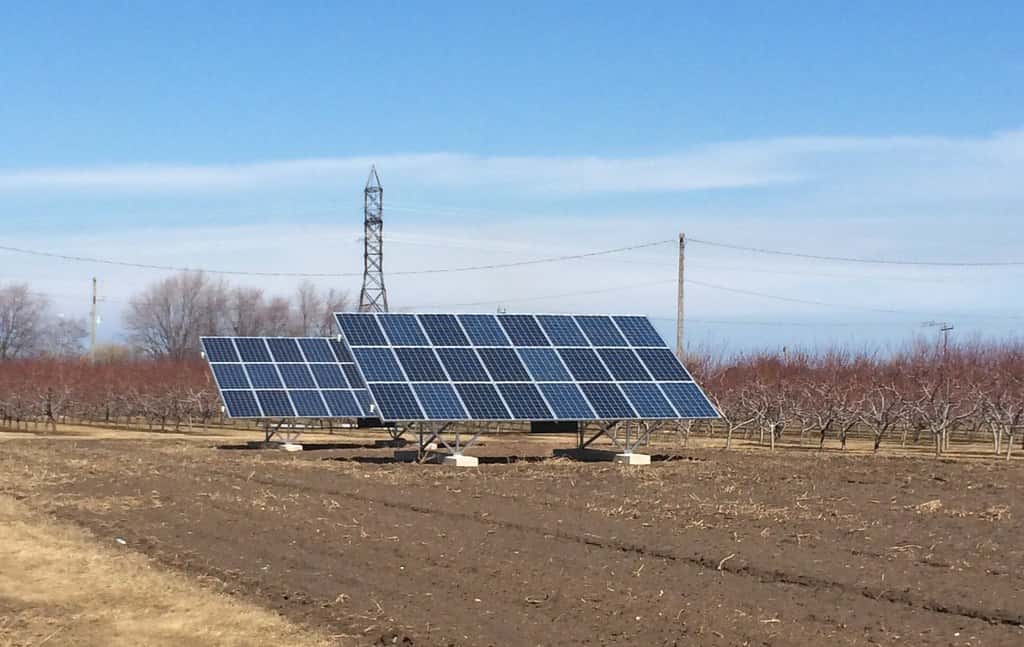
Florida Power & Light is running a pilot program that puts agricultural activity on land already occupied by solar energy infrastructure, an approach known as agrivoltaics. The utility is working with beekeepers to place honeybee colonies in green space at more than 40 solar energy centers across the state, and is separately testing livestock grazing as a substitute for conventional mowing.
The program spans 18 counties and pairs FPL with Florida beekeeping operations that maintain hives on the utility's solar sites. In Martin County, the utility is working with McCoy's Sunny South Apiaries, a third generation beekeeping business that maintains 80 hives at the FPL Fawn Solar Energy Center. Beyond pollinators, FPL is exploring cattle grazing in DeSoto County and sheep grazing in Northwest Florida.
A separate research component involves the University of Florida Institute of Food and Agricultural Sciences at the FPL Miami-Dade Solar Energy Center, where the utility and researchers are studying the efficiency of growing crops on solar sites. That work addresses the harder version of the agrivoltaics question: whether row crops can be productive under and between panel arrays.
What agrivoltaics is
Agrivoltaics refers to the co location of solar energy generation and agricultural production on the same parcel of land. The concept exists because utility scale solar occupies substantial acreage, and much of that acreage is not covered by panels. Rows are spaced to avoid shading, access lanes run between arrays, and perimeter buffers surround the site.
That interstitial land has to be maintained regardless. Vegetation that grows too tall shades panels, interferes with equipment and creates fire risk. The conventional solution is repeated mechanical mowing, which carries fuel, labor and equipment costs and generates emissions on a site built to avoid them.
Grazing substitutes animals for machines. Sheep are the most common choice in the industry because they are small enough to move under panel arrays without damaging equipment and because they graze close to the ground. Cattle require different site design, generally taller panel mounting, because a full grown cow can damage racking and wiring that sheep cannot reach.
Pollinator habitat operates on a different logic. Rather than replacing mowing, it changes what is planted, converting turf or bare ground into flowering species that support bees and other pollinators. Hives placed on those sites give beekeepers forage and give the surrounding agricultural landscape pollination services.
Why this matters for Florida agriculture
Florida agriculture depends heavily on pollination. Blueberries, watermelon, squash, cucumbers and a range of specialty crops grown in the state require or substantially benefit from insect pollination, and commercial beekeeping operations supply that service on a contract basis.
Florida is also a significant producer of honey and a major overwintering location for commercial bee operations that pollinate crops in other states during the growing season. The state's climate allows colonies to remain active through the winter, which is why beekeepers from across the country truck hives to Florida.
Those operations need forage, and forage has become harder to find. Development pressure has converted pasture and undeveloped land across the state, and land in intensive agricultural production frequently offers a narrow bloom window and pesticide exposure. Solar sites are the unusual case of large, contiguous, low disturbance acreage with no pesticide program.
Managed honeybees are not native to North America and are not a substitute for native pollinator conservation, a distinction that ecologists routinely raise in discussions of pollinator friendly solar. Habitat plantings on these sites support native bees, butterflies and other insects as well, and the plant selection determines how much of that benefit is realized.
The land use question
Utility scale solar in Florida has generated friction with agricultural and rural communities over land conversion. A solar facility takes farmland out of production for the operational life of the project, typically several decades, and county commissions across the state have wrestled with zoning and siting decisions.
Agrivoltaics reframes that tradeoff. If a site can host both generation and some form of agricultural production, the land is not fully removed from the agricultural economy. Grazing leases provide income to ranchers and reduce vegetation management costs for the utility, an arrangement that benefits both parties.
The economics are more favorable for grazing and pollinators than for row crops. Grazing requires modest site modification and produces immediate savings on mowing. Crop production under panels requires taller and more widely spaced arrays, which reduces energy yield per acre and raises construction cost, and it requires equipment access that standard solar site design does not accommodate.
That is why the UF/IFAS crop research at the Miami-Dade site matters. Determining which crops perform adequately under partial shade, and what array configuration makes cultivation practical, is the prerequisite to any expansion beyond grazing and pollinator habitat.
What it means for Floridians
For FPL customers, the immediate effect is on operating cost rather than on rates in any visible way. Vegetation management across a large solar fleet is a recurring expense, and substituting grazing leases for contracted mowing reduces it. Those savings are small relative to total utility operating costs but they run every year for the life of each site.
For rural landowners, the program creates a category of income that did not previously exist. A rancher with sheep or cattle can lease grazing rights on a solar site, and a beekeeper can place hives without buying or leasing land outright. Both arrangements convert utility land into a productive input for an existing operation.
For consumers of Florida agricultural products, the pollination benefit is indirect but real. Healthier and better provisioned bee colonies produce better pollination outcomes for the crops those colonies service, which affects yield in a way that shows up eventually in supply and price.
Local impact across the state
The program's 18 county footprint reaches across FPL's service territory, which covers much of eastern and southern Florida along with the Northwest Florida territory the company serves following its combination with Gulf Power.
Martin County hosts the Fawn Solar Energy Center partnership with McCoy's Sunny South Apiaries, an operation with three generations of beekeeping history in the state. DeSoto County, in the heart of Florida's cattle country, is the site of the cattle grazing trial, which is a logical pairing given the concentration of ranching operations in that part of the state.
Northwest Florida is hosting the sheep grazing component. Sheep operations are less common in Florida than cattle, and the trial will test whether the model that has become standard in solar grazing elsewhere in the country adapts to Florida conditions, including heat, humidity and parasite pressure.
Miami-Dade County hosts the crop research site with UF/IFAS. The county has a substantial specialty crop sector in its agricultural reserve area, which makes it a relevant setting for testing whether solar sites can support production rather than only grazing.
Florida's solar buildout
Florida has added utility scale solar capacity rapidly over the past decade, moving from a negligible position to one of the largest solar fleets in the country. FPL has driven much of that growth through a program of standardized solar energy centers built across its service territory.
The standardized design approach reduces cost by repeating the same configuration at multiple sites, and it also means that a land management practice validated at one site can be applied across the fleet. That repeatability is what makes a pilot program meaningful rather than site specific.
Solar generation in Florida has a favorable profile against the state's demand curve. Peak electricity demand occurs on hot afternoons driven by air conditioning load, which aligns reasonably well with solar output, though the evening ramp as solar declines while demand persists is the challenge that battery storage addresses.
Storage and the grid
FPL has committed substantial capital to battery energy storage over the 2026 and 2027 period and has launched a long duration energy storage pilot. Storage is the technology that determines how much solar a grid can absorb, because it shifts generation from midday to the evening peak.
Battery installations occupy far less land than the solar arrays they support, which means the land use questions surrounding solar are not replicated in the storage buildout. Storage siting concerns center on fire safety and interconnection rather than acreage.
For customers, the practical significance of the storage investment is reliability during peak demand and the ability to integrate more solar without compromising grid stability. Florida's summer demand peaks are the operational test that storage capacity is sized against.
How the pilot will be judged
Pilot programs succeed or fail on measurable criteria, and the relevant measures here differ by component. For grazing, the question is whether animals maintain vegetation adequately without damaging equipment, and whether the arrangement costs less than mechanical mowing.
For the pollinator component, the measures are colony health, honey production and whether the surrounding agricultural area sees pollination benefit. Beekeepers track colony survival and productivity as a matter of course, which makes the data relatively easy to gather.
The crop research at the Miami-Dade site operates on a longer horizon and will require multiple growing seasons to produce conclusions about yield under partial shade. Agricultural research does not produce quick answers, and early season results are indicative rather than determinative.
What is next
The pilot's results will determine whether FPL expands these practices across its solar fleet or keeps them limited to demonstration sites. Grazing is the most likely candidate for expansion because the operational case is straightforward and the model is proven in other states.
The UF/IFAS crop study will take multiple growing seasons to produce meaningful data on yield under panel shade. Research of that kind is not quickly conclusive, and early results are typically indicative rather than definitive.
County commissions weighing solar siting applications are the audience most likely to be influenced by the outcome. If agrivoltaics can be demonstrated to keep land in agricultural use, it changes the terms of the local land use debate that has slowed solar development in parts of rural Florida. FPL has separately committed substantial capital to battery energy storage over the 2026 and 2027 period, and how it manages land use across its generating fleet remains a live question for regulators and communities alike.
Spotted an issue with this article?
Have something to say about this story?
Write a letter to the editorComments
No comments yet. Be the first to weigh in.
Related Coverage

Florida Loggerhead Sea Turtles Set Nesting Record as Leatherbacks Near New High
1d ago
Florida Anglers Get a 14-Day Fall Atlantic Red Snapper Season Starting Oct. 9
3d ago

King Tides Swamp South Florida Streets and Shut Down Two Miles of A1A
4d ago
Everglades Restoration Delivers Record Freshwater Flows Even as Drought Grips South Florida
4d ago