GAO report: 57% of Florida kindergartners missed the readiness benchmark in 2024-25
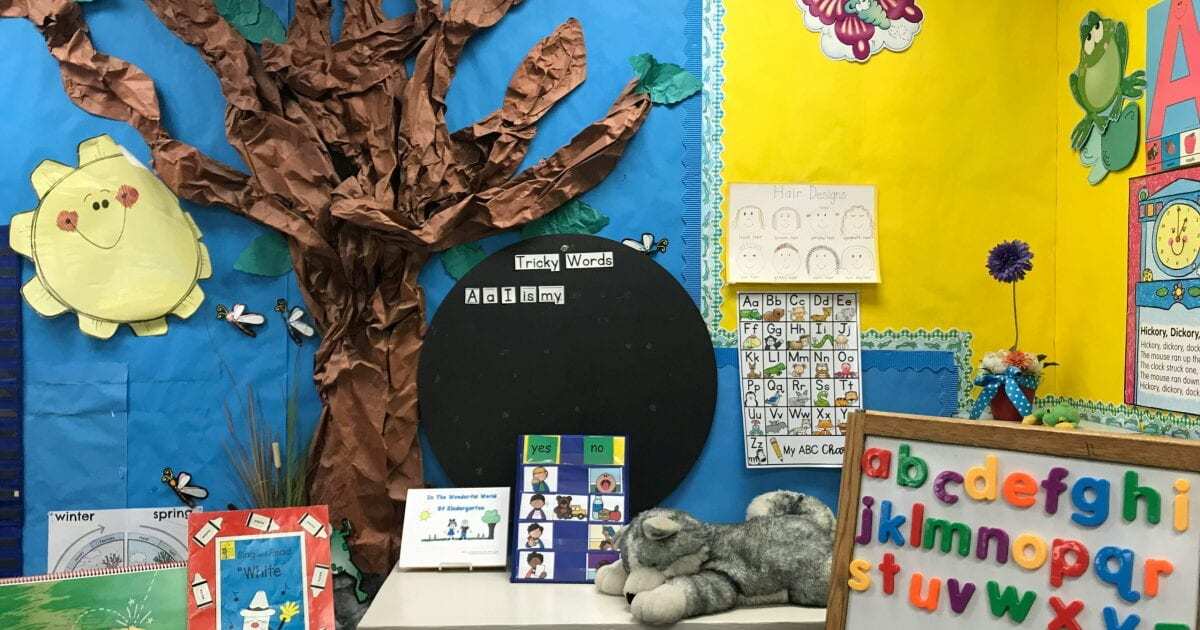
More than half of Florida's kindergartners started school last year without the skills the state considers necessary to be ready for the classroom, according to a new report from the U.S. Government Accountability Office. The federal watchdog found that 57% of Florida kindergarten students tested in the 2024-25 school year did not meet the state's readiness benchmark, up from 49% the year before, WUSF reported.
The report, numbered GAO-27-108796, pulls together existing state data and research rather than new testing. That approach lets researchers compare Florida with four other states, Connecticut, Kentucky, Maryland and Ohio, and compare Florida counties with each other. It arrives as Florida families, early learning coalitions and lawmakers continue to debate how well the state's free prekindergarten program prepares 4-year-olds for school.
What the GAO found
Florida screens every public school kindergartner within the first 30 days of the school year. The screening covers early reading, comprehension and basic math, and it produces the readiness rates the GAO analyzed.
Across the five states it studied, the GAO found that fewer than half of students were ready for kindergarten in each state, according to the report's key findings as summarized by K-12 Dive. The agency cautioned that the percentages should not be used to rank states against each other, because each state uses its own assessment, its own benchmark and its own reporting rules.
Several of the patterns the GAO identified apply directly to Florida:
- School districts with higher poverty levels generally had lower kindergarten readiness rates in Florida, as they did in Connecticut, Kentucky and Ohio.
- Girls were more likely than boys to be rated ready in all five states. In Florida the gap was about 4 percentage points, according to coverage of the report by Newsweek and K-12 Dive.
- Districts with higher shares of children enrolled in public or private preschool had higher readiness rates in Connecticut, Kentucky and Ohio, but the GAO did not find a statistically significant association at the district level in Florida or Maryland.
The GAO also reviewed 11 research studies on publicly funded preschool. Ten of them found that it had a positive effect on kindergarten readiness in literacy, math or both, according to coverage of the report, though the agency noted that the benefits of preschool can fade over time.
VPK children were far more likely to be ready
The sharpest Florida number in the report concerns the state's Voluntary Prekindergarten program, known as VPK. Children who went through VPK were ready for kindergarten at a rate of 55%, compared with 29% of children who were not enrolled, WUSF reported.
That gap at the level of individual children sits alongside the GAO's finding that, district by district, higher preschool enrollment did not translate into a statistically significant rise in readiness in Florida. The two findings measure different things: one compares children who attended VPK with children who did not, while the other compares whole districts.
VPK is free for every Florida 4-year-old regardless of family income, according to the Florida Department of Education. Families can choose a school-year program of 540 instructional hours or a summer program of up to 300 hours. Children must be 4 years old on or before Sept. 1 of the school year to enroll.
The program's reach has slipped. According to the National Institute for Early Education Research's 2025 State of Preschool profile, Florida's program enrolled 150,607 children in 2024-25, a decrease of 2,270 from the year before, and served 63% of the state's 4-year-olds, below a high of 80% more than a decade earlier. The state Department of Education, using its own method, puts participation at about two-thirds of Florida 4-year-olds. NIEER reported state spending of $2,946 per child, or about $443.7 million in total, and said Florida met five of its 10 quality benchmarks.
Why the hours matter to families
Because VPK pays only for the state-funded instructional hours, it does not cover full-day child care. Parents who work full time have to find and pay for the rest of the day themselves, and that cost can keep some families from enrolling at all, WUSF reported.
Fred Hicks, CEO of the Early Learning Coalition of Hillsborough County, told WUSF that the added cost makes some parents hesitant to sign up. Hillsborough holds an annual summit where business executives help raise money to enroll more children, and the coalition is starting scholarships to help parents afford the part of the day that VPK does not cover, Hicks said.
Hicks also stressed skills that do not show up neatly on a reading or math screener. He told WUSF that teaching children to communicate and manage their emotions before kindergarten is extremely important, and that self-regulation starts at home.
Educators point to the pandemic and screens
Many of the children tested in 2024-25 were born during the COVID-19 pandemic. John Michael Nix, regional director of operations at Archway Academy, who has worked in early childhood education for 27 years, told WUSF that the pandemic and the habits it left behind are part of the explanation, including a decline in face-to-face interaction for young children.
"The mask went away, but the technology did not necessarily go with it," Nix told the station. He argued that preschool does more than get children ready for kindergarten and urged policymakers to keep examining the problem.
Jackie Nowicki, the GAO's director of K-12 education research, described the agency as a nonpartisan investigator and said reports like this one can prompt states and districts to look at what is and is not working. "I think a lot of districts and a lot of states can use reports like this to ask themselves questions," she told WUSF.
A separate state measure shows a similar picture
The federal findings line up with a state-level analysis released over the summer. The Florida Chamber Foundation's 2025-2026 Kindergarten Readiness Report found that 44% of children entering kindergarten in fall 2025 met Florida's readiness standard, meaning roughly 56% did not, WFTV reported in July. That report covers a later school year than the GAO figures and is not directly comparable.
The Chamber's analysis showed wide gaps between counties. Pinellas County had the highest readiness rate in the state at 53%, while Jefferson County had the lowest at 13%, according to WFTV. The Chamber also noted that the Department of Education had recently raised the score needed to be counted as ready, and it found that children who complete VPK are significantly more likely to meet the benchmark. The foundation has set a goal of 100% kindergarten readiness by 2030.
Florida's kindergarten screening has used the Florida Assessment of Student Thinking, or FAST, Star Early Literacy test since the 2022-23 school year, when it replaced the older Florida Kindergarten Readiness Screener, according to the Department of Education. The department publishes fall results by district and school.
What it means for Florida families
Kindergarten readiness is closely watched because it tends to predict later outcomes. The Chamber Foundation ties it to third-grade reading, high school graduation and workforce success. Florida law calls for third graders who score at the lowest level on the state reading test to be held back unless they qualify for an exemption, so the early gaps the screener identifies can carry real consequences a few years later.
For parents of young children, the practical takeaways from the report are the ones educators keep repeating: enroll in VPK if the hours fit the family's schedule, ask the local early learning coalition about help covering the rest of the day, and work at home on the social and emotional skills, such as following directions, taking turns and expressing feelings, that teachers say matter as much as letters and numbers.
What's next
The GAO report does not carry new requirements for Florida; it is a compilation meant to inform policymakers. Its arrival comes as Florida prepares for a change in leadership, with a new governor taking office in January and the Legislature's 2027 session ahead, when early learning funding and VPK rates will again be part of budget talks.
Locally, coalitions such as Hillsborough's plan to keep raising private money for scholarships to fill the gap between VPK's state-funded hours and a full working day. Fall 2026 screening results for the current kindergarten class, tested during the state's first progress-monitoring window this fall, will show whether the decline the GAO documented continued.
Spotted an issue with this article?
Have something to say about this story?
Write us a letterComments
No comments yet. Be the first to weigh in.
Related Coverage
Some Classes Will Stay on Hillsborough College's Dale Mabry Campus During Rays Stadium Construction, Reversing Part of Off-Site Plan
20h ago
Broward Schools Fired 285 Teachers Over Certification Lapses This Year After a State Audit Found Nearly a Quarter Out of Compliance
1d ago
Vanderbilt's West Palm Beach Campus Aims to Keep Palm Beach County Talent at Home as 2029 Opening Nears
2d ago
Built to Fit: How Florida's Universal Vouchers Are Fueling a Microschool Boom and Pushing Districts to Compete
3d ago