Grand Jury Says DeSantis Administration Misappropriated $10 Million in Medicaid Money Routed to Hope Florida
A Florida state grand jury concluded that the DeSantis administration misappropriated $10 million in taxpayer money when it steered funds from a Medicaid legal settlement into the Hope Florida Foundation, the charitable arm of an initiative founded by First Lady Casey DeSantis. The panel nevertheless declined to recommend criminal charges, saying it could not identify sufficient evidence to charge any individual. Details of the report, which remains officially sealed and is dated January 28, 2026, circulated publicly this week and immediately reopened one of the most contentious fights in Florida politics.
The finding matters to Floridians because the money at issue originated in a settlement with the state's largest Medicaid contractor, funds that critics say were meant to serve low income patients in the Medicaid program. Instead, according to the grand jury's account, the money traveled through a charity and a pair of political committees before helping finance the campaign that defeated a 2024 constitutional amendment on recreational marijuana.
The report lands at a politically sensitive moment. Florida voters will choose a new governor in November, and the state's Republican legislative leadership has spent much of the past two years at odds with the governor's office over exactly this transaction. The grand jury's conclusion gives both sides something to point to: a finding of wrongdoing for critics, and the absence of charges for the administration.
What the grand jury found
The transaction at the center of the report began with a settlement between the state and Centene, the health care company that holds Florida's largest Medicaid managed care contract. The overall agreement resolved allegations related to pharmacy benefit billing and totaled roughly $67 million. Of that sum, $10 million was designated as a donation to the Hope Florida Foundation rather than being returned to the state's Medicaid program or the federal government, which shares in Medicaid financing.
According to accounts of the report, the grand jury characterized the movement of that money as part of a coordinated effort to fund political activity. The panel traced the funds from the foundation to nonprofit organizations, then to political committees, and ultimately into spending aimed at defeating Amendment 3, the citizen initiative that would have legalized recreational marijuana in Florida. The amendment received majority support in November 2024 but fell short of the 60 percent threshold Florida requires for constitutional amendments.
The grand jury's most quoted line concerns accountability rather than legality. Jurors wrote that nobody would take responsibility for the decision to send $10 million of taxpayer money to Hope Florida, a conclusion that speaks to how diffuse the decision making appeared to investigators. The panel paired that observation with its finding that the evidence did not support charging a specific person with a specific crime.
It is worth being precise about what the report does and does not represent. A grand jury finding of misappropriation is not a conviction, an indictment, or a court judgment. No one has been charged. The report is an investigative body's assessment of what happened and whether the evidence supports prosecution, and on the second question the panel answered no.
How Hope Florida works
Hope Florida began in 2021 as an initiative associated with the First Lady, built around the idea of connecting Floridians who seek public assistance with churches, nonprofits, and community organizations that might meet their needs outside of government programs. The state has described the model as a way to move families toward self sufficiency and reduce long term reliance on public benefits.
The Hope Florida Foundation is the affiliated charitable entity created to accept private donations in support of that work. Direct support organizations and affiliated foundations are common across Florida state government, attached to universities, agencies, and parks, and they generally operate under reporting requirements that are lighter than those governing state agencies themselves.
That structural gap is much of what drew legislative attention. Lawmakers who examined the foundation in 2025 raised questions about missing financial filings, board oversight, and the speed with which large sums moved in and out of the organization. The administration has consistently defended Hope Florida's mission and framed the scrutiny as politically motivated.
For readers trying to follow the thread, the key distinction is between the program and the transaction. Nothing in the grand jury's reported findings addresses whether Hope Florida's case management model helps families. The findings concern one $10 million transfer and where that money went afterward.
The legislative backdrop
Florida House committees spent much of the 2025 legislative session pressing state health officials for documents and testimony about the Centene settlement. The inquiry produced sharp exchanges between House Republicans and the governor's office, an unusual public rupture within a party that controls every statewide office and both legislative chambers.
Lawmakers questioned why a settlement with a Medicaid vendor included a donation to a private foundation at all, and whether the federal government's share of any Medicaid recovery had been properly accounted for. Medicaid is jointly funded by state and federal dollars, which means recoveries typically must be apportioned rather than redirected at state discretion.
The administration has argued that the settlement's total value exceeded what the state was owed and that the additional funds were properly directed toward a charitable purpose. The governor has described the payment as an extra benefit for the state on top of a full recovery, and has repeatedly rejected the characterization that public money was diverted.
The grand jury's report does not resolve that disagreement so much as reframe it. By finding misappropriation without finding a chargeable offense, the panel effectively handed the dispute back to the political branches and to voters.
What it means for Floridians
The most direct practical question is whether any money returns to the Medicaid program. The report as described does not order restitution, and a grand jury generally lacks the authority to do so. Any recovery would require separate civil litigation or federal action, neither of which has been announced.
For Medicaid recipients, the immediate effect is limited. Florida's Medicaid program serves several million residents, and $10 million represents a small fraction of annual spending. The significance is less about the dollar amount than about the precedent of settlement proceeds being routed outside normal appropriations channels, which is a question about how state money is controlled rather than about any individual's benefits.
There is also a transparency dimension that touches every Floridian. The report remains sealed, which means the public is reading accounts of a document rather than the document itself. Petitions to unseal grand jury materials are decided by courts, and the timing of any release is uncertain.
Voters heading toward the November gubernatorial election now have a formal investigative finding to weigh, even if that finding stops short of legal consequence. Both major parties have signaled they intend to use it.
Reaction across the state
Democratic legislators have called for the report to be unsealed in full and for a broader accounting of settlement proceeds handled by state agencies. Several have argued that the absence of charges reflects the difficulty of prosecuting diffuse institutional decisions rather than the absence of misconduct.
Republican reaction has been more divided than usual. Some legislative Republicans who pushed the original inquiry have said the findings vindicate their questions. Others, along with the governor's office, have emphasized the grand jury's conclusion that no criminal charges were warranted and have described the continuing coverage as an effort to relitigate a settled matter.
Good government organizations in Tallahassee have used the report to renew a longstanding argument for tighter statutory rules governing direct support organizations, including mandatory audits, standardized reporting deadlines, and clearer limits on transfers to third parties. Similar proposals have been filed in past sessions without passing.
Outside the capital, the story has been absorbed into the broader conversation about how Florida manages large sums of one time money, a conversation that also includes hurricane recovery funds, federal pandemic aid, and settlement dollars from other sectors.
How grand juries work in Florida
Florida operates two kinds of grand juries, and the distinction explains much about this report. County grand juries, empaneled within a judicial circuit, primarily return indictments in capital and life felony cases. Statewide grand juries, convened by the Florida Supreme Court at the request of the governor or the statewide prosecutor, investigate matters that cross circuit boundaries.
Both types can issue presentments, sometimes called reports, that describe findings and make recommendations without charging anyone. That authority is what produced this document. A presentment allows jurors to say what they concluded even where the evidence does not support an indictment.
Grand jury proceedings are secret by statute. Witnesses testify without cross examination, defense counsel is not present in the room, and the target of an inquiry has no right to rebut evidence as it is presented. Those features are why courts treat presentments carefully and why the reports are ordinarily sealed until a judge determines they may be released.
Florida law provides a procedure for a person named or implicated in a presentment to move to repress or expunge portions of it. That process is one reason reports can remain sealed for extended periods after jurors complete their work, and it is a plausible explanation for the gap between the January date on this report and its public description in August.
Where the money went, step by step
The path the grand jury described involves several distinct transfers, and following them in order clarifies what was found. The first step was the settlement itself, in which Centene resolved allegations concerning pharmacy benefit management billing with the state.
The second step designated $10 million of that resolution as a donation to the Hope Florida Foundation rather than as a recovery returned to the Medicaid program. That designation is the decision the grand jury said no one would claim responsibility for.
The third step moved money from the foundation to nonprofit organizations. The fourth moved it from those organizations into political committees and to the Republican Party of Florida. The fifth applied it to the campaign against Amendment 3 in 2024.
Each transfer in that sequence may be lawful in isolation. Charities make grants to other nonprofits, and nonprofits organized under certain sections of the tax code may engage in political activity within limits. The grand jury's finding of misappropriation concerns the sequence taken as a whole and its origin in public settlement proceeds, not any single transaction viewed alone.
What's next
The most consequential near term question is whether a court agrees to unseal the report. Until that happens, the public record consists of secondhand descriptions, and the administration is likely to continue arguing that reporting has been incomplete.
The Legislature convenes for its 2027 regular session in January, and members who led the earlier inquiry have indicated they may pursue statutory changes to how settlement proceeds are handled. Any such bill would need to clear both chambers and survive a veto, which makes the outcome of the November election directly relevant.
Federal involvement remains an open possibility given Medicaid's shared funding structure, though no federal agency has publicly announced an inquiry tied to the settlement. Separately, civil litigation by outside parties could force additional documents into the public record.
For now, the practical status is straightforward. A grand jury has said the money was misappropriated. No one has been charged. The report is sealed. And Florida's political system, rather than its criminal courts, will decide what happens next.
Spotted an issue with this article?
Have something to say about this story?
Write us a letterComments
No comments yet. Be the first to weigh in.
Related Coverage
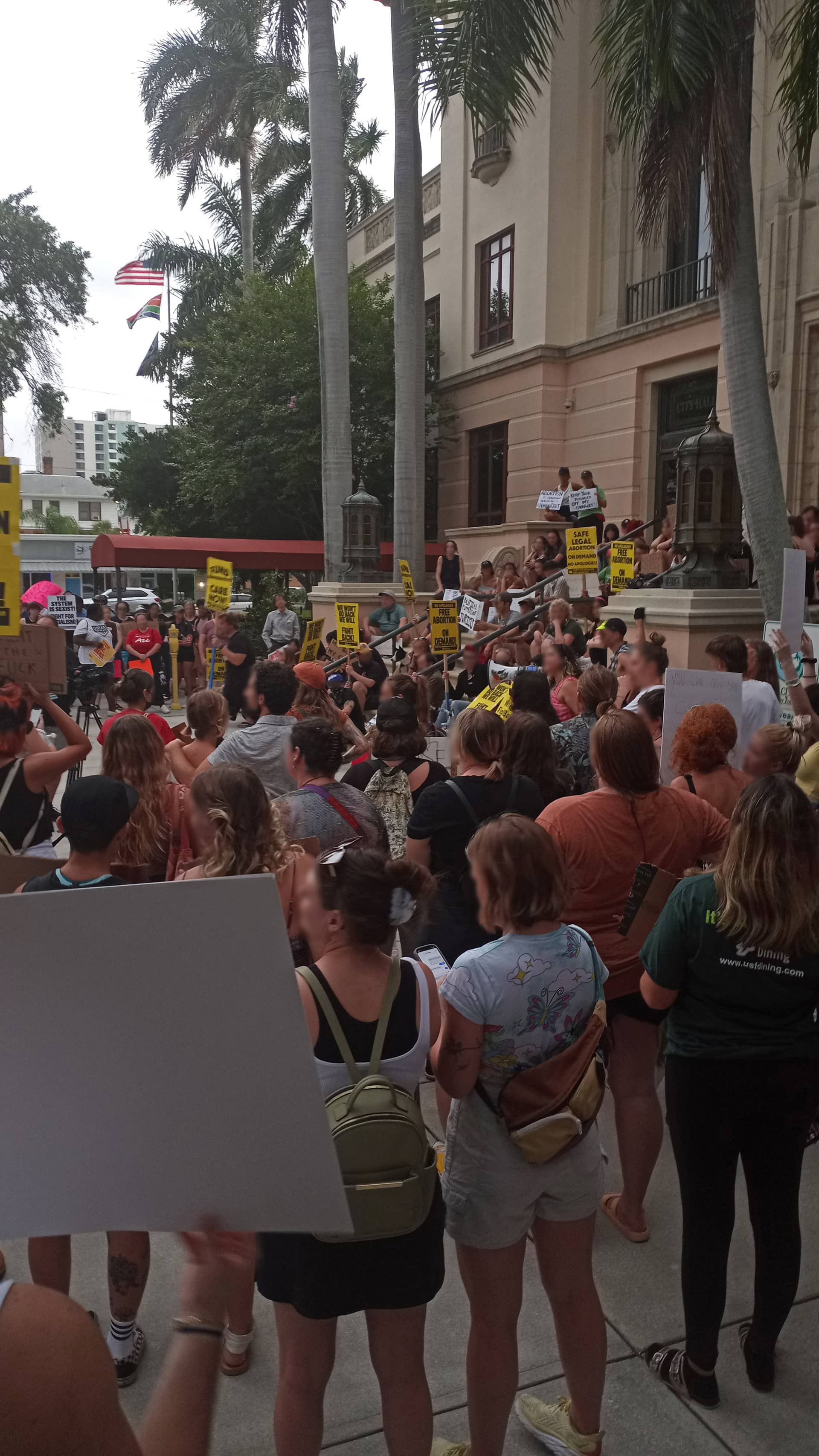
HUD Mapping Error Fixed: St. Petersburg Gets $173 Million in Hurricane Milton Recovery Money
5h ago
Bernie Sanders Brings Tour to Florida for Angie Nixon's Senate Bid Against Ashley Moody as Thune Readies Visit
5h ago
Annette Taddeo Ad Accuses CFO Blaise Ingoglia of Corruption as Polls Show Florida's CFO Race Tied
1d ago
Manatee County Freezes Data Center Applications for a Year as Commissioners Float a Permanent Ban
2d ago