Health Experts Say Federal Order Keeping OUC's Stanton Coal Unit Running Is Raising Health Risks in East Orlando
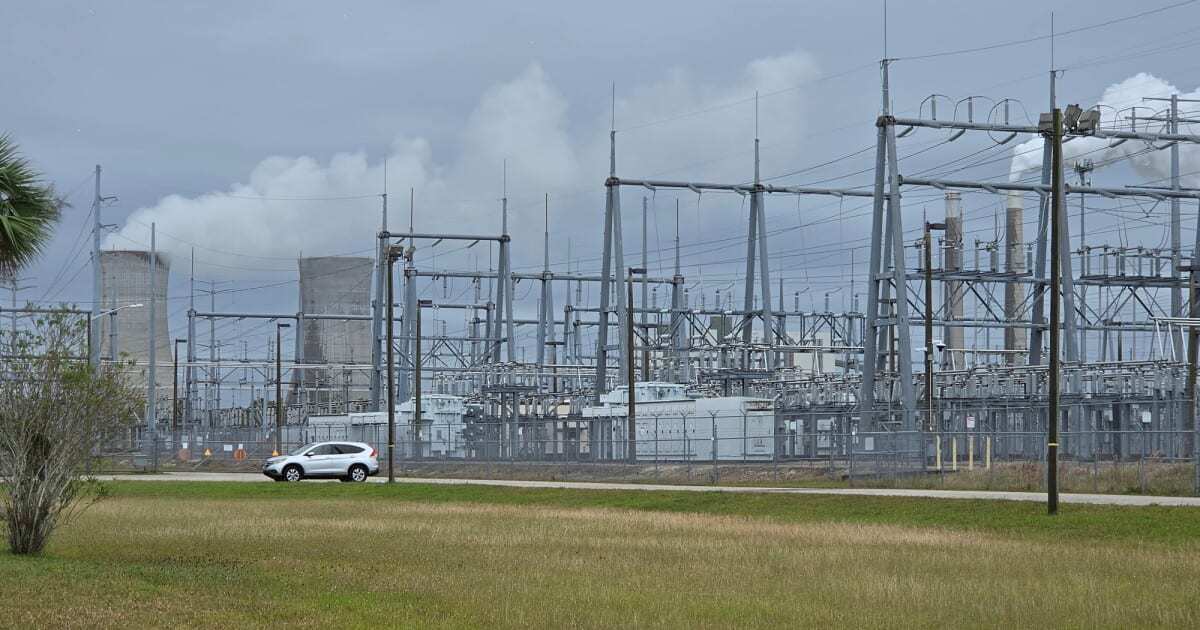
Health professionals and local officials are warning that a federal emergency order keeping a coal-fired unit at the Orlando Utilities Commission's Stanton Energy Center running past its planned retirement is exposing east Orlando families to pollution linked to asthma, heart attacks and premature death. The 1987-era unit, Stanton Unit 1, was scheduled to enter an extended cold shutdown at the end of May 2026, but the U.S. Department of Energy has ordered OUC to keep it available under orders that currently run through Nov. 30.
The warnings came at a press conference held in Avalon Park, less than three miles from the plant, Central Florida Public Media reported in a story published Friday, Nov. 20, by WUSF. OUC's board is scheduled to vote Dec. 15 on an updated long-range power plan, and the federal order could be extended again before then.
What health experts are saying
Dr. Michelle Kirwan Bythwood, a Miami-based pediatrician, said at the event that choices about air pollution affect children's health in ways doctors cannot control. "But the decisions made about what goes into the air that a child breathes are made far beyond my exam room," she said, adding that families and health care systems bear costs that never appear on an electric bill.
Donna Zankowski, an occupational and environmental nurse, pointed to the two schools, including Avalon Middle School, that sit just under three miles from the plant. "So these kids, when they come out for recess, are basically covered in this particulate matter," she said, according to the report.
The main concern is fine particulate matter, known as PM2.5: particles about 2.5 micrometers across or smaller, released when fossil fuels are burned. The particles can travel deep into the lungs, trigger asthma attacks and are linked to premature births, heart attacks and strokes. Children face greater risk because they breathe faster and spend more time outdoors.
Coal particles appear to be especially harmful. A study published in the journal Science in late 2023, drawing on two decades of data, found that the mortality risk from exposure to coal PM2.5 was more than double that of fine particles from other sources, and attributed 460,000 deaths in the United States to coal-related PM2.5 over that period.
How the plant ended up still running
In 2021, OUC's board voted to retire Stanton Unit 1 and convert its sister coal unit, Unit 2, to natural gas, as part of a plan to cut carbon emissions 50 percent by 2030 and 75 percent by 2040. Each unit is roughly 465 megawatts. Unit 1 was set to begin an extended cold shutdown on May 31, 2026.
On June 4, Energy Secretary Chris Wright issued emergency Order No. 202-26-26 under Section 202(c) of the Federal Power Act, directing OUC to keep Unit 1 available to operate through Sept. 1. Wright cited strain on OUC's system during cold snaps the previous winter and expected growth in demand from data centers, Central Florida Public Media reported at the time. The order states that Florida's long-term energy projections lag behind what is needed to support new data centers and other large loads.
Wright's order also cited a North American Electric Reliability Corp. assessment that rated the Florida peninsula's long-term risk of an energy shortage as normal, and an April Pew Research Center study listing eight new data centers planned for Florida, the fewest among the 15 states it listed, according to Central Florida Public Media. OUC said it did not request the order but would comply, and that the order did not change its carbon reduction commitments.
The department followed with Order No. 202-26-42, in effect from Sept. 2 through Nov. 30, 2026. Environmental and public interest groups have asked the department to rehear and stay both orders, arguing that they lack factual support for an emergency. The department also directed OUC to file any tariff changes it needs with the Federal Energy Regulatory Commission to recover the cost of complying.
Stanton Unit 1 is one of seven power plants nationwide under similar Energy Department orders, six of them coal-fired and one an oil and gas plant in Pennsylvania, according to a Sierra Club analysis cited by WUSF.
What it costs and who pays
An Environmental Defense Fund analysis estimates the cost of keeping Unit 1 running at $6.2 million a month. An OUC spokesperson disputed that figure by email, saying it does not reflect the utility's comprehensive analysis, but did not provide OUC's own monthly cost when asked, according to the report.
Orlando District 1 Commissioner Tom Keen called the federal mandate frustrating, saying it interferes with OUC's efforts to control costs and pursue cleaner energy, and pointed to the utility's proposal to lower residential rates by about $5 a month.
How much the plant emits
The whole Stanton complex, which also includes natural gas units and solar farms, released about 2.95 million short tons of carbon dioxide and about 2,830 short tons of nitrogen oxides in 2024, according to federal emissions data compiled by Global Energy Monitor. Those figures cover the entire site rather than Unit 1 alone. OUC says the plant burns low-sulfur, low-ash coal and runs pollution control equipment to remove pollutants. Nitrogen oxides help form ozone and fine particles, the pollutants health experts are most concerned about.
Political pressure in Orlando
The issue has become part of Orlando's mayoral race. Former state Rep. Anna Eskamani, a Democrat running for mayor, has opposed the federal order since June, when she said Orlando deserves energy that is cleaner, cheaper and decided locally. At this week's event she said the Trump administration has inserted itself in preventing the city from moving off coal.
Jason Thornton, a Valencia College student who leads the school's chapter of genCLEO, the youth arm of the Miami-based CLEO Institute, said young people have been let down by the Trump administration and also by Mayor Buddy Dyer and the OUC board, and urged a faster switch to renewable energy.
What's next
The current federal order expires after Nov. 30 unless the Energy Department extends it again, as it did in September. OUC's board will vote Dec. 15 on an updated Electric Integrated Resource Plan, replacing the one adopted in late 2020, which will shape the future of Stanton Unit 2 and the utility's broader mix of gas, solar and storage. In a filing with the Energy Department earlier this year, OUC said it expected to decide on Unit 2 by the end of 2026 based on that plan.
For families in east Orange County, the decision about whether a 39-year-old coal unit keeps running near their neighborhoods and schools rests, for now, with Washington rather than with the city-owned utility that planned to close it.
Spotted an issue with this article?
Have something to say about this story?
Write us a letterComments
No comments yet. Be the first to weigh in.
Related Coverage

43 Florida Hospitals Earn Leapfrog Straight-A Safety Honors as State Slips to Ninth
4h ago

Flu Cases Jump in Florida as First Cold Front Arrives, With State Among Three Worst on National Flu Index
5d ago

US Loses Measles Elimination Status After 26 Years as Florida Logs 163 Cases and Fights Over School Vaccines
5d ago
Florida Health Agency Puts $1 Placeholder in Budget Request for Autism Therapy Task Force Recommendations
Nov 12