Hurricane Isaias Insured Losses Climb Past $735.5 Million as Claims Reach 68,071 in Florida
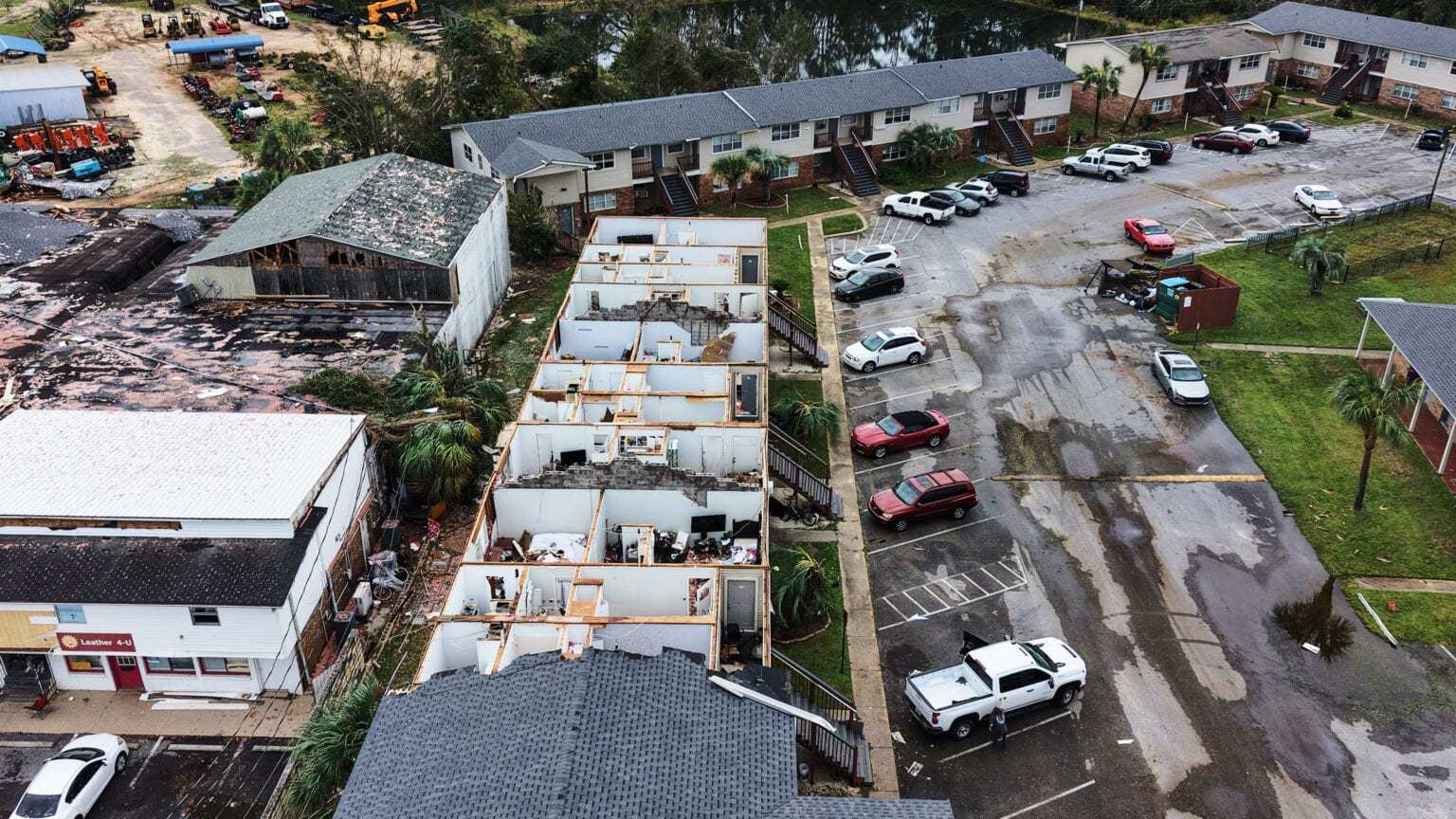
Estimated insured losses from Hurricane Isaias have climbed past $735.5 million, with 68,071 claims filed by Florida policyholders as of Friday, Nov. 6, according to data posted by the Florida Office of Insurance Regulation and reported by the Florida Phoenix.
The figures, compiled from reports insurers file with the state, show the storm's financial toll still rising a month after Isaias made landfall near Destin as a Category 2 hurricane on Oct. 9. The losses are concentrated in the western Panhandle, where Santa Rosa and Escambia counties have generated the most claims.
How the losses have grown
The estimate includes both payments already made and the reserves insurers have set aside for open claims, so it typically climbs for weeks after a storm as adjusters reach damaged properties. Isaias has followed that pattern.
Reported claims and estimated insured losses have risen at each OIR update cited in news coverage:
| OIR data as of | Claims filed | Estimated insured losses | Share of claims closed |
|---|---|---|---|
| Oct. 15 | 46,509 | About $582 million | Nearly 12% |
| Oct. 27 | 62,295 | $652.2 million | 39.5% |
| Nov. 6 | 68,071 | More than $735.5 million | 58.2% |
That works out to roughly $83 million in added estimated losses and nearly 5,800 new claims in the 10 days ending Nov. 6. The pace of closures has picked up sharply as well, from barely one in eight claims in mid-October to well over half now.
In the Oct. 27 data, residential property claims made up $599.9 million of the estimated losses. Commercial property accounted for $19.1 million and private passenger auto for $21.7 million, the Phoenix reported.
Where the claims stand
OIR data show 58.2% of Isaias claims had been closed as of Nov. 6. More than 81% of all claims are for residential property coverage, a broad category that includes homeowners, mobile homeowners and commercial residential policies.
The status of the 68,071 claims breaks down as follows:
| Claim status | Number of claims |
|---|---|
| Closed with payment | 25,211 |
| Closed without payment | 14,402 |
| Open, no payment yet | 20,482 |
| Open, some payment made (by subtraction) | 7,976 |
Private passenger auto damage accounted for 7,825 claims, the second-largest category behind residential property. There were 163 claims for commercial auto losses.
The OIR figures do not include an average payment amount or other details about the payments insurers have made, the Phoenix noted.
Why so many claims closed without payment
More than one in five Isaias claims, 14,402 in all, have been closed with nothing paid. The biggest single reason was that the insured damage claimed fell below the policy's deductible, which accounted for 6,835 of those claims.
Another 5,374 were closed for administrative reasons, a broad category that covers duplicate claims and claims opened in error, claims with incorrect dates of loss, cases in which the policyholder stopped communicating with the insurer, and claims withdrawn by the policyholder or filed only as inquiries. Three claims, all on private passenger auto policies, were closed without payment because of suspected fraud.
OIR's website lists other common reasons claims are closed without payment, including flood damage that falls outside standard homeowners coverage. Flood losses are typically covered by separate National Flood Insurance Program or private flood policies and are not part of the state's figures.
Panhandle counties bear the brunt
By Oct. 27, Santa Rosa County led the state with 29,463 claims, followed by Escambia with 19,274, Okaloosa with 5,859 and Bay with 2,259, according to OIR data reported by the Phoenix. Those counts had grown quickly from mid-October, when Santa Rosa had 22,894 claims, Escambia 13,677 and Okaloosa 4,334. County-level totals for the Nov. 6 update were not included in the latest report.
President Donald Trump has approved FEMA individual assistance for residents of eight Panhandle counties: Bay, Escambia, Gulf, Holmes, Okaloosa, Santa Rosa, Walton and Washington. FEMA has said people with losses should file claims with their insurers before applying for federal aid. The president earlier approved public assistance to repair roads, bridges, buildings and other infrastructure in 15 counties; the DeSantis administration had requested $237 million.
The bigger picture for insurers
Florida's figures cover only claims filed with insurers by Florida policyholders. Isaias also caused damage beyond the state line, and modeling firms have produced their own industry-wide estimates. Karen Clark & Company projected about $3 billion in privately insured U.S. losses from wind and storm surge, and Moody's RMS estimated insured losses across multiple states at $2.5 billion to $4.5 billion, according to industry coverage. Neither figure includes National Flood Insurance Program claims, which Moody's RMS separately estimated at about $250 million.
Modeled estimates and OIR's reported figures measure different things, so they are not directly comparable, but both suggest the Florida tally reported so far is only part of the storm's total insured cost.
FPL seeks an Isaias surcharge
The storm's costs are also headed for electric bills. Florida Power & Light has asked the Florida Public Service Commission to approve a temporary surcharge of $3.48 a month for residential customers to recover the cost of restoring power after Isaias and to rebuild part of its storm reserve, WEAR-TV reported. If approved, the charge would apply from January through December 2027.
FPL said Isaias knocked out power to about 435,000 customers, roughly 84% of its Northwest Florida customers, and that it mobilized about 17,000 workers. The utility is pairing the surcharge with a requested cut in its fuel charge and projects a typical residential bill of $141.87 a month in 2027, below the $143.05 it had projected earlier. The proposals still await a decision by the commission.
The final weeks of hurricane season
The 2026 Atlantic hurricane season officially ends Nov. 30. As of Wednesday morning, the National Hurricane Center said tropical cyclone formation is not expected in the Atlantic, the Caribbean Sea or the Gulf during the next seven days.
Late-season storms are uncommon but not unheard of, and forecasters typically urge Floridians to keep watching the tropics until the season formally closes.
What's next
OIR updates its Isaias claims data periodically, and the loss estimate is likely to keep rising as the roughly 28,000 still-open claims are resolved. The commission will take up FPL's surcharge request in the coming weeks, and FEMA aid applications remain open for residents of the eight designated counties.
For Panhandle homeowners, the next test is the cost of coverage itself. Insurers' Isaias losses will feed into future reinsurance and rate filings, though an Insurance Journal analysis has described Isaias as manageable for insurers so far, with preliminary losses below those of several recent major hurricanes.
Spotted an issue with this article?
Have something to say about this story?
Write us a letterComments
No comments yet. Be the first to weigh in.
Related Coverage
Florida's First Winterlike Cold Front Arrives Thursday, Bringing 40s From Tallahassee to Orlando, Wind Chills in the 30s and Rough Seas
1d ago
St. Johns River Hits Major Flood Stage Near Cocoa as Seminole County Braces for Weeks of High Water and a Late-November Crest
4d ago
NOAA Retires the NAM, the Forecast Model Known for Overhyping Florida Hurricanes, in Favor of the Rapid Refresh Forecast System
5d ago

Florida Requests Federal Major Disaster Declaration for Fall Flooding as Martin County Counts 25 Homes Destroyed
Nov 3