Jacksonville Police Target Street Takeovers With Arrests and Impounds
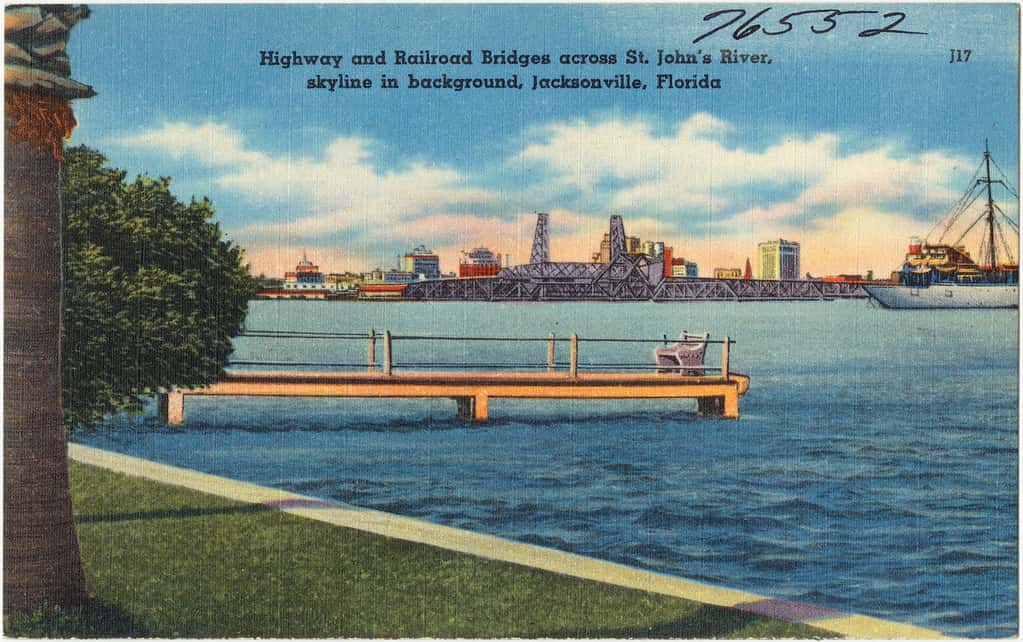
The Jacksonville Sheriff's Office has moved against street takeovers in a series of enforcement actions this month, arresting several people and impounding vehicles after incidents that included a Labor Day car meetup drawing roughly 30 vehicles and a separate takeover near the Acosta Bridge that ended with a pursuit at speeds estimated near 120 miles per hour on Interstate 95.
In the Labor Day case, JSO said four people were arrested and four vehicles were removed from the road. Juan Solivan, 18, and Joseph Ezzo, 20, each face at least one felony charge according to the agency. Two other individuals, both 18, face misdemeanor charges. All are presumed innocent unless and until convicted.
Separately, a 20-year-old Jacksonville man was arrested after detectives said he participated in a street takeover in the San Marco area and then fled on I-95 at high speed.
What street takeovers involve
The term describes a pattern in which groups of drivers and spectators occupy an intersection or roadway, blocking traffic while vehicles perform donuts, burnouts and similar maneuvers. Participants typically coordinate through social media, with locations circulated shortly before events to complicate law enforcement response.
The practice has spread across American cities over the past several years and has generated fatalities and serious injuries in multiple jurisdictions, involving participants, spectators and uninvolved motorists. Spectators standing close to moving vehicles are at particular risk.
Florida law addresses the conduct through several provisions, including statutes covering racing on highways, reckless driving and, where applicable, fleeing or eluding law enforcement. Penalties escalate significantly when a pursuit is involved or when injury results.
Vehicle impoundment is a specific tool available in these cases. Removing a vehicle imposes an immediate and substantial cost even before any criminal case resolves, and agencies have found it among the more effective deterrents.
The enforcement approach
Law enforcement agencies have generally shifted away from immediate intervention at active takeovers, which can escalate danger for everyone present, toward investigative approaches that identify participants afterward.
That shift relies on video evidence, much of it posted publicly by participants themselves, along with license plate readers and traffic camera footage. Detectives can build cases over days or weeks and make arrests in controlled circumstances.
Pursuit policy is a related consideration. High-speed pursuits carry substantial risk to officers, suspects and bystanders, and agencies across the country have tightened the circumstances under which they are permitted. The I-95 incident, in which a driver reportedly reached speeds near 120 miles per hour, illustrates the hazard.
JSO has publicized these cases, which serves a deterrent purpose alongside the enforcement itself. Agencies handling street takeover enforcement generally treat publicity as part of the strategy.
Jacksonville's broader context
The Jacksonville Sheriff's Office is a consolidated agency serving both the city and Duval County, covering one of the largest municipal land areas in the United States. Its jurisdiction includes extensive highway mileage, including major interstate corridors and the bridges crossing the St. Johns River.
That geography is relevant to street takeover enforcement. Large intersections, bridge approaches and highway interchanges provide the kind of open pavement participants seek, and the area's scale complicates rapid response.
The agency has faced its own accountability matters this year. In April, the sheriff announced the arrests of two active officers and one former officer accused of falsely claiming thousands of dollars in overtime. In July, the agency sought the termination of an officer after body camera footage showed him striking a handcuffed suspect during an arrest.
What it means for Northeast Florida residents
For drivers, the most direct guidance from law enforcement is to avoid areas where takeovers are occurring rather than attempting to drive through. Motorists who encounter one are advised to turn around if it can be done safely and to report the location.
Residents in neighborhoods where takeovers recur have raised concerns about noise, property damage and the risk to pedestrians. Community complaints have been a driver of the enforcement emphasis in Jacksonville and in other Florida cities.
For young drivers specifically, the legal exposure is substantial. Felony charges carry consequences extending well beyond any immediate penalty, affecting employment, education and licensing for years. Vehicle impoundment and the associated costs compound the financial impact.
A statewide pattern
Street takeovers are not confined to Jacksonville. Agencies in Miami-Dade, Broward, Hillsborough and Orange counties have all conducted enforcement operations targeting the same conduct, and the Florida Highway Patrol has participated in multiagency responses.
The Legislature has considered measures addressing the practice, including proposals strengthening penalties and expanding vehicle forfeiture authority. Similar legislation has been enacted in other states experiencing the same pattern.
Enforcement alone has had limited effect in cities where the practice is established, and some jurisdictions have paired it with engineering measures, including intersection modifications that make the maneuvers impractical.
How the practice spread
Street takeovers emerged as a recognizable pattern over the past decade, developing from established car meet culture into something organized around blocking roadways rather than gathering in parking lots.
Social media drove much of that evolution. Footage of takeovers circulates widely, which creates an incentive structure rewarding more dramatic and more dangerous behavior. Organizers coordinate through encrypted messaging and release locations shortly before events to limit law enforcement response time.
Cities including Los Angeles, Atlanta, Houston and Philadelphia have all faced the same pattern, and law enforcement agencies have shared approaches through professional networks.
Florida's warm climate and extensive road network make the state a year-round environment for the activity, and takeovers have occurred across the state's metropolitan areas.
The safety record
The hazards are documented rather than theoretical. Incidents nationwide have produced deaths and serious injuries involving drivers who lost control, spectators struck by vehicles, and uninvolved motorists who encountered takeovers unexpectedly.
Spectators face particular risk because the maneuvers involve vehicles operating at the limits of traction with unpredictable trajectories. A driver who loses control has no ability to avoid a crowd standing at the edge of the circle.
Emergency response is also affected. A blocked intersection can delay ambulances and fire apparatus, and agencies have cited that consequence in arguing for stronger enforcement.
Property damage from tire smoke residue, damaged pavement and vandalism adds a cost that falls on municipalities and nearby businesses.
What penalties apply
Florida law addresses the conduct through several provisions, and charging decisions depend on the specific behavior involved.
Racing on a highway is a misdemeanor for a first offense with escalating penalties for repeat violations, and it carries license revocation and vehicle impoundment provisions. Participating as a spectator has also been addressed in some statutory frameworks.
Reckless driving charges apply where the conduct demonstrates willful disregard for safety, and the offense level rises when injury or property damage results.
Fleeing or eluding a law enforcement officer is a felony in Florida, with the offense level increasing when the flight occurs at high speed or creates risk to others. That provision accounts for the felony exposure in cases involving pursuits.
How agencies build these cases
Investigations into street takeovers typically begin after the event rather than during it, and detectives assemble evidence from several sources.
Video is the foundation. Participants and spectators post footage that frequently captures license plates, vehicle identifying features and individuals. Detectives compile that material alongside any surveillance and traffic camera coverage.
Automated license plate reader networks, which many Florida agencies operate, provide records of vehicle movement that can place a specific car at a location and time.
Vehicle identification then requires connecting a plate or a distinctive car to a registered owner and establishing who was driving, which often depends on additional investigation.
That process explains the gap between an event and the arrests that follow, and it produces cases built on documentary evidence rather than on officer observation during a chaotic scene.
The regional response
Northeast Florida agencies have coordinated on the issue, since participants travel across county lines and events have occurred in Clay, St. Johns and Nassau counties as well as Duval.
The Florida Highway Patrol has participated in multiagency operations targeting the activity on state roads and interstates, where troopers hold primary jurisdiction.
Municipal engineering departments have contributed in some jurisdictions by modifying intersections where takeovers recur, installing features that make circular maneuvers impractical.
Those engineering approaches have shown promise where applied, though the cost and the number of candidate intersections limit how widely they can be deployed.
What communities have tried
Jurisdictions confronting recurring takeovers have combined enforcement with approaches aimed at the underlying car culture rather than only at the illegal conduct.
Some cities have partnered with legal venues, including racetracks and sanctioned events, to provide outlets where drivers can operate vehicles at speed under controlled conditions. Results have been mixed, since the appeal of takeovers includes the public and unauthorized character of the activity.
Others have focused on the social media dimension, working with platforms to remove content that organizes events. That approach runs into the volume of content and the ease of migrating to other platforms.
Florida agencies have generally emphasized enforcement and publicity, and the Jacksonville actions this month fit that pattern.
What's next
The cases arising from these incidents will proceed through the Fourth Judicial Circuit, which covers Duval, Clay and Nassau counties. The State Attorney's Office will determine final charging decisions, which may differ from the charges at arrest.
JSO has indicated it will continue targeting the activity, and further enforcement operations should be expected, particularly around holiday weekends when meetups have historically been organized.
The individuals named in these cases have been charged and not convicted. Under Florida law they are entitled to the presumption of innocence, and the accounts described here reflect allegations made by the sheriff's office in its public statements.
Spotted an issue with this article?
Have something to say about this story?
Write us a letterComments
No comments yet. Be the first to weigh in.
Related Coverage
Bunnell Man Sentenced to Death for Stabbing Wife Outside Their Home as Teen Son Watched in 2024
8h ago
Five Brevard County men sentenced to 13 to 18 years in federal prison for armed robbery of Ybor City nightclub
1d ago
Coral Gables developer sentenced to six years in prison for DUI crash into home that killed sleeping 82-year-old
1d ago

St. Johns County inmate accused of trying to arrange murder of witness in his drug case
2d ago