Lead pellets from shot iguanas linked to first known crocodile poisoning death in Florida
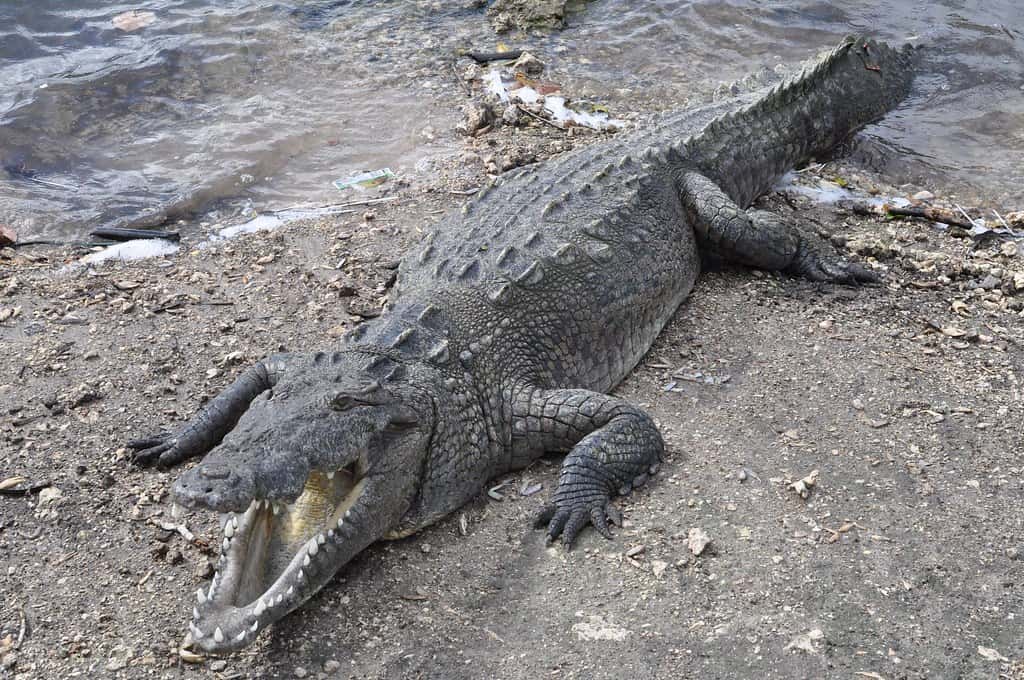
A 7-foot American crocodile that died shortly after being captured from a Miami-Dade County swimming pool had more than 22 grams of lead in its stomach, much of it air-rifle pellets likely swallowed while scavenging shot iguanas, according to a new study by Florida Fish and Wildlife Conservation Commission scientists. The researchers describe it as the first apparent case of lead poisoning contributing to the death of an American crocodile in Florida, where the species is federally protected as threatened.
The case study, published this year in the journal Endangered Species Research, drew wider attention this week after WINK News and other Florida outlets reported on it. Its authors, J.B. Ricketts, D. Brianne, A. Letter, R. Ford, D.A. Steen and V.R. Deem, are affiliated with the FWC's Fish and Wildlife Research Institute, whose Wildlife Research Laboratory is based in Gainesville. The paper is titled "An apparent case of Pb toxicosis in an American crocodile Crocodylus acutus in South Florida, USA." Pb is the chemical symbol for lead.
A nuisance call that ended in a necropsy
The episode began in November 2023, when an FWC officer responded to a complaint about a crocodile in a residential outdoor pool in Miami-Dade County, according to the study as described in news reports. The animal, a female about 7 feet long, was captured without incident, and researchers used the opportunity to fit her with a satellite transmitter as part of ongoing crocodile tracking research.
The crocodile was active and alert at first. But as the team was finishing its work, a foul-smelling liquid began coming from her nostrils and she began thrashing violently, according to the reports. Researchers completed the procedure and released her into a canal near where she had been found that afternoon. Less than two hours later, she was found dead.
A field necropsy showed why the animal may have been so fragile. Her stomach held 22.42 grams of lead, made up of 23 air-rifle pellets, one fishing weight and two small unidentifiable lead fragments. The stomach also contained four undigested green iguana claws. The crocodile had clinical signs consistent with lead poisoning, including significant tooth loss and black staining inside the mouth.
What the lab found
Tissue tests backed up what researchers saw in the stomach. Liver samples contained lead at 78.06 parts per million on a wet weight basis, while samples from the crocodile's scutes, the bony plates in its skin, measured 0.35 parts per million, according to the study's abstract as summarized by the FWC.
The researchers concluded that chronic lead exposure likely weakened the crocodile's overall health and reduced her ability to withstand the physical stress of capture, contributing to her death. The study calls it "the first apparent case of mortality associated with Pb toxicosis for this threatened species," and notes that other affected crocodiles probably exist.
The findings are summarized below.
| Item | Finding |
|---|---|
| Date and place | November 2023, residential pool in Miami-Dade County |
| Animal | Female American crocodile, about 7 feet |
| Lead in stomach | 22.42 grams |
| Lead objects | 23 air-rifle pellets, 1 fishing weight, 2 fragments |
| Other stomach contents | 4 green iguana claws |
| Liver lead level | 78.06 ppm, wet weight |
| Scute lead level | 0.35 ppm, wet weight |
The iguana connection
The pellets point to an unexpected pathway for lead in South Florida's food web. Green iguanas are invasive in Florida and can damage seawalls, landscaping and native ecosystems. Residents are allowed to humanely kill them to help control the population, and the study noted that this is often done with air rifles loaded with lead pellets, according to reports on the paper. The researchers believe the crocodile picked up the pellets by eating iguana carcasses left behind after they were shot.
Under FWC rules, green iguanas can be captured and humanely killed on private property with the landowner's permission, with no permit, hunting license, season or bag limit required. The FWC added green iguanas to the state's Prohibited species list in 2021, a designation reserved for high-risk nonnative animals. State law still requires that the animals be killed humanely, and local ordinances may restrict discharging air guns in some areas.
The single fishing weight in the crocodile's stomach reflects a second, better-known source of lead in Florida's waters. Crocodiles, like many birds, swallow hard objects and cannot easily pass dense lead items, which allows the metal to dissolve slowly in stomach acid and enter the bloodstream.
A known threat in other wildlife
Lead's toxicity to wildlife is well documented, but research on Florida's crocodiles has been limited, the study's authors note. Elsewhere, scientists have found severe cases in related species. A 2022 study of Nile crocodiles at Lake St. Lucia in South Africa, published in the journal Chemosphere, reported lead in the blood of every crocodile tested and linked the exposure to swallowed fishing sinkers. Some of those animals showed anemia and severe tooth loss, the same kind of dental damage seen in the Florida crocodile.
Birds have drawn the most attention. A study published in Science in 2022 found harmful levels of lead in the bones of 46% of bald eagles sampled across 38 states, including Florida, with spent ammunition and fishing tackle identified as the likely sources.
A recovery success story with new questions
The finding lands on a species that has become one of Florida's conservation comebacks. When the American crocodile was listed as endangered in 1975, the Florida population was estimated at roughly 200 to 300 animals, according to the U.S. Fish and Wildlife Service. The federal government reclassified the Florida population from endangered to threatened in 2007 after it more than doubled and expanded its range.
Today, the FWC estimates there are about 2,000 adult crocodiles in Florida, which sits at the northern edge of the species' range. They live mainly in brackish and saltwater areas of South Florida and the Keys, including mangrove swamps, coves and creeks, and are increasingly seen in the canal systems of southeast Florida. That expansion puts more crocodiles near neighborhoods, golf courses and backyard pools, as in the Miami-Dade case, and in closer contact with places where iguanas are shot and anglers lose tackle.
The FWC describes crocodiles as shy and reclusive. Residents with concerns about a crocodile can call the agency's nuisance line at 866-FWC-GATOR (866-392-4286).
What's next
The case has already changed how the state monitors the animals. The FWC has expanded sampling for lead and other contaminants among crocodiles throughout their Florida range, according to reports on the study, to determine whether the Miami-Dade crocodile was an isolated case or a sign of broader exposure.
That work could shape advice to the public. Lead-free alternatives, including non-lead air-rifle pellets and fishing weights made of steel, tin or tungsten, are widely sold, and wildlife scientists have long pointed to them as a way to reduce lead in the environment. Because the study links the crocodile's exposure to iguana carcasses, property owners and trappers who shoot iguanas, and anglers fishing in crocodile habitat, may become part of the conversation as state researchers gather more data.
Spotted an issue with this article?
Have something to say about this story?
Write us a letterComments
No comments yet. Be the first to weigh in.
Related Coverage

DeSantis and Cabinet protect more than 10,770 acres, from Putnam County woods to Martin County ranches
3d ago

Record King Tides and Heavy Rain Swamp South Florida Streets as Water Managers Warn the Season Peaks Oct. 27
4d ago

Florida's loggerhead sea turtles set preliminary nesting record
6d ago
Florida Anglers Get a 14-Day Fall Atlantic Red Snapper Season Starting Oct. 9
Sep 29