Lee County Man Charged After Allegedly Firing at a Sheriff's Drone
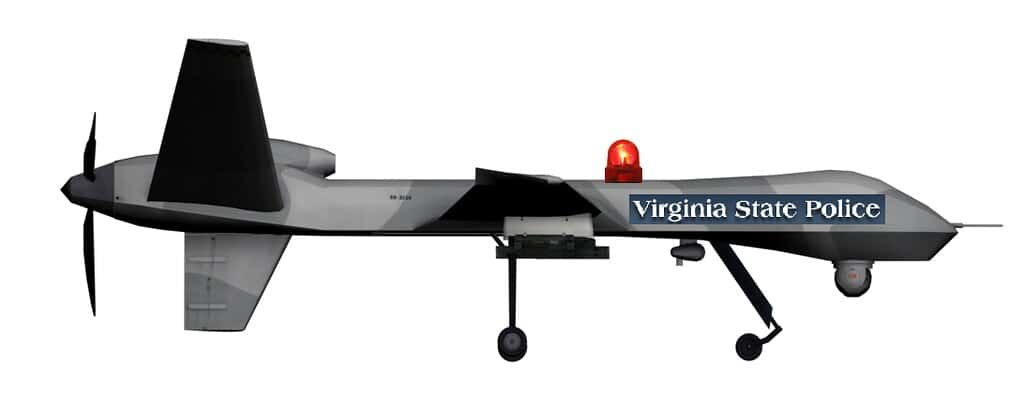
The Lee County Sheriff's Office has arrested a Lehigh Acres man it says was caught on video allegedly pointing a BB rifle at one of the agency's first-responder drones and firing toward it. Deputies identified the suspect as Elvin Antonio Callejas-Serrato, 26, who is charged with shooting or throwing deadly missiles into an aircraft, a Florida felony. The arrest was reported around June 14 and 15, 2026, after an incident over the weekend of June 13 and 14.
According to the sheriff's office, a first-responder drone had been deployed to assist with a call near Todd Avenue South when its camera recorded a man allegedly pointing a BB rifle at the aircraft and appearing to fire two rounds in its direction. Deputies working in the area detained a group nearby and say they recovered a BB rifle loaded with steel projectiles. The agency has attributed the account of what the video shows to its own investigators.
Callejas-Serrato has not been convicted of any offense, and the allegations against him remain accusations that must be proven in court. As with any criminal case, he is presumed innocent unless and until the state secures a conviction. The details that follow are drawn from what the sheriff's office has described in connection with the arrest.
The case offers an unusual window into a fast-growing tool in Florida law enforcement: the use of drones as first responders. Several agencies across the state have adopted programs that launch unmanned aircraft to scenes ahead of, or alongside, patrol deputies. The allegation that someone fired at one of those aircraft raises questions about both the felony charge involved and the legal status of the drones themselves.
What Deputies Say Happened
The sheriff's office says the encounter unfolded after a drone was sent to support a call for service near Todd Avenue South in the Lehigh Acres area. Drone-as-first-responder programs are designed to put eyes on a scene quickly, and in this instance the agency says the aircraft's camera was recording as events played out below it.
According to deputies, the footage captured a man allegedly raising a BB rifle toward the drone and appearing to discharge two rounds in its direction. Investigators have described the weapon as a BB rifle loaded with steel projectiles, the type of ammunition the agency says was recovered after deputies in the area detained a group nearby.
The sheriff's office has framed the recovered weapon and the recorded video as central to its case. Deputies say the combination of the aerial footage and the physical evidence on the ground led them to identify and arrest Callejas-Serrato. Every element of that narrative, the agency has stressed through its account, reflects what its investigators allege rather than facts established in court.
No injuries to deputies or bystanders have been described in connection with the incident, and the sheriff's office has not alleged that any person was struck. The focus of the charge, as the agency has presented it, is the alleged act of firing toward the aircraft itself.
The Felony Charge Explained
Callejas-Serrato is charged with shooting or throwing deadly missiles into an aircraft. Under Florida law, that offense covers wantonly or maliciously shooting at, throwing a deadly missile into, or otherwise endangering an aircraft. Prosecutors treat it as a serious felony because of the potential danger involved when a projectile is directed at any aircraft in operation.
The term "deadly missile" in this context is broader than it may sound. In the relevant statutes, a missile can include a projectile fired from a weapon, and the law is written to capture conduct that places an aircraft or those connected to it at risk. The charge does not require that an aircraft be damaged or that anyone be hurt; the alleged act of shooting toward it can be enough to support the count.
How the law applies to an unmanned first-responder drone, as opposed to a piloted plane or helicopter, is one of the legal questions that cases like this can surface. Drones occupy a relatively new place in the landscape of aviation law, and prosecutors and defense attorneys alike sometimes test how older statutes map onto newer technology. The sheriff's office has nonetheless pursued the aircraft-related felony in this instance.
Because the charge is a felony, a conviction could carry significant penalties, including the possibility of a prison sentence, though the actual outcome would depend on the facts proven, the defendant's record, and the discretion of the court. At this stage, the charge is only an accusation, and no penalty attaches unless the state proves its case.
Drones as First Responders in Florida
Lee County's program is part of a broader trend across Florida and the country: the deployment of drones as first responders. In these programs, agencies launch unmanned aircraft, often from fixed locations or patrol vehicles, to reach a scene quickly and stream live video back to deputies and dispatchers. The aircraft can arrive before patrol units, giving responders an early picture of a developing situation.
Supporters of these programs argue that they improve safety and efficiency. A drone overhead can help deputies understand what they are walking into, locate people who need help, and document scenes in real time. Agencies have used the technology for everything from searches for missing people to assessments of traffic crashes and active calls for service.
The expansion of these programs has also prompted discussion about privacy, airspace, and the rules that govern when and how the aircraft are used. Drone operations in the United States generally fall under federal aviation oversight, and agencies must navigate those requirements alongside state and local policies. As the technology spreads, questions about its proper use continue to evolve.
The alleged shooting at a Lee County drone illustrates a different concern: the safety of the aircraft themselves and the people connected to their operation. When an agency invests in unmanned aircraft as a frontline tool, an alleged attack on one of those aircraft becomes a law enforcement matter in its own right, as the felony charge in this case reflects.
How BB Guns Fit Into Florida Law
The weapon at the center of this case is described by the sheriff's office as a BB rifle loaded with steel projectiles. BB and pellet guns occupy a particular niche in Florida law. They are not firearms in the traditional sense, yet they can still be used in ways that the law treats seriously, particularly when they are alleged to be directed at people, property, or, as here, an aircraft.
Florida statutes address the use of air guns and similar devices in various contexts, and conduct involving them can support criminal charges depending on the circumstances. The fact that a weapon is a BB rifle rather than a conventional firearm does not necessarily remove it from the reach of statutes that punish dangerous conduct. In this case, the sheriff's office has chosen to pursue the aircraft-related felony.
Steel projectiles, of the type the agency says it recovered, can be propelled at significant speed by some air-powered weapons. That capability is part of why air guns are not treated as harmless in every context. The specific characteristics of the weapon and ammunition alleged here could become relevant as the case proceeds, though those determinations rest with the court.
For residents, the case is a reminder that air guns are not exempt from legal consequences when they are allegedly used in a dangerous manner. The sheriff's office has framed the alleged conduct as a felony matter, signaling how it views the seriousness of firing toward one of its aircraft.
The Legal Process Ahead
With the arrest reported, the case now enters the criminal justice process. After booking, a defendant in Florida typically appears before a judge for an initial hearing, where matters such as bond and the formal reading of charges are addressed. From there, prosecutors review the evidence and decide what charges to formally file.
The state attorney's office, not the sheriff's office, makes the ultimate charging decisions and carries the burden of proving the case in court. Prosecutors must establish each element of the offense beyond a reasonable doubt, the highest standard in the legal system. The arrest charge can change as that review unfolds; it may be amended, reduced, or, in some cases, not pursued.
Callejas-Serrato is entitled to legal representation and to challenge the evidence against him, including the video the sheriff's office says it captured and the weapon it says it recovered. The defense may question how the footage was obtained, what it actually shows, and whether the elements of the charged offense are met. These are the ordinary contours of a contested criminal case.
Throughout that process, the presumption of innocence remains in place. The allegations described by the sheriff's office are the government's version of events, and they will be tested through the adversarial process. Nothing in the agency's account establishes guilt, which can be determined only by a court.
Community Impact and Context
For the Lehigh Acres community, part of unincorporated Lee County, the case touches on a visible and growing presence: the sight and sound of law enforcement drones overhead. As agencies expand these programs, residents are increasingly likely to encounter unmanned aircraft responding to calls in their neighborhoods. How the public reacts to that presence is part of the broader conversation around the technology.
Cases involving alleged interference with law enforcement equipment, including aircraft, tend to draw attention because they test the boundaries between newer technology and existing law. While each case turns on its own facts, the general pattern of agencies pursuing serious charges when their aircraft are allegedly targeted reflects how much value departments place on the tools.
The sheriff's office has presented this case as an example of its drone program functioning as intended, with an aircraft on scene capturing what the agency alleges occurred. That framing underscores the dual role these drones can play: as responders to calls and, at times, as recorders of the very incidents that become criminal cases.
For now, the outcome rests with the courts. The sheriff's office has made its allegations, an arrest has been reported, and the case will move through the legal system that exists precisely to test such accusations. Until a court resolves the matter, the charge against Callejas-Serrato remains exactly that: a charge.
What's Next
The next steps will play out in the Lee County court system, where prosecutors will formalize their charging decision and the case will proceed through hearings toward either a resolution or a trial. Observers will be watching how the aircraft-related felony is applied to an alleged attack on an unmanned first-responder drone, a question that sits at the intersection of new technology and established law.
The case may also draw interest from other Florida agencies operating or considering drone-as-first-responder programs. The way charges are pursued and resolved in matters like this can inform how departments think about protecting their aircraft and how the legal system treats alleged interference with them.
For residents of Lee County and the wider region, the immediate takeaway is straightforward: the sheriff's office says one of its drones recorded an alleged shooting, made an arrest, and is pursuing a felony charge. The deeper questions, about guilt, about the law, and about the role of drones in Florida policing, will be answered over time as the case moves forward and as the technology continues to spread across the state.
Spotted an issue with this article?
Have something to say about this story?
Write a letter to the editor