Divided Fed Holds Rates Again, and Florida Borrowers Feel None of the Relief
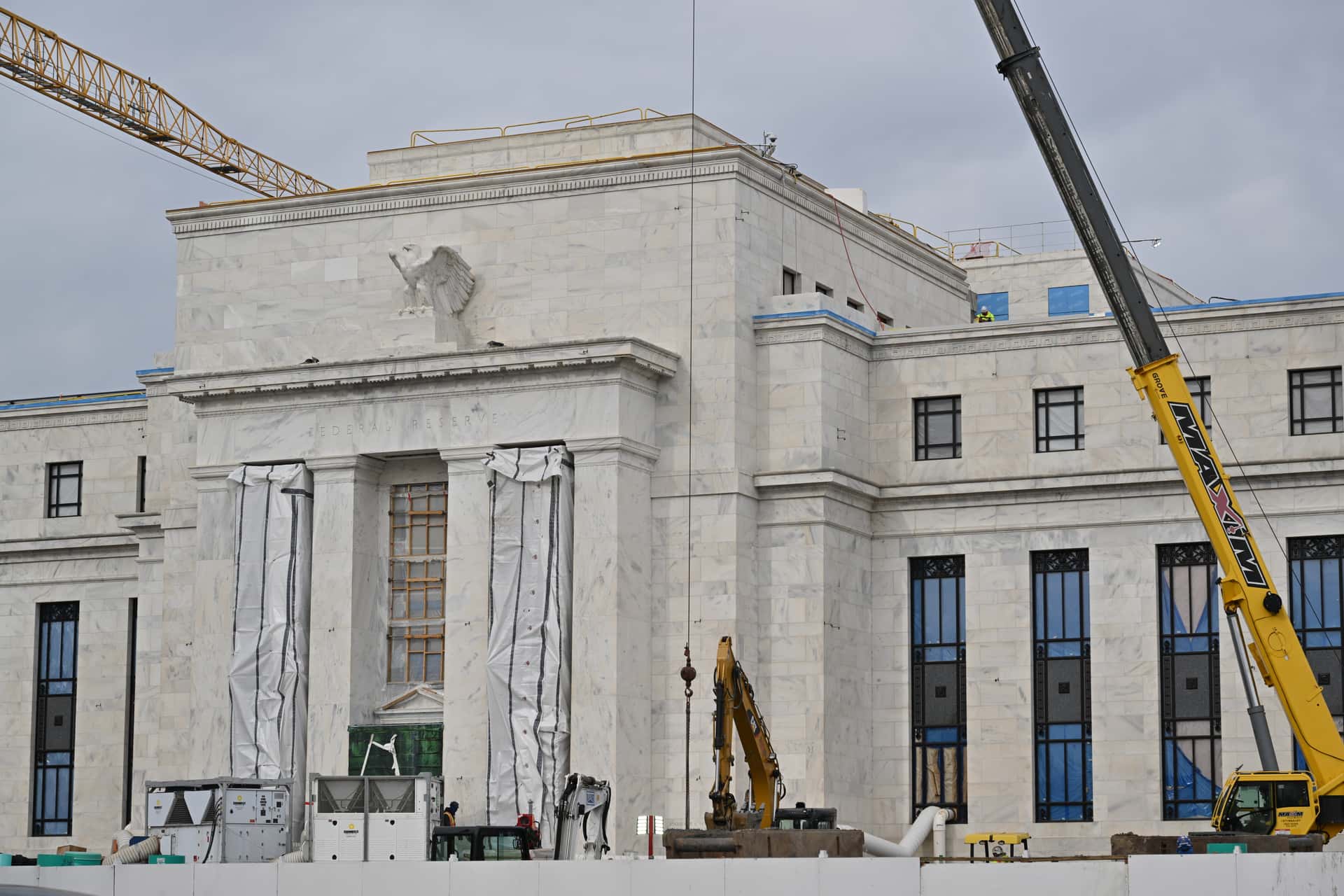
The Federal Reserve voted 9 to 3 on Wednesday to hold its benchmark interest rate steady in a range of 3.5 to 3.75 percent, the fifth consecutive meeting without a change. The decision produced an unusually visible split, with three regional Federal Reserve Bank presidents dissenting: Beth Hammack of Cleveland, Neel Kashkari of Minneapolis, and Lorie Logan of Dallas.
The dissents reflect frustration that inflation has remained above the Federal Reserve's 2 percent target for more than five years. The committee's statement acknowledged that inflation remains elevated relative to that goal, attributing part of the persistence to supply shocks that have driven price increases in specific sectors including energy.
For Florida, the decision arrives at a moment when the state's housing market has just posted a record median price and mortgage rates have climbed to near a one-year high. The combination has produced an affordability squeeze that a rate hold does nothing to ease.
What the Fed decided and why it was contested
Holding rates steady for a fifth meeting means the Federal Open Market Committee has kept policy unchanged for the better part of a year. The rationale is that inflation, while lower than its peak, has not returned durably to target, and that cutting prematurely would risk re-accelerating price growth.
The dissenters took the opposite view from the direction most observers might assume. Rather than arguing for cuts, the concern reflected in the split centers on inflation that has run above target for an extended period, and on whether current policy is sufficiently restrictive to bring it down.
Two specific pressures have divided officials in recent months: inflationary effects arising from conflict involving Iran, which has affected energy markets, and bottlenecks associated with artificial intelligence infrastructure buildout, which have driven demand for electrical equipment, construction, and power generation.
Three dissents on a single decision is notable. The Federal Open Market Committee generally produces consensus outcomes, and a 9-3 vote signals genuine disagreement about the appropriate path.
Why a Fed hold does not help Florida homebuyers
The most common misunderstanding about Federal Reserve policy concerns its relationship to mortgage rates. The Fed sets the federal funds rate, an overnight rate at which banks lend reserves to each other. That rate directly influences short-term borrowing costs, including credit cards, home equity lines of credit, and variable rate business loans, which are typically pegged to the prime rate.
Fixed-rate mortgages work differently. A 30-year mortgage rate is driven primarily by yields on long-term Treasury securities and by mortgage-backed securities markets, which price in expected inflation, term risk, and prepayment behavior over decades. Those yields can rise while the Fed holds or even cuts.
That is what has happened. Mortgage rates have moved near a one-year high, driven in part by renewed tensions between the United States and Iran and by inflation expectations, even as the Fed's benchmark rate has been unchanged since the winter.
For a Florida buyer financing the state's record median single-family price of 432,000 dollars, the practical consequence is that monthly principal and interest costs have not improved, and the affordability calculation depends on income growth and price appreciation rather than on financing relief.
Florida's specific exposure
Florida households face a cost structure that amplifies interest rate effects. Property insurance premiums remain among the highest in the nation despite recent moderation, and lenders include insurance and taxes in the debt-to-income ratios that determine loan qualification.
That means a Florida buyer qualifies for a smaller loan at a given income than a buyer in most other states, and the gap widens when rates rise. Two households with identical incomes, one in Florida and one in a state with lower insurance costs, face materially different purchasing power.
Florida's condominium market carries an additional layer. Association assessments driven by structural inspection and reserve funding requirements are also underwritten by lenders, and buildings with pending special assessments can face financing restrictions entirely separate from the buyer's own creditworthiness.
On the commercial side, Florida's substantial construction and development sector borrows at rates tied more closely to short-term benchmarks, meaning the Fed's hold has more direct effect there than in residential mortgages. Developers evaluating projects face financing costs that have not eased.
What it means for Florida households
For savers, the extended hold has been favorable. Money market yields, certificates of deposit, and high-yield savings accounts have continued to pay returns well above what was available for most of the 2010s, which benefits Florida's large population of retirees living partly on interest income.
For borrowers carrying variable rate debt, including credit cards and home equity lines, the hold means no additional increase but also no relief. Balances carried at current rates remain expensive.
For prospective homebuyers, the practical guidance is that waiting for the Federal Reserve to cut rates is unlikely to produce the outcome buyers expect, because mortgage rates do not track the Fed's benchmark directly. Buyers should evaluate affordability on current terms rather than on anticipated policy changes.
The broader Florida economy
Florida's economy is unusually sensitive to interest rates because of the size of its real estate, construction, and financial sectors, and because population growth driven by domestic in-migration depends on households being able to buy or rent.
Tourism, the state's other pillar, is more sensitive to consumer discretionary spending, which is affected by rates indirectly through credit costs and through the wealth effects of asset prices. Cruise lines operating from Florida ports have reported strong demand, with Royal Caribbean raising full-year guidance in its most recent quarterly results.
Agriculture and logistics face financing costs on equipment and inventory that track shorter-term rates. Florida's citrus sector recorded a production increase this season after years of decline, a positive signal in an industry that has faced sustained pressure.
Why dissents matter
Federal Open Market Committee decisions are usually unanimous or nearly so, a product of institutional norms that favor consensus and of a chair's role in building it. Three dissents on a single decision is therefore a genuine signal rather than a procedural footnote.
Dissents communicate to markets that the committee's stated policy path is less settled than the statement suggests, which affects how traders price future decisions. That pricing feeds into Treasury yields, which feed into mortgage rates.
The specific dissenters are also informative. Regional Federal Reserve Bank presidents rotate as voting members, and their positions reflect regional economic conditions as well as individual analytical judgment. Cleveland, Minneapolis, and Dallas represent distinct regional economies.
For Florida households, the practical implication is that policy uncertainty is itself a cost. Lenders price uncertainty into long-term rates, which means a divided committee can contribute to higher mortgage costs even without any change to the benchmark rate.
Inflation's Florida-specific components
National inflation figures are averages, and the components that drive them affect Florida differently than they affect other states. Shelter costs, which carry the heaviest weight in the consumer price index, have risen faster in Florida metros than in much of the country during the past several years.
Insurance is measured within the index but does not capture the full Florida experience, since homeowners insurance costs in the state have moved on a different trajectory from the national series. Households experience that gap directly even when national inflation appears to be moderating.
Energy prices, cited in the committee's statement as a source of supply-driven price increases, matter substantially in Florida because of air conditioning load. A household running air conditioning through a summer of heat advisories with index values above 105 degrees consumes electricity at rates that make utility prices a major budget item.
Food and transportation costs affect Florida similarly to other states, though the state's tourism-dependent service economy means wage growth in those sectors responds to visitor volume as much as to national labor conditions.
What businesses are watching
Florida's business community faces the short-term rate environment more directly than households do. Commercial real estate financing, construction lending, equipment purchases, and working capital lines are typically priced off short-term benchmarks that track the federal funds rate closely.
Commercial real estate in particular faces a refinancing cycle in which loans originated at much lower rates come due and must be replaced at current pricing. That dynamic affects office, retail, and multifamily properties across Florida's metros.
Small businesses, which account for a large share of Florida employment, borrow at rates tied to prime. A hold means their costs do not rise further, which is meaningful relief relative to a hiking cycle, but it does not restore the borrowing conditions of several years ago.
Where to find the underlying data
The Federal Open Market Committee publishes its statement immediately after each meeting, along with the vote and any dissents, and releases minutes with a delay. Those documents are the primary record and are available without charge.
Florida-specific economic data is published by the Bureau of Labor Statistics for employment and unemployment, by Florida Realtors for housing, and by the Florida Office of Economic and Demographic Research for state fiscal and demographic indicators.
Mortgage rate series are published weekly by several sources, and borrowers should note that advertised averages differ from individual quotes, which reflect credit profile, loan-to-value ratio, property type, and points paid.
What's next
The Federal Open Market Committee meets again later in the year, and market expectations for the path of policy will shift with incoming inflation and labor market data. The dissents recorded this week suggest the internal debate is unresolved.
For Florida housing, the more consequential variables in the near term are long-term Treasury yields and property insurance pricing, neither of which the Fed controls directly. Florida Realtors will publish July market data in the coming weeks.
Hurricane season adds an additional variable specific to Florida. A significant landfall affects insurance markets, construction costs, and consumer spending in ways that can persist for quarters. The peak of the season begins in mid-August. The Florida Press will continue reporting on economic conditions affecting Florida households.
Spotted an issue with this article?
Have something to say about this story?
Write a letter to the editor