Data Center Growth Tests Florida's Grid as New Large-Load Rules Take Hold
Florida's electrical grid is absorbing a new category of demand at the same time the state is running through a summer heat wave, and the question of who pays for the infrastructure to serve it has now been written into state law. A former United States Department of Energy official warned this week that data centers are already straining the grid during heat events like the one currently affecting the state, a caution that arrives as two Florida statutes governing large electricity customers take effect.
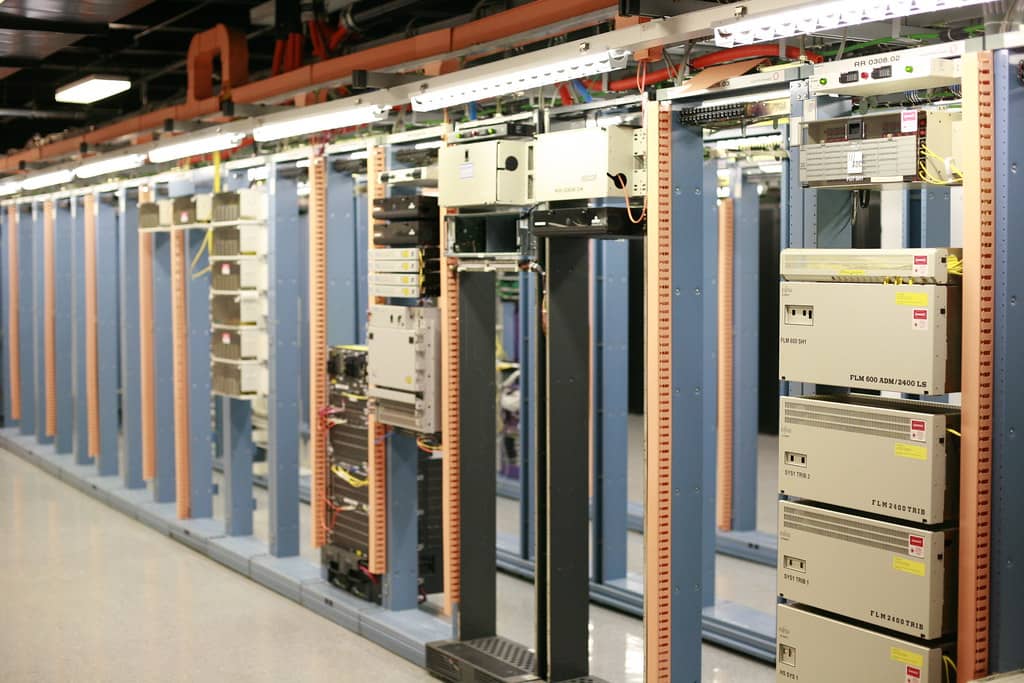
The scale of the shift is substantial. Data centers currently account for roughly 4 percent of national electricity usage, and projections put that figure as high as 12 percent by 2030. A single large facility drawing 650 megawatts would consume roughly the equivalent of 500,000 homes, a load comparable to the total residential demand of a county the size of Orange.
Florida Power and Light's parent company, NextEra Energy, has reported roughly 9 gigawatt-hours of data center proposals in advanced discussions, describing those as customers who have completed engineering studies and could begin receiving service as soon as 2028. The company has positioned itself as a significant supplier to artificial intelligence infrastructure development.
What the new Florida laws do
Two measures passed by the Florida Legislature address large-load electricity customers from different angles. House Bill 1007 creates large load tariff requirements for the Florida Public Service Commission, establishing that data center-scale customers must bear the full cost of the infrastructure needed to serve their facilities, including interconnection, transmission, generation capacity, and ongoing maintenance.
The policy objective behind that structure is cost allocation. Without a dedicated tariff class, the capital expenditure required to serve a very large new customer flows into a utility's general rate base, which is recovered from all customers including residential ratepayers. A large load tariff isolates those costs and assigns them to the customer that caused them.
Senate Bill 484, which took effect July 1, addresses a different concern. It prohibits public electric utilities from knowingly providing service to large load facilities owned or controlled by foreign countries of concern, a national security provision that mirrors similar restrictions Florida has applied to land ownership and other sectors.
Together, the two measures signal that Florida is treating hyperscale computing facilities as a distinct regulatory category rather than as ordinary commercial customers. That is a meaningful change in posture for a state that has generally competed aggressively for capital investment.
Why heat waves are the pressure point
Florida's grid is summer-peaking. Unlike states where the annual demand peak arrives on the coldest winter morning, Florida's maximum load occurs on hot summer afternoons when air conditioning across millions of homes and businesses runs simultaneously. Utilities size generation and transmission capacity around that peak.
Data center load is different in character. It is largely flat, running around the clock at high utilization rather than following a daily curve. That constancy is attractive to utilities in some respects, because it improves capacity factors on generation assets. But it also means that when the residential air conditioning peak arrives, the data center load is already there, adding to rather than yielding to the peak.
The current heat wave, which has produced heat index values from 106 to 110 degrees in South Florida with heat advisories in effect, is exactly the condition under which that interaction becomes visible. The warning from the former Department of Energy official was specifically about heat wave conditions rather than about average demand.
Florida's grid has generally performed well through recent summers, and utilities maintain reserve margins designed for these conditions. The question raised by rapid data center growth is whether the pace of load addition outruns the pace of generation and transmission construction, which operates on multi-year timelines.
The economic argument for the buildout
Data centers bring capital investment, property tax base, and construction employment. A hyperscale facility represents hundreds of millions to billions of dollars of taxable property in a single parcel, which is significant for county budgets, particularly in jurisdictions with limited commercial tax base.
Permanent employment is more modest. Data centers are capital-intensive rather than labor-intensive, typically employing dozens to a few hundred technicians, engineers, and security personnel once operational. The construction phase generates far more jobs than the operating phase.
For utilities, large-load customers can improve system economics. A customer with high, steady consumption spreads fixed costs across more kilowatt-hours, which in principle can moderate rates for everyone if the incremental infrastructure is priced correctly. The large load tariff framework in House Bill 1007 is designed to ensure that pricing actually happens.
Florida's gubernatorial candidates have been asked about data center policy during the primary campaign, indicating that the issue has moved from a technical regulatory matter into general political debate ahead of the August 18 primary and the November 3 general election.
What it means for Florida ratepayers
The direct question for a residential customer is whether monthly bills rise because of data center growth. The large load tariff structure is intended to prevent exactly that outcome by assigning infrastructure costs to the facilities that require them.
Whether it works in practice depends on implementation by the Florida Public Service Commission, which sets the terms of the tariff, approves utility rate cases, and reviews capacity planning. Those proceedings are public, and ratepayer advocates including the Florida Office of Public Counsel participate in them.
The secondary question is reliability. If load growth outpaces capacity additions, the consequences appear as tighter reserve margins during peak conditions, which is a system planning issue rather than a billing issue. Utilities file long-range resource plans with the state that lay out how they intend to meet projected demand.
Water is a third consideration that receives less attention. Many data center cooling designs consume significant water, and Florida's water management districts regulate withdrawals. Siting decisions in water-constrained areas draw scrutiny on that basis independent of electricity.
Where the facilities are going
Florida's data center development has concentrated in areas with transmission access, available land, and fiber connectivity. Central Florida corridors, parts of the Tampa Bay region, and areas near existing substations along major transmission lines have drawn the most interest.
Miami has a distinct role as a network interconnection point, given the concentration of submarine cables landing in South Florida that carry traffic between North America, Latin America, and the Caribbean. That makes South Florida attractive for latency-sensitive facilities even where land costs are higher.
County commissions have found themselves adjudicating siting decisions that involve zoning, water use, noise from cooling equipment, and the transmission corridors required to serve a site. Those hearings are the venue where residents have the most direct input.
How Florida's grid is planned
Florida utilities file ten-year site plans with the Florida Public Service Commission, projecting demand growth and identifying the generation and transmission needed to meet it. Those filings are public and are the primary document through which the state assesses adequacy.
The commission reviews plans for reasonableness but does not approve them in the manner of a construction permit. Actual construction authority runs through separate processes, including the Florida Electrical Power Plant Siting Act for large generation facilities.
Reserve margin is the planning metric that matters most for reliability. Utilities maintain generating capacity above forecast peak demand to accommodate unit outages and forecast error, and Florida utilities have historically planned to reserve margins in the range of 20 percent.
Rapid, lumpy load additions complicate that planning. A single data center representing hundreds of megawatts is a step change rather than the gradual growth that forecasting models handle well, and the lead time to build serving infrastructure runs years.
Water, land and local review
Electricity is the most discussed data center input but not the only constrained one. Many cooling designs consume substantial water, and Florida's water management districts regulate consumptive use through permitting that assesses availability and environmental impact.
Air-cooled and closed-loop designs reduce water consumption at the cost of higher electricity use, which means the water and power questions trade against each other rather than being independent.
Land use review occurs at the county or municipal level. Zoning, setbacks, noise from cooling equipment and backup generators, traffic during construction, and the visual impact of large windowless buildings are all matters local boards evaluate.
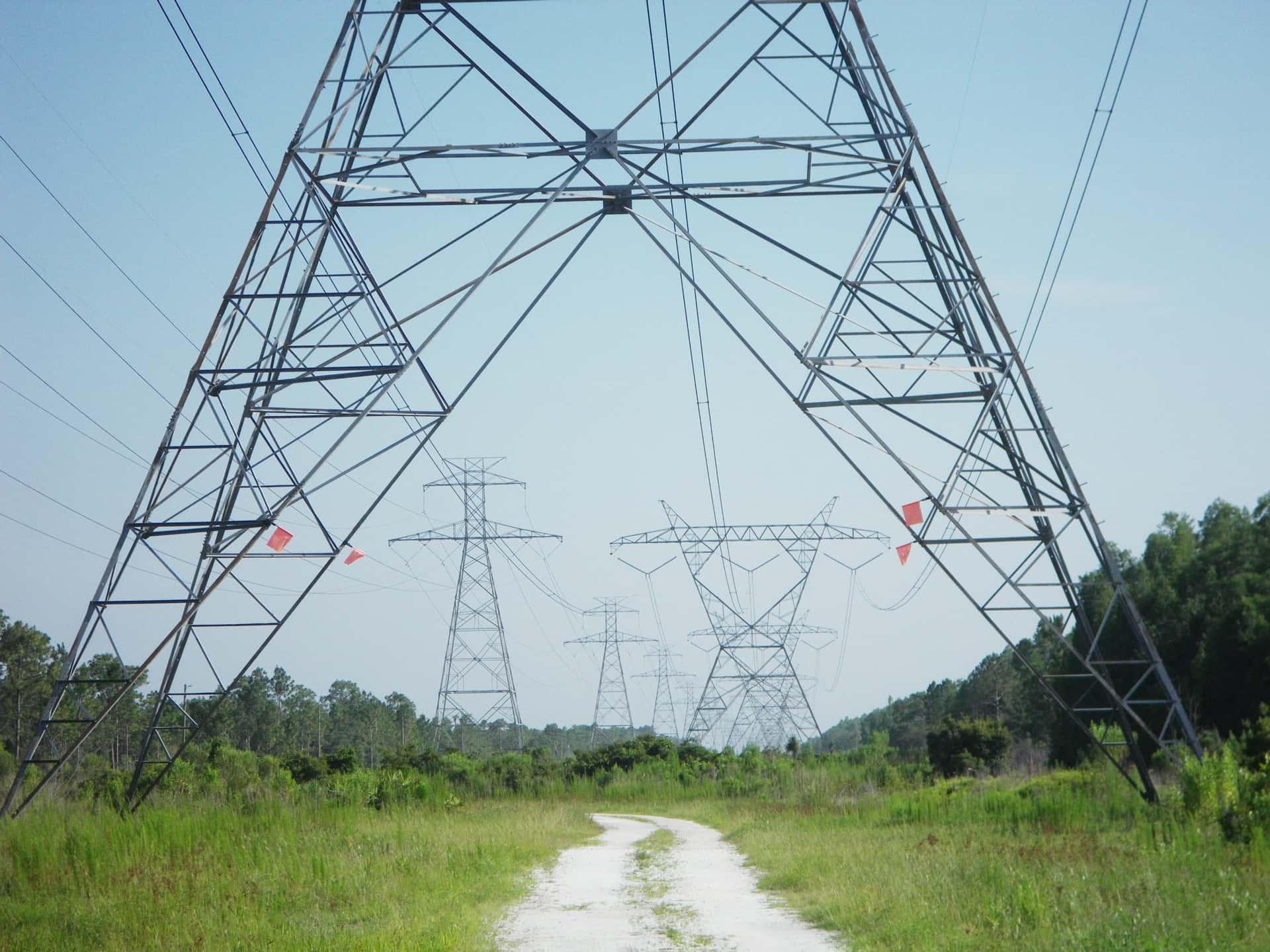
Transmission corridors add another layer. Serving a large facility frequently requires new or upgraded transmission lines, which involve easements, routing decisions, and their own permitting, often across properties whose owners were not party to the siting decision.
What residents can watch
Florida Public Service Commission dockets are public, and residents can review utility filings, rate cases, and the proceedings implementing the large load tariff requirements. The Office of Public Counsel represents ratepayers in those proceedings.
County commission and planning board agendas are where siting decisions appear, and Florida's open meetings requirements guarantee notice and public comment opportunity. Those hearings are the point of maximum public leverage.
Utility bills themselves provide the most direct feedback. Residential customers can compare their rates and usage over time, and utilities publish tariff schedules showing how charges are structured across customer classes.
What's next
The Florida Public Service Commission will implement the large load tariff requirements, a process that involves utility filings, staff review, and public hearings. Those proceedings will determine how the cost allocation principle in the statute translates into actual rate structures.
NextEra and Florida Power and Light have indicated that the earliest of the advanced-discussion data center customers could begin taking service in 2028, which sets the timeline for the generation and transmission additions required to serve them.
For now, the immediate concern is the current heat wave. Residents can reduce peak demand and their own bills by raising thermostat settings during the hottest afternoon hours and deferring major appliance use to the evening. The Florida Press will report on Public Service Commission proceedings as the tariff framework develops.
Spotted an issue with this article?
Have something to say about this story?
Write a letter to the editor