The Marlins' Collapse Arrives Just as Miami Has to Decide on Sandy Alcantara
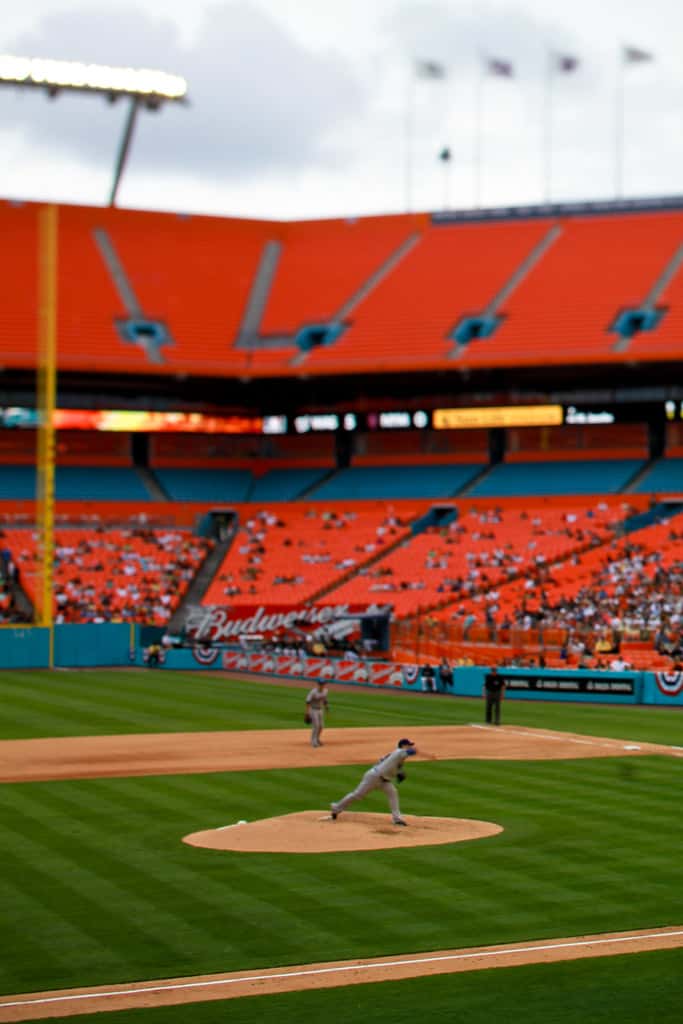
Three weeks ago the Miami Marlins were one of the better stories in baseball. They had climbed as many as 10 games above .500 by July 9 after sweeping the Athletics and the Mariners, they sat three games clear in the National League Wild Card picture, and reporting at the time indicated the front office planned to hold ace Sandy Alcantara and buy at the trade deadline.
None of that has survived the second half. Miami has not won a game since July 10. The Marlins have been swept in each of their first three series coming out of the All-Star break, went 0-6 on a road trip through Milwaukee and Houston, and were swept at home by the San Diego Padres over the weekend.
The timing could hardly be worse. The trade deadline falls on August 3 at 6 p.m. Eastern, which gives the organization roughly a week to determine whether the team that played through June or the team that has played since the break is the accurate one.
How the slide happened
Collapses of this length are rarely attributable to a single failure. What makes this one difficult to read is that it began immediately after the All-Star break, a natural discontinuity that separates the good stretch from the bad one and makes it harder to identify a gradual decline that might have been visible earlier.
The road trip to Milwaukee and Houston was a demanding assignment against quality opposition. Losing all six is a poor result but not an inexplicable one. Being swept at home by San Diego, following that trip, is the sequence that turned a bad stretch into a genuine crisis of confidence about the roster.
Miami's success in June was built on a formula that offered limited margin. The Marlins have operated with one of baseball's lower payrolls and have relied on pitching, defense, and timely offense rather than on overwhelming lineup depth. Teams constructed that way can outperform their underlying metrics for stretches, and they can also fall apart quickly when the margins turn.
The Alcantara decision
Sandy Alcantara is the most consequential name in Miami's deadline calculus and has been in trade speculation dating back to last season. He is the franchise's most recognizable player and a former National League Cy Young Award winner.
His contract structure shapes the decision. Alcantara has one year remaining beyond this season, with a $21 million club option for 2027 carrying a $2 million buyout. That means an acquiring team would receive not a rental but a starter under control through 2027, which raises his value substantially relative to a pure deadline rental.
The counterargument for holding is straightforward. A pitcher of Alcantara's caliber is difficult to replace, and Miami's competitive window depends on the young position players and pitchers already under club control. Trading him signals a reset the roster may not actually require.
The counterargument for dealing is equally clear. Contending teams pay premiums for controllable starting pitching at the deadline, and a team that has not won in more than two weeks has weakened its own case for buying.
Why Miami's sell would be small
Even if the Marlins decide to sell, the transaction volume is likely to be limited. Much of the roster is under club control well beyond this season, which is precisely the condition that argues against moving players.
Deadline sellers typically move veterans on expiring contracts, players whose value to the current team ends in October regardless. Miami does not carry many of those. The roster is young, cheap, and controllable, which is the profile a rebuilding team wants to acquire rather than dispose of.
That leaves Alcantara as the primary trade asset and a small number of complementary pieces. A team in that position faces a binary choice on its most valuable player rather than a broader dismantling.
The organizational context
The Marlins have operated under significant financial constraints for most of their existence, punctuated by two World Series championships in 1997 and 2003, each followed by roster teardowns that alienated portions of the fan base.
Attendance at loanDepot park has consistently ranked among the lowest in Major League Baseball, a problem with multiple causes: the stadium's location and traffic access, South Florida's competitive entertainment market, and a franchise history that has repeatedly asked fans to invest in teams that were subsequently dismantled.
That history is why deadline decisions carry weight in Miami beyond their competitive merit. A front office that publicly indicated in July that it intended to buy, then sold its best pitcher three weeks later, would be reinforcing a pattern that has shaped the franchise's relationship with its market for three decades.
The counterpoint is that sentiment does not win games, and an organization that holds a valuable asset past its peak trade value has damaged the future to protect the present without accomplishing either.
What the standings actually require
The Wild Card format gives three National League teams a postseason berth beyond the division winners, which keeps more teams mathematically alive later into the season than the older format did. That structure is part of why the Marlins were positioned as buyers in early July.
An extended losing streak in late July does damage that compounds. It costs games in the standings, and it costs the games remaining in which to recover them. Every day of the streak reduces the runway.
The practical threshold for a front office is not whether a postseason berth remains mathematically possible but whether it is probable enough to justify surrendering prospects for short-term help. That calculation has moved substantially against Miami over the past two and a half weeks.
What this means for South Florida baseball
The Marlins compete for attention in a market where the Heat, the Dolphins, the Panthers, Inter Miami, and the University of Miami all draw substantial followings. Sustained success is the only reliable way for the franchise to hold market share, and sustained success has been elusive.
The June run generated genuine local interest, the kind that translates into ticket sales and broadcast ratings. Losing that momentum in July, and then trading the team's most recognizable player, would be the sequence most likely to reset that interest to baseline.
For the young core the organization has assembled, the deadline outcome also shapes the environment they develop in. Playing meaningful September games is a developmental experience that a team in a deadline sell-off does not provide.
What a deadline market looks like
Trade deadline pricing is driven by scarcity on both sides. Contending teams with an identified need bid against a small number of alternatives, and sellers with a genuinely valuable asset hold leverage that does not exist at other points in the calendar.
Starting pitching is consistently the scarcest commodity. Every contending team wants rotation depth entering October, injuries have accumulated by late July, and the supply of available starters is limited because teams reluctant to sell hold them.
Contract control is the multiplier. A rental starter, meaning one whose contract expires after the season, commands a meaningfully lower return than one under control for an additional year. Alcantara's club option for 2027 places him in the higher category.
The return in a deal of this type typically consists of prospects rather than major league players, and the quality of that return depends heavily on how many teams are bidding. A single motivated buyer produces a different outcome than three.
The developmental argument for holding
The case against trading extends beyond sentiment. Organizations with young pitching staffs frequently cite the value of an established veteran presence in the rotation, and the argument has practical content beyond clubhouse leadership.
Young starters learn preparation routines, in-game adjustment, and workload management largely by observation. A pitcher who has performed at the level Alcantara has provides a working model that coaching staffs cannot fully replicate through instruction.
There is also a competitive floor consideration. A rotation anchored by a front-line starter has a higher baseline than one composed entirely of pitchers still establishing themselves, and that floor matters for a team whose position players are developing and benefit from playing meaningful games.
The counterargument is that these benefits are real but modest relative to the value of a strong prospect return, and that organizations frequently overweight them because they are easier to articulate than the abstract value of players who have not yet arrived.
Reading the rest of the roster
Miami's June performance was built on contributions across a young roster rather than on a small number of stars, which is both the reason the run was encouraging and the reason it was fragile.
Teams constructed that way depend on multiple players performing at or above expectation simultaneously. When several regress toward their established levels at the same time, the effect compounds rather than averaging out, which is a plausible description of what has happened since the All-Star break.
The distinction that matters for the front office is between players whose June performance reflected genuine improvement and those who were outperforming their underlying indicators. That assessment is made internally using data that is not fully public, and it is the analysis on which the deadline decision will actually rest.
Whatever Miami decides, the roster's control structure means the organization will field a broadly similar team in 2027. The deadline question is about the margin, not about the core.
What's next
The August 3 deadline at 6 p.m. Eastern is the hard date. Trade activity typically accelerates in the final 48 hours as teams that have been waiting on market prices make decisions.
Between now and then, Miami's results will inform the choice. A winning stretch against the remaining schedule would restore some of the case for holding. Continued losses would remove it entirely.
The organization has said little publicly since the streak began, which is standard practice for a front office weighing a decision of this magnitude. What Miami does with Alcantara will be the clearest statement it makes about how it reads its own roster.
Spotted an issue with this article?
Have something to say about this story?
Write us a letterComments
No comments yet. Be the first to weigh in.
Related Coverage

Penguins Blank Panthers 4-0, Spoiling Cooper Black's Record-Setting NHL Debut
9h ago
No. 1 Miami Hosts Pitt in First Game Atop the AP Poll Since 2002
9h ago

Baker Mayfield Set to Return as 1-5 Buccaneers Visit NFC South-Leading Panthers
15h ago

UCF Hosts No. 2 BYU in Highest-Ranked Visit in Bounce House History as Knights Seek Homecoming Upset
1d ago